• العربية
  • فارسی
Brand
  • Iran Insight
  • Politics
  • Economy
  • Analysis
  • Special Report
  • Opinion
  • Podcast
  • Iran Insight
  • Politics
  • Economy
  • Analysis
  • Special Report
  • Opinion
  • Podcast
  • Theme
  • Language
    • العربية
    • فارسی
  • Iran Insight
  • Politics
  • Economy
  • Analysis
  • Special Report
  • Opinion
  • Podcast
All rights reserved for Volant Media UK Limited
volant media logo
ANALYSIS

Israel’s South Pars strikes push Iran conflict into energy war

Umud Shokri
Umud Shokri

Senior visiting fellow, George Mason University

Mar 18, 2026, 16:41 GMT

Israel’s strikes on Iran’s gas facilities mark a shift in the conflict from military confrontation to economic warfare centered on energy.

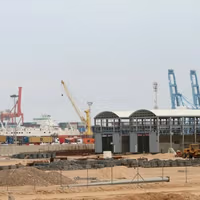
On March 18, Israeli strikes targeted facilities linked to South Pars and the onshore hub at Asaluyeh in Bushehr Province.

Qatar, which shares the reservoir, directly blamed Israel, while the United Arab Emirates branded the attack a "dangerous escalation" threatening global energy security.

Tehran responded with a swift call for the evacuation of energy infrastructure across the Persian Gulf, including in Qatar, Saudi Arabia and the United Arab Emirates.

South Pars is not simply another hydrocarbon asset. Together with Qatar’s North Dome, it forms the world’s largest natural gas field, holding an estimated 1,800 trillion cubic feet of gas and 50 billion barrels of condensate.

Iran’s share accounts for roughly 36 percent of its proven gas reserves and about 5.6 percent of global reserves, placing a central pillar of its economy at risk.

Asaluyeh serves as the operational core of this system, concentrating upstream, midstream and downstream infrastructure in a single coastal zone. Offshore production feeds into refineries, petrochemical complexes and export terminals that underpin Iran’s electricity generation, industrial base and energy exports.

This concentration creates both efficiency and vulnerability. A strike on Asaluyeh does not merely disrupt production; it threatens the entire value chain.

Positioned along the Persian Gulf and connected to export routes through the Strait of Hormuz, Asaluyeh sits at the intersection of production and transit. Any sustained disruption could compound supply shocks across global markets.

Israel has moved beyond military and nuclear assets to strike the economic core of Iran’s power, signaling a shift toward economic attrition in which energy systems become primary targets.

Iran’s response suggests escalation will not remain contained. Outlets linked to the Islamic Revolutionary Guard Corps have published lists of potential targets: Ras Laffan and Mesaieed in Qatar, the SAMREF refinery and Jubail petrochemical complex in Saudi Arabia, and the Al Hosn gas field in the United Arab Emirates.

The fallout is already visible. Iraq has reported a halt in Iranian gas supplies following the strike on South Pars, while Ras Laffan installations in Qatar are being evacuated.

The shared nature of the reservoir raises additional risks. Qatar’s North Dome underpins a significant share of global LNG supply to Europe and Asia. Instability on the Iranian side introduces concerns over reservoir management, operational safety and spillover effects.

Qatar’s swift condemnation reflects a clear calculation: escalation around the world’s largest gas field threatens global markets as much as regional stability.

The risks extend beyond the Gulf. Israel’s offshore gas fields—Leviathan, Tamar and Karish—are critical to domestic supply and regional exports and remain exposed to potential retaliation. Expanding the conflict to the Eastern Mediterranean would transform a regional confrontation into a multi-basin energy crisis.

The strike also exposes a strategic asymmetry. Israel has limited comparable domestic energy infrastructure vulnerable to direct retaliation, while Iran operates within a region where energy assets are densely clustered.

Tehran cannot easily mirror the strike, but it can impose costs across a wider regional system by targeting Gulf producers, shipping lanes or offshore infrastructure.

The choice of South Pars and Asaluyeh therefore reflects more than tactical targeting. It marks a deliberate shift toward pressure on economic systems and systemic vulnerability.

The immediate damage may prove limited. The strategic consequences are not. Once energy infrastructure becomes a battlefield, escalation thresholds shift, retaliation broadens, and interconnected energy systems become more fragile.

South Pars is not just a gas field; it anchors Iran’s economy and links directly to global energy markets. By placing it in the crosshairs, the conflict has entered a phase in which local strikes carry global consequences.

Most Viewed

US terminates green cards of 3 Iranians tied to Islamic Republic
1

US terminates green cards of 3 Iranians tied to Islamic Republic

2
PODCAST

Worst outcome is Islamic Republic’s survival, ex-CIA official says

3
ANALYSIS

Iran brings unusually broad team to US talks to blunt future blame

4
INSIGHT

Tehran sends tough message but keeps diplomacy door open

5

Zoroastrian religious figure arrested in Iran

Banner
Banner

Spotlight

  • Tehran sends tough message but keeps diplomacy door open
    INSIGHT

    Tehran sends tough message but keeps diplomacy door open

  • Worst outcome is Islamic Republic’s survival, ex-CIA official says
    PODCAST

    Worst outcome is Islamic Republic’s survival, ex-CIA official says

  • Why the Iran-US truce is more likely to buy time than peace
    ANALYSIS

    Why the Iran-US truce is more likely to buy time than peace

  • Engaged but uncommitted: China watches Iran and US fight and talk
    ANALYSIS

    Engaged but uncommitted: China watches Iran and US fight and talk

  • A truce for the world, a reckoning for Iran’s economy
    ANALYSIS

    A truce for the world, a reckoning for Iran’s economy

  • Why the world failed to bypass the Strait of Hormuz
    ANALYSIS

    Why the world failed to bypass the Strait of Hormuz

•
•
•

More Stories

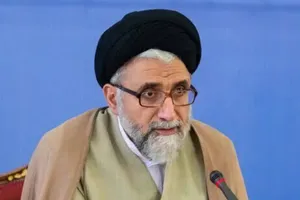
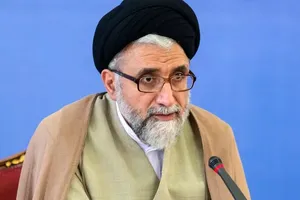
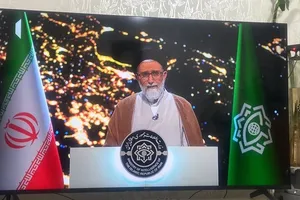
Spymaster Esmail Khatib killed: The man who turned dissent into espionage

Mar 18, 2026, 12:38 GMT
•
Arash Sohrabi

Esmail Khatib, killed in overnight strikes, mattered not because he ran spies but because he helped redraw the line between politics and security, turning dissent into an intelligence battlefield and recasting protest as hybrid war.

That was the frame Khatib laid out in a long interview published on Ali Khamenei’s website during the Woman, Life, Freedom uprising. It became more than rhetoric. It became a governing logic that collapsed protest, foreign media, activism and espionage into one threat map.

Khatib’s career made him unusually suited to that task.

Born in 1961 and trained in Qom, he rose through the Revolutionary Guards’ intelligence world, later ran the intelligence office in Qom, moved into the Supreme Leader’s protection orbit and then headed the judiciary’s protection and intelligence apparatus.

By the time Ebrahim Raisi made him intelligence minister in 2021, Khatib had passed through nearly every institution that mattered in the Islamic Republic’s coercive core: the Guards, the judiciary and the Supreme Leader’s household.

His retention in 2024 confirmed that his authority rested less on party politics than on trust from the system above elected government.

Under Khatib, the state increasingly treated social unrest as proof of foreign infiltration.

Protesters were not simply angry citizens. They were portrayed as nodes in an enemy network. Foreign-based Persian media were not just broadcasters. They were recast as operational arms of hostile states.

That logic also hardened into law.

Under his watch, the state broadened the definition of espionage and hostile collaboration, making it easier to turn contact, information-sharing, media work and loosely defined cooperation with enemy states or affiliated groups into national-security crimes.

The point was not only to punish spies. It was to widen the category of who could be treated like one.

The United States designated Khatib twice in September 2022, reflecting the breadth of his role across both overseas operations and domestic repression.

The Treasury first sanctioned him and the Intelligence Ministry over malicious cyber activity, including the disruption of Albanian government systems.

Later that month, it sanctioned him again, saying the ministry under his leadership had targeted human rights defenders, women’s rights activists, journalists, filmmakers and religious minorities, and had subjected detainees to torture in secret detention centers.

  • Tehran set to implement law expanding death penalty to online offenses

    Tehran set to implement law expanding death penalty to online offenses

  • Tenfold rise in intelligence ministry's budget raises eyebrows in Iran

    Tenfold rise in intelligence ministry's budget raises eyebrows in Iran

  • Proposed minister of intelligence in Iran: Who is Esmail Khatib?

    Proposed minister of intelligence in Iran: Who is Esmail Khatib?

Years of the gallows

The intelligence ministry did not sign every death sentence. But the execution surge is still part of the meaning of Khatib’s tenure, because it formed the climate in which his security doctrine operated.

In the four full calendar years after he took office, Iran carried out at least 4,000 executions: about 580 in 2022, 830 in 2023, 975 in 2024 and 1,900 in 2025.

Those numbers belong formally to the judiciary and the prison system.

Politically, though, they sit inside the same larger story: a state that answered dissent, insecurity and social fracture with a heavier reliance on coercion, exemplary punishment and fear.

Operations beyond Iran

Khatib was also important beyond Iran’s borders. The ministry he led was accused by Western governments of directing cyber operations, targeting dissidents abroad and helping run the wider machinery of transnational repression.

His significance, though, was not that he was publicly tied to every individual plot.

It was that he sat atop a ministry that linked classic espionage, cyber activity, surveillance of exiles and operational cooperation with Iran’s other security arms.

In that sense he was less a field commander than a system manager, overseeing one part of Iran’s long war against opponents at home and abroad.

  • Islamic Republic Creating Yet Another Parallel Intel Agency

    Islamic Republic Creating Yet Another Parallel Intel Agency

  • Iran To Set Up A Fourth Major Intelligence Entity

    Iran To Set Up A Fourth Major Intelligence Entity

  • Iran’s intelligence mocked by allies and foes over 'secret' Israel files

    Iran’s intelligence mocked by allies and foes over 'secret' Israel files

The glue

That coordinating role may be the most revealing part of his legacy.

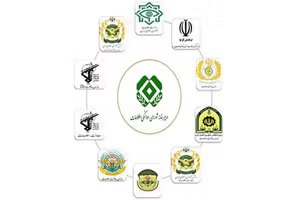
Iran’s intelligence world is fragmented. The Intelligence Ministry, the IRGC Intelligence Organization, the judiciary and the Leader’s office all have their own stakes, rivalries and chains of command.

Khatib’s value was that he could move across those worlds.

He came from the Guards’ intelligence culture, served in the Leader’s protection orbit, worked closely with the judiciary and then ran the ministry that was supposed to give the system a more unified picture of the threat environment.

After the 2022 uprising, that became even more important.

The Islamic Republic needed its rival security organs to act less like competing fiefdoms and more like a single architecture.

Khatib helped provide that common language, one in which protest, activism, foreign media, exile politics, sabotage and espionage could all be placed on the same continuum of danger.

That is why Khatib mattered. He mattered because he helped normalize a broader idea: that almost any challenge to the Islamic Republic could be reclassified as infiltration.

In the end, that was his real achievement for the system he served. He helped make dissent legible as intelligence warfare.

Iranians defy crackdown at fire festival as Israel signals support

Mar 18, 2026, 11:15 GMT

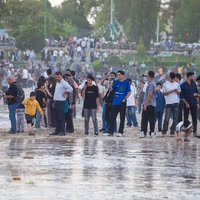
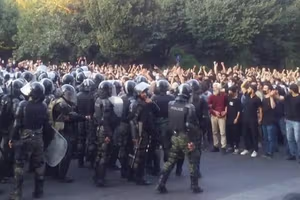
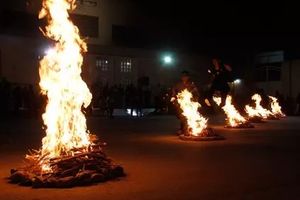
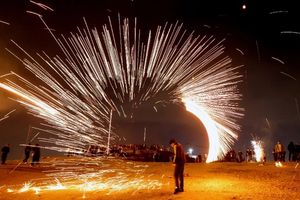
Iranians across many cities took to the streets late Tuesday to celebrate Chaharshanbe Suri, defying warnings and attempted crackdowns by security forces as the country remains under sustained military pressure.

Videos sent to Iran International showed crowds gathering in Tehran, Karaj, Shiraz, Mashhad and other cities, lighting fires, dancing and chanting slogans, including “Javid Shah,” in apparent response to calls by exiled prince Reza Pahlavi to mark the pre-Islamic festival despite restrictions.

In several locations, including Chitgar in western Tehran and parts of Karaj, security forces were seen attempting to disperse gatherings, with footage showing police vehicles approaching crowds.

  • Tehran warns of crackdown ahead of annual fire festival

    Tehran warns of crackdown ahead of annual fire festival

  • Iran braces for fire festival under shadow of war

    Iran braces for fire festival under shadow of war

But the celebrations persisted, with people singing patriotic songs such as “Ey Iran” and setting off fireworks in residential neighborhoods and public spaces.

Chaharshanbe Suri, traditionally held on the eve of last Wednesday of the Iranian calendar year, has long been viewed with suspicion by the Islamic Republic.

In recent years it has increasingly become a flashpoint for anti-government expression, particularly during periods of unrest.

This year’s celebrations unfolded against the backdrop of ongoing conflict and heightened security pressure, with reports of surveillance and efforts by authorities to deter gatherings.

Israeli support

“An unprecedented event took place last night, as Israeli drones targeted Basij and police patrols attempting to approach celebration sites,” an Israeli official told Iran International.

“For the first time, the people of Iran benefited from active support that paralyzed the repression apparatus and effectively provided an ‘air umbrella’ for the crowds,” the official said.

Israeli Prime Minister Benjamin Netanyahu had earlier signaled support, saying in a video message that Israeli forces were targeting what he described as “terrorist operatives” to enable Iranians to celebrate.

“Our aircraft are striking terrorist elements in city squares and intersections to allow the brave people of Iran to celebrate the fire festival,” he said. “Celebrate. Happy Nowruz. We are watching from above.”

Experts challenge claim behind Kent's resignation: Was Iran threat imminent?

Mar 18, 2026, 10:53 GMT
•
Negar Mojtahedi

The US counterterrorism chief’s resignation over the Iran war made waves in Washington, but his assertion that Tehran posed no imminent threat was swiftly challenged by officials and analysts.

In his resignation letter to President Trump Joe Kent wrote that “Iran posed no imminent threat to our nation” and accused the White House of going to war on behalf of Israel.

US officials pushed back quickly, with Press Secretary Karoline Leavitt saying Trump had evidence to support his decision to strike and House Speaker Mike Johnson questioning Kent’s information.

“I don't know where Joe Kent is getting this information, but he wasn't in those briefings,” Johnson said. “Had the president waited, we would have had mass casualties. That proposition at the end is clearly wrong.”

Director of National Intelligence Tulsi Gabbard also pushed back publicly, saying that the administration rejects the view that Iran posed no threat.

Kent resigned on Tuesday, saying he “cannot in good conscience” support the Trump administration’s war in Iran, and arguing the conflict had been driven by pressure from Israel and its supporters in the United States rather than an immediate security necessity.

President Trump dismissed him shortly afterward, calling it a “good thing” he stepped down and describing him as “very weak on security.”

'Kent’s claim contradicts years of warnings'

Analysts echoed that assessment.

“The fact of the matter is that Donald Trump, in his State of the Union address, said that Iran is a threat and Iran is thinking about directly attacking the United States. That's not Trump's imagination,” said Shayan Samii, a former US government appointee and Iranian-American analyst.

He pointed to Iran’s missile program and nuclear activity as further evidence.

“They bragged about having 60% enriched fuel, enough for eleven bombs. They told me and Jared [Kushner], ‘We're not gonna give you diplomatically what you couldn't take militarily,’” White House envoy Steve Witkoff said on March 8 alongside Trump aboard Air Force One.

Samii said such positions reinforced concerns that Iran was using diplomacy to buy time.

“They were saying, yes, we do have this material… why should we give [it] to you voluntarily?” he said.

More broadly, US security agencies have long warned that Iran poses a multifaceted threat, including cyberattacks on critical infrastructure, potential operations on US soil, drone capabilities and proxy attacks across the Middle East.

The FBI has also warned law enforcement in California of possible retaliation linked to the war, including the risk of Iranian drone activity targeting the US West Coast, according to an alert reviewed by ABC News.

Kent’s claim has also drawn emotional backlash from those directly affected by Iranian-linked violence.

“My husband, Alan, was killed by Iranian proxies in Iraq. And now, after decades, the fight is finally leading back to the number one state sponsor of terrorism in the world,” a Gold Star widow wrote on X.

“You understood it when it was your loss. Now you’re minimizing it when it’s mine. You don’t get to redefine this war just because it’s not your grief anymore.”

Questions over access, motive and past ties

Against that backdrop, questions have also emerged about Kent’s access to intelligence and the motivations behind his position as well as his past political associations.

A senior administration official told Fox News Kent was “a known leaker” who had been cut out of presidential intelligence briefings months earlier and excluded from Iran-related planning – raising doubts about whether he had access to the information he was disputing.

“He has a history of white supremacism,” Jake Wallis Simons, host of the Brink podcast and a columnist with The Telegraph, told Iran International, adding that Kent’s background should be considered when evaluating his position.

Open-source reporting reviewed by Iran International shows Kent faced criticism during his political campaigns over engagement with white nationalist figures.

According to The Forward, he sought support from white nationalist Nick Fuentes and made comments describing American culture as “anti-white,” though Kent has said he disagrees with some of those views.

Stephen F. Hayes of The Dispatch reported that Kent’s former campaign manager acknowledged in texts that he had sent racist and antisemitic messages, and that a senior adviser attended a conference hosted by Fuentes.

Warren Kinsella, a former special assistant to Canadian Prime Minister Jean Chrétien, said opposition to the war in some cases reflects ideology rather than security realities.

“Kent is an example of that,” Kinsella said. “The war is defensible on any number of grounds… the fact that Iran is the world’s leading sponsor of terrorism. This was the right thing to do.”

He added that Kent’s past associations had long raised concerns.

“Kent had long had associations with white supremacist and neo-Nazi groups,” he said. “He was widely seen as a national security risk and only got through Senate scrutiny by the skin of his teeth.”

As head of the National Counterterrorism Center, Kent oversaw the agency responsible for analyzing terrorist threats – making his assertion that Iran posed no imminent danger particularly consequential.


Iran executes Swedish citizen accused of spying for Israel, judiciary says

Mar 18, 2026, 08:17 GMT

Iran has executed a Swedish-Iranian man identified as Kourosh Keyvani after convicting him of espionage for Israel, according to reports by the judiciary-linked Mizan news agency.

Mizan said Keyvani was executed on Wednesday morning after his death sentence was upheld by the Supreme Court. He had been accused of passing “images and information of sensitive locations” to officers of Israel’s Mossad intelligence agency.

The report said Keyvani was arrested in Savojbolagh on the fourth day of the 12-day war in June. Authorities said the case had gone through legal procedures, but no independent evidence supporting the allegations was made public.

Later in the day, Swedish Foreign Minister Maria Malmer Stenergard said in a statement that a Swedish citizen was executed in Iran without naming him. However, it confirmed that the person was arrested in June.

The legal proceedings leading up to the execution did not meet the standards of due process, she added.

  • Sweden summons Iran envoy amid reports citizen faces death sentence

    Sweden summons Iran envoy amid reports citizen faces death sentence

The semi-official Tasnim news agency said Keyvani had been detained by the Revolutionary Guards’ intelligence arm and was found with cash, vehicles and what it described as advanced communication and surveillance equipment.

Tasnim also reported that he had allegedly been recruited through online contact and trained abroad before returning to Iran, though these claims could not be independently verified.

Keyvani is the latest in a series of executions in Iran involving individuals accused of espionage for Israel, particularly since the outbreak of the June war.

Iran has one of the highest execution rates in the world and has long used the death penalty in national security cases, including allegations of spying. Following the conflict, rights groups and international media have reported a sharp increase in arrests and executions on such charges.

The Telegraph reported that executions in Iran have surged since the June war, citing data from human rights group HRANA indicating that the number of executions has risen significantly, including for those accused of links to Israel. The Sunday Times has also reported that dozens more people could face execution on similar charges.

What the Balkans can tell Iranians about life after war

Mar 18, 2026, 07:23 GMT
•
Naeimeh Doostdar

Recent history in the Balkans may offer a useful lens for the postwar questions now confronting many ordinary Iranians.

That question has taken on added urgency after repeated suggestions by President Donald Trump this week that the war could end in the very near future.

Among the most instructive comparisons is the NATO intervention in Yugoslavia in 1999—a conflict that carried sharply different meanings depending on where it was experienced.

For many outside observers, the war began with NATO’s 78-day bombing campaign launched in March of that year after the collapse of peace talks. But for those on the ground in Kosovo, the conflict had already been unfolding for years.

It had taken shape not through airstrikes, but through a gradual tightening of control: checkpoints, dismissals from public jobs, the closure of Albanian-language schools and the growing presence of security forces.

By the time NATO intervened, many Kosovo Albanians saw the bombing not as the start of war but as a new phase of a conflict they had already been living through.

For many Kosovo Albanians, the bombing was accompanied by fear but also a measure of hope. By early 1999, large numbers of civilians were already fleeing violence, and accounts from refugee camps in Albania and North Macedonia often reflected a similar sentiment.

Fragments of those fears and hopes remain preserved in television reports from the time, now widely available online.

“We are afraid of the planes, but we are more afraid of the soldiers who burned our homes,” a young man from Prizren tells the BBC in one such report.

Another refugee says: “When we heard NATO had attacked, we thought maybe someone had finally come to stop this.”

For others, the calculus was more reluctant. A teacher later reflected: “We did not want war. But once it began, we felt it might be the only way for things to change.”

At the same time, civilians in Serbia experienced the war very differently.

In Belgrade, air raid sirens sent residents into shelters night after night as bridges, factories and military sites were targeted. In the early days, a sense of defiance took hold, with people gathering in public spaces despite the risk.

“We know it is dangerous, but we do not want to leave our city alone,” one student said.

As the bombing continued, defiance gave way to exhaustion. Power outages became more frequent, daily life more strained and uncertainty more acute.

“At first, people were angry. After a while, we were just tired,” one resident later said.

The Kosovo war illustrates how the same military intervention can carry entirely different meanings depending on lived experience.

For many Serbs, NATO’s campaign became a symbol of foreign aggression and national humiliation. For many Kosovo Albanians, it represented the possibility — however uncertain — that years of repression might finally end.

After 78 days, Yugoslav forces withdrew and international peacekeeping troops entered Kosovo. For many Kosovo Albanians, that marked the beginning of a return to homes that were often damaged or destroyed. For many Serbs, the war remained a defining national trauma.

The contrast endures in how the conflict is remembered.

“We hated the war,” one Kosovar later wrote. “But without it, we might still be living in that fear.”

A Serbian citizen offered a starkly different view: “For us, this war was neither freedom nor justice. It was simply bombing.”

As Iranians begin to consider what might follow the current conflict, the Balkan experience offers no simple answers—only a reminder that the meaning of war is rarely shared equally.

If the war does end soon, as Trump suggests, its consequences inside Iran may prove equally contested.