• العربية
  • فارسی
Brand
  • Iran Insight
  • Politics
  • Economy
  • Analysis
  • Special Report
  • Opinion
  • Podcast
  • Iran Insight
  • Politics
  • Economy
  • Analysis
  • Special Report
  • Opinion
  • Podcast
  • Theme
  • Language
    • العربية
    • فارسی
  • Iran Insight
  • Politics
  • Economy
  • Analysis
  • Special Report
  • Opinion
  • Podcast
All rights reserved for Volant Media UK Limited
volant media logo

Islamic Republic Creating Yet Another Parallel Intel Agency
Iran International Newsroom
Dec 13, 2022, 15:01 GMTUpdated: 17:51 GMT+1

While there are already several parallel intelligence organizations active in Iran, a lawmaker says the Islamic Republic’s judiciary is about to set up a new one.

Abolfazl Amouei, the spokesman of the parliament's National Security and Foreign Policy Committee, said Monday plans are in place to discuss the establishment a new intelligence organization for the Judiciary branch. The aim of the new outfit will be "preventing and countering measures to threaten and bribe judicial authorities."

Gathering information and reports about sensitive cases “to counter the propaganda campaigns by the global arrogance” is also mentioned as part of the duties of the new organization, indicating that the body will also coordinate with other entities out the judiciary apparatus. “Global arrogance” is a term used by the Islamic Republic to refer to the United States.

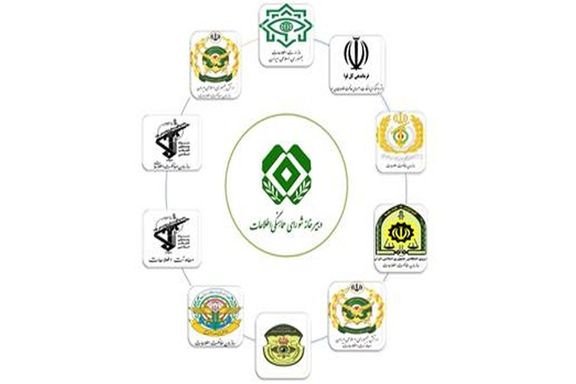
Iran has a traditional Intelligence Ministry, but other state entities, such as the Revolutionary Guard have established their own spy and security agencies. Now it appears the hardliner Judiciary has joined the game, which is not an unprecedented in the Islamic Republic. The trend, which has been evolving for over four decades, reached a turning point in 2009 with the formation of the Intelligence Organization of the Islamic Revolutionary Guard Corps, an intelligence agency within the IRGC and part of the Council for Intelligence Coordination. 

Abolfazl Amouei, the spokesman of the parliament's National Security and Foreign Policy Committee (file photo)
100%
Abolfazl Amouei, the spokesman of the parliament's National Security and Foreign Policy Committee

The Council is comprised of at least 13 to 16 separate active intelligence agencies, according to different sources. Most of these parallel agencies have strong ties with the IRGC and the judiciary as well as the office of the Supreme Leader. The intelligence minister, the interior minister, foreign minister and the country’s chief justice are members of the body. The IRGC’s Intelligence Organization, and its Intelligence Protection Organization, and their counterparts in the traditional Army and Police force as well as cyber police are some of the other members. 

Such parallel structures among the intelligence agencies is a can of worms that regime’s officials rarely speak about. However, a few politicians, such as outspoken conservative Ali Motahari, who was deputy-speaker in the previous parliament, have talked about the issue and repeatedly criticized it. Motahari famously said that the intelligence minister should not allow other organizations to interfere in the work of the Ministry. Heydar Moslehi, the intelligence minister under President Mahmoud Ahmadinejad, also warned against the "parallel work and confusion in intelligence operations." Amid tensions between the ministry and the IRGC’s intelligence organization, he had also sued the Fars news agency, affiliated to the Revolutionary Guards, accusing it of "spreading false news."

The deputy head of Fars news agency has been recently arrested for “forging briefing reports” after a large set of documents was released by a hacktivist group late in November.

Earlier in the week, Chief Justice Gholam-Hossein Mohseni Ejei also criticized the forced confessions coerced through torture and threats from people who have been arrested during the current wave of protests. His remarks suggest that such confessions, which have been the basis for the regime’s justification of executions and prison sentences, have been extracted by intelligence agencies outside the judiciary, mainly by IRGC intelligence. His criticism came on the backdrop of remarks by the former chief of Iran's state television, who says there are operatives in intelligence organizations with unknown identities, with vast powers and no accountability. 

Most Viewed

US terminates green cards of 3 Iranians tied to Islamic Republic
1

US terminates green cards of 3 Iranians tied to Islamic Republic

2
PODCAST

Worst outcome is Islamic Republic’s survival, ex-CIA official says

3
ANALYSIS

Iran brings unusually broad team to US talks to blunt future blame

4
INSIGHT

Tehran sends tough message but keeps diplomacy door open

5

Zoroastrian religious figure arrested in Iran

Banner
Banner

Spotlight

  • Tehran sends tough message but keeps diplomacy door open
    INSIGHT

    Tehran sends tough message but keeps diplomacy door open

  • Worst outcome is Islamic Republic’s survival, ex-CIA official says
    PODCAST

    Worst outcome is Islamic Republic’s survival, ex-CIA official says

  • Why the Iran-US truce is more likely to buy time than peace
    ANALYSIS

    Why the Iran-US truce is more likely to buy time than peace

  • Engaged but uncommitted: China watches Iran and US fight and talk
    ANALYSIS

    Engaged but uncommitted: China watches Iran and US fight and talk

  • A truce for the world, a reckoning for Iran’s economy
    ANALYSIS

    A truce for the world, a reckoning for Iran’s economy

  • Why the world failed to bypass the Strait of Hormuz
    ANALYSIS

    Why the world failed to bypass the Strait of Hormuz

•
•
•

More Stories

Insider Explains Systematic Corruption In Iranian Government

Dec 13, 2022, 11:52 GMT
•
Iran International Newsroom

The former chief of Iran's state television says there are operatives in intelligence organizations who have vast powers, but their identities remain unknown.

Mohammad Sarafraz who resigned his post as head of IRIB (Islamic Republic of Iran Broadcasting) in May 2016 due to interventions in his organization's financial operations by Supreme Leader Ali Khamenei's son Mojtaba and former IRGC intelligence Chief Hossein Taeb, was one of the closest persons to Khamenei until then. The Supreme Leader later appointed Sarafraz as a member of the Supreme Council of Cyberspace. But Sarafraz says he resigned this post also, although Khamenei never accepted his resignation.

In an interview conducted by one of his former aides, Shahrzad Mirgholikhan, and published on You Tube, Sarafraz said that Iranian intelligence officers can even tell judges at the court what they should decide when ruling on various cases.

Sarafraz accused the government and banking system of systematic corruption that has led to vast income gaps among Iranians. He said most of this corruption exists in companies that enjoy the benefits of private firms but pretend to be government entities when they are paying taxes or report their financial status. These companies, he said, leave no room for competition by real private companies.

Eighty percent of Iran’s economy is directly or indirectly controlled by the government or semi-official companies. A privatization drive began 15 years ago, but it mainly turned into setting up quasi-governmental firms controlled by powerful insiders who block competition and use public funds to stay afloat.

former IRGC intelligence Chief Hossein Taeb (center) (file photo)
100%
Former IRGC intelligence Chief Hossein Taeb (center)

Sarafraz explained that these entities use insider information to benefit from foreign exchange and gold price fluctuations when the government intervenes in the market. They also make hefty profits by circumventing sanctions.

Sarafraz also criticized the government for destroying most political parties and depriving Iranians of the right to choose their own candidates for the parliament or presidency. He said, "I believe that in a healthy system the government should provide a budget for political parties that train cadres for the government."

Instead, Sarafraz pointed out, rich and powerful government institutions act like political parties. These institutions determine who should be the country's President or who should win in the parliamentary elections, thanks to their financial, political and intelligence powers. Sarafraz was probably referring to the Revolutionary Guard (IRGC) and Khamenei's office and family who have been accused by politicians, such as reformist cleric Mehdi Karrubi, of engineering all presidential elections since 2005.

This has created “systematic corruption which is likely to land the country in deep trouble,” Sarafraz insisted and said, that most of what the intelligence agencies and the IRGC do in Iran are illegal, but they can get away with it as no one is in control. Meanwhile, none of these organizations assume responsibility for the instability their actions create.

Sarafraz pointed out that "Government forces killed between 300 to 1,500 people in the 2019 protest. But no one accepted responsibility for even one of those cases.”

Mojtaba Khamenei seen greeting former Qods Force commander Qasem Soleimani (file photo)
100%
Mojtaba Khamenei (right) seen greeting former Qods Force commander Qasem Soleimani

"These individuals and institutions also control the state television and order it how to report events, how to get forced confessions from political prisoners and how to broadcast them. That is one of the reasons why society has no trust in the state-owned television. Not only they do not tell the truth, but they also fabricate fake news to present a different narrative," the former head of IRIB said.

"The same guys and their agents wanted to take over the TV by controlling its financial resources," said Sarafraz while claiming that there are Mossad and CIA agents among them. He explained: "I told IRGC Commander Hossein Salami that those individuals and institutions [IRGC Intelligence and Khamenei's office] first tried to control the state TV and then targeted the IRGC. I told him that they were discrediting the IRGC."

"If the CIA has planned this, we need to praise them," he said.

Some Iran Insiders Voice Serious Criticism Amid Crisis

Dec 12, 2022, 23:11 GMT
•
Iran International Newsroom

In a rare moment of truth, Tehran Friday prayer leader Mohammad Hassan Abutorabi has said that the government has been losing its standing in the society.

Abutorabi's statement may possibly signal some kind of diversity in the rhetoric of Friday Prayer Imams, who in calmer times repeat a centrally crafted message to believers attending sermons on Fridays.

He advised government officials to behave based on ethical standards, as systematic financial corruption has become a characteristic of the Iranian government and its officials in recent years.

Abutorabi added that the officials' commitment to ethical standards is the only way to restore the government's lost social capital. Abutorabi's comments are in sharp contrast to remarks by other Friday Prayer leaders who have called on officials to tighten control over the society.

To highlight the difference in messaging recently, the Friday Imam in Mashad, Ahmad Alamolhoda has accused Iranian women who protest against compulsory hijab of being linked to foreign networks and the outlawed Mojahedin-e Khalq (MeK) opposition group. The hardliner Ahmad Khatami in Tehran on the same day thanked the Iranian judiciary for its quick verdict in issuing the death sentence for the 23-year-old protester Mohsen Shekari who was executed in Tehran December 8.

Meanwhile, Abutorabi criticized the government for wasting the country's gas and oil resources and paving the way for smuggling fuel out of Iran.

In another development, Hossein Marashi, the leader of the centrist pro-reform Executives of Construction Party has told a local website that "We should not sacrifice the country for the sake of one individual," adding that "We should attach priority to the people."

Iranian centrist politician Hossein Marashi
100%
Iranian centrist politician Hossein Marashi

Most readers would have immediately assumed that he was speaking about the 83-year-old authoritarian ruler Ali Khamenei, but Marashi, probably realizing he might have gone too far, later underlined that he was referring to President Ebrahim Raisi, who is really not a major player amid the current crisis.

Speaking about the ongoing uprising in Iran, Marashi said: "This movement is fueled by the Islamic Republic's mistakes," adding that "We should not sacrifice the Islamic Republic for Raisi." He further explained that his party believes that "Current protests are the outcome of problems resulting from government officials' performance. Their performance has pushed the country to the point of explosion."

Marashi went on to say: "During the past five years, the county's usual 20% inflation rate increased to over 45% and at times to 60%. As far as foodstuffs are concerned, the inflation rate even reached 90%. The people are facing high inflation and high unemployment rates, and yet the government has not been doing anything about it."

He added: "Goods including medicine have become scarce and the people are angry and what the government did was ban social media and tighten compulsory hijab rules, which further angered the people. In foreign policy the government has been always creating tensions with the United States, Israel and Saudi Arabia."

He suggested that Iran should settle its disputes with Saudi Arabia and replace Ali Bagheri with Abbas Araqchi to conclude the differences over the nuclear deal with the United States as quickly as possible. "For how long we should wait for Raisi to solve the problems?" He asked.

Marashi also criticized the use of violence against protesters, which has resulted in about 500 deaths among civilians.

Marashi argued that 75 percent of Iranians are unhappy with the government's performance but only 5 percent take to the street. The government still has a chance to end the crisis, as long as this difference exists.

Islamic Law Experts Question Basis Of Iran’s Death Sentences

Dec 11, 2022, 23:25 GMT
•
Iran International Newsroom

As the Islamic Republic is adamant to execute more protesters, some Islamic law experts are voicing opposition to the Judiciary’s interpretation of Sharia. 

Iranian Shia theologian Morteza Moghtadaei -- the deputy chairman of Society of Seminary Teachers of Qom told Iran’s Labour News Agency Sunday that the judicial system does not adhere to Islamic law, or sharia, regarding limitation to issuing death sentence.

Himself a former Revolution Court judge and head of Supreme Court of Iran, Moghtadaei said "In cases where a person does not fight with a group and only fights with one person, that person is not called a mohareb," referring to the charge of "moharebeh" that the Islamic Republic’s judiciary has issued for many protesters. 

“Moharebeh” is an Islamic-Arabic term that in the lexicon of the Iranian regime means “fighting God” and its punishment is death.

The judiciary announced on Thursday the execution of Mohsen Shekari, a twenty-three-year-old protester convicted of injuring a security guard with a knife and closing off a street in the capital Tehran. He was charged with Moharebeh that along with another Islamic concept translated as “corruption on earth” are used as broad concepts by the regime to issue maximum sentences against opponents.

Clerical judges who take orders from the hardliner Judiciary convict people to death without a real trial, often with no defense lawyers and behind closed doors. The defendants have no way of challenging state evidence or introducing witnesses.

Moghtadaei elaborated that "If a mohareb kills someone, he should get the death sentence, but if he only threatens and intimidates, even if he is convicted, he should not get a death sentence; which means although he is a mohareb but should not be executed.”

ranian Shia theologian Morteza Moghtadaei (file photo)
100%
ranian Shia theologian Morteza Moghtadaei

Mohammad-Ali Ayazi, another Shia scholar and a seminary teacher, also said that everyone has the right to protest and can defend himself against government agents who want to prevent him. That is not committing ‘moharebeh’, he underlined.

He added that "In an important issue such as execution, it is important that an independent lawyer defends the accused and that a public hearing is held in the presence of a jury." If these principles are not respected, the cycle of violence will continue, Ayazi noted. 

Prominent Iranian lawyer Nemat Ahmadi also criticized the judiciary for the prompt decision to issue death sentences for some of the detained protesters, saying that death sentences cannot be issued so haphazardly. He said that according to Article 279 of the Islamic Penal Code, a person is called a mohareb when he takes up a weapon against the people to cause insecurity by threatening others’ lives, property and honor. “Those who oppose the government are not recognized as mohareb,” he explained.

He added that many Islamic scholars believe the term should be used to describe bandits who endanger the security of the society, considering the historic context in which the term came into existence in the first place. It is very important to determine the use of the term with a lot of caution.

Mohammad-Hossein Saket, another lawyer and law researcher, said that “in general, it is not good to mix legal issues with political issues and make hasty decisions.” 

In a speech after the execution of the first protester, President Ebrahim Raisi announced that "the trial and punishment of the protesters" will continue. Also, Ahmad Khatami, a hardliner cleric and Friday prayer Imam expressed his gratitude “for the decisiveness of the Judiciary, which sent the first rioter to the gallows.” Judiciary spokesman Masoud Setayeshi had announced Tuesday that five more people indicted in the killing of a Basij militia member, Rouhollah Ajamian, were sentenced to death.

Shekari’s hanging after a hasty and unfair trial has sparked deep anger among Iranians, who believe his killing was meant to instill fear among the people, and world leaders who describe the act as the acme of atrocity and a nadir of humanity.

Iran’s top Sunni religious leader has also slammed the executions of protesters as violations of Sharia law and warned the authorities that this will not stop the antigovernment movement.

Nationwide protests that erupted after the death of 22-year-old Kurdish Iranian woman Mahsa Amini on September 16 represent one of the biggest challenges to the Islamic Republic since its establishment in 1979. So far, around 500 civilians have been killed by security forces and at least 18,000 arrested. While many have been released, around 1,500 face criminal charges, and at least 80 detainees face the death sentence.

Former Head Of Iran’s State TV Says Killing Protesters Must End

Dec 11, 2022, 21:01 GMT

The former chief of Iran’s state Radio and TV says the current way of governance is “unsustainable” and the regime faces such “misery it cannot meet the smallest demands of the people.”

Mohammad Sarafraz said in a video message that “beating and killing [protesters] will not work and sooner or later it will reach a dead end, so this method must end.”

The comments by Sarafaraz, which can be interpreted as an unprecedented warning by an official appointed by Supreme Leader Ali Khamenei, were made in a conversation with Shahrazad Mirqolikhan.

Mirqolikhan was arrested and imprisoned for five years in the US for trying to send military equipment to Iran.

After her release, she went to Oman and later became the public relations manager of Press TV, the English-language Iranian state TV channel, which was headed by Mohammad Sarfraz at the time.

In his unprecedented speech, Sarafraz warned Supreme Leader’s son, Mojtaba Khamenei saying “the method of putting pressure on people and not paying attention to their political and economic demands and their legitimate freedoms will not work.”

“I am in a situation that I know by making these remarks, anything may happen to me, so I have written my will,” added Sarafraz.

Iran’s Top Sunni Cleric Says Hanging Protesters Is Un-Islamic

Dec 9, 2022, 22:43 GMT
•
Iran International Newsroom

Iran’s top Sunni religious leader slammed executions of protesters as violations of Sharia law and warned the authorities that this will not stop the antigovernment movement.

He specifically raised the issue of death sentences against five protesters charged with the murder of a government security agent and said, “Where is it written in Sharia that for killing one Basij member five people should receive the death sentence, and in such a short time?”

Abdolhamid also criticized the December 8 execution of the first protester, Mohsen Shekari, saying that for wounding a government security agent and closing a street, he should not have been hanged. The Sunni cleric said that Sharia foresees many lesser punishments, even if a person is convicted of “fighting against God,” the charge made against Shekari.

Mohsen Shekari, a young protester hanged for injuring a security guard with a knife and closing off a street in the capital Tehran (December 2022)
100%
Mohsen Shekari, a young protester hanged for injuring a security guard with a knife and closing off a street in the capital Tehran

Abdolhamid also said that government agents have killed many innocent people since September and there has been no accountability and no justice.

The Islamic Republic considers many acts of opposition or defiance against the regime as “Moharebeh”, an Islamic-Arabic term meaning war against God, with the maximum punishment of death, which the regime readily applies.

Abdolhamid had warned last week against issuing death sentences for protesters. Relations between Abdolhamid and the government became tense after security forces opened fire on demonstrators in Zahedan September 30, killing more than 80 people.

A secret file revealed by hackers in November showed that Supreme Leader Ali Khamenei ordered his security people not to arrest Abdolhamid but to disgrace him, after the Sunni cleric directly criticized the autocratic ruler. If true, this shows that Khamenei plays a major role in decisions that lead to violations of human rights and the operations of intelligence agencies against dissidents.

Abdolhamid defended his own record on the issue of freedom and equal rights for women, which critics have recently raised. He said that the Baluch populated region was a traditional area, where women did not historically enjoy much freedom, “But a lot of work has been done.”

Condemning excessive punishment and executions, Abdolhamid said, “Governments of the world should know that killing their own people is wrong.”

He maintained that Shekari’s execution was not right according to Quran and Sharia. “Executions in Iran had no precedent in Islam in any period. [Similar executions] did not take place during Prophet [Mohammed] or during the four senior Caliphs who succeeded him, including Imam Ali.”

In Islamic jurisprudence, the decisions and actions of Prophet Mohammed are taken as a guide in Sharia and judicial or political decisions. The Sunni cleric particularly mentioned the fourth Caliph Ali, because he is the most important source of emulation after the prophet.

Abdolhamid also criticized the regime’s foreign policy, saying its international conduct brough poverty and hunger to the nation. “The nuclear issue has gone on for so long and you were not able to solve it, which brought pressure on the people and led to their protests.”