• العربية
  • فارسی
Brand
  • Iran Insight
  • Politics
  • Economy
  • Analysis
  • Special Report
  • Opinion
  • Podcast
  • Iran Insight
  • Politics
  • Economy
  • Analysis
  • Special Report
  • Opinion
  • Podcast
  • Theme
  • Language
    • العربية
    • فارسی
  • Iran Insight
  • Politics
  • Economy
  • Analysis
  • Special Report
  • Opinion
  • Podcast
All rights reserved for Volant Media UK Limited
volant media logo

What the Balkans can tell Iranians about life after war

Naeimeh Doostdar
Naeimeh Doostdar

Journalist and Iran analyst
Mar 18, 2026, 07:23 GMT

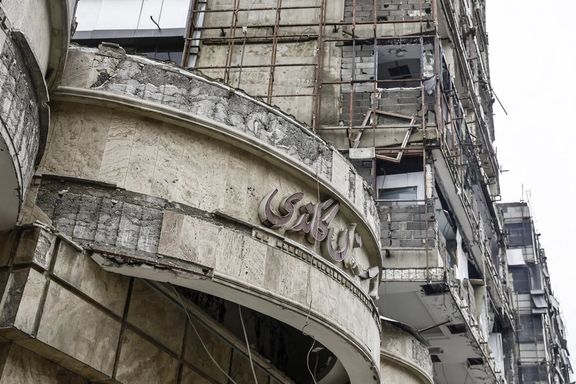
Recent history in the Balkans may offer a useful lens for the postwar questions now confronting many ordinary Iranians.

That question has taken on added urgency after repeated suggestions by President Donald Trump this week that the war could end in the very near future.

Among the most instructive comparisons is the NATO intervention in Yugoslavia in 1999—a conflict that carried sharply different meanings depending on where it was experienced.

For many outside observers, the war began with NATO’s 78-day bombing campaign launched in March of that year after the collapse of peace talks. But for those on the ground in Kosovo, the conflict had already been unfolding for years.

It had taken shape not through airstrikes, but through a gradual tightening of control: checkpoints, dismissals from public jobs, the closure of Albanian-language schools and the growing presence of security forces.

By the time NATO intervened, many Kosovo Albanians saw the bombing not as the start of war but as a new phase of a conflict they had already been living through.

For many Kosovo Albanians, the bombing was accompanied by fear but also a measure of hope. By early 1999, large numbers of civilians were already fleeing violence, and accounts from refugee camps in Albania and North Macedonia often reflected a similar sentiment.

Fragments of those fears and hopes remain preserved in television reports from the time, now widely available online.

“We are afraid of the planes, but we are more afraid of the soldiers who burned our homes,” a young man from Prizren tells the BBC in one such report.

Another refugee says: “When we heard NATO had attacked, we thought maybe someone had finally come to stop this.”

For others, the calculus was more reluctant. A teacher later reflected: “We did not want war. But once it began, we felt it might be the only way for things to change.”

At the same time, civilians in Serbia experienced the war very differently.

In Belgrade, air raid sirens sent residents into shelters night after night as bridges, factories and military sites were targeted. In the early days, a sense of defiance took hold, with people gathering in public spaces despite the risk.

“We know it is dangerous, but we do not want to leave our city alone,” one student said.

As the bombing continued, defiance gave way to exhaustion. Power outages became more frequent, daily life more strained and uncertainty more acute.

“At first, people were angry. After a while, we were just tired,” one resident later said.

The Kosovo war illustrates how the same military intervention can carry entirely different meanings depending on lived experience.

For many Serbs, NATO’s campaign became a symbol of foreign aggression and national humiliation. For many Kosovo Albanians, it represented the possibility — however uncertain — that years of repression might finally end.

After 78 days, Yugoslav forces withdrew and international peacekeeping troops entered Kosovo. For many Kosovo Albanians, that marked the beginning of a return to homes that were often damaged or destroyed. For many Serbs, the war remained a defining national trauma.

The contrast endures in how the conflict is remembered.

“We hated the war,” one Kosovar later wrote. “But without it, we might still be living in that fear.”

A Serbian citizen offered a starkly different view: “For us, this war was neither freedom nor justice. It was simply bombing.”

As Iranians begin to consider what might follow the current conflict, the Balkan experience offers no simple answers—only a reminder that the meaning of war is rarely shared equally.

If the war does end soon, as Trump suggests, its consequences inside Iran may prove equally contested.


Most Viewed

US terminates green cards of 3 Iranians tied to Islamic Republic
1

US terminates green cards of 3 Iranians tied to Islamic Republic

2
PODCAST

Worst outcome is Islamic Republic’s survival, ex-CIA official says

3
ANALYSIS

Iran brings unusually broad team to US talks to blunt future blame

4
INSIGHT

Tehran sends tough message but keeps diplomacy door open

5

Zoroastrian religious figure arrested in Iran

Banner
Banner

Spotlight

  • Tehran sends tough message but keeps diplomacy door open
    INSIGHT

    Tehran sends tough message but keeps diplomacy door open

  • Worst outcome is Islamic Republic’s survival, ex-CIA official says
    PODCAST

    Worst outcome is Islamic Republic’s survival, ex-CIA official says

  • Why the Iran-US truce is more likely to buy time than peace
    ANALYSIS

    Why the Iran-US truce is more likely to buy time than peace

  • Engaged but uncommitted: China watches Iran and US fight and talk
    ANALYSIS

    Engaged but uncommitted: China watches Iran and US fight and talk

  • A truce for the world, a reckoning for Iran’s economy
    ANALYSIS

    A truce for the world, a reckoning for Iran’s economy

  • Why the world failed to bypass the Strait of Hormuz
    ANALYSIS

    Why the world failed to bypass the Strait of Hormuz

•
•
•

More Stories

War and hardship dampen Nowruz mood in Iran

Mar 17, 2026, 21:29 GMT
•
Hooman Abedi

Nowruz is approaching with far less of its usual energy across Iran this year, as many families abandon long-standing New Year preparations while war, economic strain and an atmosphere of uncertainty dampen the festive mood.

Several Iranians told Iran International that familiar rituals that normally fill homes with activity in the weeks before the holiday have stalled.

“This year we did nothing,” Leila, a 38-year-old resident of Tehran, told Iran International. “We didn’t wash carpets and we didn’t do the house cleaning. Every year I would start from early February, but this year we are just looking at the sky, waiting for the fall of this regime.”

Nowruz, the Persian New Year marking the arrival of spring, has been celebrated for more than 3,000 years across Iran and parts of Central Asia and the Middle East.

The holiday usually falls on March 20 or 21 and begins nearly two weeks of family visits, meals and gatherings.

An Iranian person washes a carpet during traditional spring cleaning, known as khaneh-Tekani, ahead of the Nowruz new year celebrations.
100%
An Iranian person washes a carpet during traditional spring cleaning, known as khaneh-Tekani, ahead of the Nowruz new year celebrations.

‘Shaking the house’

In most years, the weeks before Nowruz transform daily life across Iran. Families traditionally begin with Khaneh Tekaani, a deep spring cleaning whose name literally means “shaking the house.” Carpets are washed, cupboards reorganized and homes refreshed to symbolically welcome the new year.

Another essential ritual is planting Sabzeh — dishes of sprouting wheat, lentils or barley that represent renewal and rebirth and are later placed on the Haft-Seen table, the centerpiece of the celebration alongside candles, colored eggs, a mirror and often a red goldfish.

But this year, some residents say even modest traditions feel out of reach.

“Planting Sabzeh is something we Iranians do every year, but this year with all the news about war we completely forgot about it. God damn the Islamic Republic for ruining everything,” Kamran, a 42-year-old office worker in Hamedan, told Iran International.

An Iranian man installs curtains at home as part of preparations ahead of the Nowruz new year celebrations.
100%
An Iranian man installs curtains at home as part of preparations ahead of the Nowruz new year celebrations.

‘No money, no mood’

Markets that normally bustle in the run-up to Nowruz — with families buying sweets for visiting relatives, decorative items for Haft-Seen tables and new clothes for children — have also been quieter this year, residents say.

Some cite the worsening economic situation as a key reason holiday traditions have faded.

“Every year despite inflation we bought at least a few things,” said Golnaz, a 35-year-old shop owner in Karaj. “But this year we had neither the money nor the mood. We are waiting for that final moment.”

Golnaz described how rising prices have weighed heavily on households and small businesses.

“Even if we wanted to prepare and had the energy, prices are so high we simply cannot afford it. Everything has become several times more expensive. I run a small cosmetics shop and this month I have not even earned the rent for the store,” she said.

Her husband, who drives for a ride-hailing service, is working less frequently amid fears of bombings and falling demand as more people stay home.

People look at goldfish displayed for sale at a street market ahead of Nowruz celebrations in Tehran.
100%
People look at goldfish displayed for sale at a street market ahead of Nowruz celebrations in Tehran.

‘No ordinary time’

On social media, many Iranians say the emotional tone of the season has shifted sharply compared with previous years.

“If things were normal, I should be excited for next week and finishing my preparations. The scent of night-blooming flowers would be filling the house and the holiday sweets would already be in the refrigerator,” one user wrote.

Another reflected on the contrast with childhood memories: “What burns me is that it is the New Year season. People should now have the mood of buying for the holiday and welcoming the new year in Iran. I remember how excited I was as a child. But those feelings slowly died inside me.”

For generations, the approach of Nowruz has filled Iranian homes with cleaning, cooking and preparations symbolizing renewal. This year, residents say those rituals — once a nationwide signal of spring’s arrival — have been overshadowed by war, rising prices and uncertainty about what the new year will bring.

A traditional Haft-Seen table is arranged at a home ahead of Nowruz, the Persian New Year.
100%
A traditional Haft-Seen table is arranged at a home ahead of Nowruz, the Persian New Year.

Tehran warns of crackdown ahead of annual fire festival

Mar 17, 2026, 15:50 GMT
•
Maryam Sinaiee

Authorities in Tehran have issued sweeping warnings ahead of Iran’s annual fire festival, Chaharshanbeh Suri, framing the centuries-old celebration as a potential flashpoint for unrest during wartime.

The festival has long been a source of friction between the public and the state, but this year officials appear particularly concerned amid U.S.-Israeli strikes and fresh calls for mass participation, including appeals this week from exiled Prince Reza Pahlavi.

Judicial and security bodies have sent text messages directly to citizens. One such message, reportedly from a provincial justice department, warned that any “noise, commotion or unconventional behaviour” that disrupts public order could result in punishments including imprisonment and flogging.

On Tuesday, chief justice Gholam-Hossein Mohseni-Ejei warned dissenters and repeated orders to confiscate the assets of those deemed “collaborators with the enemy,” again raising the possibility of capital punishment.

“We warn all elements who intend to threaten public security that if they act, they will face firm legal action, and there will be no leniency,” he said.

The Revolutionary Guards (IRGC) spokesman, Brigadier General Ali-Mohammad Naeini, used even sharper language, describing the day as a “Charshanbeh of burning enemies.”

He vowed that attacks on Israel and U.S. bases in the region would intensify while “symbols of monarchists, separatist terrorists and mercenaries inside the country” would be set ablaze.

Ahmad-Reza Radan, Iran’s police commander, appeared Monday at a pro-establishment gathering in Tehran and urged supporters “not to leave the arena” to the opposition, calling the night “a decisive night” for the state.

Marked by bonfires, fireworks and rituals rooted in pre-Islamic traditions, Charshanbeh Suri has frequently drawn official scrutiny since the 1979 revolution, with clerical leaders often dismissing it as incompatible with religious norms.

Despite repeated enforcement efforts involving police, paramilitary Basij forces and vigilante groups, the celebration has persisted.

Restrictions have also altered how the festival is observed: traditional practices such as jumping over small fires and spoon-banging at doors have, over time, given way in many areas to the use of homemade explosives, often resulting in injuries and property damage.

In recent years — especially following the 2022–23 “Woman, Life, Freedom” protests — the festival has taken on a more overtly political dimension, with young people chanting slogans and at times confronting security forces with firecrackers and improvised devices.

The wave of warnings followed messages by Iran’s exiled Prince Reza Pahlavi in recent days addressed to Iranians and the “international community and friends of Iran.”

He urged citizens to celebrate Charshanbeh Suri in “alleys and neighborhoods across the country” and called on global observers to keep their eyes on Iran and “not to allow the regime to use violence against the people determined to celebrate life, light and hope in the face of darkness.”

In a separate message, he directly urged Donald Trump and Benjamin Netanyahu to closely monitor developments on the night of the festival.

In a further video message posted Tuesday, he urged Iranians to avoid confrontation with government forces while warning security personnel to leave people in peace.

“These malevolent agents intend to drag your festival of light, purity and life into darkness, filth and death. Do not give them this opportunity,” he said.

Online reactions suggest the calls for participation are resonating with some younger Iranians, who frame the festival as both a national tradition and a symbol of resistance.

One user wrote that holding Charshanbeh Suri this year would mean “turning a national ritual into a symbol of standing against the regime and honoring those who gave their lives for the homeland.”

Another post declared: “Tomorrow night we will witness the largest Charshanbeh Suri in Iran’s history. I dare you to touch even a hair on the heads of our compatriots.”

Israel says Larijani, Basij chief killed in major blow to Iran leadership

Mar 17, 2026, 10:35 GMT

Israeli forces killed senior Iranian official Ali Larijani and IRGC-Basij commander Gholamreza Soleimani in overnight airstrikes inside Iran, Israel’s defense minister and military said on Tuesday, as Tehran has yet to confirm the deaths.

Defense Minister Israel Katz said Larijani had been killed in the strikes, while the Israeli military confirmed it targeted him in Tehran. The military separately said a strike killed Soleimani, head of the Basij paramilitary force, along with other senior officials.

Katz used stark language in comments released by his office after a security assessment.

“Larijani and the Basij commander were eliminated overnight and joined the head of the annihilation program, Khamenei, and all the eliminated members of the axis of evil, in the depths of hell,” Katz said.

The Israeli military said Soleimani was struck at a tent camp recently established by the Basij after earlier Israeli attacks damaged several headquarters used by the paramilitary organization.

According to the military, the strike also killed the deputy commander of the Basij and several other senior officials.

The Basij, which operates under the Islamic Revolutionary Guards Corps, has long been associated with the enforcement of ideological policies and the suppression of dissent inside Iran.

The reported killings mark one of the most significant decapitation strikes against Iran’s leadership structure since the outbreak of the current conflict.

Larijani: Insider and wartime power broker

Ali Ardashir Larijani, born on June 3, 1945 in Najaf, Iraq, rose to become one of the most influential figures in the Islamic Republic over four decades.

He came from a clerical family originally from Mazandaran province in northern Iran. His father, Hashem Larijani, was a cleric, and several of his brothers also held senior posts within the Iranian state.

Iran's former Secretary of the Supreme National Security Council Ali Larijani
100%
Iran's former Secretary of the Supreme National Security Council Ali Larijani

His political career began in the early years after the 1979 Islamic Revolution, when he joined the Islamic Revolutionary Guards Corps and later moved into government posts.

Larijani served as deputy labor minister and later as deputy minister of information and communications technology before he was appointed in 1994 as the head of the state broadcasting organization, Islamic Republic of Iran Broadcasting (IRIB).

He led the state media network for a decade, a role that gave him a position in shaping the government’s propaganda during a politically turbulent period.

In 2005 he was appointed secretary of the Supreme National Security Council, placing him at the center of Iran’s security policy and nuclear negotiations. In that role he served as Iran’s chief nuclear negotiator in talks with European powers.

Larijani later entered parliamentary politics and became speaker of the Iranian parliament in 2008, a position he held until 2020.

He ran for president in 2005 but finished sixth, and later attempted to run again in 2021 and 2024. Both candidacies were blocked by the Guardian Council, which vets candidates for high office.

In August 2025, he returned to the center of national security policy when he was appointed once again as secretary of the Supreme National Security Council.

Following the death of Supreme Leader Ali Khamenei during the 2026 US-Israeli strikes, some analysts and media reports described Larijani as acting as Iran’s wartime leader, relying on long-standing ties to security institutions and clerical networks.

Iran's former Secretary of the Supreme National Security Council Ali Larijani
100%
Iran's former Secretary of the Supreme National Security Council Ali Larijani

The United States imposed sanctions on Larijani in January 2026 over his role in the violent suppression of protests inside Iran.

Iranian on social media blame him as the mastermind behind the massacre of around 36,500 protesters during January uprising. Israeli officials said their overnight strike targeted him in Tehran.

Soleimani: Basij commander

Gholamreza Soleimani, born in 1963 in Farsan in Iran’s Chaharmahal and Bakhtiari province, built his career inside the Islamic Revolutionary Guards Corps and the Basij militia.

Despite sharing the surname, he was not related to Qasem Soleimani, the commander of the Guard’s Quds Force who was killed in a US drone strike in Iraq in January 2020.

Iran's former Basij Cheif Gholamreza Soleimani
100%
Iran's former Basij Cheif Gholamreza Soleimani

Soleimani joined the Basij as a volunteer during the Iran-Iraq War in the 1980s and later became a member of the Revolutionary Guards.

He steadily rose through the ranks and eventually became commander of the Basij Organization in 2019.

The Basij, a paramilitary network with branches across Iran, operates under the authority of the Revolutionary Guards and has played a key role in enforcing ideological policies and mobilizing supporters of the Islamic Republic.

The force has also been widely accused by human rights groups of participating in violent crackdowns on protests.

Soleimani was sanctioned by the European Union in 2021 for his role in the repression of those protests.

The United States Treasury placed him on its Specially Designated Nationals list later the same year.

Additional sanctions were imposed by the United Kingdom and Canada in connection with human rights abuses.

Iran's former Basij Cheif Gholamreza Soleimani
100%
Iran's former Basij Cheif Gholamreza Soleimani

The strikes occurred as Israel and the United States continued a broad aerial campaign against Iranian military and nuclear infrastructure.

Meanwhile, Israeli air defenses detected a new ballistic missile launch from Iran toward northern Israel on Tuesday.

Trump was warned Iran could retaliate across the Persian Gulf - Reuters

Mar 17, 2026, 03:46 GMT

President Donald Trump was briefed before launching strikes on Iran that Tehran could retaliate against US allies in the Persian Gulf, Reuters reported Monday, citing a US official and several people familiar with intelligence assessments.

Prewar intelligence did not say retaliation was certain, but it was “on the list of potential outcomes,” one source said, speaking on condition of anonymity.

Two additional sources said Trump was also warned Iran might attempt to close the Strait of Hormuz, a vital global oil transit route.

Trump said twice on Monday that Iran’s retaliatory strikes on Qatar, Saudi Arabia, the United Arab Emirates, Bahrain and Kuwait had been unexpected.

“They weren’t supposed to go after all these other countries in the Middle East,” he said at a White House event. “Nobody expected that. We were shocked.”

The remarks came as the Pentagon sought to underscore the scale of the campaign. US Central Command said it had hit more than 7,000 targets across Iran by the end of Monday, including missile sites, naval assets and command facilities.

Israel’s military issued similarly sweeping claims, asserting in a post on its Persian X account that it had inflicted heavy losses on Iranian forces and leadership and caused declining morale — claims that could not be independently verified.

Yet a report by The Washington Post the same day cited US intelligence assessments suggesting the campaign has not destabilized Iran’s political system and that the Islamic Revolutionary Guard Corps is consolidating power, with no signs of major defections or internal fractures.

Trump defended the decision to join Israel in launching airstrikes on February 28, arguing the economic fallout was justified. He called the war’s impact on markets “a very small price to pay,” adding: “You want to see the stock market go down? Start letting them hit you with nukes.”

Major stock indexes have fallen since the campaign began, while oil prices surged as shipping through the Strait of Hormuz slowed sharply. Markets recovered somewhat Monday as oil prices eased.

Trump also argued the war was necessary to prevent a wider conflict, saying that “had we not done this, you would have had a nuclear war that would have evolved into World War III.”

Iran’s internet chokes under wartime clampdown

Mar 17, 2026, 02:11 GMT
•
Maryam Sinaiee

Iran has imposed new restrictions on internet access, further limiting VPN connections and reportedly targeting Starlink users, leaving even fewer people able to access global networks.

Seventeen days after the outbreak of war, connectivity in the country has fallen to about one percent of normal levels, leaving most people unable to reach the global internet.

Some users initially managed limited access using specialized VPN configurations, but many say those options have largely stopped working since Sunday.

Asked in a CBS interview why he was able to conduct a Zoom call while ordinary citizens could not access the internet, Foreign Minister Abbas Araghchi said he had access because he is “the voice of Iranians” and must defend their rights.

The comment drew criticism from Iranians still able to briefly connect.

“People of Iran are not voiceless themselves, and this man is not their voice,” one user wrote. “Open the internet so you can hear the real voice of the people from inside the country.”

‘No picture, no voice’

Even among the few who can still connect, the internet is barely usable. Users say images and videos on social media often fail to load, and in many cases, core features of platforms have stopped functioning.

“Direct messages practically don’t open, and mentions disappear quickly if I try to answer them,” one user said. “Videos and voice messages are basically inaccessible because they consume too much data.”

Another described the experience in stark terms: “The internet feels more like a dying breath than a means of communication these days,” adding that data-limited connections have become extremely slow and prices have sharply increased.

The internet monitoring group NetBlocks said Monday that disruptions to telecommunications infrastructure were further reducing VPN availability and sending some whitelisted users and services offline, it said.

The restrictions appear to be affecting domestic networks as well. Some users say even Iranian websites are difficult to access, while customers of certain banks have temporarily lost access to their accounts.

Reports of disruptions have also surfaced in mobile banking apps, payment cards and Iranian messaging platforms such as Bale, suggesting that parts of Iran’s internal network are also experiencing instability.

Experts say the cause of the broader disruptions remains unclear.

Starlink crackdown

At the same time, warnings have spread widely online urging owners of Starlink satellite internet devices to turn them off.

According to posts circulating on social media, Iranian security forces may be actively searching for Starlink kits and detaining users, with some claims of arrests in cities including Tehran and Kermanshah.

The warnings say patrol vehicles equipped with signal scanners are being used to detect radio emissions from Starlink equipment and pinpoint their location.

A Starlink user told Iran International he has taken multiple precautions to avoid detection but said the risk remains constant.

“I’m afraid all the time that a neighbor might report it,” he said. “They might accuse Starlink users of espionage and sentence them to heavy punishment as a warning to others.”

He added that the restrictions have forced ordinary users to learn complex technical workarounds simply to stay connected.

Not everyone believes the warnings about Starlink detection are accurate.

Some users say the reports may be part of a psychological campaign to frighten people into turning off their devices, noting that locating satellite terminals at scale would require capabilities authorities may not widely possess.

But amid the uncertainty, many say they are preparing for the possibility that their last remaining connection to the outside world could disappear entirely.