• العربية
  • فارسی
Brand
  • Iran Insight
  • Politics
  • Economy
  • Analysis
  • Special Report
  • Opinion
  • Podcast
  • Iran Insight
  • Politics
  • Economy
  • Analysis
  • Special Report
  • Opinion
  • Podcast
  • Theme
  • Language
    • العربية
    • فارسی
  • Iran Insight
  • Politics
  • Economy
  • Analysis
  • Special Report
  • Opinion
  • Podcast
All rights reserved for Volant Media UK Limited
volant media logo

Israel energy strikes set off Iran-Qatar confrontation

Mar 18, 2026, 20:56 GMT

Iran and Qatar moved into open confrontation on Wednesday after an Israeli strike on Iran’s energy infrastructure set off a chain of retaliation across the Persian Gulf, pulling new actors into the conflict.

Qatar declared the Iranian embassy’s military and security attaché persona non grata hours after Iranian forces struck near the Ras Laffan industrial area, home to the world’s largest liquefied natural gas facility.

Qatari authorities reported a fire at the site, with emergency teams working to contain it.

Doha said the decision was driven by what it described as Iran’s repeated attacks on the country, the latest targeting Ras Laffan industrial city.

The escalation followed Israeli strikes on facilities linked to Iran’s South Pars gas field and the onshore hub at Asaluyeh in Bushehr Province—a critical node in Iran’s energy system.

The strikes marked a departure from previous targeting patterns, hitting the economic core of Iran’s power rather than its military or nuclear assets.

Iranian officials warned that attacks on the country’s fuel and gas infrastructure would be met with retaliation across the region. Tehran said energy facilities in Qatar, Saudi Arabia and the United Arab Emirates could be targeted.

Saudi officials said air defenses intercepted incoming threats aimed at energy infrastructure, according to regional media reports, though details were limited.

Iran’s president, Masoud Pezeshkian, said he “strongly condemns” the attacks on the country’s energy infrastructure, warning that such actions would “complicate the situation” and could lead to “uncontrollable consequences that will affect the entire world.”

The widening confrontation has raised concerns that energy infrastructure across the Persian Gulf—and beyond—could become a primary battleground, with risks extending to global oil and gas markets.

Markets have already reacted. Wall Street ended sharply lower on Wednesday after the Federal Reserve held interest rates steady and signaled only a single rate cut this year, as officials assessed economic risks tied to surging oil prices and the expanding conflict.

Israeli officials have not publicly detailed the operation, but multiple reports suggested the strikes were carried out with US awareness, if not direct coordination.

For now, the immediate damage appears contained. But the sequence of events culminating in the diplomatic fallout between Tehran and Doha underscores how quickly the conflict is spilling beyond its original bounds.

Most Viewed

US terminates green cards of 3 Iranians tied to Islamic Republic
1

US terminates green cards of 3 Iranians tied to Islamic Republic

2
PODCAST

Worst outcome is Islamic Republic’s survival, ex-CIA official says

3
ANALYSIS

Iran brings unusually broad team to US talks to blunt future blame

4
INSIGHT

Tehran sends tough message but keeps diplomacy door open

5

Zoroastrian religious figure arrested in Iran

Banner
Banner

Spotlight

  • Tehran sends tough message but keeps diplomacy door open
    INSIGHT

    Tehran sends tough message but keeps diplomacy door open

  • Worst outcome is Islamic Republic’s survival, ex-CIA official says
    PODCAST

    Worst outcome is Islamic Republic’s survival, ex-CIA official says

  • Why the Iran-US truce is more likely to buy time than peace
    ANALYSIS

    Why the Iran-US truce is more likely to buy time than peace

  • Engaged but uncommitted: China watches Iran and US fight and talk
    ANALYSIS

    Engaged but uncommitted: China watches Iran and US fight and talk

  • A truce for the world, a reckoning for Iran’s economy
    ANALYSIS

    A truce for the world, a reckoning for Iran’s economy

  • Why the world failed to bypass the Strait of Hormuz
    ANALYSIS

    Why the world failed to bypass the Strait of Hormuz

•
•
•

More Stories

Israel’s South Pars strikes push Iran conflict into energy war

Mar 18, 2026, 16:41 GMT
•
Umud Shokri

Israel’s strikes on Iran’s gas facilities mark a shift in the conflict from military confrontation to economic warfare centered on energy.

On March 18, Israeli strikes targeted facilities linked to South Pars and the onshore hub at Asaluyeh in Bushehr Province.

Qatar, which shares the reservoir, directly blamed Israel, while the United Arab Emirates branded the attack a "dangerous escalation" threatening global energy security.

Tehran responded with a swift call for the evacuation of energy infrastructure across the Persian Gulf, including in Qatar, Saudi Arabia and the United Arab Emirates.

South Pars is not simply another hydrocarbon asset. Together with Qatar’s North Dome, it forms the world’s largest natural gas field, holding an estimated 1,800 trillion cubic feet of gas and 50 billion barrels of condensate.

Iran’s share accounts for roughly 36 percent of its proven gas reserves and about 5.6 percent of global reserves, placing a central pillar of its economy at risk.

Asaluyeh serves as the operational core of this system, concentrating upstream, midstream and downstream infrastructure in a single coastal zone. Offshore production feeds into refineries, petrochemical complexes and export terminals that underpin Iran’s electricity generation, industrial base and energy exports.

This concentration creates both efficiency and vulnerability. A strike on Asaluyeh does not merely disrupt production; it threatens the entire value chain.

Positioned along the Persian Gulf and connected to export routes through the Strait of Hormuz, Asaluyeh sits at the intersection of production and transit. Any sustained disruption could compound supply shocks across global markets.

Israel has moved beyond military and nuclear assets to strike the economic core of Iran’s power, signaling a shift toward economic attrition in which energy systems become primary targets.

Iran’s response suggests escalation will not remain contained. Outlets linked to the Islamic Revolutionary Guard Corps have published lists of potential targets: Ras Laffan and Mesaieed in Qatar, the SAMREF refinery and Jubail petrochemical complex in Saudi Arabia, and the Al Hosn gas field in the United Arab Emirates.

The fallout is already visible. Iraq has reported a halt in Iranian gas supplies following the strike on South Pars, while Ras Laffan installations in Qatar are being evacuated.

The shared nature of the reservoir raises additional risks. Qatar’s North Dome underpins a significant share of global LNG supply to Europe and Asia. Instability on the Iranian side introduces concerns over reservoir management, operational safety and spillover effects.

Qatar’s swift condemnation reflects a clear calculation: escalation around the world’s largest gas field threatens global markets as much as regional stability.

The risks extend beyond the Gulf. Israel’s offshore gas fields—Leviathan, Tamar and Karish—are critical to domestic supply and regional exports and remain exposed to potential retaliation. Expanding the conflict to the Eastern Mediterranean would transform a regional confrontation into a multi-basin energy crisis.

The strike also exposes a strategic asymmetry. Israel has limited comparable domestic energy infrastructure vulnerable to direct retaliation, while Iran operates within a region where energy assets are densely clustered.

Tehran cannot easily mirror the strike, but it can impose costs across a wider regional system by targeting Gulf producers, shipping lanes or offshore infrastructure.

The choice of South Pars and Asaluyeh therefore reflects more than tactical targeting. It marks a deliberate shift toward pressure on economic systems and systemic vulnerability.

The immediate damage may prove limited. The strategic consequences are not. Once energy infrastructure becomes a battlefield, escalation thresholds shift, retaliation broadens, and interconnected energy systems become more fragile.

South Pars is not just a gas field; it anchors Iran’s economy and links directly to global energy markets. By placing it in the crosshairs, the conflict has entered a phase in which local strikes carry global consequences.

Spymaster Esmail Khatib killed: The man who turned dissent into espionage

Mar 18, 2026, 12:38 GMT
•
Arash Sohrabi

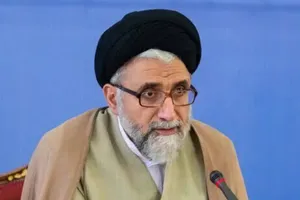
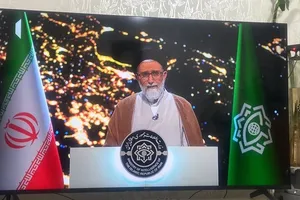
Esmail Khatib, killed in overnight strikes, mattered not because he ran spies but because he helped redraw the line between politics and security, turning dissent into an intelligence battlefield and recasting protest as hybrid war.

That was the frame Khatib laid out in a long interview published on Ali Khamenei’s website during the Woman, Life, Freedom uprising. It became more than rhetoric. It became a governing logic that collapsed protest, foreign media, activism and espionage into one threat map.

Khatib’s career made him unusually suited to that task.

Born in 1961 and trained in Qom, he rose through the Revolutionary Guards’ intelligence world, later ran the intelligence office in Qom, moved into the Supreme Leader’s protection orbit and then headed the judiciary’s protection and intelligence apparatus.

By the time Ebrahim Raisi made him intelligence minister in 2021, Khatib had passed through nearly every institution that mattered in the Islamic Republic’s coercive core: the Guards, the judiciary and the Supreme Leader’s household.

His retention in 2024 confirmed that his authority rested less on party politics than on trust from the system above elected government.

Under Khatib, the state increasingly treated social unrest as proof of foreign infiltration.

Protesters were not simply angry citizens. They were portrayed as nodes in an enemy network. Foreign-based Persian media were not just broadcasters. They were recast as operational arms of hostile states.

That logic also hardened into law.

Under his watch, the state broadened the definition of espionage and hostile collaboration, making it easier to turn contact, information-sharing, media work and loosely defined cooperation with enemy states or affiliated groups into national-security crimes.

The point was not only to punish spies. It was to widen the category of who could be treated like one.

The United States designated Khatib twice in September 2022, reflecting the breadth of his role across both overseas operations and domestic repression.

The Treasury first sanctioned him and the Intelligence Ministry over malicious cyber activity, including the disruption of Albanian government systems.

Later that month, it sanctioned him again, saying the ministry under his leadership had targeted human rights defenders, women’s rights activists, journalists, filmmakers and religious minorities, and had subjected detainees to torture in secret detention centers.

  • Tehran set to implement law expanding death penalty to online offenses

    Tehran set to implement law expanding death penalty to online offenses

  • Tenfold rise in intelligence ministry's budget raises eyebrows in Iran

    Tenfold rise in intelligence ministry's budget raises eyebrows in Iran

  • Proposed minister of intelligence in Iran: Who is Esmail Khatib?

    Proposed minister of intelligence in Iran: Who is Esmail Khatib?

Years of the gallows

The intelligence ministry did not sign every death sentence. But the execution surge is still part of the meaning of Khatib’s tenure, because it formed the climate in which his security doctrine operated.

In the four full calendar years after he took office, Iran carried out at least 4,000 executions: about 580 in 2022, 830 in 2023, 975 in 2024 and 1,900 in 2025.

Those numbers belong formally to the judiciary and the prison system.

Politically, though, they sit inside the same larger story: a state that answered dissent, insecurity and social fracture with a heavier reliance on coercion, exemplary punishment and fear.

Operations beyond Iran

Khatib was also important beyond Iran’s borders. The ministry he led was accused by Western governments of directing cyber operations, targeting dissidents abroad and helping run the wider machinery of transnational repression.

His significance, though, was not that he was publicly tied to every individual plot.

It was that he sat atop a ministry that linked classic espionage, cyber activity, surveillance of exiles and operational cooperation with Iran’s other security arms.

In that sense he was less a field commander than a system manager, overseeing one part of Iran’s long war against opponents at home and abroad.

  • Islamic Republic Creating Yet Another Parallel Intel Agency

    Islamic Republic Creating Yet Another Parallel Intel Agency

  • Iran To Set Up A Fourth Major Intelligence Entity

    Iran To Set Up A Fourth Major Intelligence Entity

  • Iran’s intelligence mocked by allies and foes over 'secret' Israel files

    Iran’s intelligence mocked by allies and foes over 'secret' Israel files

The glue

That coordinating role may be the most revealing part of his legacy.

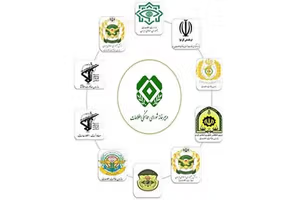
Iran’s intelligence world is fragmented. The Intelligence Ministry, the IRGC Intelligence Organization, the judiciary and the Leader’s office all have their own stakes, rivalries and chains of command.

Khatib’s value was that he could move across those worlds.

He came from the Guards’ intelligence culture, served in the Leader’s protection orbit, worked closely with the judiciary and then ran the ministry that was supposed to give the system a more unified picture of the threat environment.

After the 2022 uprising, that became even more important.

The Islamic Republic needed its rival security organs to act less like competing fiefdoms and more like a single architecture.

Khatib helped provide that common language, one in which protest, activism, foreign media, exile politics, sabotage and espionage could all be placed on the same continuum of danger.

That is why Khatib mattered. He mattered because he helped normalize a broader idea: that almost any challenge to the Islamic Republic could be reclassified as infiltration.

In the end, that was his real achievement for the system he served. He helped make dissent legible as intelligence warfare.

Iranians defy crackdown at fire festival as Israel signals support

Mar 18, 2026, 11:15 GMT

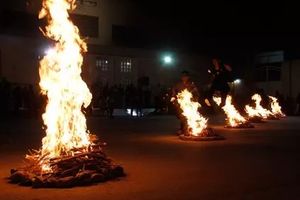
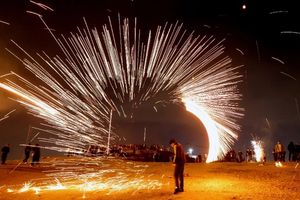
Iranians across many cities took to the streets late Tuesday to celebrate Chaharshanbe Suri, defying warnings and attempted crackdowns by security forces as the country remains under sustained military pressure.

Videos sent to Iran International showed crowds gathering in Tehran, Karaj, Shiraz, Mashhad and other cities, lighting fires, dancing and chanting slogans, including “Javid Shah,” in apparent response to calls by exiled prince Reza Pahlavi to mark the pre-Islamic festival despite restrictions.

In several locations, including Chitgar in western Tehran and parts of Karaj, security forces were seen attempting to disperse gatherings, with footage showing police vehicles approaching crowds.

  • Tehran warns of crackdown ahead of annual fire festival

    Tehran warns of crackdown ahead of annual fire festival

  • Iran braces for fire festival under shadow of war

    Iran braces for fire festival under shadow of war

But the celebrations persisted, with people singing patriotic songs such as “Ey Iran” and setting off fireworks in residential neighborhoods and public spaces.

Chaharshanbe Suri, traditionally held on the eve of last Wednesday of the Iranian calendar year, has long been viewed with suspicion by the Islamic Republic.

In recent years it has increasingly become a flashpoint for anti-government expression, particularly during periods of unrest.

This year’s celebrations unfolded against the backdrop of ongoing conflict and heightened security pressure, with reports of surveillance and efforts by authorities to deter gatherings.

Israeli support

“An unprecedented event took place last night, as Israeli drones targeted Basij and police patrols attempting to approach celebration sites,” an Israeli official told Iran International.

“For the first time, the people of Iran benefited from active support that paralyzed the repression apparatus and effectively provided an ‘air umbrella’ for the crowds,” the official said.

Israeli Prime Minister Benjamin Netanyahu had earlier signaled support, saying in a video message that Israeli forces were targeting what he described as “terrorist operatives” to enable Iranians to celebrate.

“Our aircraft are striking terrorist elements in city squares and intersections to allow the brave people of Iran to celebrate the fire festival,” he said. “Celebrate. Happy Nowruz. We are watching from above.”

Iran executes Swedish citizen accused of spying for Israel, judiciary says

Mar 18, 2026, 08:17 GMT

Iran has executed a Swedish-Iranian man identified as Kourosh Keyvani after convicting him of espionage for Israel, according to reports by the judiciary-linked Mizan news agency.

Mizan said Keyvani was executed on Wednesday morning after his death sentence was upheld by the Supreme Court. He had been accused of passing “images and information of sensitive locations” to officers of Israel’s Mossad intelligence agency.

The report said Keyvani was arrested in Savojbolagh on the fourth day of the 12-day war in June. Authorities said the case had gone through legal procedures, but no independent evidence supporting the allegations was made public.

Later in the day, Swedish Foreign Minister Maria Malmer Stenergard said in a statement that a Swedish citizen was executed in Iran without naming him. However, it confirmed that the person was arrested in June.

The legal proceedings leading up to the execution did not meet the standards of due process, she added.

  • Sweden summons Iran envoy amid reports citizen faces death sentence

    Sweden summons Iran envoy amid reports citizen faces death sentence

The semi-official Tasnim news agency said Keyvani had been detained by the Revolutionary Guards’ intelligence arm and was found with cash, vehicles and what it described as advanced communication and surveillance equipment.

Tasnim also reported that he had allegedly been recruited through online contact and trained abroad before returning to Iran, though these claims could not be independently verified.

Keyvani is the latest in a series of executions in Iran involving individuals accused of espionage for Israel, particularly since the outbreak of the June war.

Iran has one of the highest execution rates in the world and has long used the death penalty in national security cases, including allegations of spying. Following the conflict, rights groups and international media have reported a sharp increase in arrests and executions on such charges.

The Telegraph reported that executions in Iran have surged since the June war, citing data from human rights group HRANA indicating that the number of executions has risen significantly, including for those accused of links to Israel. The Sunday Times has also reported that dozens more people could face execution on similar charges.

War and hardship dampen Nowruz mood in Iran

Mar 17, 2026, 21:29 GMT
•
Hooman Abedi

Nowruz is approaching with far less of its usual energy across Iran this year, as many families abandon long-standing New Year preparations while war, economic strain and an atmosphere of uncertainty dampen the festive mood.

Several Iranians told Iran International that familiar rituals that normally fill homes with activity in the weeks before the holiday have stalled.

“This year we did nothing,” Leila, a 38-year-old resident of Tehran, told Iran International. “We didn’t wash carpets and we didn’t do the house cleaning. Every year I would start from early February, but this year we are just looking at the sky, waiting for the fall of this regime.”

Nowruz, the Persian New Year marking the arrival of spring, has been celebrated for more than 3,000 years across Iran and parts of Central Asia and the Middle East.

The holiday usually falls on March 20 or 21 and begins nearly two weeks of family visits, meals and gatherings.

An Iranian person washes a carpet during traditional spring cleaning, known as khaneh-Tekani, ahead of the Nowruz new year celebrations.
100%
An Iranian person washes a carpet during traditional spring cleaning, known as khaneh-Tekani, ahead of the Nowruz new year celebrations.

‘Shaking the house’

In most years, the weeks before Nowruz transform daily life across Iran. Families traditionally begin with Khaneh Tekaani, a deep spring cleaning whose name literally means “shaking the house.” Carpets are washed, cupboards reorganized and homes refreshed to symbolically welcome the new year.

Another essential ritual is planting Sabzeh — dishes of sprouting wheat, lentils or barley that represent renewal and rebirth and are later placed on the Haft-Seen table, the centerpiece of the celebration alongside candles, colored eggs, a mirror and often a red goldfish.

But this year, some residents say even modest traditions feel out of reach.

“Planting Sabzeh is something we Iranians do every year, but this year with all the news about war we completely forgot about it. God damn the Islamic Republic for ruining everything,” Kamran, a 42-year-old office worker in Hamedan, told Iran International.

An Iranian man installs curtains at home as part of preparations ahead of the Nowruz new year celebrations.
100%
An Iranian man installs curtains at home as part of preparations ahead of the Nowruz new year celebrations.

‘No money, no mood’

Markets that normally bustle in the run-up to Nowruz — with families buying sweets for visiting relatives, decorative items for Haft-Seen tables and new clothes for children — have also been quieter this year, residents say.

Some cite the worsening economic situation as a key reason holiday traditions have faded.

“Every year despite inflation we bought at least a few things,” said Golnaz, a 35-year-old shop owner in Karaj. “But this year we had neither the money nor the mood. We are waiting for that final moment.”

Golnaz described how rising prices have weighed heavily on households and small businesses.

“Even if we wanted to prepare and had the energy, prices are so high we simply cannot afford it. Everything has become several times more expensive. I run a small cosmetics shop and this month I have not even earned the rent for the store,” she said.

Her husband, who drives for a ride-hailing service, is working less frequently amid fears of bombings and falling demand as more people stay home.

People look at goldfish displayed for sale at a street market ahead of Nowruz celebrations in Tehran.
100%
People look at goldfish displayed for sale at a street market ahead of Nowruz celebrations in Tehran.

‘No ordinary time’

On social media, many Iranians say the emotional tone of the season has shifted sharply compared with previous years.

“If things were normal, I should be excited for next week and finishing my preparations. The scent of night-blooming flowers would be filling the house and the holiday sweets would already be in the refrigerator,” one user wrote.

Another reflected on the contrast with childhood memories: “What burns me is that it is the New Year season. People should now have the mood of buying for the holiday and welcoming the new year in Iran. I remember how excited I was as a child. But those feelings slowly died inside me.”

For generations, the approach of Nowruz has filled Iranian homes with cleaning, cooking and preparations symbolizing renewal. This year, residents say those rituals — once a nationwide signal of spring’s arrival — have been overshadowed by war, rising prices and uncertainty about what the new year will bring.

A traditional Haft-Seen table is arranged at a home ahead of Nowruz, the Persian New Year.
100%
A traditional Haft-Seen table is arranged at a home ahead of Nowruz, the Persian New Year.