• العربية
  • فارسی
Brand
  • Iran Insight
  • Politics
  • Economy
  • Analysis
  • Special Report
  • Opinion
  • Podcast
  • Iran Insight
  • Politics
  • Economy
  • Analysis
  • Special Report
  • Opinion
  • Podcast
  • Theme
  • Language
    • العربية
    • فارسی
  • Iran Insight
  • Politics
  • Economy
  • Analysis
  • Special Report
  • Opinion
  • Podcast
All rights reserved for Volant Media UK Limited
volant media logo

Ex-Hostage Sheds Light On Iran-US Prisoner Deal
Iran International Newsroom
Aug 11, 2023, 23:17 GMT+1Updated: 17:40 GMT+1
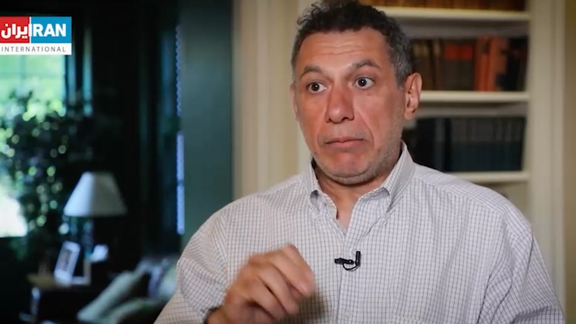
Nizar Zakka, a Lebanese former hostage of the Iranian regime during an interview with Iran International

A former hostage in Tehran reveals details on the deal between Tehran and Washington to release US hostages in exchange for Iran’s frozen funds.

Nizar Zakka, a Lebanese who spent about four years in prison in Iran on trumped-up charges – like all foreign citizens held hostage in Iran – told Iran International that based on information he received from his sources the amount of money Iran is receiving as part of the deal is said to be over $10 billion, which includes the frozen funds in South Korea, Iraq and Japan.

He said there are conflicting reports on the amount of the money from Iranian and US sources, adding that it is not yet clear if all the frozen funds in Iraq, Japan and South Korea are included in the agreement. “It’s a lot of money,” he said, explaining that the funds will not go to the hands of the regime authorities, and are supposed to “go directly for humanitarian purposes through a third party.”

Iran has tens of billions of dollars worth of funds in foreign banks that it cannot access because of US sanctions. The funds are mostly kept in banks in South Korea ($7 billion), Iraq ($11 billion), Japan ($3 billion) as well as China and India where Iran is owed for shipments of crude and other oil products that took place before the United States pulled out of the 2015 nuclear deal and re-imposed full energy sanctions on Tehran in 2018 and 2019.

“We hope that this deal will put an end... this hostage business model that has been ongoing for so long,” added Zakka, who is the president of Hostage Aid Worldwide -- an NGO to support and help the release of people held hostage for unjust reasons.

The interview followed reports about the deal that will see five US citizens release from Iran in exchange for Iranian funds going from one restricted account to another, only be used for humanitarian purposes such as buying food or medicine.

US State Department spokesperson Matt Miller said, "We are relieved to learn that Iranian authorities have released five US citizens -- Siamak Namazi, Morad Tahbaz, Emad Sharghi (Shargi), and two individuals who at this time wish to remain private -- from prison to house arrest.” Iran's mission to the United Nations told Iranian state media that "Under the deal mediated by a third country, five Iranians jailed in the United States will be released and Iran's frozen funds in South Korea will be unblocked and transferred to Qatar."

Siamak Namazi, Morad Tahbaz, Emad Sharghi (Shargi)  (file photo)
100%
Siamak Namazi, Morad Tahbaz, Emad Sharghi (Shargi)

In reaction to US Secretary of State Antony Blinken's claim that he was not aware of any other Americans still detained in Iran, Zakka said "I personally had discussion and correspondence about (US permanent resident) Shahab Dalili with (former special envoy for Iran) Rob Malley and the State Department. “Everybody is very aware about Shahab's detention in Iran. I believe it may have skipped his (Blinken's) mind at a certain moment that he forgot Shahab Dalili's case exists."

"The Levinson Act does not differentiate between a US green card holder and a passport holder. We know of at least two cases of green card holders (Shahab Dalili and Jamshid Sharmahd) being charged exactly for cooperating with the US and being a US resident," he said, emphasizing that no hostages should be left behind like what happened for Siamak Namazi in 2016. “I hope this time everybody will be home, and we'll put an end to this hostage diplomacy.”

Highlighting that the Islamic Republic took two more hostages during the course of negotiations for this deal, he criticized a lack of deterrence in the deal. “Without deterrence, the Islamic Republic's hostage-taking is going to continue and happen again because they're making money out of this and have so much leverage over the West through these hostages."

Citing sources involved in the matter and close to power circles in Iran, Zakka said the deal "has something to do with the long-range missile agreement that will end next month, and this will put a pause on this as well. This will be good to calm the situation in the region especially now with Iran's supersonic missile."

If the information is right, Iran will not resume ballistic missiles tests after the expiry of the sanctions in October, will pause testing hypersonic missiles and will not transfer ballistic missiles to Russia. These issues are the points that France, Britain and Germany are using to justify retaining ballistic missile sanctions on Iran set to expire in October under the defunct 2015 nuclear deal. In early-July, the UN Security Council held a session on the Joint Comprehensive Plan of Action (JCPOA) and the implementation of resolution 2231, whose clauses are justifying keeping the sanctions in place.

Earlier in the day, an Israeli source, who wished to remain anonymous, revealed to Iran International's correspondent in Israel that the agreement between the US and the regime is not merely a tentative understanding but a comprehensive accord.

Emphasizing that the agreement carries significant ramifications, signaling a shift beyond conventional diplomatic engagements between nations, the source said the Israeli government is concerned about the expansion of the accord, like many other critics who believe the deal would embolden Iran in its hostage taking policy.

The informed source further elaborated that the agreement encompasses more intricate details, which have not yet been disclosed.

"The reason Prime Minister Benjamin Netanyahu has refrained from commenting on this agreement thus far is that he avoids acknowledging that, during his tenure, the United States and the Islamic Republic have reached an accord," the source stated.

His remarks came just hours before The Wall Street Journal reported that Iran has significantly slowed the pace at which it is accumulating near-weapons-grade enriched uranium and has diluted some of its stockpile, citing people briefed on the matter. "Iran has diluted a small amount of 60% enriched uranium in recent weeks and slowed the rate at which it is accumulating new material."

The WSJ said that US officials had hoped Tehran would stop accumulating 60% enriched uranium as one of a series of de-escalatory steps from both sides, which included the prisoners deal.


Most Viewed

Iran negotiators ordered to return after internal rift over Islamabad talks
1
EXCLUSIVE

Iran negotiators ordered to return after internal rift over Islamabad talks

2
ANALYSIS

US blockade enters murky phase as tankers spoof signals and buyers hesitate

3
ANALYSIS

Why the $100 billion Hormuz toll revenue is a myth

4

US tightens financial squeeze on Iran, warns banks over oil money flows

5
ANALYSIS

US blockade targets Iran oil boom amid regional disruption

Banner
Banner

Spotlight

  • Hardliners push Hormuz ‘red line’ as US blockade tests Iran’s leverage
    INSIGHT

    Hardliners push Hormuz ‘red line’ as US blockade tests Iran’s leverage

  • Ideology may be fading in Iran, but not in Kashmir's ‘Mini Iran'
    INSIGHT

    Ideology may be fading in Iran, but not in Kashmir's ‘Mini Iran'

  • War damage amounts to $3,000 per Iranian, with blockade set to add to losses
    INSIGHT

    War damage amounts to $3,000 per Iranian, with blockade set to add to losses

  • Why the $100 billion Hormuz toll revenue is a myth
    ANALYSIS

    Why the $100 billion Hormuz toll revenue is a myth

  • US blockade targets Iran oil boom amid regional disruption
    ANALYSIS

    US blockade targets Iran oil boom amid regional disruption

  • Iran's digital economy battered by prolonged blackout
    INSIGHT

    Iran's digital economy battered by prolonged blackout

•
•
•

More Stories

OPEC Figures Contradict Iran's Oil Production Claims

Aug 11, 2023, 20:25 GMT+1
•
Iran International Newsroom

Latest figures released by OPEC reveal a significant discrepancy between Iran's recent claims about its oil production and the actual data. 

The report was released on Thursday, a day after the National Iranian Oil Company (NIOC) Managing Director Mohsen Khojasteh-Mehr – a deputy oil minister -- claimed that the country's daily oil production would surge by 250,000 barrels to reach 3.5 million barrels by the end of summer, meaning that the current figure stands at 3.25 million barrels.

However, the latest OPEC statistics suggest that Iran's daily oil production amounts to only 2.828 million barrels, indicating a substantial gap of 422,000 barrels with the Islamic Republic’s figure. 

Furthermore, OPEC's new figures highlight that Iran's oil production experienced an 11% growth in the first seven months of the current year, yet the country's oil price has plummeted by over 24%. Iran's daily oil production increased by 274,000 barrels until July, still falling short by a million barrels compared to the reported 3.8 million barrels it used to produce prior to sanctions imposed by the United States. 

Crude oil production of OPEC countries
100%
Crude oil production of OPEC countries

The backdrop of this production surge lies in the aftermath of the 2015 Joint Comprehensive Plan of Action (JCPOA) nuclear deal, which saw the lifting of international sanctions on Iran and a subsequent increase in revenues. Iran's oil revenues temporarily soared to $66 billion in 2017. However, this upward trajectory was disrupted after the United States withdrew from the JCPOA in May 2018, which led to renewed sanctions that intensified a year later. 

As a result, Iran's oil exports faced a significant decline, falling to between $15 - $20 billion by 2020. The tide began to turn towards the close of that year after the election of US President Joe Biden, who expressed his intention to reinstate the JCPOA. China, in response, embarked on a trajectory of more oil imports from Iran.

Presently, China remains the main customers of the Iranian oil. Meanwhile, data from Kepler, a data analytics company that also tracks oil tankers, indicates that Iran's average daily oil and gas condensate exports to China during the first seven months of 2023 have been hovering around one million barrels per day, up from roughly 325,000 bpd in 2020 and just 160,000 bpd in August 2019, in the wake of tightened US sanctions. 

While oil has been trading at around 75-82 dollars in the past several months, Iran International reported in December that Tehran provides huge discounts to China, charging as little as $37 per barrel. A report by The Wall Street Journal in July said Iran is exporting the highest amount of crude oil in five years, but it offers discounts of up to $30 per barrel. 

No matter how many buyers or how much trade Iran manages to secure for its exports, it faces serious obstacles in bringing in the revenues and money transfers due to US banking sanctions, Mohammad-Hossein Malaek, who served as Tehran’s envoy for four years under former president Mohammad Khatami, told the Iranian Labour News Agency earlier in August. 

The former envoy highlighted China’s purchase of Iranian oil never stopped no matter the status of US and international sanctions on the Islamic Republic, but the country faces serious obstacles to pay Iran for its crude, pushing Beijing to barter goods and services to with ally.

Bolton Foresees Regime Change In Iran After Khamenei's Death

Aug 11, 2023, 18:23 GMT+1

Former US national security adviser John Bolton said that the death of Iranian Supreme Leader Ali Khamenei could expose vulnerability and offer an opportunity for regime change in Iran.

Speaking at a Jerusalem Center for Public Affairs (JCPA) webinar titled "Supporting Iran’s Quest for Democracy and the Urgency of Europe Proscribing Iran’s Islamic Revolutionary Guards Corps" on Thursday, Bolton highlighted the unique window of opportunity that Khamenei's death could present for a democratic transition in the nation.

Bolton emphasized the delicate state of affairs in Iran due to the advanced age and recurrent health issues of Ali Khamenei, currently 84 years old. He noted that the absence of a clear succession plan within the Islamic Republic further exacerbates the challenges of maintaining stability during the transition of power. Bolton's analysis suggests that this critical juncture could be leveraged to weaken the influence of the Islamic Revolutionary Guard Corps (IRGC), thereby fostering a more conducive environment for democratic change.

"Pressuring the IRGC in the lead-up to and during this transition phase could expose its vulnerabilities," Bolton stated. However, he cautioned against complacency, warning that failing to address the IRGC's influence could empower the organization to exert even greater control during this transitional period.

Israeli Intelligence Minister Gila Gamliel, another prominent voice at the webinar, stressed the moral imperative of categorizing the IRGC as a terrorist organization. Gamliel urged the EU and UK to proscribe the IRGC as a means to counteract its role in terrorism and hostage-taking. She underscored that swift action is pivotal in preparing the path for a democratic Iran, allowing its people to experience freedom and self-determination.

IRGC-Linked Website Blasts Foreign Minister For Anti-Taliban Tweet

Aug 11, 2023, 17:05 GMT+1
•
Maryam Sinaiee

Fars News Agency strongly objected to a tweet by Iran’s foreign minister criticizing the Taliban, alleging that it could have dire consequences for bilateral ties. 

In an unattributed commentary entitled “Critique To Foreign Minister’s Recent Remarks” , the Revolutionary Guards (IRGC) linked news agency said Wednesday that Hossein Amir-Abdollahian’s tweet could provoke “unfortunate and irreparable events that may cause challenges to the old friendship between the peoples of Iran and Afghanistan.” 

In his tweet on August 8, the Iranian foreign minister had accused the Taliban of committing a murderous act in August 1998 by attacking the Iranian consulate in Mazar-e Sharif during which they killed eight diplomats and a journalist. In fact, Iran’s Journalists Day on August 8 was designated to honor that journalist. 

“It is very surprising that despite several meetings with Taliban officials and hosting them, the minister of foreign affairs is unaware of the sensitivities of these matters and the costs that such statements may impose on the government and people of Iran,” Fars wrote and claimed that a breakaway Taliban faction controlled by Pakistani intelligence had been responsible for the Mazar-e Sharif attack. 

In another tweet seven hours later, apparently after he was chastised behind the scenes by the military, Amir-Abdollahian tried to somehow appease his critics, but this appears not to have satisfied the IRGC which the Taliban a potential ally against the United States. 

In his second tweet the Iranian foreign minister claimed that he had been told by the acting Minister of Foreign Affairs of the Islamic Emirate of Afghanistan, Amir Khan Muttaqi, at their first meeting, that the Taliban condemned the 1998 attack on the Iranian consulate, when asked to clarify the Taliban’s position regarding the matter. 

"There is no relationship between the Taliban of today and them. We condemn that inhuman act," Muttaqi said according to Amir-Abdollahian.

Fars also claimed on Thursday that according to sources close to the Taliban negotiating team in Doha, the US Special Representative Thomas West has repeatedly demanded that the Taliban act as a destabilizing force against the Islamic Republic of Iran in return for the release of part of Afghanistan’s blocked assets. Allegedly, the Taliban turned down the demand. 

A London-based Afghan political activist told Iran International that the Islamic Republic of Iran has now realized its calculations were wrong and the Taliban would gradually increase their capabilities to act against Tehran, no matter how much the Islamic Republic compromises with them. 

It had been obvious from the beginning that the religious ideological difference would not allow a stable relationship between the two and “the honeymoon period” would end sooner or later, he stressed. 

Afghanistan’s embassy in Tehran  (file photo)
100%
Afghanistan’s embassy in Tehran

Tehran was the third country after Pakistan and Russia that handed over Afghanistan’s embassy to the Taliban following the fall of President Ashraf Ghani in 2021 and has more or less maintained good relations with the Taliban despite several border skirmishes. 

Tensions have been simmering between the Islamic Republic and the Taliban in the past few months over Iran’s share of the waters of Hirmand (Helmand in Afghanistan) which the Taliban are withholding by building dams. 

In June Amir-Abdollahian said Tehran does not recognize the Taliban and called for the formation of an inclusive government in Afghanistan. He referred to the water dispute, stressing that any dispute had to be resolved through legal channels as stated in the 1973 water treaty between the two countries. Iran's foreign ministry also strongly refuted Taliban’s claim over lack of enough water due to draught to release Iran's share of the river’s waters.

FM Claims Russia Pledges Not To Use Iranian Drones In Ukraine Conflict

Aug 11, 2023, 14:32 GMT+1

Iran's Foreign Minister claims Russia has said it will refrain from utilizing Iranian weaponry in the ongoing conflict in Ukraine.

Hossein Amir-Abdollahian made this assertion during a diplomatic visit to South Africa, just three days after he denied any involvement in sending drones to Russia during a visit to Japan.

His announcement follows the contentious discourse surrounding the delivery of Iranian-manufactured drones to Russia, a development that garnered international attention following the Kremlin's invasion of in Ukraine. Although Iran initially denied allegations of providing Shahed suicide drones to Russia, Amir-Abdollahian eventually acknowledged the transfer in November 2022. He claimed that these deliveries occurred in a restricted capacity before the Ukrainian conflict began.

However, Ukrainian authorities have vehemently disputed Iran's narrative and produced a alrge amount of physical evidence showing that Iran continues to deliver hundreds of drones.

During discussions with Japanese officials in Tokyo, Amir-Abdollahian repeated Iran's position that it had not supplied drones for use in the Ukrainian conflict. He also dismissed tangible evidence from Ukraine showing the use of Iranian drones.

The European Union, the United Kingdom, the United States, and Canada, have implemented a series of punitive measures against Iran in response to allegations of drone deployments which purportedly targeted civilian zones and critical infrastructure within Ukraine. Within Iranian political circles, there has been a noticeable surge of criticism surrounding the potential repercussions of these alleged actions.

Khamenei's Representative Says Hijab Must Be Observed In Sports

Aug 11, 2023, 13:30 GMT+1

The representative of Iran’s Supreme Leader Ali Khamenei in Qom has urged for adhering to “religious values in sports”.

As part of the Iranian regime’s crackdown on defiance against mandatory hijab, Mohammad Saeedi said that sports activities must align with the country's religious principles, urging for the compulsory hijab for female athletes.

"The hijab is an adornment for female athletes," Saeedi stated. "In sports, we are not supposed to do whatever they ask us to do, but we only do sports that do not contradict our religious values."

"Hijab is an adornment for female athletes in domestic and international gatherings, and if our ladies want to be approved by God, they must separate themselves from people who violate values."

These remarks come in the wake of recent events that have raised concerns about the treatment of female athletes in Iran. Morality police in the southern port city of Bandar Abbas on the Persian Gulf recently detained female athletes during a simple morning workout.

A significant number of Iranian athletes, particularly women, have defected from national teams in recent years, seeking asylum in other countries. This exodus has been attributed to a combination of factors, including a lack of attention, threats, mandatory hijab, corruption within sports federations, and Iran's policy of not allowing athletes to compete against Israelis.

Mohammad Saeedi said that sports activities must align with the country's religious principles, urging for the compulsory hijab for female athletes.

"The hijab is an adornment for female athletes," Saeedi stated. "In sports, we are not supposed to do whatever they ask us to do, but we only do sports that do not contradict our religious values."

"Hijab is an adornment for female athletes in domestic and international gatherings, and if our ladies want to be approved by God, they must separate themselves from people who violate values."

These remarks come in the wake of recent events that have raised concerns about the treatment of female athletes in Iran. Morality police in the southern port city of Bandar Abbas on the Persian Gulf recently detained female athletes during a simple morning workout.

A significant number of Iranian athletes, particularly women, have defected from national teams in recent years, seeking asylum in other countries. This exodus has been attributed to a combination of factors, including a lack of attention, threats, mandatory hijab, corruption within sports federations, and Iran's policy of not allowing athletes to compete against Israelis.