• العربية
  • فارسی
Brand
  • Iran Insight
  • Politics
  • Economy
  • Analysis
  • Special Report
  • Opinion
  • Podcast
  • Iran Insight
  • Politics
  • Economy
  • Analysis
  • Special Report
  • Opinion
  • Podcast
  • Theme
  • Language
    • العربية
    • فارسی
  • Iran Insight
  • Politics
  • Economy
  • Analysis
  • Special Report
  • Opinion
  • Podcast
All rights reserved for Volant Media UK Limited
volant media logo
INSIGHT

What Israel hit at Iran's Karoon Petrochemical and why it matters

Jun 8, 2026, 11:50 GMT+1Updated: 20:44 GMT+1
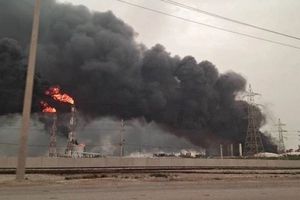
Photo published by Tasnim News Agency, affiliated with Iran’s Revolutionary Guards, shows damage following the June 8 attack on the Karoon Petrochemical Complex.

A strike on the Karoon Petrochemical complex in southwestern Iran on Monday put the spotlight on a key industrial facility with roles in both civilian production and sectors tied by Israel and Western governments to Iran's military capabilities.

Officials in Khuzestan province said the facility was hit during Israeli attacks, with reports indicating damage to chlorine-related units and storage facilities. Any prolonged disruption could affect both domestic supply chains and exports from one of Iran's most important petrochemical hubs.

Karoon is located in Mahshahr, home to a concentration of petrochemical facilities that form a major pillar of Iran's non-oil economy.

Links to the IRGC

Karoon is owned by Persian Gulf Petrochemical Industries Company (PGPIC), Iran's largest petrochemical holding group.

The United States sanctioned PGPIC and dozens of affiliated companies in 2019, saying the group generated billions of dollars that helped finance the Islamic Revolutionary Guards Corps and its construction arm, Khatam al-Anbiya.

According to the US Treasury, PGPIC subsidiaries worked with Khatam al-Anbiya through engineering, construction and financing contracts worth hundreds of millions of dollars. Washington said revenue from the petrochemical sector provided an important source of funding for the IRGC's military activities.

The Guards have long maintained a significant presence in Iran's energy and industrial sectors through a network of companies, contractors and affiliated organizations that oversee major infrastructure projects and benefit from export revenues.

Role in missile-related industries

Petrochemical facilities are primarily civilian enterprises, but some of their products can have military applications.

Chemical compounds produced in Mahshahr and other petrochemical centers such as Assaluyeh can be used as precursor materials in the production of propellants and other components associated with missile programs.

During previous operations targeting industrial facilities in the Mahshahr area, Israel said sites in the region were involved in producing materials used by Iran's missile program.

Israeli military officials said on Monday that one of their objectives was to destroy infrastructure used to manufacture raw materials essential for ballistic missile production.

The dual-use nature of petrochemical production means facilities can simultaneously support civilian industries while supplying materials that may have military applications.

Critical supplier for domestic industry

Despite scrutiny over military links, Karoon remains one of the most important suppliers to Iran's civilian manufacturing sector.

The company is the region's only producer of isocyanates, advanced chemical compounds used in the production of polyurethane materials.

These products serve as the foundation for a wide range of industrial and consumer goods, including insulation, adhesives, coatings, automotive components, footwear, furniture and household appliances.

Karoon receives feedstock such as benzene and toluene from neighboring petrochemical plants and combines them with chlorine, carbon monoxide and hydrogen to produce isocyanates and related products.

The facility's strategic importance increased after the implementation of the HYCO (Hydrogen and Carbon Monoxide) project, which enabled domestic production of carbon monoxide and hydrogen and reduced dependence on imported supplies.

Impact on supply chains and exports

Industry experts say damage to chlorine production units could have consequences beyond the immediate facility.

Chlorine is essential for the production of phosgene, a key intermediate chemical used in manufacturing isocyanates. Any interruption to chlorine supplies can halt downstream production, affecting multiple industries dependent on polyurethane products.

The effects could extend throughout the Mahshahr industrial zone, disrupting manufacturers that rely on Karoon's output.

Karoon also serves export markets. The company ships products including aniline to India and sells other chemical products to customers in Turkey, Russia and neighboring countries.

Those exports have helped Iran maintain a regional presence in specialty chemical markets while generating valuable foreign currency earnings.

A strategic target

The strike illustrates how Iran's petrochemical sector occupies a position at the intersection of economic and security concerns.

For Tehran, facilities such as Karoon support industrial self-sufficiency, exports and employment. For Israel and Western governments, parts of the sector are viewed as supporting broader military and missile-related capabilities through financial links to the IRGC and the production of dual-use materials.

As a result, major petrochemical complexes have become increasingly significant targets in a confrontation that extends well beyond the battlefield and into the infrastructure underpinning Iran's economy and defense industries.

Most Viewed

Delayed burial, absent successor: Questions over post-Khamenei Iran
1

Delayed burial, absent successor: Questions over post-Khamenei Iran

2

Student protests over university entrance exam rules continue across Iran

3
ANALYSIS

From banks to blockchains: US opens new front in Iran sanctions

4
INSIGHT

Iran turns to LA-based singer for state-backed religious event

5
INSIGHT

What Israel hit at Iran's Karoon Petrochemical and why it matters

Banner
Banner

Spotlight

  • Delayed burial, absent successor: Questions over post-Khamenei Iran

    Delayed burial, absent successor: Questions over post-Khamenei Iran

  • Iran turns to LA-based singer for state-backed religious event
    INSIGHT

    Iran turns to LA-based singer for state-backed religious event

  • From banks to blockchains: US opens new front in Iran sanctions
    ANALYSIS

    From banks to blockchains: US opens new front in Iran sanctions

  • Can Trump crack Iran's negotiating playbook?
    PODCAST

    Can Trump crack Iran's negotiating playbook?

  • Explained: Iran's frozen assets around the world

    Explained: Iran's frozen assets around the world

  • Strikes on petrochemical hubs leave Iran short of plastics

    Strikes on petrochemical hubs leave Iran short of plastics

•
•
•

More Stories

Student protests over university entrance exam rules continue across Iran

Jun 7, 2026, 15:11 GMT+1
Student protests over university entrance exam rules continue across Iran
100%
Students in Kermanshah, western Iran, gather outside the Kermanshah provincial directorate of education.

Student protests over Iran’s university entrance exam system continued on Sunday, spreading across at least 20 provinces as pupils demanded changes to rules that give school grades a decisive role in university admissions.

Videos received by Iran International showed students in the northeastern city of Mashhad chanting: “We have heard many promises, but seen no result,” and “If our problem is not solved, there will be protests every day.”

Other videos from the central city of Isfahan showed students chanting: “Student, shout, cry out for your rights.”

The protests, which began in late May in western and central Iran, initially focused on how final exams were being held. They later grew into a broader demand to cancel the fixed impact of 11th-grade GPA scores on the national university entrance exam, or at least change it to a positive-only effect.

Iran’s national university entrance exam, known as the konkur, is a highly competitive test that plays a major role in determining access to higher education and future career prospects.

Students say repeated changes to exam rules, the role of school grades in admissions and the way final exams are being held have placed heavy psychological and academic pressure on them.

Abdolvahed Fayyazi, a member of parliament’s Education and Research Committee, told the semi-official ILNA news agency that responsibility for the entrance exam decision lies with the Supreme Council of the Cultural Revolution, a powerful state body that sets major education and cultural policies in Iran.

He said the council continued to insist on including school grades in the entrance exam process.

Fayyazi urged protesting students to “give up the protests and go study,” saying “there is no other choice and protests are useless.”

The protests have reached at least 20 provinces, including Tehran, Isfahan, Khuzestan, Fars, Razavi Khorasan, Sistan and Baluchestan, Gilan, Lorestan, Mazandaran and Yazd.

They have also spread to cities including Tehran, Isfahan, Mashhad, Shahrekord, Khorramabad, Arak, Qom, Yazd and Saveh.

Reports from some cities said security forces confronted protesters, injuring several students and arresting at least one person.

Students had previously gathered outside the Education Department in Mashhad, demanding the resignation of Abdolhossein Khosropanah, secretary of the Supreme Council of the Cultural Revolution.

Khosropanah defended the policy in an interview with Iranian state television on Sunday, saying members of the council had reached a consensus on keeping the decisive role of 11th- and 12th-grade academic records in the 2026 entrance exam.

He also accused “most” of the protesters of being linked to the “konkur mafia,” a term Iranian officials use to refer to private tutoring and exam-preparation businesses that profit from the university entrance system.

The remarks drew criticism from students, who said the accusation ignored the real concerns of pupils facing repeated policy changes, exam pressure and uncertainty over their educational future.

Khosropanah acknowledged that some demands, including those of repeat entrance exam candidates and students seeking to improve their grades, could not be dismissed.

He said proposals including more opportunities to improve grades, single-subject grade improvement and changes to exam scheduling would be reviewed.

Students say their generation has already faced school closures, online learning, social crises and repeated changes to education rules, and should not have to pay the price for sudden and contradictory decisions by officials.

They have said the protests will continue until their demands are addressed.

Delayed burial, absent successor: Questions over post-Khamenei Iran

Jun 7, 2026, 09:28 GMT+1
•
Masoud Kazemi
Delayed burial, absent successor: Questions over post-Khamenei Iran
100%
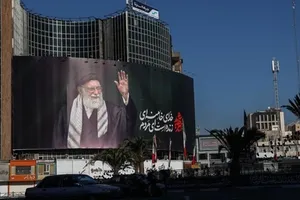
An empty seat and a portrait of Iran's slain Supreme Leader Ali Khamenei are seen at a venue in Tehran

One hundred days after former Supreme Leader Ali Khamenei was killed in an attack on his office in Tehran, the Islamic Republic has yet to bury the man who led the country for more than three decades.

The delay has become one of the most unusual and politically sensitive aspects of Iran's post-war transition. While senior military commanders and officials killed in the same conflict have already been buried, repeated promises of a massive funeral for Khamenei have so far gone unfulfilled.

Tehran municipal officials spoke of plans for a multi-day funeral procession later this month. Ceremonies, they said, are expected to span several cities before Khamenei's final burial in the religious city of Mashhad.

  • Iranians react with joy and disbelief to Khamenei's death

    Iranians react with joy and disbelief to Khamenei's death

The prolonged delay sits awkwardly alongside Shi'ite religious tradition, which generally favors the prompt burial of the dead. Classical jurisprudence encourages hastening burial except in exceptional circumstances, such as uncertainty over death or concerns about preserving life. Several contemporary clerics have similarly argued that unnecessary delays should be avoided if they risk disrespecting the deceased.

The absence of a funeral has fueled speculation about the condition of Khamenei's remains following the strike that killed him. Iranian media reports about other officials who died in the same attack described bodies recovered weeks later and identified only through DNA testing after suffering extensive damage.

Officials have released no information about the condition or location of Khamenei's remains.

Security concerns and a missing successor

The unanswered questions surrounding the burial have merged with another mystery: the continued absence of Khamenei's successor.

Mojtaba Khamenei, who assumed leadership following his father's death, has not appeared publicly since the attack. Officials insist he survived and suffered only minor injuries, but reports and rumors about more serious wounds have persisted.

Iranian slain Supreme Leader Ali Khamenei stands before coffins draped in Iranian flags during a memorial ceremony for military commanders and officials killed in the Iran-Israel conflict, in Tehran.
100%
Iranian slain Supreme Leader Ali Khamenei stands before coffins draped in Iranian flags during a memorial ceremony for military commanders and officials killed in the Iran-Israel conflict, in Tehran.

If alive and active, Mojtaba Khamenei would rank among Israel's most prominent targets. Any large public appearance could present significant security risks.

That reality complicates what would ordinarily be a defining moment for a new leader. A funeral for a supreme leader is not merely a religious ceremony; it is also a display of political continuity. The absence of the successor from such an event would be difficult to explain, while his appearance could expose him to risks the authorities may be unwilling to accept.

The politics of a funeral

There is also a political dimension to the delay. The Islamic Republic has a long history of using such ceremonies for political messaging. An example was the funeral of Qassem Soleimani, the former commander of the Revolutionary Guards' Quds Force.

The funeral procession, held for several days, passed through Kadhimiya, Baghdad, Najaf, Karbala, Ahvaz, Mashhad, Tehran and Qom before Soleimani was ultimately buried in Kerman.

  • Why Khamenei’s funeral keeps changing

    Why Khamenei’s funeral keeps changing

State media and Iranian officials said millions of people attended the ceremonies and repeatedly used images from the events in official messaging.

The publicity surrounding the funeral largely overlooked the deaths of 56 mourners, who were killed in a stampede during the burial ceremony in Kerman.

Officials have shown they hope for a similarly turnout for Khamenei. Yet organizing a funeral on that scale in the aftermath of war presents obvious logistical and security challenges.

For now, the result is an unusual limbo. One hundred days after Khamenei's death, Iran has formally selected a successor but has yet to publicly introduce him. It has promised a historic farewell for its former leader but has yet to hold one. And it continues to confront questions that neither official statements nor public ceremonies have managed to answer.

Iran turns to LA-based singer for state-backed religious event

Jun 7, 2026, 08:32 GMT+1

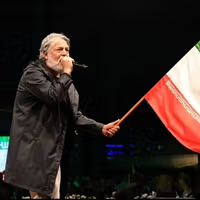
The appearance of Iranian pop singer Gheysar, who has spent nearly four decades living in Los Angeles, at a state-backed religious celebration in Tehran has sparked widespread debate over politics, culture, and the possible return of exiled artists.

The performance took place on Thursday during Eid al-Ghadir celebrations at Imam Hossein Square in central Tehran. The event, which received extensive coverage from official and semi-official media outlets, featured Binesh Bolour, known professionally as Gheysar, who has lived outside Iran for nearly four decades.

In recent years, the Islamic Republic has sought to transform Eid al-Ghadir into a broader national celebration through large-scale public events held in city streets and squares.

Continue reading

Iran turns to LA-based singer for state-backed religious event

Jun 7, 2026, 08:30 GMT+1
•
Maryam Sinaiee
Iran turns to LA-based singer for state-backed religious event
100%

The appearance of Iranian pop singer Gheysar, who has spent nearly four decades living in Los Angeles, at a state-backed religious celebration in Tehran has sparked widespread debate over politics, culture, and the possible return of exiled artists.

The performance took place on Thursday during Eid al-Ghadir celebrations at Imam Hossein Square in central Tehran. The event, which received extensive coverage from official and semi-official media outlets, featured Binesh Bolour, known professionally as Gheysar, who has lived outside Iran for nearly four decades.

In recent years, the Islamic Republic has sought to transform Eid al-Ghadir into a broader national celebration through large-scale public events held in city streets and squares.

The festival included speeches by clerics, performances by government-approved pop singers and religious vocalists closely associated with hardline political groups. Gheysar took the stage as some members of the crowd chanted “Long Live Iran” and “Death to America.”

  • Tehran Aims To Prevent Concerts By Iranian-American Singers From LA

    Tehran Aims To Prevent Concerts By Iranian-American Singers From LA

Official and semi-official media outlets, including state broadcaster IRIB, widely circulated videos of his appearance. In a caption accompanying one of the videos, IRIB wrote that Gheysar had “shouted out his patriotism and returned to Iran” after the outbreak of the recent war involving Iran, the United States, and Israel.

The newspaper Haft-e Sobh described Gheysar’s participation in an official event as both “surprising” and “taboo-breaking,” noting that it was unprecedented since the 1979 Islamic Revolution.

The newspaper wrote: “Gheysar’s presence in Tehran and his performance should be regarded as an important development with dimensions beyond an artistic event. This form of participation in an official ceremony could symbolize the breaking of one of the cultural boundaries of the past four decades.”

Anti-western statements during the war

During the recent conflict involving Iran, the United States and Israel, Gheysar repeatedly criticized US President Donald Trump and Israeli Prime Minister Benjamin Netanyahu on social media. He also strongly attacked Crown Prince Reza Pahlavi and opposition groups that advocated foreign support for the overthrow of the Islamic Republic.

In one video, he said the Iranian nation had broken the “hegemony of the West” and that he was proud of being Iranian. Following the military confrontation, he published additional videos praising Iran’s military capabilities and said: “We shattered the West’s grandeur, and I am proud of that.”

Mixed reactions online

The singer’s appearance has generated sharply divided reactions on social media. Some users described the government’s decision to allow him to perform as hypocrisy, arguing that the authorities embrace nationalism only when they need public support.

One user, Mehrdad Raha, wrote: “Whenever you see a veteran Iranian singer abroad becoming softer in tone toward the Islamic Republic, know that the government has probably been in contact with them for some time, using intermediaries, with promises of money, sponsorship, travel opportunities to Iran, or other incentives to win them over.”

Gheysar rejected such accusations in a video circulated online. He said this was not his first visit to Iran and insisted that he had not returned for money or to obtain a permanent license to work in the country.

He said he had participated in the ceremony because, like many Shiites, he holds a deep respect for Imam Ali, whom Shiites believe was designated by the Prophet Muhammad as his successor at Ghadir.

The legacy of the “Los Angeles singer”

The controversy also revived discussion about the long-standing phenomenon of the so-called “Los Angeles singer.”

Following the 1979 revolution, many Iranian pop stars and actors left the country, particularly female performers whose singing careers were effectively prohibited under the new political order. Many settled in the United States, especially in Southern California.

For years, recordings by exiled singers circulated inside Iran through cassette tapes and videotapes that were copied and distributed despite official restrictions. Possession or distribution of such material could expose people to legal penalties.

The style of dance-oriented Persian pop music associated with Los Angeles was often portrayed in official discourse as morally corrupt, and the term “Los Angeles singer” frequently carried a derogatory connotation in state media.

Several Iranian outlets referred to Gheysar, who has also performed in Israel, a destination Iranian citizens are generally prohibited from visiting, in exactly those terms while reporting on his recent appearance.

Yet the two songs he performed in Tehran differed markedly from the repertoire that made him famous.

One song was dedicated to his hometown, Tehran. The second, titled “The Children of Minab,” was inspired by damage to a school in the southern city of Minab during the first day of the recent conflict. Iranian media reported that 120 schoolchildren and nearly 40 teachers, staff members and parents were killed in the attack.

Could other exile artists return?

Gheysar’s official appearance has renewed speculation about whether other prominent exile artists might be allowed to return.

Haft-e Sobh asked: “Now we must wait and see whether Gheysar’s return is an exception or whether this path will be opened for other artists as well. Will this remain limited to one person, or could it become a model for the future?”

In recent months, several well-known Los Angeles-based Iranian singers have publicly expressed a desire to spend their final years in Iran.

Among those expressing a desire to return is veteran singer Shahram Shabpareh, who has said he would like to spend the final years of his life and career in Iran.

The possibility of a return by singer Moein has also been the subject of recurring speculation, although reports about potential concerts in Iran have repeatedly been denied by him or those close to him.

  • Iran Halts Music Fest As It Teases Diaspora Singer's Return

    Iran Halts Music Fest As It Teases Diaspora Singer's Return

For supporters, Gheysar’s appearance may signal a gradual easing of long-standing cultural restrictions surrounding exiled performers.

Skeptics, however, point to the experience of singer Habib, who returned to Iran in 2009 but was repeatedly denied permits to perform, arguing that official approval can be fleeting and does not necessarily translate into lasting artistic freedom.
Inside Rasht's bloody crackdown: witnesses detail secret removals of bodies

Jun 6, 2026, 17:16 GMT+1
•
Farnoosh Faraji
Inside Rasht's bloody crackdown: witnesses detail secret removals of bodies
100%

Security forces opened fire on protesters, blocked medical aid and secretly removed bodies as they crushed demonstrations in Rasht, northern Iran, during January’s nationwide uprising, eyewitness accounts and documents sent to Iran International show.

Witnesses described security forces shooting at protesters, blocking aid to the wounded, demanding money from families before returning bodies, and pressuring relatives to hold secret burials and avoid public ceremonies.

The new accounts add to an Iran International public documentation campaign that has gathered testimony saying protesters in Rasht were driven into narrow market passages, trapped as fire spread and fired upon by security forces during January’s unrest.

The morning of Jan 9: a city in smoke, blood and fire

One eyewitness told Iran International that around 5 a.m. on January 9, heavy smoke and fire were still rising in the municipality area of Rasht.

The witness said streets leading to the municipality, including Namjoo Street, Imam Street, Shahrdari Street and the route from the bazaar toward Saqlan Square, were badly damaged and parts of the city had burned.

“On the morning of January 9, the city smelled of smoke. Traces of blood were clearly visible on Shahrdari and Saadi streets. The bloody handprints of protesters were on the city walls. Basijis in Sabzeh Meydan Square were busy erasing slogans with spray paint, and large parts of the bazaar had completely burned,” the witness said.

Bodies moved in pickup trucks and garbage trucks

An eyewitness told Iran International that on the morning of January 9, several municipal pickup trucks left Shahrdari Street, and the bodies of some of those killed were in the back of one vehicle, covered with cloth.

Iran International has also received multiple reports indicating that the bodies of some of those killed in Rasht were collected with garbage trucks and secretly transferred.

Witnesses said some wounded people were also among the bodies transferred to Bagh-e Rezvan cemetery in Rasht.

A source said one wounded person who had been transferred to Bagh-e Rezvan along with the bodies managed to escape and hid for a while in a nearby forest.

Transfer of bodies to an unmarked warehouse

New information received by Iran International shows that on January 8 and 9, the bodies of some of those killed in Rasht were transferred to a warehouse on Tehran Road, between Bagh-e Rezvan and Saravan.

The warehouse was painted red, white and green and had no specific sign or official marking.

The bodies were kept there temporarily before burial or transfer to other locations.

Witnesses describe DShK machine gun fire on protesters

Witnesses told Iran International that security forces used heavy weapons including DShK machine guns against people who had entered parts of the city’s military areas.

According to the accounts, the area around the Rasht governor’s office was one of the main sites where protesters were killed on January 8 and 9.

One eyewitness said Basij and Revolutionary Guards forces directed the crowd toward the governor’s office, placing protesters on a route where their ability to leave or retreat was limited.

The witnesses said armed forces shot at people after the gates of the governor’s office were opened.

The accounts indicated that the crackdown in Rasht was not limited to streets around the municipality, the bazaar, Namjoo Street and Sajjad Clinic, and that the area around the governor’s office was also a key site of shootings and killings.

Families told to pay for slain protesters’ bodies

Sources told Iran International that slain protesters' families faced severe security pressure.

Some families were asked to pay money to receive the bodies of their children, with the amount depending on the family’s financial situation, according to the accounts.

Some families were asked for several billion rials, equivalent to several thousand dollars, and in some cases more than 10 billion rials, or over $5,700 at the open-market rate, the sources said.

An eyewitness said one family was told to bring a box of sweets along with the payment before they could receive their loved one’s body.

The witness said the request was part of a humiliating process of dealing with the survivors.

Families forced into secret night burials

Witnesses told Iran International that the families of some slain protesters were not allowed to wash their loved ones’ bodies, a standard Islamic burial rite performed before burial.

One eyewitness said security agents told a family the victims were “ritually impure” and had to be buried as they were, bloodied and still in their clothes.

According to witness accounts, burials were often carried out late at night or near dawn, with a limited number of family members present and under pressure from security forces.

The burial place of many of the victims is in the far sections of Bagh-e Rezvan in Rasht.

Families said they were repeatedly humiliated and threatened while receiving and burying the bodies.