• العربية
  • فارسی
Brand
  • Iran Insight
  • Politics
  • Economy
  • Analysis
  • Special Report
  • Opinion
  • Podcast
  • Iran Insight
  • Politics
  • Economy
  • Analysis
  • Special Report
  • Opinion
  • Podcast
  • Theme
  • Language
    • العربية
    • فارسی
  • Iran Insight
  • Politics
  • Economy
  • Analysis
  • Special Report
  • Opinion
  • Podcast
All rights reserved for Volant Media UK Limited
volant media logo

OPEC Figures Contradict Iran's Oil Production Claims
Iran International Newsroom
Aug 11, 2023, 20:25 GMT+1Updated: 18:05 GMT+1
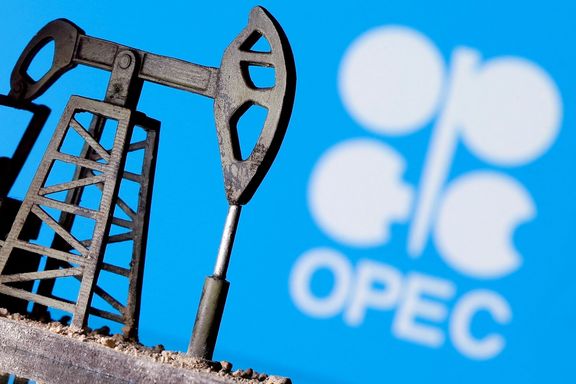
A 3D-printed oil pump jack is seen in front of displayed OPEC logo in this illustration picture, April 14, 2020.

Latest figures released by OPEC reveal a significant discrepancy between Iran's recent claims about its oil production and the actual data. 

The report was released on Thursday, a day after the National Iranian Oil Company (NIOC) Managing Director Mohsen Khojasteh-Mehr – a deputy oil minister -- claimed that the country's daily oil production would surge by 250,000 barrels to reach 3.5 million barrels by the end of summer, meaning that the current figure stands at 3.25 million barrels.

However, the latest OPEC statistics suggest that Iran's daily oil production amounts to only 2.828 million barrels, indicating a substantial gap of 422,000 barrels with the Islamic Republic’s figure. 

Furthermore, OPEC's new figures highlight that Iran's oil production experienced an 11% growth in the first seven months of the current year, yet the country's oil price has plummeted by over 24%. Iran's daily oil production increased by 274,000 barrels until July, still falling short by a million barrels compared to the reported 3.8 million barrels it used to produce prior to sanctions imposed by the United States. 

Crude oil production of OPEC countries
100%
Crude oil production of OPEC countries

The backdrop of this production surge lies in the aftermath of the 2015 Joint Comprehensive Plan of Action (JCPOA) nuclear deal, which saw the lifting of international sanctions on Iran and a subsequent increase in revenues. Iran's oil revenues temporarily soared to $66 billion in 2017. However, this upward trajectory was disrupted after the United States withdrew from the JCPOA in May 2018, which led to renewed sanctions that intensified a year later. 

As a result, Iran's oil exports faced a significant decline, falling to between $15 - $20 billion by 2020. The tide began to turn towards the close of that year after the election of US President Joe Biden, who expressed his intention to reinstate the JCPOA. China, in response, embarked on a trajectory of more oil imports from Iran.

Presently, China remains the main customers of the Iranian oil. Meanwhile, data from Kepler, a data analytics company that also tracks oil tankers, indicates that Iran's average daily oil and gas condensate exports to China during the first seven months of 2023 have been hovering around one million barrels per day, up from roughly 325,000 bpd in 2020 and just 160,000 bpd in August 2019, in the wake of tightened US sanctions. 

While oil has been trading at around 75-82 dollars in the past several months, Iran International reported in December that Tehran provides huge discounts to China, charging as little as $37 per barrel. A report by The Wall Street Journal in July said Iran is exporting the highest amount of crude oil in five years, but it offers discounts of up to $30 per barrel. 

No matter how many buyers or how much trade Iran manages to secure for its exports, it faces serious obstacles in bringing in the revenues and money transfers due to US banking sanctions, Mohammad-Hossein Malaek, who served as Tehran’s envoy for four years under former president Mohammad Khatami, told the Iranian Labour News Agency earlier in August. 

The former envoy highlighted China’s purchase of Iranian oil never stopped no matter the status of US and international sanctions on the Islamic Republic, but the country faces serious obstacles to pay Iran for its crude, pushing Beijing to barter goods and services to with ally.

Most Viewed

Iran negotiators ordered to return after internal rift over Islamabad talks
1
EXCLUSIVE

Iran negotiators ordered to return after internal rift over Islamabad talks

2
ANALYSIS

US blockade enters murky phase as tankers spoof signals and buyers hesitate

3
ANALYSIS

Why the $100 billion Hormuz toll revenue is a myth

4

US tightens financial squeeze on Iran, warns banks over oil money flows

5
ANALYSIS

US blockade targets Iran oil boom amid regional disruption

Banner
Banner

Spotlight

  • Hardliners push Hormuz ‘red line’ as US blockade tests Iran’s leverage
    INSIGHT

    Hardliners push Hormuz ‘red line’ as US blockade tests Iran’s leverage

  • Ideology may be fading in Iran, but not in Kashmir's ‘Mini Iran'
    INSIGHT

    Ideology may be fading in Iran, but not in Kashmir's ‘Mini Iran'

  • War damage amounts to $3,000 per Iranian, with blockade set to add to losses
    INSIGHT

    War damage amounts to $3,000 per Iranian, with blockade set to add to losses

  • Why the $100 billion Hormuz toll revenue is a myth
    ANALYSIS

    Why the $100 billion Hormuz toll revenue is a myth

  • US blockade targets Iran oil boom amid regional disruption
    ANALYSIS

    US blockade targets Iran oil boom amid regional disruption

  • Iran's digital economy battered by prolonged blackout
    INSIGHT

    Iran's digital economy battered by prolonged blackout

•
•
•

More Stories

Bolton Foresees Regime Change In Iran After Khamenei's Death

Aug 11, 2023, 18:23 GMT+1

Former US national security adviser John Bolton said that the death of Iranian Supreme Leader Ali Khamenei could expose vulnerability and offer an opportunity for regime change in Iran.

Speaking at a Jerusalem Center for Public Affairs (JCPA) webinar titled "Supporting Iran’s Quest for Democracy and the Urgency of Europe Proscribing Iran’s Islamic Revolutionary Guards Corps" on Thursday, Bolton highlighted the unique window of opportunity that Khamenei's death could present for a democratic transition in the nation.

Bolton emphasized the delicate state of affairs in Iran due to the advanced age and recurrent health issues of Ali Khamenei, currently 84 years old. He noted that the absence of a clear succession plan within the Islamic Republic further exacerbates the challenges of maintaining stability during the transition of power. Bolton's analysis suggests that this critical juncture could be leveraged to weaken the influence of the Islamic Revolutionary Guard Corps (IRGC), thereby fostering a more conducive environment for democratic change.

"Pressuring the IRGC in the lead-up to and during this transition phase could expose its vulnerabilities," Bolton stated. However, he cautioned against complacency, warning that failing to address the IRGC's influence could empower the organization to exert even greater control during this transitional period.

Israeli Intelligence Minister Gila Gamliel, another prominent voice at the webinar, stressed the moral imperative of categorizing the IRGC as a terrorist organization. Gamliel urged the EU and UK to proscribe the IRGC as a means to counteract its role in terrorism and hostage-taking. She underscored that swift action is pivotal in preparing the path for a democratic Iran, allowing its people to experience freedom and self-determination.

IRGC-Linked Website Blasts Foreign Minister For Anti-Taliban Tweet

Aug 11, 2023, 17:05 GMT+1
•
Maryam Sinaiee

Fars News Agency strongly objected to a tweet by Iran’s foreign minister criticizing the Taliban, alleging that it could have dire consequences for bilateral ties. 

In an unattributed commentary entitled “Critique To Foreign Minister’s Recent Remarks” , the Revolutionary Guards (IRGC) linked news agency said Wednesday that Hossein Amir-Abdollahian’s tweet could provoke “unfortunate and irreparable events that may cause challenges to the old friendship between the peoples of Iran and Afghanistan.” 

In his tweet on August 8, the Iranian foreign minister had accused the Taliban of committing a murderous act in August 1998 by attacking the Iranian consulate in Mazar-e Sharif during which they killed eight diplomats and a journalist. In fact, Iran’s Journalists Day on August 8 was designated to honor that journalist. 

“It is very surprising that despite several meetings with Taliban officials and hosting them, the minister of foreign affairs is unaware of the sensitivities of these matters and the costs that such statements may impose on the government and people of Iran,” Fars wrote and claimed that a breakaway Taliban faction controlled by Pakistani intelligence had been responsible for the Mazar-e Sharif attack. 

In another tweet seven hours later, apparently after he was chastised behind the scenes by the military, Amir-Abdollahian tried to somehow appease his critics, but this appears not to have satisfied the IRGC which the Taliban a potential ally against the United States. 

In his second tweet the Iranian foreign minister claimed that he had been told by the acting Minister of Foreign Affairs of the Islamic Emirate of Afghanistan, Amir Khan Muttaqi, at their first meeting, that the Taliban condemned the 1998 attack on the Iranian consulate, when asked to clarify the Taliban’s position regarding the matter. 

"There is no relationship between the Taliban of today and them. We condemn that inhuman act," Muttaqi said according to Amir-Abdollahian.

Fars also claimed on Thursday that according to sources close to the Taliban negotiating team in Doha, the US Special Representative Thomas West has repeatedly demanded that the Taliban act as a destabilizing force against the Islamic Republic of Iran in return for the release of part of Afghanistan’s blocked assets. Allegedly, the Taliban turned down the demand. 

A London-based Afghan political activist told Iran International that the Islamic Republic of Iran has now realized its calculations were wrong and the Taliban would gradually increase their capabilities to act against Tehran, no matter how much the Islamic Republic compromises with them. 

It had been obvious from the beginning that the religious ideological difference would not allow a stable relationship between the two and “the honeymoon period” would end sooner or later, he stressed. 

Afghanistan’s embassy in Tehran  (file photo)
100%
Afghanistan’s embassy in Tehran

Tehran was the third country after Pakistan and Russia that handed over Afghanistan’s embassy to the Taliban following the fall of President Ashraf Ghani in 2021 and has more or less maintained good relations with the Taliban despite several border skirmishes. 

Tensions have been simmering between the Islamic Republic and the Taliban in the past few months over Iran’s share of the waters of Hirmand (Helmand in Afghanistan) which the Taliban are withholding by building dams. 

In June Amir-Abdollahian said Tehran does not recognize the Taliban and called for the formation of an inclusive government in Afghanistan. He referred to the water dispute, stressing that any dispute had to be resolved through legal channels as stated in the 1973 water treaty between the two countries. Iran's foreign ministry also strongly refuted Taliban’s claim over lack of enough water due to draught to release Iran's share of the river’s waters.

FM Claims Russia Pledges Not To Use Iranian Drones In Ukraine Conflict

Aug 11, 2023, 14:32 GMT+1

Iran's Foreign Minister claims Russia has said it will refrain from utilizing Iranian weaponry in the ongoing conflict in Ukraine.

Hossein Amir-Abdollahian made this assertion during a diplomatic visit to South Africa, just three days after he denied any involvement in sending drones to Russia during a visit to Japan.

His announcement follows the contentious discourse surrounding the delivery of Iranian-manufactured drones to Russia, a development that garnered international attention following the Kremlin's invasion of in Ukraine. Although Iran initially denied allegations of providing Shahed suicide drones to Russia, Amir-Abdollahian eventually acknowledged the transfer in November 2022. He claimed that these deliveries occurred in a restricted capacity before the Ukrainian conflict began.

However, Ukrainian authorities have vehemently disputed Iran's narrative and produced a alrge amount of physical evidence showing that Iran continues to deliver hundreds of drones.

During discussions with Japanese officials in Tokyo, Amir-Abdollahian repeated Iran's position that it had not supplied drones for use in the Ukrainian conflict. He also dismissed tangible evidence from Ukraine showing the use of Iranian drones.

The European Union, the United Kingdom, the United States, and Canada, have implemented a series of punitive measures against Iran in response to allegations of drone deployments which purportedly targeted civilian zones and critical infrastructure within Ukraine. Within Iranian political circles, there has been a noticeable surge of criticism surrounding the potential repercussions of these alleged actions.

Politicians Say Iran’s Economic Crisis Can Lead To Regime Collapse

Aug 11, 2023, 13:42 GMT+1
•
Iran International Newsroom

A former head of Iran's Planning and Budget Organization says economic crisis will inevitably lead to the collapse of the regime, as others also voice pessimism.

A prominent ‘reformist’ politician also argues that the current popular distrust in the government leads the authorities to use a security approach against the people.

At the same time, a former Deputy Intelligence Minister and Government Spokesman says despite the nationwide uprising that started in September 2022, there is no prospect for change and reform in the country.

Former budget chief Massoud Roghani Zanjani speaking in a Club House chat session that years of inflation and poverty have brought the popular dissatisfaction to a peak and laid the ground for protests in Iran. 

Zanjani said that the current crisis is the outcome of clerics' intervention in politics and the conflict between elected and non-elected bodies in the government. He added that the non-elected bodies are where the clerics' power centers are. 

Former budget chief Massoud Roghani Zanjani (undated)
100%
Former budget chief Massoud Roghani Zanjani

He further added that "When absolute power was given to the Supreme Leader in the 1987 revision of the Iranian Constitution, it was in fact similar to crossing out all other articles of the Constitution." He pointed out that since then, Ali Khamenei has undermined the Constitution by actions such as giving executive powers to the heads of the three branches of the government. 

Zanjani said one of the reasons for the country's economic crisis is that Iran has two treasuries, one for the government, and another for Khamenei's office. He further charged that privileges given to the clerics has created an apartheid regime in their favor. 

Meanwhile, prominent reformist figure Feyzollah Arabsorkhi said in an interview with Rouydad24 website that people's distrust of the government, has encouraged officials to use security measures as a tool against the people. 

He added that what is going on in the parliament and the government is diagonally different from what people expect. Arabsorkhi said, "Just look at the government's views about the Internet and social media. It reflects the views of the hard core of the government about freedom of speech.” Under these circumstances, you cannot expect the people to trust the government when it tries all the time to restrict people's access to the Internet.

Reformist figure Feyzollah Arabsorkhi  (undated)
100%
Reformist figure Feyzollah Arabsorkhi

"People's distrust in the government and its efficiency are currently the biggest problems the authorities are facing," Arabsorkhi said, adding that "People do not believe what rulers say, and if the government wishes to correct this situation it should respond positively to popular demands and expectations. 

He added that the hijab law that is currently being discussed secretly at the parliament without paying attention to the people's views and expectations is one of the examples why Iranians have lost trust in the government. The state television which could have acted as mediator between the people and the government acts so unilaterally that there is no trace of the people's demands in its programming.

Meanwhile, former government spokesman Ali Rabiei wrote in Etemad Online website that there is still no prospect for reforms and correcting mistakes made by the government despite several months of nationwide protests. 

"On the contrary, in some cultural issues we see that the government is putting a step back," Rabiei said, presumably referring to compulsory hijab.

Rabiei insisted that failure to bring about a clear prospect for reforms in foreign and economic policies, and improve governance will adversely affect turnout in the upcoming parliamentary elections. 


Khamenei's Representative Says Hijab Must Be Observed In Sports

Aug 11, 2023, 13:30 GMT+1

The representative of Iran’s Supreme Leader Ali Khamenei in Qom has urged for adhering to “religious values in sports”.

As part of the Iranian regime’s crackdown on defiance against mandatory hijab, Mohammad Saeedi said that sports activities must align with the country's religious principles, urging for the compulsory hijab for female athletes.

"The hijab is an adornment for female athletes," Saeedi stated. "In sports, we are not supposed to do whatever they ask us to do, but we only do sports that do not contradict our religious values."

"Hijab is an adornment for female athletes in domestic and international gatherings, and if our ladies want to be approved by God, they must separate themselves from people who violate values."

These remarks come in the wake of recent events that have raised concerns about the treatment of female athletes in Iran. Morality police in the southern port city of Bandar Abbas on the Persian Gulf recently detained female athletes during a simple morning workout.

A significant number of Iranian athletes, particularly women, have defected from national teams in recent years, seeking asylum in other countries. This exodus has been attributed to a combination of factors, including a lack of attention, threats, mandatory hijab, corruption within sports federations, and Iran's policy of not allowing athletes to compete against Israelis.

Mohammad Saeedi said that sports activities must align with the country's religious principles, urging for the compulsory hijab for female athletes.

"The hijab is an adornment for female athletes," Saeedi stated. "In sports, we are not supposed to do whatever they ask us to do, but we only do sports that do not contradict our religious values."

"Hijab is an adornment for female athletes in domestic and international gatherings, and if our ladies want to be approved by God, they must separate themselves from people who violate values."

These remarks come in the wake of recent events that have raised concerns about the treatment of female athletes in Iran. Morality police in the southern port city of Bandar Abbas on the Persian Gulf recently detained female athletes during a simple morning workout.

A significant number of Iranian athletes, particularly women, have defected from national teams in recent years, seeking asylum in other countries. This exodus has been attributed to a combination of factors, including a lack of attention, threats, mandatory hijab, corruption within sports federations, and Iran's policy of not allowing athletes to compete against Israelis.