• العربية
  • فارسی
Brand
  • Iran Insight
  • Politics
  • Economy
  • Analysis
  • Special Report
  • Opinion
  • Podcast
  • Iran Insight
  • Politics
  • Economy
  • Analysis
  • Special Report
  • Opinion
  • Podcast
  • Theme
  • Language
    • العربية
    • فارسی
  • Iran Insight
  • Politics
  • Economy
  • Analysis
  • Special Report
  • Opinion
  • Podcast
All rights reserved for Volant Media UK Limited
volant media logo

Iranian MP says Trump’s 'unpredictability' remains main concern

May 28, 2026, 15:49 GMT+1

An Iranian lawmaker said negotiations with the United States had made “good progress” and that most of Tehran’s proposals had been accepted, but added that President Donald Trump’s "unpredictability" remained a major concern.

“The negotiations have seen significant qualitative and quantitative progress,” national security committee member Fadahossein Maleki told Iranian media on Thursday.

Some Iranian demands, Maleki said, still needed to be addressed by Washington and pointed to recent attacks on Iranian ships, adding: “Our only concern is Trump’s unpredictability and his failure to honor commitments.”

He also said parliament speaker Mohammad Bagher Ghalibaf’s recent visit to Qatar focused on frozen Iranian funds and payment mechanisms, describing the outcome as positive for Tehran.

Most Viewed

Text of US-Iran memorandum released
1

Text of US-Iran memorandum released

2

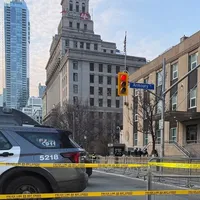
Toronto shooting probe uncovers trail leading to Tehran

3

US says Iran won't get funds upfront under MoU

4
INSIGHT

Can Iranians cheer Team Melli without cheering the state?

5

G7 welcomes US-Iran deal, backs Hezbollah disarmament

Banner
Banner
Banner

Spotlight

  • A fragile compact: ambiguities that could undermine US-Iran MoU
    ANALYSIS

    A fragile compact: ambiguities that could undermine US-Iran MoU

  • A thaw with the US won't fill Iranian tables overnight
    INSIGHT

    A thaw with the US won't fill Iranian tables overnight

  • Khamenei shifts responsibility for MoU as Iran, US implement Hormuz terms

    Khamenei shifts responsibility for MoU as Iran, US implement Hormuz terms

  • Why some think a weakened Iran could emerge stronger
    ANALYSIS

    Why some think a weakened Iran could emerge stronger

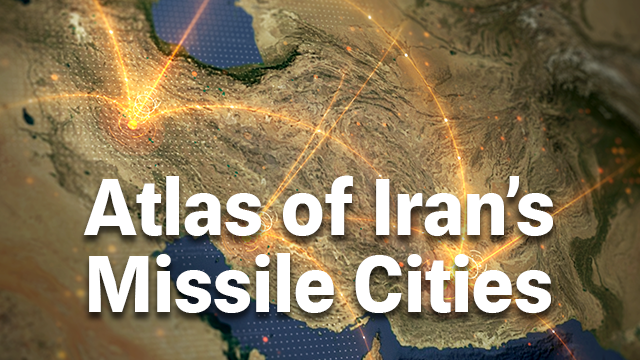
  • Atlas of Iran missile cities: The hidden network behind Tehran’s missile power
    SPECIAL REPORT

    Atlas of Iran missile cities: The hidden network behind Tehran’s missile power

  • Toronto shooting probe uncovers trail leading to Tehran

    Toronto shooting probe uncovers trail leading to Tehran

•
•
•

More Stories

Tehran Guards commander says forces at “peak readiness”

May 28, 2026, 15:42 GMT+1
Tehran Guards commander says forces at “peak readiness”
100%

The commander of the Revolutionary Guards in Tehran said Iran’s armed forces were at “peak readiness” and had launched new military drills immediately after fighting stopped.

“The mechanisms are designed in a way that allows a response to any enemy action in the shortest possible time,” Hassan Hassanzadeh said on Thursday.

Hassanzadeh also said attacks on Basij centers during the conflict had failed to weaken support for the paramilitary force.

US and Iran reach deal but need Trump's final approval, officials tell Axios

May 28, 2026, 15:15 GMT+1

US and Iranian negotiators have reached a draft 60-day memorandum of understanding to extend the ceasefire and begin talks on Iran’s nuclear program, but President Donald Trump has not yet given final approval, Axios reported on Thursday citing two US officials and a regional source involved in the mediation effort.

According to Axios, US officials said the terms of the agreement were largely finalized by Tuesday, pending approval from senior leaders on both sides. The officials said Iranian negotiators later informed mediators they had secured the necessary approvals and were ready to sign, although Tehran has not publicly confirmed that account.

“The president relayed to the mediators that he wants a couple of days to think about it,” one US official told Axios after Trump was briefed on the details of the proposed agreement.

The memorandum would guarantee unrestricted commercial shipping through the Strait of Hormuz and require Iran to remove naval mines from the waterway within 30 days, the report said. “This means no tolls and no harassment,” a US official told Axios.

The agreement also includes an Iranian commitment not to pursue a nuclear weapon and outlines negotiations over Tehran’s stockpile of highly enriched uranium and its enrichment activities. The United States will commit to discuss sanctions relief, the release of frozen Iranian assets and mechanisms to facilitate humanitarian aid deliveries to Iran, according to the report.

Names of some Iran protest victims vanish from Tehran cemetery database

May 28, 2026, 14:47 GMT+1
•
Saba Heidarkhani
Names of some Iran protest victims vanish from Tehran cemetery database
100%
A file photo from Tehran's Behesht-e Zahra cemetery

Families of people killed in Iran’s January protests say names and burial records have disappeared from Tehran’s Behesht-e Zahra cemetery database, raising new concerns over efforts to erase evidence of the deaths.

Iran International also searched the cemetery’s public database for the names of dozens of people killed during the January 7 and 8 protests. The searches returned no results, or only unrelated names with different birth and death dates, suggesting that burial details including names, sections, rows and grave numbers have been removed from the system.

Searches for other prominent protesters and executed prisoners killed in earlier years, however, still produced identifiable results in the same database.

It is not clear when the removals took place or whether they affect all those killed in the January protests who were buried at Behesht-e Zahra.

Families report missing records

Some families had already raised the issue on social media. Iranian authorities, including the head of the Behesht-e Zahra Organization, have not publicly explained the missing records.

The family of one person killed wrote on X that a growing number of people had contacted them to say they could no longer find the graves of their loved ones in the Behesht-e Zahra system.

The family said they realized from those messages that the names of several people killed in the protests were no longer listed on the cemetery website.

  • Iran crackdown reaches cemeteries as graves of slain protesters defaced

    Iran crackdown reaches cemeteries as graves of slain protesters defaced

Comments under the post mentioned other names in a similar situation, saying no information about them appeared in the database.

Some users compared the removals to earlier attempts by the Islamic Republic to conceal information about mass killings, including the 1988 executions.

Echoes of 1988

In the summer of 1988, after the Iran-Iraq War, the Islamic Republic executed thousands of political prisoners. Over several weeks, panels later known as “death committees” sent prisoners to execution, and many were buried in unmarked or mass graves, including in Khavaran, a cemetery area in southeast Tehran.

The comparison has become more frequent as families and activists report attempts to obscure or alter the burial records and graves of those killed in the January protests.

On January 25, Iran International’s editorial board said in a statement that more than 36,500 people had been killed during the suppression of Iran’s national uprising on the orders of Ali Khamenei, then Iran’s ruler.

Damaged graves

In recent months, Iran International has also received reports showing that headstones of several people killed in the January protests had been damaged, altered or covered with layers of cement.

In some cases, families say authorities objected to words such as javidnam – meaning eternally remembered and widely used for slain protestors – or phrases such as “child of Iran” being inscribed on graves, and threatened to break headstones if the wording was not changed.

These actions have been reported at Bagh-e Rezvan cemetery in Rasht and in parts of Behesht-e Zahra in Tehran, often under pressure or threats from official bodies.

Damage to the graves of protesters and people executed after earlier demonstrations has also been reported in previous years.

There have been reports of damage to the graves of Majidreza Rahnavard, Siavash Mahmoudi, Kian Pirfalak, Zakaria Khial and Aylar Haghi, among others.

For families, the apparent removal of burial records is not only an administrative issue. It deepens fears that the state is trying to control how the dead are remembered, where they can be found and whether their names remain part of the public record.

US says warships enforcing Iran blockade redirected 111 vessels

May 28, 2026, 14:24 GMT+1
US says warships enforcing Iran blockade redirected 111 vessels
100%

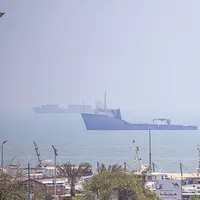
US Central Command said more than 20 American warships were enforcing the blockade against Iran, adding that US forces had redirected 111 commercial vessels to ensure compliance.

The amphibious assault ship, the command said, was among vessels supporting operations linked to the blockade against Iran.

US sanctions Iranian strait authority, targets airlines and oil trade

May 28, 2026, 14:03 GMT+1

US Treasury Secretary Scott Bessent said Washington had sanctioned Iran’s Persian Gulf Strait Authority as part of what he called an “Economic Fury” campaign targeting Tehran’s oil exports and transport networks.

Bessent warned on X that companies and governments against paying what he described as Iranian tolls disguised as aid payments. He also said a US naval blockade had pushed Iranian crude shipments to record lows and that Washington would cut Iranian airlines off from landing slots, refueling and ticket sales.

The treasury secretary said only a “satisfactory outcome” in negotiations would halt the pressure campaign.