• العربية
  • فارسی
Brand
  • Iran Insight
  • Politics
  • Economy
  • Analysis
  • Special Report
  • Opinion
  • Podcast
  • Iran Insight
  • Politics
  • Economy
  • Analysis
  • Special Report
  • Opinion
  • Podcast
  • Theme
  • Language
    • العربية
    • فارسی
  • Iran Insight
  • Politics
  • Economy
  • Analysis
  • Special Report
  • Opinion
  • Podcast
All rights reserved for Volant Media UK Limited
volant media logo

G7 welcomes US-Iran deal, backs Hezbollah disarmament

Jun 17, 2026, 07:00 GMT+1
G7 leaders for a family photo before a cultural performance and concert during the G7 summit, in Evian-les-Bains, France, June 16, 2026.

G7 leaders welcomed on Wednesday the announcement of a deal between the United States and Iran, saying it offered a major opening to prevent Tehran from acquiring a nuclear weapon and address regional and missile-related threats.

“We welcome the announcement of a deal between the United States and Iran, secured under the strong leadership of President Trump, with the support of mediating countries,” the leaders said in a statement on geopolitical issues.

They said the agreement provided “an historic opportunity to prevent Iran from acquiring any nuclear weapon and tackling the threats related to its regional and ballistic activities.”

“We support and are ready to contribute to its implementation,” the statement said.

The Group of Seven also backed further diplomacy after the US-Iran memorandum of understanding, saying any follow-on negotiation should address threats posed by Iran “in the region and beyond” and include relevant partners, including the International Atomic Energy Agency.

“We reaffirm that Iran will never obtain a nuclear weapon,” the leaders said.

100%

On Lebanon, the G7 tied its support to an immediate ceasefire and the disarmament of Iran-backed Hezbollah.

“In Lebanon, we support, through an immediate robust ceasefire, the Lebanese leadership’s efforts to achieve the disarmament of Hezbollah and the monopoly of arms, and to protect Lebanon’s territorial integrity and sovereignty with the appropriate international security guarantees,” the statement said.

The leaders also backed the resumption of traffic through the Strait of Hormuz, saying “the right of transit passage without restrictions or tolls is the bedrock of international trade.”

They said a multinational defensive initiative led by France and the UK could help protect merchant vessels, reassure shipping operators and verify the removal of mines.

The G7 also pledged to reduce global vulnerability to the Strait of Hormuz by accelerating the diversification of energy supply routes and increasing energy stocks.

Most Viewed

Iran-US MoU draws praise and backlash across Tehran’s political spectrum
1
INSIGHT

Iran-US MoU draws praise and backlash across Tehran’s political spectrum

2
ANALYSIS

Iran hardliners rage over US deal, but experts say regime is closing ranks

3
EXCLUSIVE

Israel to help oust Iran regime, Bennett tells Iranians frustrated by US deal

4

Iran executes two January protesters as post-war crackdown continues

5
INSIGHT

Hope, anger and distrust: Iranians debate Iran-US memorandum online

Banner
Banner
Banner

Spotlight

  • Toronto shooting probe uncovers trail leading to Tehran

    Toronto shooting probe uncovers trail leading to Tehran

  • Hope meets caution as Tehran weighs economic impact of US deal
    INSIGHT

    Hope meets caution as Tehran weighs economic impact of US deal

  • Can Iranians cheer Team Melli without cheering the state?
    INSIGHT

    Can Iranians cheer Team Melli without cheering the state?

  • Iran-US MoU draws praise and backlash across Tehran’s political spectrum
    INSIGHT

    Iran-US MoU draws praise and backlash across Tehran’s political spectrum

  • Trump's Iran strategy underrates regime's resilience, ex-US diplomat says

    Trump's Iran strategy underrates regime's resilience, ex-US diplomat says

•
•
•

More Stories

Iran hardliners rage over US deal, but experts say regime is closing ranks

Jun 16, 2026, 21:45 GMT+1
•
Negar Mojtahedi
Iran hardliners rage over US deal, but experts say regime is closing ranks
100%
Islamic Republic supporters mourn on the first day of Muharram at Tehran’s Enghelab Square on June 16, 2026.

Iran's hardliners have erupted against the US-Iran MoU with death chants against chief negotiators Abbas Araghchi and M. Bagher Ghalibaf, but experts say the backlash is unlikely to derail a deal the ruling elite sees as essential to the regime's survival.

The public anger from some regime supporters has exposed real divisions within Iran’s political and media establishment. But those divisions appear to be less about whether to preserve the Islamic Republic than about how best to preserve it.

That is the assessment of several Iran experts who spoke to Iran International following the announcement of the US-Iran Memorandum of Understanding.

Hardliners protest the deal

Much of the dissent appears to be coming from the hardline Paydari Front, which sees itself as a guardian of the values of the 1979 revolution that established the Islamic Republic. The faction has long opposed engagement with the West and advocates a more ideological vision of the state rooted in Shia Islamist principles.

Ahead of the signing of the MoU, prominent hardline lawmaker Mahmoud Nabavian warned that accepting the agreement would effectively turn Iran into “a colony of the United States.” He also criticized provisions related to the Strait of Hormuz, arguing they would amount to surrendering one of Iran’s most important strategic levers.

The rhetoric spilled into the streets. At rallies in Tehran over the weekend, protesters called for the resignations of Foreign Minister Abbas Araghchi and Parliamentary Speaker Mohammad Bagher Ghalibaf. Some invoked the memory of the late Supreme Leader, chanting: “Ghalibaf, Araghchi — what about my Leader’s blood?”

Some went even further, calling for their death and execution.

Opponents of the deal have also launched a “we will not accept” campaign.

The question now is whether these internal fractures could eventually weaken a system that, while more resilient than many anticipated, remains under significant strain. For now, experts say the divisions do not appear sufficient to break the system from within.

“The hardliners are loud, but they have a weak case to make,” said Alex Vatanka, a senior fellow at the Middle East Institute.

“This regime has now proven beyond doubt that they’re much more entrenched and resilient than people thought they were. That doesn’t make them nice, just makes them harder adversaries.”

Survival over ideology

Arash Azizi, an Iran analyst and author of What Iranians Want: Women, Life, Freedom, argues that the Islamic Republic is shifting from ideological hardliners toward a more pragmatic — though still authoritarian — collective leadership focused on regime survival.

“They are authoritarian and they’re thugs, to be clear. But they care about keeping their own economic interests, which means social peace as much as they can, and which means deals with the US,” Azizi told Iran International.

In other words, the Islamic Republic is not moderating. It is acting pragmatically — and, as Azizi argues, cynically — to survive.

According to Azizi, the hardliners around Saeed Jalili are important precisely because they have revealed their weakness. They loudly opposed the deal but appear unable to stop it.

Real power, he argues, lies with a collective leadership centered around Ghalibaf, the IRGC leadership and the Supreme National Security Council. That leadership appears to view a deal with Washington as necessary to protect the system.

The deal’s progress, despite Mojtaba Khamenei’s continued absence from public view, has fueled speculation that a new power structure may be consolidating inside the Islamic Republic.

Jason Brodsky, policy director at United Against Nuclear Iran, notes that such divisions are not new.

Similar opposition emerged during the 2013–2015 negotiations that led to the JCPOA, when hardliners attacked then-President Hassan Rouhani and Foreign Minister Mohammad Javad Zarif.

“The Supreme Leader made a decision, and that’s going to carry the day,” Brodsky said.

But Brodsky argues the real struggle may begin if sanctions relief materializes.

“There will be those who want to use resources toward economic rebuilding, but there will be a very hardened IRGC contingent ... who are going to want to rebuild their military, rebuild the nuclear program, and rebuild the terror apparatus.”

Media split reflects political divide

Iran’s media landscape reflects the same tensions.

Hardline newspaper Kayhan has denounced the MoU as surrender to the United States. Khorasan has framed it as a temporary pause rather than peace. Hamshahri has argued that diplomacy was made possible by Iran’s military deterrence.

Meanwhile, reformist and moderate outlets such as Shargh, Etemad and Khabar Online have presented the agreement as a state-backed effort to end the war, ease economic pressure and stabilize the country.

Some supporters of the deal have gone further, arguing that the agreement is superior to the 2015 nuclear accord because Iran has retained strategic leverage, including influence over the Strait of Hormuz.

Government supporters have also pushed back against the Paydari Front, arguing it does not represent ordinary Iranians, many of whom have grown weary of war and economic hardship.

Taken together, the reactions suggest that few inside Iran view the MoU as a peace agreement.

Instead, supporters and critics alike largely see it as a mechanism for preserving the Islamic Republic, though they disagree sharply on what kind of compromise would best serve that goal.

For hardliners, the agreement risks being remembered as a retreat from revolutionary principles. For pragmatists inside the establishment, it is a necessary concession aimed at keeping the system intact.

The domestic battle over the MoU may ultimately prove just as consequential as the negotiations themselves.

New Zealand considering IRGC terrorist designation, deputy PM says

Jun 15, 2026, 21:54 GMT+1
•
Alireza Mohebbi
New Zealand considering IRGC terrorist designation, deputy PM says
100%

New Zealand is actively considering designating Iran’s Revolutionary Guards as a terrorist organization, Deputy Prime Minister David Seymour told Iran International on Monday.

Seymour said Wellington condemned the Islamic Republic’s conduct toward its neighbors, its support for militant groups in the Middle East its activities close to New Zealand as Australia.

“There is no question that we believe this is an evil regime,” Seymour said. “We condemn their actions toward their neighbors, the sponsorship of terrorism throughout the Middle East and as near as Australia, and we especially condemn their behavior toward the Iranian people.”

He said New Zealand had not yet designated the IRGC in part because it still maintained diplomatic relations with Tehran, including an Iranian ambassador in Wellington, while New Zealand’s embassy in Iran was temporarily closed.

“Those connections can be of value,” he said. “There is some value in the connection and that’s why we have maintained our stance despite the fact that we condemn the behavior and actions of the government of Iran.”

Seymour said New Zealand’s police and intelligence agencies were “very aware” of the IRGC’s activities and were monitoring them.

“The New Zealand government and its various agencies, the police, intelligence agencies, have as a priority monitoring and controlling the IRGC and particularly protecting Iranian nationals who have become New Zealanders and make their home here,” he said.

He said he had personally discussed the issue with Prime Minister Christopher Luxon, adding that the government was not currently considering further action beyond the possible terrorist designation.

Seymour also referred to a recent joint statement by New Zealand and 21 other countries condemning the Islamic Republic’s extraterritorial actions.

“We signed that letter because we and the 21 other state parties have a set of values,” he said. “We should trade value for value, voluntarily get stronger together through mutually beneficial voluntary trade rather than use violence to achieve our aims.”

He added: “That is why we condemn this regime, its behavior both inside and outside Iran.”

Seymour called the Islamic Republic’s treatment of protesters “absolutely disgraceful and disgusting,” and said the Iranian government would not endure.

“I believe the time will come when they are no longer sustainable,” he said. “They will no longer be in power because Persia has a beautiful 5,000-year history.”

He added: “The greatness of that place will not be ended by this regime. They will become a footnote in a long history of a great civilization.”

Seymour also paid tribute to the “forty-thousand freedom fighters” killed earlier this year, saying Iranians seeking freedom would ultimately prevail.

“Living freely, with dignity, safe from violence, is the only way that anybody in the world has ever been able to reach their potential,” he said. “Over time, inevitably, you will succeed because you are right and they are wrong.”

Child labor rises as poverty deepens in Iran

Jun 14, 2026, 10:51 GMT+1
Child labor rises as poverty deepens in Iran
100%

Deepening poverty in Iran is driving a rise in child labor, exposing children to sexual exploitation, violence and malnutrition, the head of Iran's Association of Social Workers warned on Sunday.

Hassan Mousavi Chalak told Khabar Online that worsening economic conditions were forcing more families to rely on their children's income to meet basic needs.

"We must accept that poverty in Iran has deepened," Mousavi said. "The more difficult economic conditions become, the more the use of children's labor capacity to cover family expenses increases."

Criticizing what he described as political efforts to downplay the issue, Mousavi said child labor extended far beyond children visible on city streets. He pointed to the use of children in slaughterhouses, livestock farms, underground workshops, orchards, farms and industrial settings, adding that many remained hidden from public view while facing dangerous and damaging working conditions.

There were no reliable statistics on the number of child laborers in Iran but that the phenomenon appeared more widespread in major cities and pilgrimage and tourist destinations, Mousavi said.

Physical and psychological toll

Children who work are deprived of the safety of school environments and normal socialization processes, Mousavi said, forcing them to adapt to harsh street conditions and sometimes engage in risky behavior to survive.

He warned that child laborers face serious health risks, including malnutrition, skin and infectious diseases, gastrointestinal problems and drug use, as well as different forms of violence and sexual exploitation.

"Social comparisons are also harmful," Mousavi said. "When a child compares themselves with others and sees peers enjoying ordinary and happy lives with their families, they experience psychological pressure and emotional suffering."

He cautioned that economic hardship increases the likelihood that children will be exploited, "sometimes even by those closest to them."

Economic strain fuels concerns

In recent weeks, multiple reports have highlighted the worsening economic situation in Iran, with citizens describing rising unemployment, sharp increases in the prices of essential goods and persistent economic stagnation.

  • Iranian teens say rising costs turn simple wishes into distant dreams

    Iranian teens say rising costs turn simple wishes into distant dreams

Messages sent to Iran International have pointed to mounting pressure on household finances as living costs rise and employment opportunities decline, deepening concerns about livelihoods and the future of the labor market.

Research published in 2025 found that a combination of poverty, migration and marginalization, alongside ineffective support policies, was pushing both Iranian and Afghan migrant children into street work and workshops.

The study argued that child labor should be understood within the framework of profiteering from children in a dysfunctional economic structure, where shortcomings in the welfare system and ineffective social interventions have left the street to serve as a substitute for formal support mechanisms.

Mafia networks target some children

Addressing remarks about organized criminal involvement, Mousavi said the existence of mafia-like networks in the child labor sector could not be entirely dismissed, particularly when it came to homeless children.

However, he said field experience did not support the assumption that all working children were controlled by such groups.

  • Rising costs push poor Iranian children out of school, activist warns

    Rising costs push poor Iranian children out of school, activist warns

Many children, he said, were sent by their families from poorer provinces to wealthier areas to help cover household expenses.

"Some children, especially those without guardians or effective caregivers, may fall under the control of such networks," Mousavi said. "In these circumstances, they may be forced into illegal or criminal activities."

Trump's Iran strategy underrates regime's resilience, ex-US diplomat says

Jun 14, 2026, 03:52 GMT+1
•
Kambiz Tavana
Trump's Iran strategy underrates regime's resilience, ex-US diplomat says
100%
Charles W. Dunne

A former US diplomat warned that President Donald Trump may be underestimating the Islamic Republic's resilience, arguing that Tehran's leadership has repeatedly demonstrated its ability to withstand military and economic pressure.

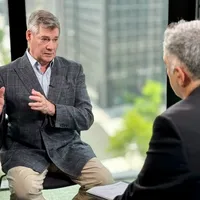
In an interview with Iran International, Charles W. Dunne, a non‑resident fellow at the Arab Center Washington DC and an adjunct lecturer at George Washington University’s Elliott School of International Affairs, said many in the West misread what sanctions, military strikes, and diplomatic isolation can achieve against Tehran.

“From a Western or an American point of view, this pressure that’s been exerted on the regime should have resulted in its collapse already,” he said. “But that’s not how this system works.”

The United States and Israel launched large‑scale attacks on Iran earlier this year, prompting Iranian missile and drone strikes against Israel, US positions, and Persian Gulf Arab states.

While President Donald Trump and Israeli Prime Minister Benjamin Netanyahu raised the possibility of regime change as a result of the airstrikes, the Islamic Republic has remained in place and has grown even more hardline, according to observers.

Dunne said the Trump administration’s shifting narrative points to a lack of strategic clarity at the top of the US government. “We’ve heard at least a dozen different explanations for why this war started in the first place,” he said. “Being completely honest with you, I’m not sure the administration knows to what end it is fighting.”

Dunne said talk of regime collapse and Venezuela‑style oil pressure ignores the Islamic Republic’s record of absorbing far greater punishment. Trump has suggested the US could one day seize Iran’s strategic oil hub of Kharg Island and “run” its energy sector “like we did in Venezuela”, but Dunne said the analogy is fundamentally flawed.

“In Venezuela the United States moved against a much smaller country, removed one leader and worked with a pliant figure inside an old regime that essentially survived,” he said. “That is not at all the scenario we face in Iran.”

Despite Trump’s saying that “regime change” already occurred, Dunne said Iran’s power structure has not collapsed and those now in charge “seem to be even more hardline and determined to prevail” than their predecessors.

Dunne added that the Islamic Republic has already shown far greater resilience, pointing to the 1980–88 Iran‑Iraq war, when the new revolutionary state suffered enormous casualties and damage yet fought Saddam Hussein’s Iraq to a standstill. “That war showed how much pain the regime is willing to accept in order to maintain its grip,” Dunne said. “Sanctions, oil export bans, a collapsing rial – none of that has brought the system to its breaking point yet.”

Dunne said repeated strikes on senior officials have not dismantled the state, but instead produced “more hardline, more aggressive personalities rising to the fore.” Iran’s regular army is backed by the Islamic Revolutionary Guard Corps (IRGC) and Basij paramilitaries, a layered security system designed to withstand both external attack and internal unrest.

“From their point of view, they are still in power, they still control the streets, and that is the main goal,” he said. “They believe they can inflict more political and even military pain than the United States is willing to bear over the next few months.”

Lebanon may become first test of emerging Iran-US deal, experts say

Jun 13, 2026, 21:42 GMT+1
•
Negar Mojtahedi
Lebanon may become first test of emerging Iran-US deal, experts say
100%
The image shows a gathering in Beirut, Lebanon, on April 22, 2026, where supporters paid tribute to Iran's late Supreme Leader Ali Khamenei and expressed support for his successor, Mojtaba Khamenei.

As Washington and Islamabad push for a preliminary agreement with Iran, experts say the unresolved fight over Lebanon could determine what the region looks like after the war and how much influence Iran retains.

The US and Pakistani officials say a Memorandum of Understanding with Iran will be signed on Sunday, describing it as a step toward ending the wider conflict, but Tehran has cast doubt on the timing.

That uncertainty has kept attention on the issues still capable of derailing or reshaping any deal.

One of them is Lebanon.

Iranian officials and media reports have suggested that any broader understanding with the United States would have to include an end to fighting involving Hezbollah. Israel has rejected any arrangement that would limit its freedom of action, with Defense Minister Israel Katz saying Friday that Israel would continue operating in Lebanon regardless of any agreement with Tehran.

The dispute reflects a larger reality taking shape across the Middle East: even if a preliminary Iran-US agreement moves forward, the struggle over Lebanon may decide what kind of post-war order follows it.

For veteran Middle East negotiator Aaron David Miller, Tehran’s focus on Lebanon is no accident.

“I think they are using Lebanon now to try to push Trump to push Netanyahu and to establish a new equation,” Miller, a senior fellow at the Carnegie Endowment for International Peace, told Eye for Iran.

For decades, Hezbollah served as Iran’s primary deterrent against direct attacks on Iranian territory. Now, Miller argues, Tehran is attempting to reverse that logic by making Hezbollah itself the red line.

Lebanon, he said, has become even more important to Iran after setbacks elsewhere in its regional network. The result is a new dynamic in which military action in Lebanon risks triggering a wider confrontation involving Iran directly.

“The concern about Lebanon and the Persian Gulf is that they provide ample opportunities for miscalculation or kinetic interaction,” Miller said.

The repercussions are already being felt beyond Lebanon.

Mohamed Fahmy, an Egyptian-Canadian journalist and Middle East political analyst who recently returned from reporting in Kuwait, Saudi Arabia and the United Arab Emirates, said the war has altered how Iran is viewed across parts of the Arab world.

“There is a scar that has changed the psyche of people there towards how Iran is viewed,” Fahmy said.

Fahmy said governments across the region are now grappling with questions about deterrence, security and their future relationship with Tehran as missile and drone attacks continue despite diplomatic efforts.

The shifting landscape is also reshaping traditional assumptions about power in the Middle East.

“If you ask me who are the three most powerful players in the region, they’re the three non-Arabs: Israel, Turkey and Iran,” Miller said.

“The three states that dominated Middle Eastern politics for decades, Egypt, Iraq and Syria, are all offline.”

That makes Lebanon more than a side issue in the diplomacy around Iran. It is one of the places where the limits of any agreement may be tested first: whether Iran can preserve the deterrent value of Hezbollah, whether Israel can keep striking without triggering a wider war, and whether Washington can turn a preliminary understanding with Tehran into a more durable regional arrangement.

'The only real end is Iran regime change'

For former US special representative for Iran Elliott Abrams, the debate over Lebanon points to a larger question about the future of the Islamic Republic itself.

“The only real end of this is the end of the regime, which is to say, let the Iranian people govern themselves,” Abrams told Eye for Iran.

Looking beyond the immediate fighting, Abrams argued that the significance of the war may not ultimately be measured by what happens in Lebanon, but by what happens inside Iran.

“If the regime falls in a few years, we’ll all look back on early 2026 and say that’s when it started.”

For now, Lebanon remains one of the clearest tests of the emerging Iran-US track. A preliminary agreement may slow the war, but experts say the unresolved fight over Hezbollah and Israel’s freedom of action could still shape what comes after it.