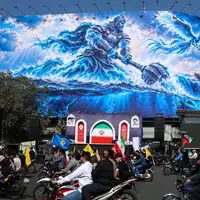
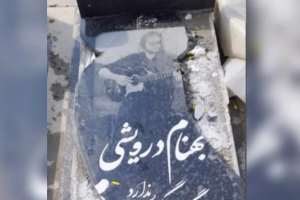
Iran International also searched the cemetery’s public database for the names of dozens of people killed during the January 7 and 8 protests. The searches returned no results, or only unrelated names with different birth and death dates, suggesting that burial details including names, sections, rows and grave numbers have been removed from the system.
Searches for other prominent protesters and executed prisoners killed in earlier years, however, still produced identifiable results in the same database.
It is not clear when the removals took place or whether they affect all those killed in the January protests who were buried at Behesht-e Zahra.
Families report missing records
Some families had already raised the issue on social media. Iranian authorities, including the head of the Behesht-e Zahra Organization, have not publicly explained the missing records.
The family of one person killed wrote on X that a growing number of people had contacted them to say they could no longer find the graves of their loved ones in the Behesht-e Zahra system.
The family said they realized from those messages that the names of several people killed in the protests were no longer listed on the cemetery website.
Comments under the post mentioned other names in a similar situation, saying no information about them appeared in the database.
Some users compared the removals to earlier attempts by the Islamic Republic to conceal information about mass killings, including the 1988 executions.
Echoes of 1988
In the summer of 1988, after the Iran-Iraq War, the Islamic Republic executed thousands of political prisoners. Over several weeks, panels later known as “death committees” sent prisoners to execution, and many were buried in unmarked or mass graves, including in Khavaran, a cemetery area in southeast Tehran.
The comparison has become more frequent as families and activists report attempts to obscure or alter the burial records and graves of those killed in the January protests.
On January 25, Iran International’s editorial board said in a statement that more than 36,500 people had been killed during the suppression of Iran’s national uprising on the orders of Ali Khamenei, then Iran’s ruler.
Damaged graves
In recent months, Iran International has also received reports showing that headstones of several people killed in the January protests had been damaged, altered or covered with layers of cement.
In some cases, families say authorities objected to words such as javidnam – meaning eternally remembered and widely used for slain protestors – or phrases such as “child of Iran” being inscribed on graves, and threatened to break headstones if the wording was not changed.
These actions have been reported at Bagh-e Rezvan cemetery in Rasht and in parts of Behesht-e Zahra in Tehran, often under pressure or threats from official bodies.
Damage to the graves of protesters and people executed after earlier demonstrations has also been reported in previous years.
There have been reports of damage to the graves of Majidreza Rahnavard, Siavash Mahmoudi, Kian Pirfalak, Zakaria Khial and Aylar Haghi, among others.
For families, the apparent removal of burial records is not only an administrative issue. It deepens fears that the state is trying to control how the dead are remembered, where they can be found and whether their names remain part of the public record.