Iran regime intact but degraded, US intelligence chief says
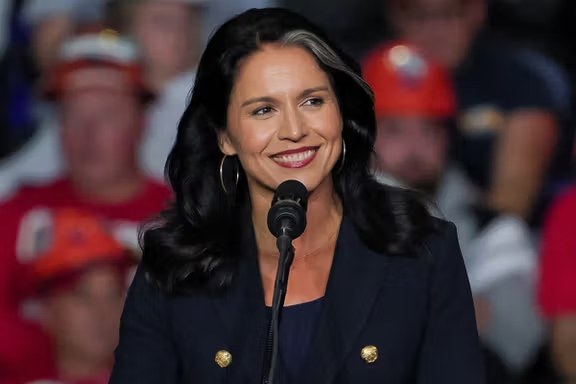
The Iranian regime appears to remain intact but “largely degraded” following US military operations, Director of National Intelligence Tulsi Gabbard said on Wednesday.
She said Iran’s nuclear enrichment program was “obliterated” in June strikes, but the full extent of the damage remains unclear.
Gabbard added the United States has seen no effort so far by Iran to rebuild its enrichment capability.
She warned Iran and its proxies still retain the ability to attack US and allied interests in the Middle East.
She said that if the regime survives, it is likely to begin a years-long effort to rebuild its missile and drone forces.




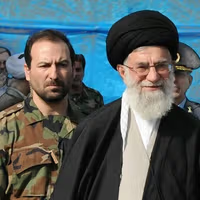


That was the frame Khatib laid out in a long interview published on Ali Khamenei’s website during the Woman, Life, Freedom uprising. It became more than rhetoric. It became a governing logic that collapsed protest, foreign media, activism and espionage into one threat map.
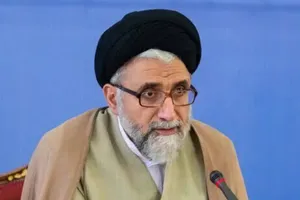
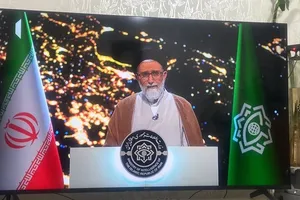
Khatib’s career made him unusually suited to that task.
Born in 1961 and trained in Qom, he rose through the Revolutionary Guards’ intelligence world, later ran the intelligence office in Qom, moved into the Supreme Leader’s protection orbit and then headed the judiciary’s protection and intelligence apparatus.
By the time Ebrahim Raisi made him intelligence minister in 2021, Khatib had passed through nearly every institution that mattered in the Islamic Republic’s coercive core: the Guards, the judiciary and the Supreme Leader’s household.
His retention in 2024 confirmed that his authority rested less on party politics than on trust from the system above elected government.
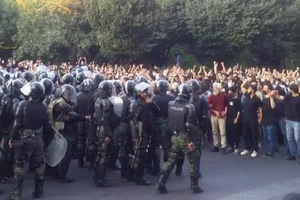
Under Khatib, the state increasingly treated social unrest as proof of foreign infiltration.
Protesters were not simply angry citizens. They were portrayed as nodes in an enemy network. Foreign-based Persian media were not just broadcasters. They were recast as operational arms of hostile states.
That logic also hardened into law.
Under his watch, the state broadened the definition of espionage and hostile collaboration, making it easier to turn contact, information-sharing, media work and loosely defined cooperation with enemy states or affiliated groups into national-security crimes.
The point was not only to punish spies. It was to widen the category of who could be treated like one.
The United States designated Khatib twice in September 2022, reflecting the breadth of his role across both overseas operations and domestic repression.
The Treasury first sanctioned him and the Intelligence Ministry over malicious cyber activity, including the disruption of Albanian government systems.
Later that month, it sanctioned him again, saying the ministry under his leadership had targeted human rights defenders, women’s rights activists, journalists, filmmakers and religious minorities, and had subjected detainees to torture in secret detention centers.

Years of the gallows
The intelligence ministry did not sign every death sentence. But the execution surge is still part of the meaning of Khatib’s tenure, because it formed the climate in which his security doctrine operated.
In the four full calendar years after he took office, Iran carried out at least 4,000 executions: about 580 in 2022, 830 in 2023, 975 in 2024 and 1,900 in 2025.
Those numbers belong formally to the judiciary and the prison system.
Politically, though, they sit inside the same larger story: a state that answered dissent, insecurity and social fracture with a heavier reliance on coercion, exemplary punishment and fear.
Operations beyond Iran
Khatib was also important beyond Iran’s borders. The ministry he led was accused by Western governments of directing cyber operations, targeting dissidents abroad and helping run the wider machinery of transnational repression.
His significance, though, was not that he was publicly tied to every individual plot.
It was that he sat atop a ministry that linked classic espionage, cyber activity, surveillance of exiles and operational cooperation with Iran’s other security arms.
In that sense he was less a field commander than a system manager, overseeing one part of Iran’s long war against opponents at home and abroad.
The glue
That coordinating role may be the most revealing part of his legacy.
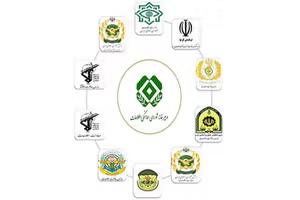
Iran’s intelligence world is fragmented. The Intelligence Ministry, the IRGC Intelligence Organization, the judiciary and the Leader’s office all have their own stakes, rivalries and chains of command.
Khatib’s value was that he could move across those worlds.
He came from the Guards’ intelligence culture, served in the Leader’s protection orbit, worked closely with the judiciary and then ran the ministry that was supposed to give the system a more unified picture of the threat environment.
After the 2022 uprising, that became even more important.
The Islamic Republic needed its rival security organs to act less like competing fiefdoms and more like a single architecture.
Khatib helped provide that common language, one in which protest, activism, foreign media, exile politics, sabotage and espionage could all be placed on the same continuum of danger.
That is why Khatib mattered. He mattered because he helped normalize a broader idea: that almost any challenge to the Islamic Republic could be reclassified as infiltration.
In the end, that was his real achievement for the system he served. He helped make dissent legible as intelligence warfare.