• العربية
  • فارسی
Brand
  • Iran Insight
  • Politics
  • Economy
  • Analysis
  • Special Report
  • Opinion
  • Podcast
  • Iran Insight
  • Politics
  • Economy
  • Analysis
  • Special Report
  • Opinion
  • Podcast
  • Theme
  • Language
    • العربية
    • فارسی
  • Iran Insight
  • Politics
  • Economy
  • Analysis
  • Special Report
  • Opinion
  • Podcast
All rights reserved for Volant Media UK Limited
volant media logo

Iran, US set for Istanbul talks as region scrambles to stave off war

Feb 3, 2026, 12:54 GMT+0Updated: 19:02 GMT+0

Regional powers including Saudi Arabia, Qatar, Egypt and Oman are trying to bring Iran and the United States to talks in Istanbul on Friday, officials say, to stave off war – starting with Tehran’s nuclear file despite a wide gap over US demands on missiles and allied militias.

What is new this week is not simply another round of nuclear diplomacy, but the intensity of the regional effort behind it.

Officials say the priority of the Istanbul meeting is to prevent conflict, with countries including Saudi Arabia, Qatar, Egypt, Oman, Pakistan and the UAE invited at foreign-minister level as part of a broader attempt to start dialogue before tensions spiral.

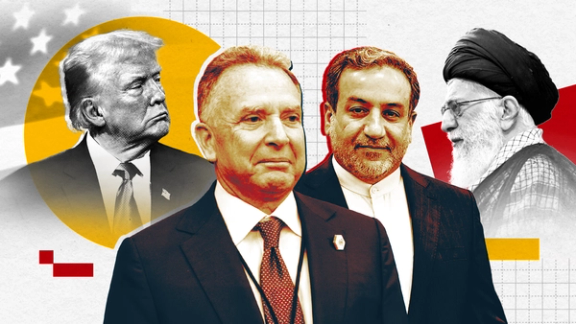
The meeting is expected to bring US special envoy Steve Witkoff and Iran’s Foreign Minister Abbas Araghchi together, with regional mediators hoping the presence of Arab and Turkish ministers can help bridge gaps that have widened since talks collapsed last summer after Israeli and US strikes on Iranian nuclear facilities.

One regional official, speaking on condition of anonymity, said that US President Donald Trump’s son-in-law Jared Kushner will also attend alongside Witkoff if the meeting goes ahead.

According to Qatar's Foreign Ministry spokesperson, Majed Al-Ansari, on Tuesday, there is regional collaboration and ongoing efforts aimed at ensuring the de-escalation.

The UAE president's adviser Anwar Gargash told a panel at the World Governments Summit in Dubai on Tuesday, "I think that the region has gone through various calamitous confrontations. I don't think we need another one, but I would like to see direct Iranian-American negotiations leading to understandings so that we don't have these issues every other day."

Public rhetoric on both sides remains extreme, making it harder to judge where compromise lies.

Trump warned this week that with big US warships heading to Iran, "bad things" would likely happen without an agreement, while Iran’s leadership continues to insist it will not negotiate under threats.

Iranian President Masoud Pezeshkian said on Tuesday that he had instructed foreign minister to prepare the ground for talks with the United States.

“Given requests from friendly governments in the region for a response to the US president’s proposal for talks, I instructed the foreign minister to, if conditions are suitable – free of threats and unrealistic expectations – create the groundwork for fair and equitable negotiations, guided by the principle of dignity, wisdom, and expediency, within the framework of the national interest,” Pezeshkian said.

The existence of an Istanbul channel – and the involvement of multiple regional capitals – suggests both sides are still testing whether a deal is possible.

Where talks could bog down

The central diplomatic battle is over scope. Regional officials involved in the effort say mediators are trying to limit the talks to Iran’s nuclear program as the most realistic path to getting Tehran to “yes,” with one official describing the strategy as addressing Washington’s non-nuclear demands only later through innovative ways.

“If the talks happen, they will stay focused on Iran’s nuclear program. And then we will try to find innovative ways to address Washington’s nonnuclear demands,” the Washington Post cited a US official as saying.

The Trump administration, however, has been explicit that it wants more than nuclear limits – including constraints on Iran’s missile development and its support for allied militia groups across Iraq, Lebanon, Yemen and elsewhere.

That mismatch is likely to define the talks: Iran wants the file narrow, Washington wants it comprehensive.

Uranium stockpile and enrichment: the urgent nuclear core

At the heart of the talks is Iran’s uranium stockpile and enrichment capability.

The Trump administration has demanded that Tehran remove or transfer 400 kilograms (more than 900 pounds) of uranium enriched to 60% purity and curb enrichment activity it says is edging toward weapons capability.

Iran denies it intends to weaponize its program, but the question of what happens to existing stockpiles – whether moved abroad, frozen, or placed under tighter monitoring – remains one of the most immediate pressure points.

Analysts say one possible compromise could be suspending further enrichment without Iran explicitly renouncing what it claims as a right to enrich under the Non-Proliferation Treaty.

Missile program: Tehran’s red line

Iran has consistently signaled that its missile program is not up for negotiation.

That creates an early ceiling on what can be achieved if Washington insists on missile curbs as part of any package, reinforcing the mediator strategy of keeping the first phase focused tightly on the nuclear file.

Regional militias: the hardest unresolved layer

The US has also demanded that Iran reduce support for allied non-state groups across the region.

Iran is unlikely to publicly abandon those relationships, but experts suggest the sides could explore narrower understandings – such as a nonaggression framework that extends to both countries’ respective partners – rather than an explicit proxy rollback.

This is where the talks could either expand into a broader security negotiation or fracture under maximalist expectations.

What happens next

Officials caution that details of the Istanbul format remain unclear, but the “main meeting” is expected on Friday.

The immediate goal may be modest: establish a channel, prevent escalation, and see whether nuclear-focused diplomacy can restart – with missiles and regional militias left as the more difficult second-stage questions.

In that sense, Istanbul seems less about a final agreement than about whether the sides can still find a negotiating floor before confrontation becomes the default.

According to an Iranian diplomatic source cited by Reuters on Tuesday, Iran is "neither optimistic nor pessimistic" over the talks.
Most Viewed

Iran diplomacy wobbles as factions compete to avoid looking soft on US
1
INSIGHT

Iran diplomacy wobbles as factions compete to avoid looking soft on US

2
ANALYSIS

The politics of pink: how Iran uses cuteness to rebrand violence

3

Scam messages seek crypto for ships’ safe passage through Hormuz, firm warns

4
EXCLUSIVE

Family told missing teen was alive, then received his body 60 days later

5
INSIGHT

Is Iran entering its Gorbachev moment?

Banner
Banner

Spotlight

  • Diplomacy tolls at Hormuz as conflict returns to its doorstep
    OPINION

    Diplomacy tolls at Hormuz as conflict returns to its doorstep

  • Opposition to US talks grows in Tehran as ceasefire deadline nears
    INSIGHT

    Opposition to US talks grows in Tehran as ceasefire deadline nears

  • Tehran moderates see ‘no deal–no war’ limbo as worst outcome
    INSIGHT

    Tehran moderates see ‘no deal–no war’ limbo as worst outcome

  • The future has been switched off here
    TEHRAN INSIDER

    The future has been switched off here

  • Lights out, then gunfire: Witnesses recount Mashhad protest crackdown
    VOICES FROM IRAN

    Lights out, then gunfire: Witnesses recount Mashhad protest crackdown

  • Is Iran entering its Gorbachev moment?
    INSIGHT

    Is Iran entering its Gorbachev moment?

•
•
•

More Stories

Trump pairs deal talk with war threats ahead of Iran negotiations

Feb 2, 2026, 23:05 GMT+0

President Donald Trump on Thursday delivered a characteristically ambiguous message on Iran, pairing talk of overwhelming military force with renewed signals that he may still favor a negotiated deal.

“I can’t tell you what I’m going to do right now,” Trump told reporters in the Oval Office when asked about Iran. “We have a tremendous force going in there, just like we did in Venezuela — even bigger.”

Still, he stressed that the administration was already in contact with Tehran.

“Right now, we’re talking to them. We’re talking to Iran,” he said. “If we could work something out, that’d be great. And if we can’t, probably bad things would happen.”

The remarks underscored a familiar dual-track approach: escalating deterrence while keeping the door open to diplomacy.

That uncertainty comes as US and Iranian officials prepare for what could be their first face-to-face engagement in the current crisis, with US envoy Steve Witkoff and Iran’s Foreign Minister Abbas Araghchi set to meet in Istanbul on Friday.

The meeting, if it goes ahead as expected, would mark a significant step after weeks of indirect messaging, military posturing and sharply escalatory rhetoric.

Conflicting reports

Various reports emerged on Friday about the details and potential format of the planned negotiations.

Reuters cited an unnamed Iranian official as saying Tehran was “ready to show flexibility on uranium enrichment,” including the possible transfer of 400 kilograms of highly enriched uranium and acceptance of zero enrichment under a consortium arrangement.

The report was swiftly denied by Ali Shamkhani, a senior adviser to Iran’s Supreme Leader Ali Khamenei, who stressed that any transfer of enriched uranium abroad was off the table.

“We are prepared for a possible war,” Shamkhani said in an interview with Hezbollah-affiliated broadcaster Al Mayadeen. “If the US attacks, we will certainly strike Israel.”

Separately, the Financial Times cited unnamed diplomats as saying the initial talks in Turkey are expected to focus primarily on Iran’s nuclear program, rather than its missile arsenal or support for regional militant groups.

Iran says Turkey could host US talks in coming days, expects results soon

Feb 2, 2026, 11:24 GMT+0

Iran’s Foreign Minister Abbas Araghchi said on Monday that Tehran was ready for diplomacy and said he hoped there would be results soon, as Iran weighs possible talks with the United States.

Araghchi said Iran had never abandoned diplomacy based on mutual respect and mutual interests.

“The people of Iran must be spoken to with respect,” Araghchi said, adding that Iran would respond respectfully to anyone who did so.

Iran’s President Masoud Pezeshkian, meanwhile, ordered the start of negotiations with the United States, Fars news agency quoted a source in the administration as saying, adding that negotiations would take place within the framework of the nuclear issue.

Fars later changed the wording of the report and said nothing is final about the status of the negotiations.

The report followed remarks earlier in the day by foreign ministry spokesperson Esmaeil Baghaei, who said talks between Iran and the US would probably be held in Turkey in the coming days.

At his weekly news conference, Baghaei said any Tehran-Washington negotiations would proceed step by step.

He said alongside “the issue of threats,” the priority for the Islamic Republic would be sanctions relief, which he called “a fundamental and non-negotiable priority.” He also thanked Turkey for its role in helping reduce regional tensions.

Tasnim news agency, which is affiliated with the Revolutionary Guard, confirmed the possibility of talks but said the time and place were not final. It said talks would likely be held between the Iranian foreign minister, and Steve Witkoff, the US special envoy.

A senior Iranian official and a Western diplomat told Reuters on Monday that Witkoff and Araghchi could meet in Turkey in the coming days.

A Turkish ruling party official told Reuters that Tehran and Washington had agreed that talks would focus on diplomacy, seen as a possible reprieve from potential US strikes.

Qatar and Egypt were also being considered as possible hosts for talks, Iran’s ISNA news agency reported.

Tehran braces for war while testing the limits of diplomacy

Jan 31, 2026, 07:08 GMT+0
•
Behrouz Turani

Tehran appears to have taken the US military buildup near Iran seriously, but shows no sign of softening its rhetoric or accepting Washington’s terms while it explores limited diplomatic channels.

Speaking in Istanbul on Friday, Foreign Minister Abbas Araghchi said Iran would consider US proposals for negotiations only if the military threat was removed first. Araghchi was in the Turkish city to explore a possible mediation initiative, though he made clear that Tehran would not negotiate under pressure.

Hours later, US President Donald Trump said he had directly communicated a deadline to Iran for reaching an agreement with Washington. “Only they know about the deadline for sure,” Trump told reporters, without elaborating on the terms or consequences.

The exchange reflects a familiar standoff: Washington is attempting to force rapid movement at a moment when Iran is politically and economically weakened, while Tehran is signaling defiance even as it quietly probes diplomatic off-ramps.

Ahmad Bakhshayesh Ardestani, a member of parliament’s Foreign Policy Committee, said on Thursday that internal debates were under way in Tehran over how far Trump might go.

“Trump’s confrontation with Iran during his first term was a failure,” he told news website Didban Iran, setting out his assessment that the US president’s long-term aim was to end the Islamic Republic.

“He knows there is no third term, and this is his only chance.”

Ardestani also argued that regional powers including the United Arab Emirates, Qatar, and Turkey oppose the collapse of the Islamic Republic, which he said they view as destabilizing and economically disruptive.

Former Iranian diplomat Kourosh Ahmadi offered a more cautious assessment.

Speaking to Entekhab on January 29, he said Trump’s deployment of military forces was intended primarily to intensify diplomatic and economic pressure on Tehran rather than signal a settled decision to strike.

“Trump does not want to be remembered as a president who failed to deliver on his promises,” Ahmadi said, adding that the show of force was designed to deepen Iran’s economic crisis and force concessions.

Araghchi has denied that talks are planned with US envoy and Trump aide Steve Witkoff, even as he travels regionally to discuss mediation proposals.

Ahmadi said US military action remained possible but warned that Trump would face difficulties justifying an attack both internationally and to his domestic political base.

He also dismissed speculation that Washington might attempt to block Iran’s oil exports, arguing that such a move would almost certainly trigger military confrontation in the Persian Gulf and affect China and Arab nations in the region.

Ironically, Iran’s hardline daily Kayhan—close to the office of Supreme Leader Ali Khamenei—has suggested that Tehran itself should consider closing the strategic waterway.

Rahman Gharemanpour, an international relations expert, told Donya-ye Eghtesad that preparations for a major operation would require significantly more time and should not be read as evidence of an imminent attack.

In the same newspaper, Mashhad University academic Rouhollah Eslami said regional states are increasingly guided by cost-benefit calculations rather than ideological alignment—a shift that helps explain their reluctance to support military action against Iran.

For now, Iran’s position remains deliberately unresolved. Araghchi insists Tehran is prepared both for negotiations and for war—and given the balance of fear and defiance now shaping decision-making in Tehran, he may not be spinning for once.

Iran shows no shift on US talks as Turkey engages Washington

Jan 30, 2026, 12:38 GMT+0

Iran showed no sign of shifting its stance toward the United States at a joint press conference with Turkey on Friday, with Foreign Minister Abbas Araghchi saying Tehran had no plan to meet US officials and would not negotiate under threats or preconditions.

“We do not have any plan or programme to meet or discuss with any US officials,” Araghchi told a joint news conference with Turkish Foreign Minister Hakan Fidan.

“Negotiation cannot be dictated,” he said. “If one party is threatening and setting preconditions, that is no longer a negotiation.”

“While they are threatening us, they say they want to negotiate,” Araghchi added.

Araghchi said Iran would only consider what he described as “just, fair and equitable” talks, but said the basic framework for such negotiations had not been established.

“We need to see the preconditions and the agenda first,” he said.

He warned that Iran was prepared for escalation if attacked. “We are ready for negotiations, but we are also ready for warfare,” Araghchi said. “We are even more ready than in June last year.”

He said any direct US intervention would change the situation fundamentally and could push the conflict beyond a bilateral confrontation, with wider regional consequences.

Araghchi described his talks with Fidan in Istanbul as “good and useful,” saying they covered bilateral, regional and international issues.

Fidan said Turkey was in contact with both Tehran and Washington as tensions rise, adding that he had held talks with US special envoy for the Middle East Steve Witkoff.

“Yesterday I had long talks with Steve Witkoff,” Fidan said, adding that Ankara would continue contacts with the United States and other regional actors.

Turkey opposes any new conflict in the region and views continued fighting as a driver of instability, terrorism and migration, Fidan said.

Gunboat diplomacy: US seeks coercion without war on Iran

Jan 29, 2026, 17:29 GMT+0
•
Umud Shokri

President Donald Trump’s response to Iran’s recent unrest appears to reflect a strategy of gunboat diplomacy: the use of military pressure, rhetorical escalation, and economic coercion to extract concessions without committing to war or formal regime change.

Iran’s currency plunge in late December 2025 sparked nationwide protests that quickly escalated from economic grievances into calls for an end to the Islamic Republic. The crackdown that followed was unusually violent, killing thousands under a sweeping internet blackout.

Trump’s response was neither a formal call for regime change nor an immediate move toward military conflict. Instead, it combined public threats, diplomatic suspension, and economic pressure with visible military signaling designed to raise the cost of repression while preserving strategic flexibility.

“A massive Armada is heading to Iran,” Trump wrote on Truth Social last week, describing the fleet—led by the aircraft carrier Abraham Lincoln—as “ready, willing, and able to rapidly fulfill its mission, with speed and violence, if necessary.”

The signalling grew more explicit on Wednesday, when the US president urged Iran to “quickly ‘Come to the Table’” and negotiate a deal. He warned that “the next attack will be far worse” than last June’s strikes on Iran’s nuclear sites if an agreement was not reached.

The military centerpiece of Trump’s strategy is the redeployment of the USS Abraham Lincoln carrier strike group, restoring credible strike capacity at a moment when Iran’s leadership is consumed by internal unrest.

Escorted by multiple destroyers and carrying nearly 90 aircraft, including F-35s, the Lincoln gives Washington a flexible range of options—from limited strikes on Revolutionary Guard assets to broader operations.

Additional US combat aircraft, armored units, and air-defense systems have been repositioned across regional bases, underscoring the signaling intent. The objective appears to be readiness without commitment.

Trump’s apparent aim is to exploit Iran’s weakened position to coerce strategic concessions—not only on the nuclear and missile programs, but also on Tehran’s regional proxy activity. That pressure has been reinforced by a proposed 25 percent tariff on countries trading with Iran, announced on January 12.

Washington’s approach appears calibrated to push for negotiations while Tehran is at its most vulnerable, stopping short of an explicit commitment to military action or regime change.

The ambiguity looks deliberate—and strategic. It may work, but it is not risk-free. US credibility could erode if threats are not followed through. External pressure may also strengthen hardliners in Tehran by reinforcing narratives of foreign orchestration, potentially unifying a fractured elite.

Iran’s armed allies in the region retain some capacity to retaliate against US interests or Israel. Whether they choose to do so is unclear, but the risk of escalation into a broader conflict cannot be dismissed.

Tehran, for its part, has hardened its rhetoric, warning of an “unrestrained” and “unprecedented” response to any US military operation, while simultaneously expressing openness to what it calls “fair” negotiations.

Pressure on Iran is also building beyond Washington. On Thursday, the European Union took what its foreign policy chief, Kaja Kallas, described as a “decisive step” toward designating the Islamic Revolutionary Guard Corps as a terrorist organisation—its strongest signal yet that patience with the Islamic Republic is wearing thin.

At the same time, Kallas cautioned that the region “doesn’t need another war,” underscoring Europe’s own balancing act between pressure and restraint.

Iran’s streets are quiet after a bloody crackdown. But the economy is in free fall, and another round of widespread protests appears increasingly likely.

The key question now is whether Trump’s gunboat diplomacy can extract strategic gains without igniting the very conflict it seeks to avoid—or whether it merely postpones a more dangerous reckoning.