• العربية
  • فارسی
Brand
  • Iran Insight
  • Politics
  • Economy
  • Analysis
  • Special Report
  • Opinion
  • Podcast
  • Iran Insight
  • Politics
  • Economy
  • Analysis
  • Special Report
  • Opinion
  • Podcast
  • Theme
  • Language
    • العربية
    • فارسی
  • Iran Insight
  • Politics
  • Economy
  • Analysis
  • Special Report
  • Opinion
  • Podcast
All rights reserved for Volant Media UK Limited
volant media logo

Iran says nuclear oversight rules need update for war conditions

Dec 9, 2025, 10:18 GMT+0
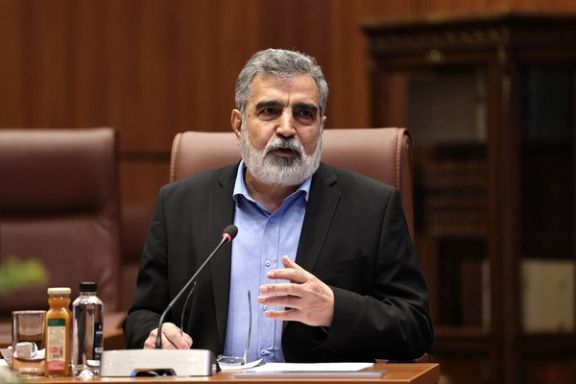
The Spokesman for the Atomic Energy Organization of Iran Behrouz Kamalvandi.

Iran’s existing nuclear safeguards agreement with the International Atomic Energy Agency (IAEA) does not account for wartime conditions and must be revised to protect national security, Behrouz Kamalvandi, spokesman for the Atomic Energy Organization of Iran, said on Tuesday.

Kamalvandi said the current safeguards agreement under the Nuclear Non-Proliferation Treaty (NPT) was written for “normal circumstances” and provides no clear mechanism for facilities that have come under attack. “The safeguards agreement was not designed for wartime situations and therefore needs to be updated,” he told IRNA.

He added that Iran remains committed to the NPT and its verification framework but said the agency’s political approach has complicated cooperation. “When a country is attacked, it cannot be expected to immediately allow inspectors into damaged sites, because that could mean handing sensitive information to its enemies,” Kamalvandi said.

The spokesman said Tehran would continue cooperating with the IAEA over undamaged facilities, but for those hit during recent strikes, “a new legal understanding is needed.” He said the safeguards regime allows for such revisions under its articles 20–22, which permit amendments in exceptional circumstances.

IAEA 'accepted Iran’s point' in Cairo talks

Kamalvandi also revealed that during recent discussions in Cairo, IAEA officials had effectively acknowledged Iran’s legal argument, accepting that the existing safeguards framework does not fully address post-conflict conditions. “Their agreement in Cairo shows that they understood our point — the current text cannot respond to the realities after the 12-day war,” he said.

He stressed that any future cooperation with the agency must ensure that Iran’s security and classified information are protected, saying Tehran is prepared to propose new verification methods “compatible with the realities of a conflict environment.”

“Our main goal is to find a path within the law,” Kamalvandi said. “We are not closing the door to cooperation, but the rules must reflect the conditions that Iran — or any country under attack — faces.”

Foreign minister warns of radiation risk at bombed nuclear sites

Meanwhile, earlier this week Foreign Minister Abbas Araghchi said Iran faces “security threats and safety concerns” after strikes on its nuclear facilities during the 12-day war in June, warning of potential radiation leaks from damaged sites.

In an interview with Japan’s Kyodo News published on Sunday, Araghchi said the attacks had created “serious dangers,” including possible contamination and unexploded ordnance.

Araghchi added that while Tehran remains open to new nuclear talks if Washington shows “a logic of confidence-building,” IAEA inspections cannot resume at damaged facilities until “clear protocols” are established to protect both safety and sovereignty.

Most Viewed

100 days after carnage: Iran economy reels from war, inflation, unemployment
1
INSIGHT

100 days after carnage: Iran economy reels from war, inflation, unemployment

2
INSIGHT

Ghalibaf defends Iran-US talks amid hardline backlash

3
INSIGHT

A nation in limbo: 100 days after the massacre, has the world moved on?

4
ANALYSIS

From instability to influence: Pakistan’s pivotal role in US-Iran diplomacy

5
ANALYSIS

100 days on: why Iran’s January protests spread across social classes

Banner
Banner

Spotlight

  • War-hit homeowners feel abandoned as Iran’s reconstruction aid fades

    War-hit homeowners feel abandoned as Iran’s reconstruction aid fades

  • 100 days on: the anatomy of Iran’s January crackdown
    INSIGHT

    100 days on: the anatomy of Iran’s January crackdown

  • Ghalibaf defends Iran-US talks amid hardline backlash
    INSIGHT

    Ghalibaf defends Iran-US talks amid hardline backlash

  • 100 days on: why Iran’s January protests spread across social classes
    ANALYSIS

    100 days on: why Iran’s January protests spread across social classes

  • From instability to influence: Pakistan’s pivotal role in US-Iran diplomacy
    ANALYSIS

    From instability to influence: Pakistan’s pivotal role in US-Iran diplomacy

  • A nation in limbo: 100 days after the massacre, has the world moved on?
    INSIGHT

    A nation in limbo: 100 days after the massacre, has the world moved on?

•
•
•

More Stories

Air pollution sends 170,000 Iranians to hospitals in a week – health official

Dec 9, 2025, 09:14 GMT+0

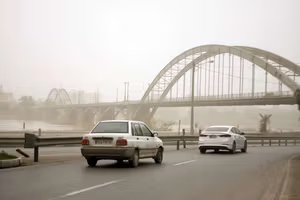
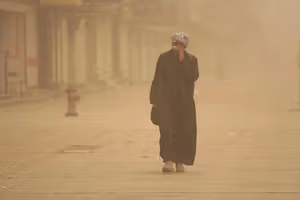
Iran’s Deputy Health Minister Alireza Raisi said more than 170,000 people have gone to emergency wards since the start of December because of heart and respiratory problems caused by air pollution, describing the situation as a “serious and widespread public health crisis.”

“During just one week, emergency departments nationwide recorded over 170,000 pollution-related visits,” Raisi said on Tuesday, noting that cases had risen by 20 to 25 percent compared with normal levels. “Most of these patients came from the 11 provinces with the highest pollution, showing the scale of the crisis,” he added.

Raisi said the Health Ministry estimates the annual health cost of pollution at about $17 billion, and that more than 59,000 people died last year from diseases linked to poor air quality.

Citing World Health Organization data, Raisi said most Iranian cities suffer from dangerously high levels of pollutants. “Tehran had only 14 clean-air days last year, Isfahan 16, Mashhad 28, and Ahvaz just two,” he said. “This means a large part of the population is exposed to hazardous air nearly all year.”

  • Air pollution killed seven Iranians every hour last year, official says

    Air pollution killed seven Iranians every hour last year, official says

  • ‘We can’t breathe’: Iranians recount daily toll of persistent smog

    ‘We can’t breathe’: Iranians recount daily toll of persistent smog

  • Toxic air tightens grip on Iran, triggering widespread alerts

    Toxic air tightens grip on Iran, triggering widespread alerts

He said particles smaller than 2.5 microns “enter the bloodstream quickly and are proven causes of cancer, cardiovascular disease, and severe respiratory disorders.”

Tehran suffers record air pollution, Shargh reports

The reformist daily Shargh said the current Iranian year, 1404, has been Tehran’s worst for air pollution in at least two decades, with more than half of all days so far classified as polluted. “In no previous year have the data been this dark,” wrote analyst Ali Pirhosseinlou in a Tuesday commentary.

He said the number of “acceptable” air-quality days has dropped to about one-third of the year, while at least four days so far have seen daily air quality index readings above 200 — considered “very unhealthy.”

“The situation is worse than at any time in the past two decades,” Shargh wrote. “There is no plan to control the sources of pollution. No effort to renew diesel fleets, improve fuel quality, or reduce traffic. Instead, the municipality has restricted access to air-quality data.”

The paper concluded: “This is not interpretation – it is reality.”

Iran accelerates missile rebuilding effort, IDF warns Knesset – Ynet

Dec 9, 2025, 08:33 GMT+0

Iran has resumed large-scale production of ballistic missiles about six months after its 12-day war with Israel, a senior IDF official told lawmakers in a closed Knesset briefing, according to Israeli news outlet Ynet.

The briefing, described by several participants, said Iran is rapidly restoring its missile manufacturing capacity after suffering heavy damage in June strikes.

The IDF official warned that Tehran’s missile program is “recovering at a fast pace” and remains a top strategic priority for Iran’s military planners.

The warning came as Iran intensified missile and drone testing during large-scale military exercises in the Persian Gulf and the Oman Sea.

Last week, the commander of Iran’s Revolutionary Guard Navy said a new missile tested during the drills had a range beyond the length of the Persian Gulf, without specifying the exact distance. “The Persian Gulf is 1,375 kilometers long – this missile’s range is beyond that,” Rear Admiral Alireza Tangsiri said on state television.

Tangsiri said the weapon, built domestically by the IRGC Navy, “can be guided after launch” and demonstrated “very high precision.” State media said the exercises also involved ballistic and cruise missile fire, drone operations, and air defense maneuvers around the Strait of Hormuz and Iran’s southern islands.

Iran’s missiles have a declared range of up to 2,000 kilometers, which officials say is sufficient for deterrence and covers Israel. The United States and its allies have urged Tehran to limit missile development to under 500 kilometers — a demand Iran has repeatedly rejected.

Iran among the world’s biggest jailers of journalists, press watchdog says

Dec 9, 2025, 07:52 GMT+0

Iran was among the world’s top jailers of journalists this year, Reporters Without Borders (RSF) said in its annual report published on Tuesday, behind China, Russia and Myanmar.

Following the top three, RSF listed the next biggest jailers in order as Belarus, Vietnam, Azerbaijan, Iran, Egypt, Israel and Saudi Arabia. 21 journalists are currently imprisoned in Iran, it added, and one remains missing.

“This is where impunity for these crimes leads us,” RSF Director General Thibaut Bruttin said in a statement.

“The failure of international organizations that are no longer able to ensure journalists’ right to protection in armed conflicts is the consequence of a global decline in the courage of governments, which should be implementing protective public policies,” it added.

The report dedicates separate sections to journalists working in war zones, including Russia, Ukraine, Sudan and Syria, warning that these environments have become increasingly deadly.

“About 43% of the journalists slain in the past 12 months were killed in Gaza by Israeli armed forces. In Ukraine, the Russian army continues to target foreign and Ukrainian reporters. Sudan has also emerged as an exceptionally deadly war zone for news professionals,” the report said.

Exiled journalists

RSF also places Iran among the top 10 countries whose journalists receive its assistance while in exile. The list includes Afghanistan, Russia, Sudan, Iran, Belarus, Myanmar, El Salvador and Kyrgyzstan.

“Out of over 40 media outlets supported by the RSF Assistance Office over the last 12 months, 19 were Afghanistan, Russia, Sudan, Iran, Belarus, Myanmar, El Salvador and Kyrgyzstan newsrooms that continued to produce journalism in exile,” the report noted.

More than half of the journalists who applied for RSF emergency assistance in 2025 had been forced into exile, coming from 44 countries.

“2025 will be remembered as the year press freedom died in plain sight,” the report concludes, urging targeted sanctions on officials and entities responsible for the surveillance and detention of journalists.

Following widespread protests that began in September 2022 in Iran, repression of the press intensified and shows no sign of easing.

The crackdown coincides with increased pressure after the outbreak of war between Iran and Israel in June, which over 700 people have been arrested on allegations of collaboration with Israel.

United Nations experts have urged Iran to end the post-ceasefire repression, warning that “post-conflict situations must not be used as an opportunity to suppress dissent and increase repression.”

Iran summons Jewish MP over constituents’ social media activity

Dec 9, 2025, 01:14 GMT+0

Homayoun Sameh Yah Najafabadi, the Jewish representative in Iran's parliament, said on Monday that he had been summoned by security agencies over Jewish users’ likes and comments on Israeli content.

“Unfortunately, in the past two weeks, I was summoned to these agencies because some fellow Jews posted comments and liked false content, causing misunderstandings among the country's intelligence agencies,” Najafabadi said in an open letter published on his Telegram channel.

Najafabadi called on members of the Jewish community in Iran to refrain from leaving comments or likes on social media that might cause suspicion.

“You are requested, if you have published any unusual, sensitive, or misconstruable comments or likes in cyberspace, to delete them as soon as possible,” the letter said.

‘Unfollow IDF’

“If you are a member of channels and pages of the Zionist regime, including Israel in Persian, and other hostile pages and channels, it is essential to immediately unfollow and cancel membership,” the letter added.

The Israel Defense Forces (IDF) maintains a series of active accounts and channels on social media platforms such as X, Instagram, Facebook and Telegram in Persian.

“Continuing membership in the mentioned channels or failing to delete comments and likes could lead to judicial problems, and pursuing and resolving the issue in the future will become much more difficult,” it said.

Homayoun Sameh Yah Najafabadi, the Jewish representative in Iran's parliament, File photo
100%
Homayoun Sameh Yah Najafabadi, the Jewish representative in Iran's parliament, File photo

The letter is the latest document in an extensive campaign by Iranian intelligence agencies against the Jewish community, which has intensified after a 12-day war with Israel in June.

Since the recent military confrontation with Israel, dozens of Iranian Jews have been arrested on charges of "collaboration with hostile regimes.”

Kamran Hekmati, a 70-year-old Jewish man from New York, a father and grandfather who runs a jewelry business and holds dual American-Iranian citizenship, is currently detained. Rights groups, colleagues, and friends say he is being questioned over a past trip to Israel.

Hekmati was sentenced to prison in Iran for a trip he made 13 years ago to Israel to hold a ceremony for his son.

According to Israeli media reports, before the 1979 revolution, about 80,000 to 100,000 Jews lived in Iran, but today their number has decreased to fewer than 10,000.

Rebellion tamed: why Iran is turning rap into a controlled industry

Dec 8, 2025, 19:18 GMT+0
•
Negar Mojtahedi

Rap has moved from the margins to the spotlight in Iran, where it is being promoted on streaming platforms, entertainment shows and Instagram feeds tied to state interests and seen by millions.

To many viewers it looks like a cultural opening: a genre long associated with underground resistance now visible on mainstream screens.

But researcher and artist Siavash Rokni, a postdoctoral fellow at McGill University in Montreal who studies Iranian youth culture, pop music and the communication dynamics of social movements, argues that that the reality is more complicated.

“It is a public relations performance,” he said. “It is fooling a lot of people, and we need to stop being fooled by it.”

Rokni has followed the evolution of Iran’s rap scene across five generations. He sees the new appetite for rap not as legalization but domestication, turning underground culture into something profitable and controllable.

Entertainment shows and “normal” rappers

One of the most watched programs in this space is BaZia, hosted by a former Iranian state television personality now living in Turkey. According to Rokni, the show’s guest selection and narratives suggest an ongoing connection with Iran.

“Technically speaking, he is no longer connected to the system,” Rokni said. “But the way he chooses his guests shows there is a connection.”

The rappers appearing on BaZia help normalize a particular type of rap that is not inclusive of all aspects of this cultural practice. Many of the same rappers featured on BaZia are now set to appear in a new rap-themed program hosted by him called GANG. Rokni says it shows how this was part of a larger plan to create momentum for the new show while normalizing a particular narrative of regime approved rap.

The narrative, Rokni said, “comes very slowly” through a sequence of interviews. Artists describe performing abroad but wanting to return. Producers talk about the economic advantage of bringing rap back while being able to control the content.

Money, control and aesthetics

Much of Iran’s music economy is in the hands of a profit-minded clique, Rokni said.

“The people who are running this oligarchical capitalism are connected to the Islamic Republic,” he said. “They just want to make cash.”

He stressed that the motivation is not necessarily ideological. Many simply benefit from the system’s structures.

The appearance of rap on screens has been accompanied by pressure and arrests behind the scenes. In early October at least five rappers and a composer were detained in Tehran and Shiraz, according to the Center for Human Rights in Iran.

Security forces raided homes, seized phones and recording equipment and transferred the men to detention.

Within days videos appeared on their Instagram accounts with shaved heads and visible tattoos, apologizing on camera. Lawyers told CHRI the accounts had been taken over by cyber police.

One of the most high profile cases remains Toomaj Salehi, whose lyrics became an anthem of the Women Life Freedom movement.

He was arrested, abused in detention, sentenced to death, released on bail and then rearrested after publicly describing his treatment. Supporters say he is targeted because he refuses to leave Iran or be silent.

Female rappers face even greater constraints. Iran bans solo female singers from performing publicly or releasing their own vocals, forcing artists into exile or underground spaces. Studios refused to record them and venues were raided for illegal performances.

Why normalize rap at all?

Rokni traces the logic back to then Iranian president Mohammad Khatami era when the government offered small cultural openings to create a sense of possibility.

“You free some cultural restrictions and reconcile with the people,” he said. “You give hope. And that can be taken away very easily.”

He called this strategy dishonest. Licensing and televised satire, he said, do not signal reform. They are tools for narrative management.

Oppression, he argued, is often brief.

“They put a lid on it,” he said. “But the program starts after that.”

The backlash against licensed rappers, especially those connected to the Woman, Life, Freedom movement, has been emotional. Some consider state approved albums a betrayal. Others see economic survival.

Rokni believes the solution is parallel economies, enabling musicians to make money without going through state linked producers or licensing offices.

“Do it yourself,” he said. He pointed to artists who built audiences through Instagram and streaming platforms.

In today’s Iran rap carries two meanings. One version is polished, licensed and safe. The other remains underground created by musicians who refuse to compromise.

Both exist at once but only one is protected.