• العربية
  • فارسی
Brand
  • Iran Insight
  • Politics
  • Economy
  • Analysis
  • Special Report
  • Opinion
  • Podcast
  • Iran Insight
  • Politics
  • Economy
  • Analysis
  • Special Report
  • Opinion
  • Podcast
  • Theme
  • Language
    • العربية
    • فارسی
  • Iran Insight
  • Politics
  • Economy
  • Analysis
  • Special Report
  • Opinion
  • Podcast
All rights reserved for Volant Media UK Limited
volant media logo

Air pollution sends 170,000 Iranians to hospitals in a week – health official

Dec 9, 2025, 09:14 GMT+0

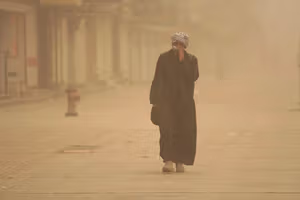
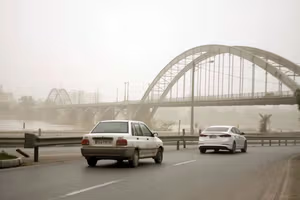
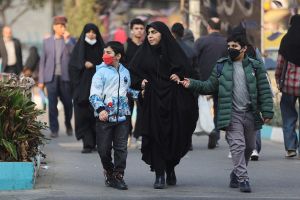
Iran’s Deputy Health Minister Alireza Raisi said more than 170,000 people have gone to emergency wards since the start of December because of heart and respiratory problems caused by air pollution, describing the situation as a “serious and widespread public health crisis.”

“During just one week, emergency departments nationwide recorded over 170,000 pollution-related visits,” Raisi said on Tuesday, noting that cases had risen by 20 to 25 percent compared with normal levels. “Most of these patients came from the 11 provinces with the highest pollution, showing the scale of the crisis,” he added.

Raisi said the Health Ministry estimates the annual health cost of pollution at about $17 billion, and that more than 59,000 people died last year from diseases linked to poor air quality.

Citing World Health Organization data, Raisi said most Iranian cities suffer from dangerously high levels of pollutants. “Tehran had only 14 clean-air days last year, Isfahan 16, Mashhad 28, and Ahvaz just two,” he said. “This means a large part of the population is exposed to hazardous air nearly all year.”

He said particles smaller than 2.5 microns “enter the bloodstream quickly and are proven causes of cancer, cardiovascular disease, and severe respiratory disorders.”

Tehran suffers record air pollution, Shargh reports

The reformist daily Shargh said the current Iranian year, 1404, has been Tehran’s worst for air pollution in at least two decades, with more than half of all days so far classified as polluted. “In no previous year have the data been this dark,” wrote analyst Ali Pirhosseinlou in a Tuesday commentary.

He said the number of “acceptable” air-quality days has dropped to about one-third of the year, while at least four days so far have seen daily air quality index readings above 200 — considered “very unhealthy.”

“The situation is worse than at any time in the past two decades,” Shargh wrote. “There is no plan to control the sources of pollution. No effort to renew diesel fleets, improve fuel quality, or reduce traffic. Instead, the municipality has restricted access to air-quality data.”

The paper concluded: “This is not interpretation – it is reality.”

Most Viewed

Ghalibaf defends Iran-US talks amid hardline backlash
1
INSIGHT

Ghalibaf defends Iran-US talks amid hardline backlash

2
INSIGHT

A nation in limbo: 100 days after the massacre, has the world moved on?

3
ANALYSIS

From instability to influence: Pakistan’s pivotal role in US-Iran diplomacy

4
ANALYSIS

100 days on: why Iran’s January protests spread across social classes

5

War-hit homeowners feel abandoned as Iran’s reconstruction aid fades

Banner
Banner

Spotlight

  • War-hit homeowners feel abandoned as Iran’s reconstruction aid fades

    War-hit homeowners feel abandoned as Iran’s reconstruction aid fades

  • 100 days on: the anatomy of Iran’s January crackdown
    INSIGHT

    100 days on: the anatomy of Iran’s January crackdown

  • Ghalibaf defends Iran-US talks amid hardline backlash
    INSIGHT

    Ghalibaf defends Iran-US talks amid hardline backlash

  • 100 days on: why Iran’s January protests spread across social classes
    ANALYSIS

    100 days on: why Iran’s January protests spread across social classes

  • From instability to influence: Pakistan’s pivotal role in US-Iran diplomacy
    ANALYSIS

    From instability to influence: Pakistan’s pivotal role in US-Iran diplomacy

  • A nation in limbo: 100 days after the massacre, has the world moved on?
    INSIGHT

    A nation in limbo: 100 days after the massacre, has the world moved on?

  • Toxic air tightens grip on Iran, triggering widespread alerts

    Toxic air tightens grip on Iran, triggering widespread alerts

  • Air pollution killed seven Iranians every hour last year, official says

    Air pollution killed seven Iranians every hour last year, official says

  • ‘We can’t breathe’: Iranians recount daily toll of persistent smog

    ‘We can’t breathe’: Iranians recount daily toll of persistent smog

•
•
•

More Stories

Iran accelerates missile rebuilding effort, IDF warns Knesset – Ynet

Dec 9, 2025, 08:33 GMT+0

Iran has resumed large-scale production of ballistic missiles about six months after its 12-day war with Israel, a senior IDF official told lawmakers in a closed Knesset briefing, according to Israeli news outlet Ynet.

The briefing, described by several participants, said Iran is rapidly restoring its missile manufacturing capacity after suffering heavy damage in June strikes.

The IDF official warned that Tehran’s missile program is “recovering at a fast pace” and remains a top strategic priority for Iran’s military planners.

The warning came as Iran intensified missile and drone testing during large-scale military exercises in the Persian Gulf and the Oman Sea.

Last week, the commander of Iran’s Revolutionary Guard Navy said a new missile tested during the drills had a range beyond the length of the Persian Gulf, without specifying the exact distance. “The Persian Gulf is 1,375 kilometers long – this missile’s range is beyond that,” Rear Admiral Alireza Tangsiri said on state television.

Tangsiri said the weapon, built domestically by the IRGC Navy, “can be guided after launch” and demonstrated “very high precision.” State media said the exercises also involved ballistic and cruise missile fire, drone operations, and air defense maneuvers around the Strait of Hormuz and Iran’s southern islands.

Iran’s missiles have a declared range of up to 2,000 kilometers, which officials say is sufficient for deterrence and covers Israel. The United States and its allies have urged Tehran to limit missile development to under 500 kilometers — a demand Iran has repeatedly rejected.

Iran among the world’s biggest jailers of journalists, press watchdog says

Dec 9, 2025, 07:52 GMT+0

Iran was among the world’s top jailers of journalists this year, Reporters Without Borders (RSF) said in its annual report published on Tuesday, behind China, Russia and Myanmar.

Following the top three, RSF listed the next biggest jailers in order as Belarus, Vietnam, Azerbaijan, Iran, Egypt, Israel and Saudi Arabia. 21 journalists are currently imprisoned in Iran, it added, and one remains missing.

“This is where impunity for these crimes leads us,” RSF Director General Thibaut Bruttin said in a statement.

“The failure of international organizations that are no longer able to ensure journalists’ right to protection in armed conflicts is the consequence of a global decline in the courage of governments, which should be implementing protective public policies,” it added.

The report dedicates separate sections to journalists working in war zones, including Russia, Ukraine, Sudan and Syria, warning that these environments have become increasingly deadly.

“About 43% of the journalists slain in the past 12 months were killed in Gaza by Israeli armed forces. In Ukraine, the Russian army continues to target foreign and Ukrainian reporters. Sudan has also emerged as an exceptionally deadly war zone for news professionals,” the report said.

Exiled journalists

RSF also places Iran among the top 10 countries whose journalists receive its assistance while in exile. The list includes Afghanistan, Russia, Sudan, Iran, Belarus, Myanmar, El Salvador and Kyrgyzstan.

“Out of over 40 media outlets supported by the RSF Assistance Office over the last 12 months, 19 were Afghanistan, Russia, Sudan, Iran, Belarus, Myanmar, El Salvador and Kyrgyzstan newsrooms that continued to produce journalism in exile,” the report noted.

More than half of the journalists who applied for RSF emergency assistance in 2025 had been forced into exile, coming from 44 countries.

“2025 will be remembered as the year press freedom died in plain sight,” the report concludes, urging targeted sanctions on officials and entities responsible for the surveillance and detention of journalists.

Following widespread protests that began in September 2022 in Iran, repression of the press intensified and shows no sign of easing.

The crackdown coincides with increased pressure after the outbreak of war between Iran and Israel in June, which over 700 people have been arrested on allegations of collaboration with Israel.

United Nations experts have urged Iran to end the post-ceasefire repression, warning that “post-conflict situations must not be used as an opportunity to suppress dissent and increase repression.”

Iranian academic hits raw nerve with scorn of poor in power

Dec 9, 2025, 02:35 GMT+0
•
Maryam Sinaiee

A prominent academic’s assertion that many of Iran’s problems stem from “the dominance of the economically weak class” in governance has stoked outrage in a country whose theocracy bills itself as a champion of the downtrodden.

In a recent interview, Mahmood Sariolghalam, a US-educated professor of international relations at Tehran’s Shahid Beheshti University, argued that senior positions should not be held by individuals from the country’s lower economic strata.

“No one from the lower economic strata should be allowed to become foreign minister or finance minister,” he said, adding that such posts require the “expertise and rational capacity of the mind.”

Sariolghalam, who held senior roles at the Center for Scientific Research and Middle East Strategic Studies under presidents Mohammad Khatami and Hassan Rouhani, framed the remarks as an analysis of development patterns rather than a social judgment.

Critics from across the spectrum accused him of class discrimination, delegitimizing the political agency of Iran’s poor and promoting an elitist technocratic worldview.

But others were more sympathetic as many observers have questioned Tehran's management of deepening diplomatic, economic and resource challenges.

For decades since the 1979 Islamic Revolution, positions of authority from local officials to the presidency have often been filled by loyal cadres often drawn from poorer demographics.

Under pressure, Sariolghalam told the reformist Ensaf News his remarks had been distorted, insisting he had highlighted the developmental role of the middle class, not the poor.

“The middle class matters not only in financial terms but also for its intellectual, educational, and investment-oriented capacities,” he said, citing Japan as an example of middle-class resilience.

‘Oligarchy’

Experts have cited the dangers of sanctions and economic mismanagement to Iran's middle class, which economists and political scientists often view as a key source of dynamism in society.

International academics Mohammad Reza Farzanegan and Nader Habibi published research in the European Journal of Political Economy in which they said sanctions on Iran had decimated the middle class and the political benefits it could bring.

"The sanctions regime on Iran was far from being a surgical strike; instead, it was a sledgehammer that smashed the very group that represents the best hope for a more moderate and stable future," they wrote in an editorial on Al-Jazeera.

In a front-page editorial titled “The Savior Class,” the centrist daily Sazandegi defended Sariolghalam's tack.

“The emphasis on the ‘middle class’ … is not meant to suggest economic superiority,” it wrote, but to underline the need for “security, mental order and relief from livelihood pressures” for sound decision-making.

The paper argued he was criticizing systems that allow “individuals who lack intellectual, managerial, or mental qualifications” into key posts.

A group of academics echoed that defense, arguing governance failures stem from the rise of opportunistic figures who wield power to “compensate for their own life shortcomings.”

Hardline outlets reacted fiercely. Several accused Sariolghalam of equating poverty with “mental deficiency” and advocating a “technocratic oligarchy” at odds with the Islamic Republic’s valorization of the mostaz’afin — often translated as “the dispossessed.”

“The downtrodden and the barefooted are expected to endure a bleak fate… while the aristocrats and the affluent… sit upon their backs and rule over them,” the IRGC-linked Javan proclaimed.

State to blame

Conservative daily Khorasan accused Sariolghalam of shifting blame for failed engagement with the West onto the “lower classes.”

Conservative media also tied the remarks to former president Hassan Rouhani, casting them as part of broader ideological failings among Iran’s technocratic current.

“The mind behind Rouhani’s thinking,” as Mehr News branded Sariolghalam, had exposed “one of the deepest intellectual flaws” of Iran’s centrists: that only they know how to run a country.

Some moderate voices pointed out that the ferocity of the debate revealed deeper structural problems.

Journalist Ahmad Zeidabadi argued in Ham-Mihan that Tehran’s decades-long, excessive rhetorical defense of the poor had created conditions in which “Sariolghalam’s repulsive statement has somehow gained acceptance.”

Iran summons Jewish MP over constituents’ social media activity

Dec 9, 2025, 01:14 GMT+0

Homayoun Sameh Yah Najafabadi, the Jewish representative in Iran's parliament, said on Monday that he had been summoned by security agencies over Jewish users’ likes and comments on Israeli content.

“Unfortunately, in the past two weeks, I was summoned to these agencies because some fellow Jews posted comments and liked false content, causing misunderstandings among the country's intelligence agencies,” Najafabadi said in an open letter published on his Telegram channel.

Najafabadi called on members of the Jewish community in Iran to refrain from leaving comments or likes on social media that might cause suspicion.

“You are requested, if you have published any unusual, sensitive, or misconstruable comments or likes in cyberspace, to delete them as soon as possible,” the letter said.

‘Unfollow IDF’

“If you are a member of channels and pages of the Zionist regime, including Israel in Persian, and other hostile pages and channels, it is essential to immediately unfollow and cancel membership,” the letter added.

The Israel Defense Forces (IDF) maintains a series of active accounts and channels on social media platforms such as X, Instagram, Facebook and Telegram in Persian.

“Continuing membership in the mentioned channels or failing to delete comments and likes could lead to judicial problems, and pursuing and resolving the issue in the future will become much more difficult,” it said.

Homayoun Sameh Yah Najafabadi, the Jewish representative in Iran's parliament, File photo
100%
Homayoun Sameh Yah Najafabadi, the Jewish representative in Iran's parliament, File photo

The letter is the latest document in an extensive campaign by Iranian intelligence agencies against the Jewish community, which has intensified after a 12-day war with Israel in June.

Since the recent military confrontation with Israel, dozens of Iranian Jews have been arrested on charges of "collaboration with hostile regimes.”

Kamran Hekmati, a 70-year-old Jewish man from New York, a father and grandfather who runs a jewelry business and holds dual American-Iranian citizenship, is currently detained. Rights groups, colleagues, and friends say he is being questioned over a past trip to Israel.

Hekmati was sentenced to prison in Iran for a trip he made 13 years ago to Israel to hold a ceremony for his son.

According to Israeli media reports, before the 1979 revolution, about 80,000 to 100,000 Jews lived in Iran, but today their number has decreased to fewer than 10,000.

In febrile Tehran atmosphere, all public life is a combat sport

Dec 8, 2025, 20:34 GMT+0

Power politics in Tehran has reached a stage where even the most routine public affairs—a film festival, an environmental report or the World Cup draw—spiral into controversy, as if the system cannot tolerate anything resembling normalcy.

Last week, an international film festival was held in the historic city of Shiraz. To emphasize the festival’s international character, organizers invited one of Turkey’s most acclaimed filmmakers Nuri Bilge Ceylan to head the jury.

The announcement angered hardliners, who framed it as a cultural intrusion. Culture Ministry officials who organized the event did not dare explain the meaning of “international.” Even if they had, few would have listened.

While the festival attempted to celebrate cinematic creativity in a conspicuously muted way—so as not to provide ammunition to political rivals—security forces in Tehran raided a private birthday gathering of Iranian filmmakers and arrested several for drinking.

It was another reminder that even culture, perhaps especially culture, cannot escape the state’s instinctive need to police spontaneity.

On air sagas

That same week, cleric Abdolrahim Soleimani Ardestani sparked outrage during a live debate on a popular YouTube-based platform when he asserted that a Shi'ite Imam was killed by his wife after discovering he had taken a second wife.

Fundamentalists and hardliners swiftly accused him of insulting religious sanctities—an allegation that could carry the death penalty—ultimately forcing him to apologize.

In the same week, a local official in the western province of Kohgiluyeh and Boyer-Ahmad openly questioned President Masoud Pezeshkian’s water policy during a televised event.

Visibly angry, Pezeshkian shouted that the dams in question were not signed off by him. The live broadcast was abruptly cut off when the official produced documents that proved the president wrong.

A mundane administrative event turned combustible in a system where power is perpetually on edge.

Everything—even football

Then came the 2026 World Cup draw in Washington DC, and the saga surrounding entry permits for Iran’s delegation.

Tehran first announced it would boycott the event after the United States issued visas to only four of the nine delegates—a high number, as countries typically send one to four representatives.

After two weeks of heated debate in Tehran, the boycott was abandoned and two delegates were sent to the draw following “consultations with the Foreign Ministry.”

Predictably, no one asked why such consultations had not taken place before the hasty boycott. Nor did anyone question why the federation or government failed to protest the ban on Iranian spectators traveling to the US for the 2026 World Cup.

Sports diplomacy became yet another venue where reflexive posturing overtakes basic competence.

Strange as it may seem, this was simply another ordinary week in Iran—a week where the smallest acts are politicized, the simplest decisions are derailed, and the state’s fear of normalcy turns daily life into a continuous cascade of avoidable crises.