• العربية
  • فارسی
Brand
  • Iran Insight
  • Politics
  • Economy
  • Analysis
  • Special Report
  • Opinion
  • Podcast
  • Iran Insight
  • Politics
  • Economy
  • Analysis
  • Special Report
  • Opinion
  • Podcast
  • Theme
  • Language
    • العربية
    • فارسی
  • Iran Insight
  • Politics
  • Economy
  • Analysis
  • Special Report
  • Opinion
  • Podcast
All rights reserved for Volant Media UK Limited
volant media logo

Politicians Say Iran’s Economic Crisis Can Lead To Regime Collapse
Iran International Newsroom
Aug 11, 2023, 13:42 GMT+1Updated: 17:36 GMT+1
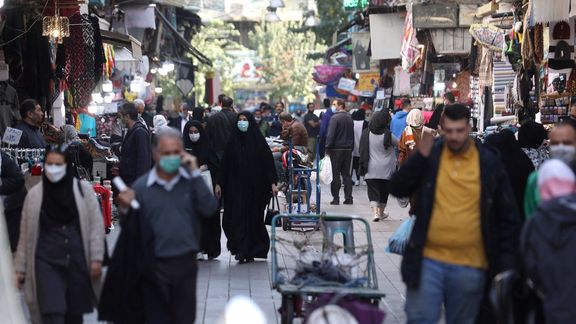
  An Iranian bazaar
An Iranian bazaar

A former head of Iran's Planning and Budget Organization says economic crisis will inevitably lead to the collapse of the regime, as others also voice pessimism.

A prominent ‘reformist’ politician also argues that the current popular distrust in the government leads the authorities to use a security approach against the people.

At the same time, a former Deputy Intelligence Minister and Government Spokesman says despite the nationwide uprising that started in September 2022, there is no prospect for change and reform in the country.

Former budget chief Massoud Roghani Zanjani speaking in a Club House chat session that years of inflation and poverty have brought the popular dissatisfaction to a peak and laid the ground for protests in Iran. 

Zanjani said that the current crisis is the outcome of clerics' intervention in politics and the conflict between elected and non-elected bodies in the government. He added that the non-elected bodies are where the clerics' power centers are. 

Former budget chief Massoud Roghani Zanjani (undated)
100%
Former budget chief Massoud Roghani Zanjani

He further added that "When absolute power was given to the Supreme Leader in the 1987 revision of the Iranian Constitution, it was in fact similar to crossing out all other articles of the Constitution." He pointed out that since then, Ali Khamenei has undermined the Constitution by actions such as giving executive powers to the heads of the three branches of the government. 

Zanjani said one of the reasons for the country's economic crisis is that Iran has two treasuries, one for the government, and another for Khamenei's office. He further charged that privileges given to the clerics has created an apartheid regime in their favor. 

Meanwhile, prominent reformist figure Feyzollah Arabsorkhi said in an interview with Rouydad24 website that people's distrust of the government, has encouraged officials to use security measures as a tool against the people. 

He added that what is going on in the parliament and the government is diagonally different from what people expect. Arabsorkhi said, "Just look at the government's views about the Internet and social media. It reflects the views of the hard core of the government about freedom of speech.” Under these circumstances, you cannot expect the people to trust the government when it tries all the time to restrict people's access to the Internet.

Reformist figure Feyzollah Arabsorkhi  (undated)
100%
Reformist figure Feyzollah Arabsorkhi

"People's distrust in the government and its efficiency are currently the biggest problems the authorities are facing," Arabsorkhi said, adding that "People do not believe what rulers say, and if the government wishes to correct this situation it should respond positively to popular demands and expectations. 

He added that the hijab law that is currently being discussed secretly at the parliament without paying attention to the people's views and expectations is one of the examples why Iranians have lost trust in the government. The state television which could have acted as mediator between the people and the government acts so unilaterally that there is no trace of the people's demands in its programming.

Meanwhile, former government spokesman Ali Rabiei wrote in Etemad Online website that there is still no prospect for reforms and correcting mistakes made by the government despite several months of nationwide protests. 

"On the contrary, in some cultural issues we see that the government is putting a step back," Rabiei said, presumably referring to compulsory hijab.

Rabiei insisted that failure to bring about a clear prospect for reforms in foreign and economic policies, and improve governance will adversely affect turnout in the upcoming parliamentary elections. 


Most Viewed

Iran negotiators ordered to return after internal rift over Islamabad talks
1
EXCLUSIVE

Iran negotiators ordered to return after internal rift over Islamabad talks

2
ANALYSIS

US blockade enters murky phase as tankers spoof signals and buyers hesitate

3
ANALYSIS

Why the $100 billion Hormuz toll revenue is a myth

4

US tightens financial squeeze on Iran, warns banks over oil money flows

5
ANALYSIS

US blockade targets Iran oil boom amid regional disruption

Banner
Banner

Spotlight

  • Hardliners push Hormuz ‘red line’ as US blockade tests Iran’s leverage
    INSIGHT

    Hardliners push Hormuz ‘red line’ as US blockade tests Iran’s leverage

  • Ideology may be fading in Iran, but not in Kashmir's ‘Mini Iran'
    INSIGHT

    Ideology may be fading in Iran, but not in Kashmir's ‘Mini Iran'

  • War damage amounts to $3,000 per Iranian, with blockade set to add to losses
    INSIGHT

    War damage amounts to $3,000 per Iranian, with blockade set to add to losses

  • Why the $100 billion Hormuz toll revenue is a myth
    ANALYSIS

    Why the $100 billion Hormuz toll revenue is a myth

  • US blockade targets Iran oil boom amid regional disruption
    ANALYSIS

    US blockade targets Iran oil boom amid regional disruption

  • Iran's digital economy battered by prolonged blackout
    INSIGHT

    Iran's digital economy battered by prolonged blackout

•
•
•

More Stories

German Intelligence Alerts Iranian Dissidents Of Cyber Espionage Risk

Aug 11, 2023, 12:13 GMT+1

Germany issued a warning to Iranian activists critical of the Iranian leadership, cautioning them about the potential threat of cyber espionage.

Germany's Federal Office for the Protection of the Constitution (BfV) specifically highlighted the activities of the Charming Kitten online espionage group, which employs sophisticated tactics to gain the trust of its targets.

According to the BfV, Charming Kitten employs a multi-step process that begins with building trust through personal contact, eventually leading the victim to unwittingly expose personal data, including online contacts within Iran. The group employs spear-phishing tactics, using counterfeit messages that appear authentic to acquire sensitive information. The victims are then lured into online video chats where they are prompted to enter login details, providing the hackers with potential access to their online accounts.

The cyberattacks conducted by Charming Kitten have primarily targeted dissident organizations and professionals, including legal practitioners, journalists, and human rights activists both within Iran and abroad.

Past instances have revealed the group's involvement in phishing attacks against foreign embassy staff, experts, and human rights advocates. The group's activities are reported to have support from the government of the Islamic Republic.

Notably, Charming Kitten has previously targeted US officials and officials responsible for implementing sanctions against Iran, as well as infiltrating the personal emails of officials within the US Treasury Department. Human Rights Watch has also pointed to the group's involvement in targeting activists, journalists, diplomats, and politicians in the Middle East. The BfV's advisory underscores the critical need for increased cybersecurity awareness and vigilance among dissident activists, journalists, and professionals dealing with sensitive information and international matters.

Iranians Insist They Will Have Full Control Over Any Released Funds

Aug 11, 2023, 11:27 GMT+1

Mohammad Marandi, a regime insider in Iran, says that Tehran will have full access to its funds when they are released from South Korea following a hostage deal.

It was confirmed on Thursday that five American hostages in Iran were released from prison and put under house arrest, pending the release of $6 billion of Iranian funds held in South Korea due to US sanctions.

Marandi, who was part of Iran’s nuclear negotiating team in Vienna in 2021-2022 tweeted that “Iran will have full and direct access to its released assets, there will be no Qatari companies involved, Iranian banks will have full control, and they can purchase goods and services without any limitation or restriction.”

United States officials have insisted that any frozen funds released from Iraq or South Korea can only be disbursed by US supervision for humanitarian purchases by Iran. The New York Times quoted sources on Thursday that Qatar’s Central Bank might become the repository of Iran’s funds, but the scheme for supervising its expenditure remains unclear.

Iran’s foreign ministry said in a statement on Friday that “The Islamic Republic will decide how to use the released funds, and these funds will be appropriated for the various needs of the country by the appropriate authorities.”

Critics say that the funds would boost the Iranian regime's finances, whether released in cash or with restrictions. If Iran can import food with the funds, it will use its own oil income for its military or malign activities.

Chief of Iran’s central bank visited Qatar in June, in what was interpreted at the time as a trip to begin coordination regarding any possible funds being released from Iraq or South Korea.

12 Students Summoned In Iran On Eve Of Mahsa Amini's Anniversary

Aug 11, 2023, 10:20 GMT+1

As the first anniversary of Mahsa Amini's death at the hands of the hijab police gets nearer, a wave of heightened security measures has surged across universities.

Reports have emerged that security authorities, under undisclosed identities, have reached out to several students including those from Tarbiat Modarres University. A total of 12 students have been summoned to report to the Ministry of Intelligence and sign pledge documents. The summoned students have not been informed of the rationale behind their summonses, and the legal foundation for these actions remains unclear.

Student union councils across the country assert that security is heightening as the first anniversary of Amini’s death approaches on September 16th.They insist that these moves indicate the regime's apprehension regarding potential student-led protests.

In a parallel development, sources have revealed that security institutions within the Islamic Republic have initiated a similar campaign of summoning individuals detained during last year's protests. These individuals have been coerced into pledging not to engage in any form of public or virtual activism during the second week of September, the time when Amini died a year ago. Failure to comply with these directives has been met with the threat of arrest.

A recent report from the United Nations High Commissioner for Human Rights disclosed that a minimum of 20,000 individuals were arrested by agents of the Islamic Republic during the revolutionary uprising, either for their active participation in the protests or for their support of the movement. Although some of these detainees were provisionally released on bail, their cases remain unresolved.

Many See Biden's Iran Hostage Deal As Encouraging Enemies

Aug 11, 2023, 08:40 GMT+1
•
Iran International Newsroom

As the White House welcomed the possible release of US hostages in Iran, critics called the $6 billion to be freed in exchange the biggest ransom ever paid by the United States.

Iran immediately corrected the $6-billion amount mentioned by Western media and said that in fact $9 billion was freed, including close to $3 billion frozen in Iraqi banks in addition to $6 billion held by South Korea. In fact, Washington freed the frozen funds in Iraq in June, possibly as the first concession to Tehran in negotiations that seem to have reached a conclusion.

Iranian government media on Friday made it clear that no prisoner will leave Iran until all the money from South Korea is transferred to special accounts in Qatar.

The Biden administration to cushion the negative impact of what is seen as a ransom payment, emphasized that no cash will reach the Iranian government and that the funds will only be disbursed to pay for humanitarian needs, but the exact mechanics of the scheme remain unclear.

The Iranians who see themselves as the big winners in hostage diplomacy, which has often paid off in the past four decades, even claimed that they will be the ones who will decide the fate of the money.

“The Islamic Republic will decide how to use the released funds, and these funds will be appropriated for the various needs of the country by the appropriate authorities,” the foreign ministry said in a statement on Friday.

Mohammad Jamshidi, a top aide to President Ebrahim Raisi, was quoted by the official government news agency IRNA that American prisoners will remain in Iran until all the funds from South Korea are released. Iranian media said that the funds will be exchanged from Korean currency into euros and kept in special accounts in Qatar’s central bank. The White House thanked the Qataris for their good offices in helping secure the deal.

Secretary of State Antony Blinken said on Thursday that the release of five Americans from prison in Iran was a "positive step" and the beginning of a process that he expects will lead to their return to the United States.

Blinken told reporters at a news conference after a meeting with his Mexican counterpart that the State Department had spoken with the five Americans on Thursday and that he was not aware of any other Americans still detained in Iran.

Iranian American activists were deeply dismayed by the Biden administration’s decision to provide a significant financial boost to the clerical regime, which is facing a serious economic crisis.

Amir Hamidi, a former US government official and a political consultant in Washington DC tweeted, “Allocating a staggering $6 billion to Iran amounts to facilitating the transfer of American hostages to a new detention facility, which is an utterly unacceptable concession. We must unwaveringly uphold the principle of not negotiating with terrorists or rewarding hostage-taking.”

Republican law makers almost immediately responded by accusing the Biden administration of caving in to Iran’s hostage diplomacy.

Senator Bill Hagerty (R-TN) said, “The release of American hostages is great and welcome news, But Biden’s policies encourage more hostage taking…The ransom is now $1.2 billion per hostage. Russia and China are taking note.”

Rep. Joe Wilson (R- S. Carolina) posted that “The terrorist regime in Tehran just received a gift of $6 billion from the Biden administration. Biden is showing our adversaries how to evade sanctions & is threatening the safety of Americans around the world.”

The debate around the administration’s Iran policy will take a sharper turn with the hostage deal and will probably become an issue in the 2024 elections. However, President Joe Biden seems to have succeeded in putting a lot of distance between the controversial decision and the election 15 months away.

Iran May Allow US Hostages To Leave Under $6 Billion Deal

Aug 10, 2023, 22:33 GMT+1
•
Iran International Newsroom

The United States has confirmed that five Americans have been released from prisons in Iran and are under house arrest, after what reports say is a deal with Tehran.

Iranian sources told the media that the deal would unfreeze $6 billion in Iranian funds in South Korea and some Iranians from US prisons.

"We are relieved to learn that Iranian authorities have released five US citizens -- Siamak Namazi, Morad Tahbaz, Emad Sharghi, and two individuals who at this time wish to remain private -- from prison to house arrest, State Department spokesperson Matt Miller told the media.

“We are in touch with the families of US citizens involved, and we continue to monitor these individuals’ health and welfare closely. While we welcome the news of these individuals’ release from prison to house arrest, they should never have been imprisoned in the first place. We continue to work diligently to bring these individuals home to their loved ones.They must be allowed to depart Iran and reunite with their loved ones as soon as possible," Miller added.

Allowing the five to leave Iran could take weeks, Reuters said, while it is not clear if all the details of releasing the funds held in South Korea have been agreed or not.

"The move by Iran of the American hostages from Evin Prison ... is an important development," Jared Genser a lawyer representing Namazi said in a statement. "While I hope this will be the first step to their ultimate release, this is at best the beginning of the end."

White House National Security Council Spokesperson Adrienne Watson confirmed that the five were all out of prison and under house arrest, saying they should never have been detained and the White House would have little more to add because talks for their eventual release "remain ongoing and are delicate."

Iran's mission to the United Nations, however, told Iranian state media the release of the dual nationals from prison was part of a US-Iranian prisoner exchange deal.

"Under the deal mediated by a third country, five Iranians jailed in the United States will be released and Iran's frozen funds in South Korea will be unblocked and transferred to Qatar," the mission said, according to state news agency IRNA.

DEPARTURE FROM IRAN COULD TAKE WEEKS

Iranian Americans, whose US citizenship is not recognized by Tehran, are often pawns for the Islamic Republic which has a long history of taking Westerners hostage to use as leverage against the United States and European governments.

The five Americans will be allowed to leave Iran after $6 billion of Iranian funds in South Korea are unfrozen, a source told Reuters. A second source familiar with the talks said it could be weeks before the US citizens leave Iran, saying September was a possible time frame. He confirmed unfreezing the funds may be part of the deal.

However, he said the funds, if transferred from the South Korean banks to another financial institution, would go from one restricted account to another and could only be used for humanitarian purposes such as buying food or medicine.

Iran's semi-official Tasnim news agency said the funds were first to be converted from the South Korean currency into Euros and then sent to an account in Qatar that Iran could access.

Three US hostages, Sharghi, Namazi and Tahbaz
100%
Three US hostages, Sharghi, Namazi and Tahbaz

The potential transfer drew immediate Republican criticism that President Joe Biden, a Democrat, had effectively paid a ransom for the US citizens and that Iran using the money for humanitarian goods could free up funds for its nuclear program or to back militias in nations such as Iraq, Lebanon and Yemen.

Henry Rome, an analyst at the Washington Institute for Near East Policy, told Reuters the deal could help reduce tensions that have boiled since then US President Donald Trump, a Republican, withdrew from a 2015 nuclear deal designed to curb Iran's atomic program.

Rome described the potential release of the five as a step forward "in the broader US efforts to de-escalate tensions in the absence of a nuclear agreement" adding that the White House "wouldn't have gone through with the deal if it wasn't confident it could withstand whatever political blowback is forthcoming."

Karim Sadjadpour, a Carnegie Endowment for International Peace analyst, told Reuters that Iranian Americans should still avoid travel to Iran.

"This deal will reinforce the view of (Iran's) Revolutionary Guards that hostage taking is a lucrative practice with minimal costs," he said.

Namazi, who in 2016 was convicted of espionage-related charges the United States has rejected as baseless, has been detained by Iran for more than seven years.

Tahbaz was arrested in 2018 and sentenced to 10 years in prison for "assembly and collusion against Iran's national security" and working for the United States as a spy. Sharghi was convicted of espionage in 2020 and also sentenced to 10 years.