• العربية
  • فارسی
Brand
  • Iran Insight
  • Politics
  • Economy
  • Analysis
  • Special Report
  • Opinion
  • Podcast
  • Iran Insight
  • Politics
  • Economy
  • Analysis
  • Special Report
  • Opinion
  • Podcast
  • Theme
  • Language
    • العربية
    • فارسی
  • Iran Insight
  • Politics
  • Economy
  • Analysis
  • Special Report
  • Opinion
  • Podcast
All rights reserved for Volant Media UK Limited
volant media logo

Energy Shortages In Iran Herald More Bad Economic News

Mardo Soghom
Mardo Soghom

Iran International

Dec 24, 2022, 14:21 GMT+0Updated: 17:39 GMT+1
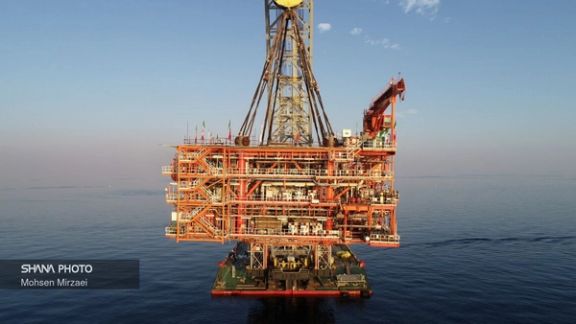
An Iranian natural gas production platform in the Persian Gulf

Government has cut off gas to 840 government and public entities, Iran’s Tasnim news reported Saturday, as consumption outpaces production.

The news might sound shocking for a country that has the second largest natural gas reserves in the world, but it has been long clear that production is falling with lack of investments and Western technology. This means many factories and steel as well as petrochemical plants stopping production, which will deal a severe blow to an economy in crisis.

Equally shocking was news this week, published by Tejarat (Commerce) newspaper in Tehran, that some Iranian oil experts believe the government is selling oil at just $37 per barrel amid US sanctions. This is only $7 more than the production cost for Iran, which might explain why the government is facing a serious financial crisis.

As the year comes to a close, the Iranian currency, rial, has been shattering low records against major currencies. On Thursday, the rial fell to 400,000 against the US dollar and the fall continued Saturday in a sign that the Islamic Republic, grappling with antigovernment protests, is unable to support its currency.

As international oil industry watchers believe Iran is selling around 700,000 barrels of oil per day, it is puzzling as to why it is in deep financial trouble, even unable to import sufficient medicines in the past few months.

The estimate that Iran is shipping crude for just $37 a barrel is piece of new information that might explain the puzzle. Previously, it was believed that Iran was giving 10-20 percent discounts to China, its major oil customer, which would still price its exports at around $65 per barrel at current prices. But $37 had never been mentioned by an informed source.

It means that Tehran might be making less than $6 million per day, or around $16 billion annually – less than half the previous estimates. That is $200 per capita in oil income, only higher than Nigeria and Venezuela in OPEC.

Despite these facts, the government has been issuing rosy news about its oil shipments, without saying anything about actual revenues, which it says is a national security secret.

Its budget and economy dependent on oil exports, the Islamic Republic has been claiming that sanctions imposed by the United States since 2018 have been defeated and it does not need to make concessions in nuclear talks with the West, which have stalled since September.

But the danger of an overall popular revolt lies in the economic misery facing a large majority of Iranians who do not have savings in foreign currencies or gold. The middle and working classes have already become impoverished by unabating high inflation since 2018.

While the general annual inflation rate is estimated to be around 50 percent, many food items have doubled in price, and so have rents.

Instead of accepting a Western offer, deemed generous, on the nuclear issue, Tehran has started supplying weapons to Russia, which has angered the US and its NATO allies.

With no prospect of resolution, the Islamic Republic is walking a tightrope, as daily sporadic protests continue, with signs of some young people becoming more radical and prone to resort to arms.


Most Viewed

Iran International says it won’t be silenced after London arson attack
1

Iran International says it won’t be silenced after London arson attack

2
VOICES FROM IRAN

Hope and anger in Iran as fragile ceasefire persists

3
INSIGHT

How Tehran bends its own red lines to boost state rallies

4

Iran halts petrochemical exports to supply domestic market

5

US arrests Iranian national over alleged Basij-linked visa fraud

Banner
Banner

Spotlight

  • Too early to tell who is winning Iran war, experts say
    PODCAST

    Too early to tell who is winning Iran war, experts say

  • How Tehran bends its own red lines to boost state rallies
    INSIGHT

    How Tehran bends its own red lines to boost state rallies

  • Iran blackout cripples freelancer, small business incomes
    VOICES FROM IRAN

    Iran blackout cripples freelancer, small business incomes

  • Ideology may be fading in Iran, but not in Kashmir's ‘Mini Iran'
    INSIGHT

    Ideology may be fading in Iran, but not in Kashmir's ‘Mini Iran'

  • US blockade enters murky phase as tankers spoof signals and buyers hesitate
    ANALYSIS

    US blockade enters murky phase as tankers spoof signals and buyers hesitate

  • Why the $100 billion Hormuz toll revenue is a myth
    ANALYSIS

    Why the $100 billion Hormuz toll revenue is a myth

•
•
•

More Stories

While Iran Hoped Europe Would Freeze, It Sells Oil At Half Price

Dec 24, 2022, 09:28 GMT+0
•
Iran International Newsroom

Some pundits in Iran are reminding the hardliners that a few months ago they were predicting Europe’s agony in winter cold, while now Iran faces energy shortage.

Heshmatollah Falahatpisheh, an outspoken critic of the government in foreign policy, nuclear talks and energy, says predictions by Iranian officials that Europe would plunge in cold and darkness this winter and they would run back to nuclear negotiations with Iran have turned out to be "illusions."

Some Iranian officials including Mohammad Marandi, who accompanies Iranian nuclear negotiators, have been saying since last summer that "a hard winter in Europe" will force European powers to come back to the negotiating table. Marandi had predicted: "The winter is coming, and the EU will have to face a paralyzing energy crisis."

The hardliner editor of the ultraconservative Kayhan daily had also said in the summer that after "only two months" the United States and Europe will beg Iran to resume the negotiations and will surrender to Iran's terms.

The flawed argument was being used to justify Tehran’s hard position after 18 months of multilateral talks to revive the 2015 nuclear deal with the West, which would lift crippling sanctions imposed on Iran.

Hardline officials were making these claims while Europe needed natural gas, something Iran does not produce enough of to export and has no way of shipping it to Europe. On the contrary, Iran is suffering from a natural gas shortage this winter like every year. It shut down several cement factories this week only to save gas for homes.

Mohammad Marandi, a US-born regime insider whose father is the personal physician of Ali Khamenei
100%
Mohammad Marandi, a US-born regime insider whose father is the personal physician of Ali Khamenei

Falahatpisheh, the former head of parliament's foreign policy and national security committee also criticized Iranian officials in an interview with the moderate conservative Khabar Online website, saying that "They are selling Iran's oil at a discounted price and still take pride in it."

The former lawmaker said that Iranian officials and hardliner commentators have been taken by surprise as their misplaced predictions in foreign policy did not come true.

Falahatpisheh also noted that while Iran counts on Russia as a "strategic ally," Russia has been selling oil at a discounted price, and Iran has no solution for its oil other than offering even more discounts than Russia. He added that Iranian officials take pride in selling oil despite US sanctions and call it a "victory", while what they are doing is wasting Iran's wealth to the tune of millions of dollars a day.

Tejarat (Commerce) Daily in Tehran quoted some oil market experts as saying that Iran has been lately selling its oil at the price of $37 per barrel while the market price for oil is around $79.25 per barrel. According to estimates, the production of every barrel of oil costs Iran nearly 30 dollars due to its aging equipment after years of token investments.

On the other hand, Iran's neighbor, Saudi Arabia invested some $82 billion in infrastructure in the past ten years to preserve its supremacy in the oil market.

Falahatpisheh in his interview argued that "Iran needs a new spirit in its foreign policy. In today's world only the countries are successful that have managed to reduce tensions with other countries." He suggested that Iran's first measure should be to settle differences with other countries and take serious steps toward détente. He said: "I believe the US and EU's current policies will not last forever. These policies are mainly meant to reduce Iran's bargaining power. However, the West will return to negotiations when and if they see that Iran has resolved its internal crisis and everyone, including all Iranian officials, are behaving in a way to serve the country's national interests."

Iran's Factories Suffering From Natural Gas Shortages

Dec 23, 2022, 17:29 GMT+0

Cement factories in Iran face serious problems due to lack of natural gas and other fossil fuels in winter, an industry insider told ILNA news website in Tehran.

Ali-Akbar Alvandian, secretary of cement producers’ association told the website that natural gas flows to many factories have been reduced and the alternative fuel, mazut, which is a dirty variety of diesel is also hard to procure.

Iran, which has the world’s second largest natural gas reserves is unable to meet domestic demand, especially in cold and hot months when energy consumption rises to its highest levels.

Power generation stations also receive less gas and resort to burning the highly polluting mazut, which has blanketed Iranian cities in a thick layer of pollution in recent weeks. As a result, the government has restricted mazut shipments to cement and other factories.

Lack of natural gas also hurts Iran’s petrochemical industry, which is a significant source of export earnings.

Iran needs around $40 billion of investment and Western technology to boost its gas production, which has been gradually falling. At the same time due to extremely low prices for consumers, gas and electricity usage increases by around 6 percent annually.

Without resolving its disputes with Western powers, Iran would not be able to provide the investment and acquire the technology needed for revitalizing its natural gas production.

Conservative Politician Lashes Out At Hardliners For Isolating Iran

Dec 23, 2022, 08:59 GMT+0
•
Iran International Newsroom

A conservative politician and former lawmaker has accused hardliners of pursuing policies that have increasingly isolated Iran in the international community.

Mansoor Haqiqatpur told Didban Iran website that hardliners who insist on radical approaches hold key positions in the government. Although he did not name any politician, most members of Iran’s parliament and the presidential administration are hardliners, many coming from the Revolutionary Guard.

"They are the same politicians who advocated the attack on the Saudi embassy [in 2016], attacked Ali Larijani [during a speech in Qom in 2012] and insulted Ayatollah Ruhollah Khomeini's grandson Hassan Khomeini in front of foreign guests[ in June 2022],” Haqiqatpur, who is close to former parliament speaker Larijani, said.

Ali Larijani was pushed out of the political spotlight after the 2020 parliamentary elections engineered to hand an absolute majority to hardliners, but he is considered a leader for traditional conservatives as opposed to ultra-conservatives currently in power.

Larijani’s ally further charged that while the revised edition of the 2015 nuclear deal with world powers was ready for final approval by all the parties involved, the hardliners prevented the outgoing Rouhani administration from signing it in mid-2021.

Haqiqatpur added that hardliners constantly impose their ideas on the government, but he claimed their positions are not in line with the regime's general policies.

Former parliament speaker Ali Larijani
100%
Former parliament speaker Ali Larijani

This kind of comment aimed at distancing the Iranian government from the actions of radicals that harm Tehran’s ties with the world have been made by several politicians during the past weeks. However, no one has explained why and how hardliners can impose their views on the government if they are not supported by Supreme Leader Ali Khamenei who has the final say about everything in Iran and micromanages every single move in Iran's domestic and international politics.

But not mentioning Khamenei's role is understandable because that would probably mean big trouble for whoever criticizes him and no media in Tehran would publish such an interview.

Haqiqatpur stressed that Iranians are experiencing hardships because Iran has severed its ties with the rest of the world. He reiterated that Iran should maintain ties with all countries, in particular with the United States and the United Kingdom, except Israel.

In domestic politics, he said, the hardliners talk about compulsory hijab in a bad language. He was probably referring to IRGC Qods Force Commander Esmail Qaani who insulted Iranian women during a December 20 angry speech. He advised that such officials should watch their mouth and control their behavior.

Some of Iranian media such as the Kayhan newspaper that operates under the supervision of Khamenei are known for badmouthing prominent individuals. Recently, the Kayhan and its editor Hossein Shariatmadari have been widely criticized for their ruthless attack on Ayatollah Mostafa Mohaqeq Damad who had called for stopping the execution of Iranian protesters.

After the news of cleric's views and his brave letter to the Revolutionary Court judges were picked up by international media, the Kayhan accused him of catering to the needs of Western propaganda against Iran.

Shariatmadari also tried to defend Iran's President Raisi who has been largely ignored by both the media and the people during the Iran protests. The hardliner editor praised him for his baseless bragging about Iran's progress during his presidency, which is otherwise seen by many as a complete failure.

US Dollar Rises Above 400,000 Iranian Rials, Signaling New Crisis

Dec 22, 2022, 17:26 GMT+0

Iran’s currency has dropped to a new historic low, breaking the 400,000 rial threshold against the US dollar Thursday, amid deep political and economic crises.

The rial has now lost nearly 50 percent of its value compared to mid-2021 and over 30 percent since December 2021.

The de facto devaluation is expected to boost Iran’s annual inflation rate, currently estimated to be 50 percent. Food prices have jumped much faster than overall inflation, with some items registering 100-percent increase in one year.

The high inflation rate this year comes on top of rising prices since 2018, when the United States pulled out of the nuclear accord known as the JCPOA and imposed oil export and banking sanction on Iran.

Iran has been rocked by nationwide antigovernment protests since mid-September after a 22-year-old woman, Mahsa (Zhina) Amini, was killed in police custody. She was arrested for violating the country’s forced hijab rules. But since then, protests have turned against the ruling regime, with many Iranians demanding a secular and democratic form of government.

Opponents of the Islamic Republic have also urged people to withdraw their deposits from government banks to put further pressure on the government, which has been printing more money in recent years. The money supply has grown at an unprecedented pace since September.

Talks to revive the JCPOA and lift most of the US sanctions have stalled since August when the last attempt by the European Union to broker a deal fell apart.

Some Dams In Iran Stand At Less Than 37% Capacity: MP

Dec 22, 2022, 14:07 GMT+0

A lawmaker in Iran has expressed concern over the critical water situation, saying that “some dams have reached less than 37% of their capacity.”

Hadi Beiginejad, member of Iranian parliament's energy commission, told ISNA website in Tehran Thursday that the country is not in a good situation in terms of water resources, adding that even the claim that 37% of dams are full may not be true.

“Based on the research I did, some reservoirs for some dams are much less than 37%,” he underlined.

On the other hand, according to latest official statistics of Iran Water Resources Management Company, two important water supply dams, namely Lar in Tehran and Ekbatan in the western city of Hamedan, have only two percent reserves.

The company also reported that among the important dams that supply drinking water, 11 have a reserve rate below 20% of their capacity.

According to the same statistics, the total water reserves of the country's dams are about 18 billion cubic meters, and on average, about 63% of the country's dam reservoirs are empty.

In the capital, however, the situation is worse and Tehran's dams with 279 million cubic meters of reserves are experiencing an unprecedented shortage in the past fifty years.

Earlier, Alireza Almasondi, Vice President of Water Resources Management Company, said 84 cities in Iran are struggling with water crisis.

Many years of drought and decades of mismanagement have led to chronic water shortages in most parts of Iran.