Iran police says 68 people were arrested over filming strike sites
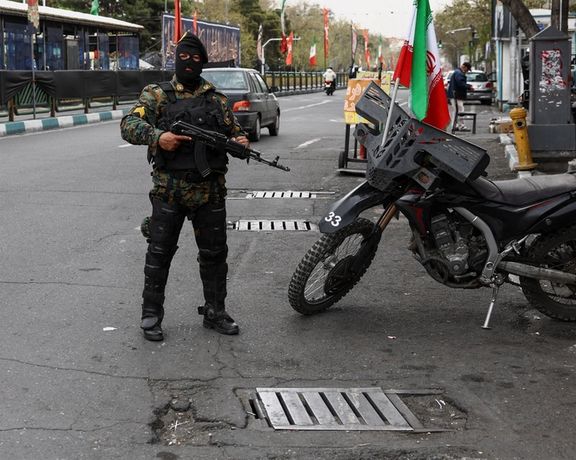

Iranian police said 68 people were arrested for allegedly filming locations hit by Israeli and US missiles and sending the images to what authorities called hostile media.
Police said 67 of those detained were “operational elements” linked to monarchists and one was accused of being a member of the MEK.
Iranian authorities often accuse opposition groups, including monarchists, of links to foreign adversaries and of seeking to incite unrest.
Authorities said they seized 88 bladed weapons, several stun grenades and multiple electronic devices from the suspects.





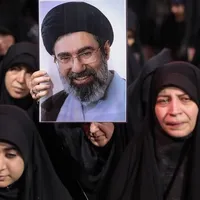
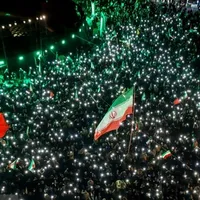
Exiled Iranian Prince Reza Pahlavi on Monday backed US President Donald Trump’s stance on Iran, calling for the dismantling of the Islamic Republic while urging that civilian infrastructure be spared.
“This regime only understands strength… its infrastructure of terror… must be destroyed and the entire regime must go,” Pahlavi said in a post on X.
Earlier on Sunday, he said: “Iran is not the Islamic Republic… Iran’s civilian infrastructure belongs to the Iranian people,” and called on Trump and Israeli Prime Minister Benjamin Netanyahu to “continue targeting the regime… while sparing civilian infrastructure.”
Pahlavi added that “with the support of the US and Israel… the hour of Iran’s freedom is at hand.”
He shared a message from Trump calling for “peace through strength,” as the US president warned of military action if Iran does not reopen the Strait of Hormuz within 48 hours.
Cases tied to the January protests have been reviewed, with some reaching final verdicts and now being carried out, Iran’s judiciary said on Monday, warning that those convicted would face no leniency.
“The cases of enemy terrorist elements and the January unrest protesters have been reviewed. Some of these cases have resulted in final verdicts and are being carried out, and several have been implemented in recent days, with further information to be announced.” the first deputy judiciary chief said.
Hamzeh Khalili said those convicted would not receive any clemency and added that the judiciary would deal harshly with people the judiciary has accused of collaborating with the enemy.
In recent weeks, Iranian authorities have stepped up executions and security measures linked to the January protests, drawing criticism from rights groups and foreign governments.
On March 19, three protesters – Mehdi Ghasemi, Saleh Mohammadi and Saeed Davoudi – were executed after being accused of killing two police officers during protests in Qom earlier in the year, according to the judiciary-linked Mizan news agency. Authorities also alleged the three had links to Israel and the United States, a recurring accusation against protesters.
A day earlier, Mizan reported the execution of Kourosh Keyvani, a Swedish-Iranian dual national convicted of espionage for Israel. Swedish Foreign Minister Maria Malmer Stenergard said a Swedish citizen had been executed and criticized the legal process as falling short of due process standards.
The crackdown has extended beyond the courtroom. Iran has been under a nationwide internet blackout lasting more than three weeks, with international connectivity largely unavailable to the public, according to NetBlocks, limiting access to information during the ongoing crisis.
The executions follow a broader and far deadlier wave of repression. Documents reviewed by Iran International show that more than 36,500 people were killed during a two-day crackdown on protests on January 8–9, in what would mark the deadliest protest suppression in modern history.
Reports and evidence also point to extrajudicial killings of detainees, including cases in which wounded individuals were allegedly shot while receiving medical treatment.
A British man jailed on espionage charges in Iran called on Prime Minister Keir Starmer to step out of the shadows and publicly declare that he and his wife are innocent.
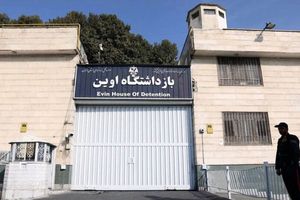
Craig Foreman, speaking in a voice message recorded from Evin prison, said he and his wife Lindsay were facing worsening conditions more than three weeks into US-Israeli attacks on Iran.
“My name is Craig Foreman… We are both currently serving 14 months into a 10-year prison sentence… for crimes that were never committed,” Foreman said, adding that the case against them was built on “falsified evidence.”
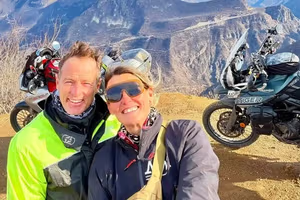
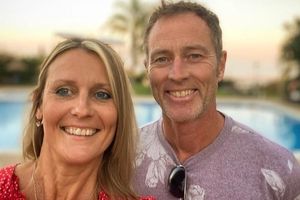
The couple were sentenced in February after Iranian authorities accused them of spying for Britain and Israel, allegations they have consistently denied.
Lindsay and Craig Foreman, both in their 50s, were arrested in January 2025 while on a motorcycle trip through Iran.
“We are proud to be British, but by now we feel let down, alone, and completely frustrated by the lack of public defence,” Foreman said.
“You know we are innocent. Go public with the information you have to clearly step up, step out of the shadows and help us.”
Prison conditions deteriorate
Foreman described an increasingly dangerous environment inside Evin prison, where nearby explosions earlier in March shattered windows and forced detainees to take cover.
“We are now in a prison in a war zone. We have gone from a challenging situation to a life-threatening situation,” Foreman said. “Our lives are constantly at risk.”
He added that the couple had received “zero information” from British authorities about contingency plans if conditions worsen.
Family members echoed those concerns. Joe Bennett, Foreman’s stepson, said officials had avoided publicly asserting the couple’s innocence despite being aware of the circumstances of their case.
“They are not spies, and our government knows that,” Bennett said, describing worsening physical and psychological conditions in detention.
Government response
Britain’s foreign ministry has previously called the sentences “totally unjustifiable” and said supporting detained nationals remains a priority.
The case has drawn renewed attention as security conditions in Iran have deteriorated, with foreign nationals advised to leave and diplomatic staff periodically withdrawn.
Rights groups and Western governments have long accused Iran of engaging in so-called “hostage diplomacy” by detaining foreign nationals to gain political or economic concessions, an allegation Tehran rejects, saying it faces Western intelligence infiltration.
Iranian lawmaker Fadahossein Maleki warned on Monday that US infrastructure in the region would be destroyed if President Donald Trump follows through on threats against Iran.
“In the event Trump’s threat is carried out, all US infrastructure in the region will be destroyed,” Maleki, a member of parliament’s national security commission, said, according to state media.
He added that the United States and Trump “did not have a specific strategy” in attacking Iran.
Trump has said Washington would strike Iranian power plants if Tehran does not reopen the Strait of Hormuz within 48 hours.
British Prime Minister Keir Starmer said on Monday there was no assessment that Iran was targeting mainland Britain.
“We carry out assessments all the time… and there’s no assessment that we’re being targeted in that way,” Starmer told reporters.
He also said efforts to reopen the Strait of Hormuz would require a clear plan, adding his priority was to protect British interests and de-escalate the conflict.