British prisoner in Iran urges Starmer to ‘step out of shadows’
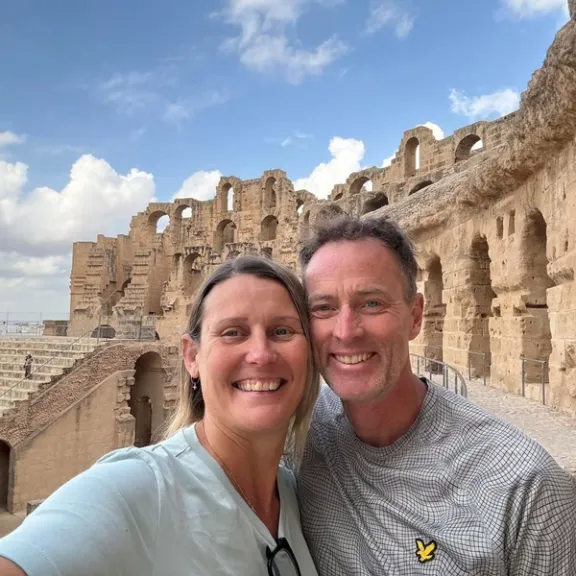
A British man jailed on espionage charges in Iran called on Prime Minister Keir Starmer to step out of the shadows and publicly declare that he and his wife are innocent.
A British man jailed on espionage charges in Iran called on Prime Minister Keir Starmer to step out of the shadows and publicly declare that he and his wife are innocent.
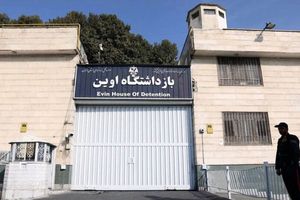
Craig Foreman, speaking in a voice message recorded from Evin prison, said he and his wife Lindsay were facing worsening conditions more than three weeks into US-Israeli attacks on Iran.
“My name is Craig Foreman… We are both currently serving 14 months into a 10-year prison sentence… for crimes that were never committed,” Foreman said, adding that the case against them was built on “falsified evidence.”
The couple were sentenced in February after Iranian authorities accused them of spying for Britain and Israel, allegations they have consistently denied.
Lindsay and Craig Foreman, both in their 50s, were arrested in January 2025 while on a motorcycle trip through Iran.
“We are proud to be British, but by now we feel let down, alone, and completely frustrated by the lack of public defence,” Foreman said.
“You know we are innocent. Go public with the information you have to clearly step up, step out of the shadows and help us.”
Prison conditions deteriorate
Foreman described an increasingly dangerous environment inside Evin prison, where nearby explosions earlier in March shattered windows and forced detainees to take cover.
“We are now in a prison in a war zone. We have gone from a challenging situation to a life-threatening situation,” Foreman said. “Our lives are constantly at risk.”
He added that the couple had received “zero information” from British authorities about contingency plans if conditions worsen.
Family members echoed those concerns. Joe Bennett, Foreman’s stepson, said officials had avoided publicly asserting the couple’s innocence despite being aware of the circumstances of their case.
“They are not spies, and our government knows that,” Bennett said, describing worsening physical and psychological conditions in detention.
Government response
Britain’s foreign ministry has previously called the sentences “totally unjustifiable” and said supporting detained nationals remains a priority.
The case has drawn renewed attention as security conditions in Iran have deteriorated, with foreign nationals advised to leave and diplomatic staff periodically withdrawn.
Rights groups and Western governments have long accused Iran of engaging in so-called “hostage diplomacy” by detaining foreign nationals to gain political or economic concessions, an allegation Tehran rejects, saying it faces Western intelligence infiltration.








“The threat level from the Iranian government and its actors is assessed as very high, and we are on full alert,” a spokesperson for Germany’s Interior Ministry said in response to Iran International on Saturday.
Federal and state security agencies, the spokesperson said, have adjusted protective measures for Jewish communities and Israeli and Jewish institutions since October 7, 2023, when Hamas attacked Israel, strengthening them where necessary.
According to the ministry, German security bodies are continuously reassessing the threat environment, maintaining a heightened state of readiness, and adapting protective measures as needed.
Berlin flags transnational repression risks
German security agencies are in close coordination with each other, state authorities, and international partners, sharing intelligence on potential threats, the spokesperson said.
“There is also close cooperation between the federal government and the states on the issue of transnational repression,” the spokesperson added.
Monitoring, pressure, and targeting of opposition figures beyond national borders remain part of the activities of Iranian state actors, the spokesperson said.
Responding to threats by Iranian officials against Persian-language media, the spokesperson said the German government treats any activities by foreign state bodies or affiliated actors on its soil with utmost seriousness and does not tolerate them.
The Interior Ministry is working with security agencies and in coordination with the Foreign Ministry to counter transnational repression, according to the statement.
Shooting in Netherlands coincides with warning
The comments came as a 36-year-old Iranian man opposed to the Islamic Republic was shot and seriously wounded in the Netherlands on Thursday morning.
Information received by Iran International identified the man as Mohi Shafiei, a monarchist activist and a member of the Dutch police, who is currently hospitalized.
It remains unclear who carried out the attack.
Dutch prosecutors said “all possible scenarios” are being considered. The country’s justice minister said security measures had been taken in light of the officer’s background.
History of overseas targeting
The warning from Berlin comes after Mohsen Rafiqdoust, the first minister of the Islamic Revolutionary Guards Corps, said in March 2025 in an interview with the Didban Iran website that he had overseen operations targeting opponents abroad in the years following the 1979 revolution.
German newspaper Welt also reported in December 2025 that Iranian intelligence services had expanded pressure tactics into Germany by threatening the families of Iranian migrants inside Iran, coercing some exiles into cooperation.
Messages sent to Iran International and posts on social media were divided over Wednesday’s strike on the South Pars gas field in southern Iran, with some welcoming the hit on state-linked assets and others warning of civilian costs.
US President Donald Trump said Israel had struck Iran’s South Pars gas field “out of anger” over developments in the Middle East, describing the damage as limited and warning there would be no further attacks unless Iran targeted Qatar again.
The strike marked a shift in a conflict that has spread across the Persian Gulf, disrupting energy flows after Iranian missiles targeted facilities in Qatar and Saudi Arabia.
Strike seen as blow to state-linked networks
Some messages sent to Iran International framed the attack as a setback for institutions tied to the Islamic Revolutionary Guards Corps.
“Israel, by hitting South Pars, saved us from more theft… the money was turned into bullets fired at our children,” one citizen wrote.
Another, who said he had worked on projects in the field, downplayed the long-term impact.
“Even with the complete destruction of all 24 gas refineries… they will return to production in less than three months,” he wrote, adding that supply lines from offshore platforms would shut automatically and protect reserves.
A separate message from an engineer challenged concerns about offshore facilities.
“The platforms are not even fully operational because of sanctions… after the Islamic Republic, they can be rebuilt better,” he wrote, contrasting them with higher-quality installations on the Qatari side.
Others shifted the focus away from infrastructure entirely.
“The main infrastructure was the young people they took from us… the rest can be rebuilt with better technology.”
Social media posts echoed that line in sharper language. “Don’t worry about infrastructure,” one post read. “What infrastructure are you talking about? What life was left that needed infrastructure?” it added.
Concerns over civilian impact
Other messages cautioned that strikes on energy infrastructure would translate directly into hardship for civilians.
“Don’t look at infrastructure so simply,” one user wrote. “Lack of electricity and gas means death – cold, hunger, medicine shortages.”
Another post rejected attacks on non-military targets. “Hitting Iran’s infrastructure by any side is condemnable. It belongs to all Iranians,” the message read.
Some called for limiting strikes strictly to military-linked targets. “Please just hit those responsible and leave non-military infrastructure alone.”
One message also questioned the timing. “Hitting South Pars at this moment is not the last and best solution,” it read.
Back to corruption and rebuilding
Even among those critical of the strike, some framed the debate through long-standing economic grievances.
“If infrastructure belonged to the people, no one would be searching in trash for food.”
Another argued that damaged facilities could ultimately be replaced. “That worn-out infrastructure… will be rebuilt better – but those lives won’t return,” the user wrote referring to thousands of people killed during the January protests.
Others pointed to historical reconstruction. “Germany and Japan were flattened in World War II – where are they now?” one user said.
Across the exchanges, a recurring thread linked both support for and opposition to the strike back to mistrust of the Islamic Republic, with many portraying the country’s energy wealth as mismanaged or diverted, and arguing that any future recovery depends less on infrastructure than on political change.
Mizan said Keyvani was executed on Wednesday morning after his death sentence was upheld by the Supreme Court. He had been accused of passing “images and information of sensitive locations” to officers of Israel’s Mossad intelligence agency.
The report said Keyvani was arrested in Savojbolagh on the fourth day of the 12-day war in June. Authorities said the case had gone through legal procedures, but no independent evidence supporting the allegations was made public.
Later in the day, Swedish Foreign Minister Maria Malmer Stenergard said in a statement that a Swedish citizen was executed in Iran without naming him. However, it confirmed that the person was arrested in June.
The legal proceedings leading up to the execution did not meet the standards of due process, she added.
The semi-official Tasnim news agency said Keyvani had been detained by the Revolutionary Guards’ intelligence arm and was found with cash, vehicles and what it described as advanced communication and surveillance equipment.
Tasnim also reported that he had allegedly been recruited through online contact and trained abroad before returning to Iran, though these claims could not be independently verified.
Keyvani is the latest in a series of executions in Iran involving individuals accused of espionage for Israel, particularly since the outbreak of the June war.
Iran has one of the highest execution rates in the world and has long used the death penalty in national security cases, including allegations of spying. Following the conflict, rights groups and international media have reported a sharp increase in arrests and executions on such charges.
The Telegraph reported that executions in Iran have surged since the June war, citing data from human rights group HRANA indicating that the number of executions has risen significantly, including for those accused of links to Israel. The Sunday Times has also reported that dozens more people could face execution on similar charges.