Trump says US, Iran held ‘productive’ talks, postpones strikes


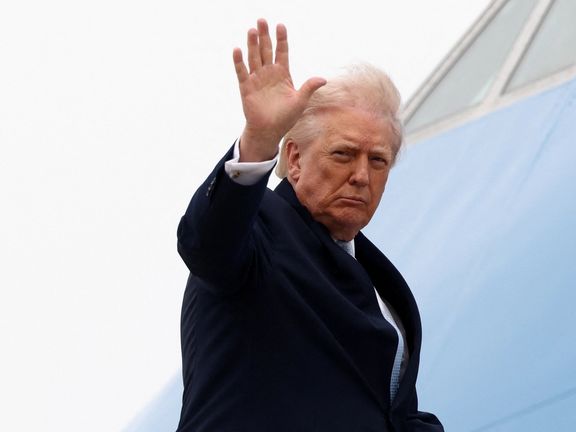
US President Donald Trump said on Monday he would pause planned strikes on Iranian energy infrastructure, following what he described as “very good and productive conversations” with Tehran.
“Based on the tenor and tone of these in-depth, detailed, and constructive conversations, which will continue throughout the week, I have instructed the Department of War to postpone any and all military strikes against Iranian power plants and energy infrastructure for a five-day period,” Trump said.
He said the pause, which follows his earlier 48-hour ultimatum, would be “subject to the success of the ongoing meetings and discussions,” which are set to continue this week.


Cases tied to the January protests have been reviewed, with some reaching final verdicts and now being carried out, Iran’s judiciary said on Monday, warning that those convicted would face no leniency.
“The cases of enemy terrorist elements and the January unrest protesters have been reviewed. Some of these cases have resulted in final verdicts and are being carried out, and several have been implemented in recent days, with further information to be announced.” the first deputy judiciary chief said.
Hamzeh Khalili said those convicted would not receive any clemency and added that the judiciary would deal harshly with people the judiciary has accused of collaborating with the enemy.
An Iran-aligned militant network has claimed responsibility for the arson attack on Jewish ambulances in north London early Monday, a monitoring organisation said, linking the incident to a string of similar fires across Europe.
The SITE Intelligence monitoring service said a group calling itself the Islamic Movement of the People of the Right Hand had carried out the attack near a synagogue in Golders Green, adding it had also been behind fires in Belgium, Greece and the Netherlands.
Prime Minister Keir Starmer described the incident as “a deeply shocking antisemitic arson attack,” adding: “My thoughts are with the Jewish community who are waking up this morning to this horrific news. Antisemitism has no place in our society.”
Police said four ambulances operated by the Hatzola volunteer emergency service were set ablaze shortly after 01:30 GMT, triggering explosions from gas cylinders onboard and damaging nearby residential buildings.
No injuries were reported, though dozens of residents were evacuated as a precaution after windows in a nearby apartment block were shattered.
Police search for suspects
The Metropolitan Police said officers were examining CCTV footage and searching for three suspects seen approaching the vehicles before the fire.
Fire crews deployed six engines and around 40 firefighters to contain the blaze, which was brought under control shortly after 03:00 GMT.
Religious leaders and officials condemned the targeting of an emergency medical service run by volunteers.
London mayor Sadiq Khan said police patrols would be increased in the area.
Israel’s embassy in Britain called for decisive action in response to the attack.
“Enough is enough,” the embassy said. “There must be a thorough investigation and decisive action to put an end to this climate of intimidation before it spirals further.”
Rising incidents since 2023
Antisemitic incidents have increased in Britain and globally since the October 2023 Hamas attack on Israel and the war in Gaza that followed.
British officials have recorded a sustained rise in such cases, including a deadly attack on a synagogue in Manchester in 2025.
Starmer said earlier this month the government would work with Jewish and Muslim organisations to strengthen protections at sensitive sites.
Iranian police said 68 people were arrested for allegedly filming locations hit by Israeli and US missiles and sending the images to what authorities called hostile media.
Police said 67 of those detained were “operational elements” linked to monarchists and one was accused of being a member of the MEK.
Iranian authorities often accuse opposition groups, including monarchists, of links to foreign adversaries and of seeking to incite unrest.
Authorities said they seized 88 bladed weapons, several stun grenades and multiple electronic devices from the suspects.
Exiled Iranian Prince Reza Pahlavi on Monday backed US President Donald Trump’s stance on Iran, calling for the dismantling of the Islamic Republic while urging that civilian infrastructure be spared.
“This regime only understands strength… its infrastructure of terror… must be destroyed and the entire regime must go,” Pahlavi said in a post on X.
Earlier on Sunday, he said: “Iran is not the Islamic Republic… Iran’s civilian infrastructure belongs to the Iranian people,” and called on Trump and Israeli Prime Minister Benjamin Netanyahu to “continue targeting the regime… while sparing civilian infrastructure.”
Pahlavi added that “with the support of the US and Israel… the hour of Iran’s freedom is at hand.”
He shared a message from Trump calling for “peace through strength,” as the US president warned of military action if Iran does not reopen the Strait of Hormuz within 48 hours.
Cases tied to the January protests have been reviewed, with some reaching final verdicts and now being carried out, Iran’s judiciary said on Monday, warning that those convicted would face no leniency.
“The cases of enemy terrorist elements and the January unrest protesters have been reviewed. Some of these cases have resulted in final verdicts and are being carried out, and several have been implemented in recent days, with further information to be announced.” the first deputy judiciary chief said.
Hamzeh Khalili said those convicted would not receive any clemency and added that the judiciary would deal harshly with people the judiciary has accused of collaborating with the enemy.
In recent weeks, Iranian authorities have stepped up executions and security measures linked to the January protests, drawing criticism from rights groups and foreign governments.
On March 19, three protesters – Mehdi Ghasemi, Saleh Mohammadi and Saeed Davoudi – were executed after being accused of killing two police officers during protests in Qom earlier in the year, according to the judiciary-linked Mizan news agency. Authorities also alleged the three had links to Israel and the United States, a recurring accusation against protesters.
A day earlier, Mizan reported the execution of Kourosh Keyvani, a Swedish-Iranian dual national convicted of espionage for Israel. Swedish Foreign Minister Maria Malmer Stenergard said a Swedish citizen had been executed and criticized the legal process as falling short of due process standards.
The crackdown has extended beyond the courtroom. Iran has been under a nationwide internet blackout lasting more than three weeks, with international connectivity largely unavailable to the public, according to NetBlocks, limiting access to information during the ongoing crisis.
The executions follow a broader and far deadlier wave of repression. Documents reviewed by Iran International show that more than 36,500 people were killed during a two-day crackdown on protests on January 8–9, in what would mark the deadliest protest suppression in modern history.
Reports and evidence also point to extrajudicial killings of detainees, including cases in which wounded individuals were allegedly shot while receiving medical treatment.