UAE rules out use of its airspace or waters in military action against Iran
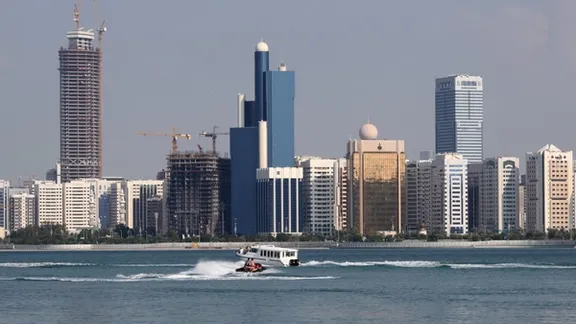
The United Arab Emirates said it would not allow its airspace, territory or territorial waters to be used for any hostile military action against Iran.
“The UAE confirms its commitment to not allowing its airspace, land or waters to be used in any hostile military actions against Iran,” Afra Al Hameli, director of strategic communications at the UAE foreign ministry, said in a post on X.
She added that the UAE would not provide any logistical support for such actions and said Abu Dhabi believed dialogue, de-escalation and respect for international law were the best way to address regional crises.









Iran cannot simply rewind to the weeks before the protests began. The crackdown hardened public anger, while an already overstretched economy and energy system lost what little room they had to absorb another shock.
On December 28, a strike by shopkeepers in Tehran’s markets ignited protests that rapidly spread far beyond their original setting. What followed was not a short-lived wave of unrest, but a nationwide rupture whose scale and consequences now make a return to the previous status quo virtually impossible.
Nearly a month later, estimates point to at least 36,500 people killed in clashes and crackdowns across more than 400 cities and 4,000 separate sites of confrontation. The magnitude marks a turning point in the country’s modern history.
Even before the protests began, Iran was already under severe strain: an economy caught in persistent inflation, an energy system stretched beyond capacity, environmental stress that had begun to affect daily life, and security structures weakened by external shocks and internal attrition.
The events that unfolded after December 28 did not create these pressures. They exposed them, intensified them, and fused them into a single, compounding crisis.
What the data now show is not simply escalation, but irreversibility.
An economy with no cushion left
Long before markets closed and strikes spread, Iran’s economy had entered a phase of chronic instability.
Official figures put unemployment at just over seven percent, but nearly 40 percent of the unemployed were university graduates, a mismatch that had been widening for years. The national currency continued to lose value, the Tehran stock exchange spent most days in decline, and liquidity pressures rippled through the private sector.
Inflation was no longer episodic. Point-to-point inflation rose from about 39 percent in early spring to nearly 53 percent by late autumn.
Even households traditionally considered middle-income were cutting back on basic goods. Reports of installment-based purchases for food items, including fruit and nuts, had become routine.
Fiscal policy offered little relief. The government’s proposed budget projected wage increases of 20 percent, well below the officially acknowledged inflation rate.
Lawmakers rejected the bill outright, citing unrealistic revenue assumptions and a growing gap between costs and household incomes. Similar gaps in previous budgets had already pushed salaried workers and pensioners further into precarity.
The banking sector added another layer of fragility. One major private bank formally acknowledged insolvency weeks before the protests began.
Across the system, only a small number of banks met international capital adequacy standards, while several large institutions showed negative ratios. Credit expansion continued largely through money printing, reinforcing inflation rather than growth.
When markets shut down after December 28, they did so without reserves. A month of disrupted commerce has left many businesses with no buffer at all, while reports of burned commercial districts and threatened asset seizures have compounded losses.
Even under optimistic assumptions, restoring activity would require vast public spending. The resources to do so are no longer visible.
Energy and limits of revenue
Energy has long been treated as Iran’s most reliable economic lever. That assumption has eroded.
Oil exports never fully recovered from earlier sanctions, and recent enforcement efforts further narrowed room for maneuver.
Other energy sales once described as insulated – particularly gas and electricity exports to neighboring countries – have also come under pressure.
At the same time, domestic shortages intensified.
Power plants turned to heavy fuel oil, worsening air pollution, while export volumes were quietly reduced to meet internal demand.
The contradiction became structural: exporting energy reduced domestic stability, while keeping energy at home limited revenue.
These constraints matter because energy income underpins much of public spending, including security outlays. Budget plans approved in December to bolster military capabilities for the next Iranian year depend heavily on oil-backed revenues, funding streams that are increasingly uncertain.
Without a stable energy surplus, neither fiscal recovery nor political containment looks financially viable.
Environmental stress
Environmental pressures have moved from background concern to immediate risk. Official estimates attribute around 58,000 deaths annually to air pollution. Water scarcity has become acute enough that authorities have publicly acknowledged difficulties supplying drinking water to the capital, with rainfall described as the only short-term relief.
Agriculture, which consumes over 90 percent of national water use and employs nearly a fifth of the workforce, cannot be restructured quickly without triggering new social shocks.
Modernization would require investments that current budgets cannot support.
Security erosion
Alongside these pressures, the security apparatus has shown visible strain. Equipment losses during recent regional conflicts, the deaths of senior commanders, and repeated cyber breaches exposing sensitive databases have weakened internal cohesion.
Reports circulating online suggest disciplinary measures against personnel who refused to participate in lethal crackdowns, adding to signs of internal fracture.
Externally, Iran has lost key regional partners, while negotiations with Western powers remain stalled and unpredictable.
Diplomatic defections abroad, including asylum requests by senior officials, point to diminishing confidence within the system itself.
After December 28
What distinguishes the period since December 28 is not only the scale of violence, but its social reach.
If the current death toll is even roughly accurate, millions of people are now directly connected to loss – families, relatives, neighbors – creating a reservoir of anger that cannot be neutralized through force alone.
Inside the country, prolonged internet disruptions have obscured events, but not halted them. Outside, large diaspora communities have mobilized in parallel, amplifying pressure and attention.
Taken together, the figures sketch a stark conclusion. The crises that existed before December 28 were severe but fragmented. The response to the protests fused them into a single, systemic break. Reversing that break would require resources, legitimacy, and internal cohesion that no longer appear to exist.
The numbers, more than the slogans, explain why there is no going back.
Iran’s Permanent Representative to the United Nations Office at Geneva, Ali Bahreini, said Tehran is prepared for “any scenario,” including the possibility of an attack, amid heightened tensions with the United States.
“The United States is unpredictable, so we are prepared for any scenario, including any possible aggression,” Bahreini said, according to state media.
Bahreini said informal messages have been exchanged between Iran’s foreign minister and US envoy Steve Witkoff, but said it would be difficult to describe those contacts as negotiations.
The remarks came after Iran’s foreign ministry spokesman Esmail Baghaei rejected reports that Tehran had sent a message to Witkoff seeking to delay possible US military action, saying such reports were false.
Iran would respond forcefully to any attack by the US or Israel, Defense Ministry Spokesman Reza Talaei-Nik said, as tensions remain high in the region.
“If there is any aggression by the US or Israel, it will be met with a more painful and decisive response than in the past,” Talaei-Nik said, adding that Iran’s military readiness had increased compared with the 12-day war in June.
“Certainly, if the enemy takes a hostile action, it will fail more than before and face a heavier defeat,” he said.
Iran’s health ministry said nearly 13,000 surgical operations had been carried out on people wounded in recent protests.
“12,986 surgical operations have been carried out for those injured in the recent incidents, but it should be noted that when people suffer trauma in various incidents they may require multiple surgeries, and this figure reflects the number of operations performed,” Hossein Kermanpour, head of the ministry’s public relations office, said.
He added that about 3,000 people wounded in protests had gone to hospitals over the past six days.
Kayhan, a hardline newspaper overseen by a representative of Iran’s supreme leader, warned against pardoning some protesters after recent unrest.
“There are whispers about pardoning some rioters who did not have weapons in their hands,” the paper wrote, asking, “if these individuals had not been present and had not supported those with weapons, would the armed ones have dared to commit such crimes?”
The paper also accused public figures of encouraging protests from behind the scenes. “Some celebrities and some cafe owners, without being present themselves, knowingly invited and incited young people and teenagers to street protests,” it wrote, adding that “all these supporters and fire-starters share responsibility for the human and financial losses.”