• العربية
  • فارسی
Brand
  • Iran Insight
  • Politics
  • Economy
  • Analysis
  • Special Report
  • Opinion
  • Podcast
  • Iran Insight
  • Politics
  • Economy
  • Analysis
  • Special Report
  • Opinion
  • Podcast
  • Theme
  • Language
    • العربية
    • فارسی
  • Iran Insight
  • Politics
  • Economy
  • Analysis
  • Special Report
  • Opinion
  • Podcast
All rights reserved for Volant Media UK Limited
volant media logo

Iran says it has 4 million tons of wheat in strategic reserves

Dec 28, 2025, 10:52 GMT+0

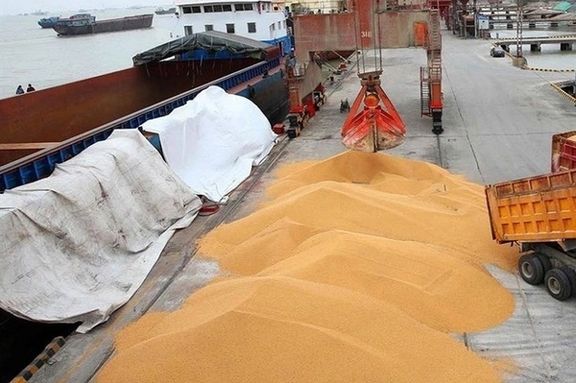
Iran has set aside about 4 million tons of wheat as a strategic reserve, equivalent to roughly three to four months of domestic consumption, the head of the state-run Government Trading Corporation said.

Saeed Rad, chief executive of the Government Trading Corporation of Iran, a subsidiary of the Agriculture Ministry responsible for state purchasing, imports and strategic stockpiles of staple goods, said the reserves had been secured through a combination of domestic production and imports.

He said Iran bought 7.7 million tons of wheat from local farmers this year under a guaranteed purchase scheme, with the remainder of national demand met through imports.

The comments come as Iran’s parliament approved a five-year pilot plan aimed at supporting agricultural production and increasing the resilience of food supply in wartime and emergency conditions, passing the measure with 207 votes in favor on Sunday.

The plan was reviewed under Article 85 of Iran’s constitution and comprises 27 articles, according to parliamentary statements.

Most Viewed

State media slam Araghchi's Hormuz tweet, say it let Trump claim victory
1

State media slam Araghchi's Hormuz tweet, say it let Trump claim victory

2
OPINION

The Hormuz get out of jail card turned to a grave

3
INSIGHT

How Tehran bends its own red lines to boost state rallies

4

Iran International says it won’t be silenced after London arson attack

5
VOICES FROM IRAN

Iran blackout cripples freelancer, small business incomes

Banner
Banner

Spotlight

  • Too early to tell who is winning Iran war, experts say
    PODCAST

    Too early to tell who is winning Iran war, experts say

  • How Tehran bends its own red lines to boost state rallies
    INSIGHT

    How Tehran bends its own red lines to boost state rallies

  • Iran blackout cripples freelancer, small business incomes
    VOICES FROM IRAN

    Iran blackout cripples freelancer, small business incomes

  • Ideology may be fading in Iran, but not in Kashmir's ‘Mini Iran'
    INSIGHT

    Ideology may be fading in Iran, but not in Kashmir's ‘Mini Iran'

  • US blockade enters murky phase as tankers spoof signals and buyers hesitate
    ANALYSIS

    US blockade enters murky phase as tankers spoof signals and buyers hesitate

  • Why the $100 billion Hormuz toll revenue is a myth
    ANALYSIS

    Why the $100 billion Hormuz toll revenue is a myth

•
•
•

More Stories

Gorgan Gulf remains at risk as Caspian levels fall

Dec 28, 2025, 09:47 GMT+0

Iranian officials warned that the Gulf of Gorgan, the largest bay of the Caspian Sea, remains at risk of a “silent crisis,” saying dredging alone will not be enough to secure its long-term survival as water levels continue to fall.

Authorities say emergency dredging of the Ashouradeh channel in recent years helped restore limited water flow, reduce salinity and prevent the bay and the nearby Miankaleh wetland from drying out completely.

But experts caution the measures have only bought time, leaving the fragile ecosystem vulnerable to continued retreat of the Caspian Sea, disrupted natural inflows and renewed sedimentation.

Saeed Rasouli, head of Iran’s Ports and Maritime Organization, said studies carried out by the agency showed that pumping water from the Caspian Sea into the bay was a necessary parallel step to dredging, but the plan has not yet been fully implemented.

He said updated engineering assessments were under way to determine how much of the current degradation is due to reduced depth, falling sea levels or new sediment layers.

  • Only three to five years left to save Gorgan Gulf, watchdog warns

    Only three to five years left to save Gorgan Gulf, watchdog warns

  • Iran says Caspian Sea a foreign policy priority on par with Persian Gulf

    Iran says Caspian Sea a foreign policy priority on par with Persian Gulf

Officials say feasibility studies have confirmed that installing pumping stations could help sustain the bay for at least the next 20 years, but the project remains stalled pending further technical work and implementation by the energy ministry.

Rasouli added that Iran had urged greater regional cooperation at a recent Caspian Sea meeting, warning that the shrinking bay reflects a broader environmental challenge shared by all five littoral states.

Iran president says budget cannot match wages to inflation

Dec 28, 2025, 09:00 GMT+0

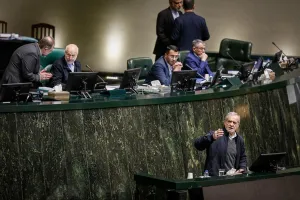
Iran’s President Masoud Pezeshkian told parliament the government could not afford to raise wages in line with inflation as lawmakers opened debate on the budget for the Iranian year starting in March, with a sliding currency and rising living costs adding pressure to the plan.

“When people are struggling with livelihoods, you cannot govern,” Pezeshkian told the open session. “They say increase wages; someone tell me where I should bring the money from?”

The draft budget submitted to parliament proposes a 20% rise in public-sector wages, while expanding income-tax exemptions to soften the hit from inflation, which has remained among the highest in the world.

Pezeshkian acknowledged the increase “is not proportionate to inflation,” but said the government had tried to compensate by raising tax-free thresholds.

Under the proposal, salaried workers earning up to 400 million rials a month (about $282) would be exempt from income tax, while those earning between 400 million and 930 million rials ($282–$655) would pay a 10% rate, according to figures cited by Iranian media.

Pezeshkian said the budget’s main aim was to reduce what he called “the fire of inflation” and avoid a deficit that fuels money creation. He said the government had raised its own current spending by only 2%, cutting what he described as nonessential lines and moving toward “performance-based budgeting,” under which ministries would have to specify services to receive funds.

Parliament Speaker Mohammad Bagher Ghalibaf said the budget’s wage assumptions needed further work, warning that household livelihoods were at stake.

“The importance of the budget is clear for all of us … the budget is people’s lives,” Ghalibaf told lawmakers, adding that the 20% wage increase “has its problems and needs to be corrected.”

  • Iran economy contracts despite modest oil growth as inflation and rial slide

    Iran economy contracts despite modest oil growth as inflation and rial slide

  • Iranian workers and consumers to bear cost of budget deficit, experts warn

    Iranian workers and consumers to bear cost of budget deficit, experts warn

Lawmakers warn currency slide and subsidy policy risk stoking prices

Several lawmakers used the debate to attack what they described as a lack of credible plans to stabilize the currency and contain inflation.

MP Mohsen Zanganeh said advisers to Pezeshkian believed the exchange rate would rise in line with inflation, which he said implied a roughly 40% increase by the end of the next year.

“Mr. Pezeshkian, your economic team has accepted that it does not have the ability to reduce inflation and control the currency rate, and therefore it is only seeking to give vouchers,” Zanganeh said.

Jabbar Kouchakinejad, a deputy head of parliament’s budget committee, said officials appeared unwilling to curb the exchange rate’s rise and suggested the government might be using hard-currency sales to plug fiscal gaps.

“It seems there is no will in the government to control the exchange rate and balance it,” Kouchakinejad told ILNA, adding: “This trend is continuing quickly and prices are rising rapidly.”

Pezeshkian said the government planned to expand targeted support, including a consumer voucher program, arguing that price swings in the currency market feed directly into household costs.

The government spent about $6 billion importing gasoline this year and had budgeted around $8 billion for subsidized foreign exchange for essential imports next year, while many goods were effectively priced at the market rate, according to the president.

He also pointed to energy subsidies as a core distortion, arguing that higher consumption channels more state support to wealthier households. He described the system as inequitable.

Iran has recently introduced a three-tier gasoline pricing system, keeping subsidized rates while adding a higher tier aimed at limiting subsidy costs and discouraging non-card refueling and quota overuse, a move officials have presented as gradual reform after past price hikes triggered unrest.

The budget deliberations come as Iran’s economy faces chronic inflation, sanctions pressure, and financial constraints that officials say limit room for maneuver, even as the government argues it is trying to protect lower-income households through tax exemptions and targeted aid.

The rial slid on Sunday to a new record low of 1,420,000 per dollar, as point-to-point inflation ran at over 50% and the central bank reported the economy had contracted despite a modest rise in oil output and sales.

Iran economy contracts despite modest oil growth as inflation and rial slide

Dec 28, 2025, 07:35 GMT+0

Iran’s economy slipped back into contraction in the first half of the current year as inflation accelerated and the rial sank to record lows, compounding the pressure on President Masoud Pezeshkian as his government seeks approval for a tight budget starting on March 21.

Fresh central bank data showed gross domestic product shrank by 0.6% including oil and by 0.8% excluding oil in the first six months of the year 1404 (started on March 21), reflecting weak demand, falling investment and heightened uncertainty across the real economy, Tasnim reported.

The downturn came despite modest growth in the oil sector, which expanded by 1.1% but failed to offset deeper declines elsewhere.

Agriculture contracted by 2.9% and industry and mining by 3.4%, while construction suffered a sharp 12.9% slump, the central bank said, pointing to a deepening recession in a sector that is a key engine of employment and related industries.

At the same time, inflation pressures intensified. The statistics center said point-to-point inflation rose to 52.6% in the month to late December, up 3.2 percentage points from the previous month, while average annual inflation climbed to 42.2%.

Food inflation was far higher, with prices of food, beverages and tobacco up 72% year-on-year, compared with 43% for non-food goods and services. Monthly inflation reached 4.2%, led by sharp increases in staples such as dairy and bread.

The deteriorating data frame a contentious budget debate in parliament, where Pezeshkian has warned that the state lacks the resources to cushion households fully from price rises.

  • Iran president says budget cannot match wages to inflation

    Iran president says budget cannot match wages to inflation

  • Iranian workers and consumers to bear cost of budget deficit, experts warn

    Iranian workers and consumers to bear cost of budget deficit, experts warn

“They tell me to raise wages, but someone should tell me where the money is supposed to come from,” he told lawmakers while defending the draft budget, which proposes a 20% public-sector pay increase – well below inflation – alongside broader tax exemptions.

Pezeshkian has said the priority is to prevent a deficit-fueled surge in prices by restraining spending growth and tightening fiscal discipline.

“An orderly budget without a deficit reduces the fire of inflation and can contain price rises to some extent,” he said, adding that the government would expand tax exemptions and roll out targeted subsidies to protect low-income households.

Parliamentary leaders and lawmakers from across factions have pushed back, arguing the budget risks aggravating inflation and living costs.

Some lawmakers have been more blunt. “The 1405 budget has an inflationary nature,” said Hossein Samasami, a member of parliament’s economic committee. “Budget decisions are among the most important drivers of prices and inflation, and ignoring their impact directly weakens purchasing power.”

Volatility in the currency market has added to the pressure. The rial has fallen sharply in recent weeks, fueling gains in gold and hard assets as households seek protection from inflation.

Guards-linked Tasnim news agency said in an analysis on Sunday that the dollar had become “a symbol of lost confidence,” criticizing what it described as inaction by the government and central bank as expectations worsened.

Markets have continued to test policy credibility. On Sunday, the rial weakened to a new record low of about 1,420,000 per dollar.

Iranian workers and consumers to bear cost of budget deficit, experts warn

Dec 27, 2025, 19:41 GMT+0
•
Maryam Sinaiee

Iran’s draft budget for the coming year, submitted to parliament this week, is being widely described by economists as the most contractionary in decades, shifting the burden of deficit control onto workers and consumers.

President Masoud Pezeshkian presented the draft budget bill for the Iranian year 1405 (starting on March 21, 2026) to parliament on Wednesday.

Lawmakers have until March 20, 2026, to review and approve the proposal, which has already sparked heated debate among economists, labor representatives, and political commentators.

The government says the budget was prepared with an emphasis on fiscal discipline, realistic revenue and expenditure estimates, and greater transparency.

Officials argue that the bill aims to control the budget deficit and curb inflation, which remains above 40 percent according to official figures and closer to 50 percent by independent estimates.

According to the bill, the total budget for next year amounts to roughly 10,144 quadrillion rials.

For the first time, the figures are presented using Iran’s newly approved rial unit, adopted in November, which removes four zeros. Under the new system, the same amount is recorded as 10,144 billion rials.

Total government spending is projected to rise by 28 percent.

Reliance on taxes instead of oil revenues

A central feature of the bill is its reliance on tax revenues rather than oil sales. Skepticism over the feasibility of this strategy is widespread, particularly amid expectations of intensified sanctions that could limit oil revenues and further strain businesses.

“Growth in the country’s tax revenues exceeds the inflation rate, and given that we have no economic growth—or even negative growth—this is not economically justifiable,” Gholamreza Salami, a senior tax expert, told the reformist daily Shargh.

Morteza Afqah, a professor of economics, voiced similar concerns in remarks to Entekhab, warning that higher tax revenues are unrealistic in the absence of economic growth.

“Continuing this trend will lead to the widespread closure of small and medium-sized enterprises, resulting in rising unemployment, deeper economic recession, and a further decline in consumers’ purchasing power,” he said.

Under the bill, the government plans to raise the value-added tax (VAT) rate from 10 to 12 percent and distribute the additional revenue directly to citizens through electronic food vouchers. Part of the proceeds would also be used to adjust pension payments for retirees.

Supporters argue that this approach is more targeted than broad subsidies, while critics warn it will further weaken household consumption.

Cutting subsidized currency and fuel signals

The draft budget also signals a significant reduction in subsidized foreign currency for imports to save 5.7 quadrillion rials (billion in the new system). While about €11 billion (around $12.9 billion) was allocated this year for importing essential goods, that figure will fall to €7 billion (around $8.2 billion) next year.

Currently, selected importers receive preferential currency at 280,500 rials per dollar, compared to a free-market rate that has surpassed 1.35 million. The recent suspension of this rate for rice and medicine imports has already driven steep price increases. Proponents of eliminating preferential rates argue that the wide gap between official and market exchange rates has fueled corruption and rent-seeking.

The government also plans to allocate nearly 5.5 quadrillion rials (billion in the new system) rials from revenues generated by imported gasoline sales to direct cash subsidies. Analysts say this strongly suggests gasoline price hikes next year.

In addition, the budget anticipates 2.9 quadrillion (billion in the new system) rials in revenue from selling wheat at non-subsidized rates, indicating a likely reduction—or complete removal—of preferential currency for wheat imports.

Pressure on salaried workers

Despite inflation exceeding 40 percent, the bill proposes only a 20 percent increase in salaries for government employees and retirees. At the same time, it significantly raises the tax-exempt income threshold, meaning nearly all teachers and about 70 percent of public-sector employees would be fully exempt from income tax.

Economist Kamran Nadri told Jam-e Jam that the cost of fiscal tightening is falling primarily on employees. He argued that the government is seeking to close the deficit not by eliminating inefficient institutions or redundant budget lines, but by suppressing wage growth.

According to Nadri, the projected increase in tax revenues would, if realized, fall largely on consumers and could fuel inflationary pressure. However, he added that if the government avoids monetary expansion, inflation caused by higher taxes and the removal of subsidized currency would not necessarily be permanent.

Opaque spending and institutional budgets

Despite official claims of transparency, the budget allocates around €7.5 billion (around $8.8 billion) in oil revenues to vaguely defined “special projects,” with no clear breakdown of expenditures. This extra-budgetary category accounted for nearly one-fifth of last year’s budget and, according to Donya-ye Eghtesad, more than two-thirds of the operational deficit.

Critics have also targeted increased funding for religious and promotional institutions, as well as state broadcaster IRIB, which is set to receive a 20 percent budget increase. The reformist daily Arman-e Melli warned that such allocations, combined with limited wage growth, risk fueling social unrest.

“The combination of severe inflation, soaring prices, and wage increases that cover less than half of current inflation should be a warning to the government that this kind of budgeting prepares the ground for future protests,” the paper wrote.

Nevertheless, hardline conservatives have also protested funding levels. Quds newspaper criticized cuts to the budget for promoting the “culture of pilgrimage.” Nasrollah Pejmanfar, a member of parliament from Mashhad, told the paper: “Unfortunately, neglect of the issue of pilgrimage has meant that people have not been able to benefit from it properly and have faced difficulties.”

Speaking to Arman-e Melli, reformist politician Fayyaz Zahed urged President Pezeshkian to seek Supreme Leader Ali Khamenei’s backing to gradually reduce funding for institutions reliant on public money. “If the president were to cut these budgets today,” he said, “his government would not last even a month. This is a very difficult and frightening confession to make.”

Air pollution worsens across Iran, reaching unhealthy for all levels

Dec 27, 2025, 10:07 GMT+0

Air quality across wide parts of Iran deteriorated sharply on Saturday, with official data showing pollution reaching “unhealthy for all” levels in large areas of Tehran, Khuzestan and Isfahan provinces.

Air quality in nine monitoring stations across Tehran Province was classified as red on Saturday, according to the National Air Quality Monitoring System. Pollution levels in the cities of Damavand, Varamin, Pakdasht, Gharchak, and Shahriar in Tehran province ranged between 150 and 170 on the Air Quality Index (AQI), placing them in the “unhealthy for all” category.

  • Air pollution sends 170,000 Iranians to hospitals in a week – health official

    Air pollution sends 170,000 Iranians to hospitals in a week – health official

The average air quality across Tehran’s 22 municipal districts stood at 136, categorised as “unhealthy for sensitive groups.” Under AQI scale, readings above 150 are considered unhealthy for the general population, while levels above 200 are deemed very unhealthy.

Khuzestan sees most severe conditions

Air pollution reached more alarming levels in Khuzestan Province in the south, where officials reported some of the worst conditions nationwide. The air quality monitoring center said the AQI in the city of Hendijan rose to 212, placing it in the purple category and signalling “very unhealthy” air.

Several other cities, including Ahvaz, Khorramshahr, Mahshahr, Dezful, etc. recorded AQI readings above 150, leaving air quality unhealthy for all age groups. Authorities advised elderly people, children, pregnant women and those with heart or respiratory illnesses to avoid outdoor activity, urging others to limit time outside.

Isfahan and Mashhad affected

In Isfahan Province, conditions were also severe. The AQI in the city of Isfahan reached 186 on Saturday morning, while some stations recorded readings above 200.

Meanwhile, officials in Mashhad said air quality there had reached “unhealthy for sensitive groups,” with pollution recorded in 16 areas of the city.

  • Air pollution returns to Tehran, putting capital back in unhealthy range

    Air pollution returns to Tehran, putting capital back in unhealthy range

Despite recurring winter pollution crises, Iranian authorities have so far relied largely on temporary measures such as short-term closures, with critics saying no effective or lasting solution has been implemented to address the underlying causes of chronic air pollution.