• العربية
  • فارسی
Brand
  • Iran Insight
  • Politics
  • Economy
  • Analysis
  • Special Report
  • Opinion
  • Podcast
  • Iran Insight
  • Politics
  • Economy
  • Analysis
  • Special Report
  • Opinion
  • Podcast
  • Theme
  • Language
    • العربية
    • فارسی
  • Iran Insight
  • Politics
  • Economy
  • Analysis
  • Special Report
  • Opinion
  • Podcast
All rights reserved for Volant Media UK Limited
volant media logo

Bus crash in central Iran kills 13

Dec 16, 2025, 17:20 GMT+0Updated: 22:46 GMT+0
The wreckage of an intercity bus that overturned and hit a taxi on the Isfahan–Natanz highway in central Iran, killing 13 people and injuring 11 others on December 16, 2025, File photo

A bus crash on the Esfahan-Natanz highway killed 13 people after an intercity coach allegedly veered into the opposite lane and slammed into a taxi on Tuesday, with Iran’s road police blaming suspected driver fatigue for the accident.

Emergency services said two passengers in the taxi and nine bus passengers died shortly after the accident. The crash also injured at least 11 others with multiple traumas, all of whom are currently in urgent care.

The Scania intercity bus, operated by the Royal Safar Isfahan company and travelling from Esfahan toward Tehran, overturned around 22:10 local time near kilometer 80 of the Esfahan–Natanz route, then collided with a passenger car, official media cited local police and provincial officials as saying.

The Iranian Red Crescent said the remaining occupants suffered injuries of varying severity and were taken to hospitals in Natanz, Shahinshahr and Isfahan.

Police account

A senior traffic police official told state media that the preliminary hypothesis is that the driver’s drowsiness and loss of control caused the bus to veer into the opposite lane, overturn and strike the car, but added that the final conclusion will depend on full technical and safety assessments.

Authorities said the scene has been cleared and traffic restored, while forensic and road-safety teams continue to inspect the vehicle, road conditions and possible mechanical factors.

Officials have said that if any negligence by the bus company, driver or other parties is confirmed, the case will be pursued through legal channels.

Iran’s Vice President on Tuesday in Tehran recalled a similar deadly accident in October in northern Iran, rejecting the driver fatigue theory.

“Is the driver to blame, when it’s apparently noted that this accident occurred about 20 minutes after he passed the police station? That would mean drowsiness, which is being raised as the issue, was not involved,” Mohammad Reza Aref said in a speech.

“A few months ago in Semnan we had a similar case, when they were going from the dormitory to class and the same thing happened and students were killed,” he added.

At least 26 students have died in 13 accidents involving university buses across Iran over the past decade, the daily Ham-Mihan reported earlier this year, reviving concerns about road safety and vehicle standards.

Most Viewed

100 days after carnage: Iran economy reels from war, inflation, unemployment
1
INSIGHT

100 days after carnage: Iran economy reels from war, inflation, unemployment

2
INSIGHT

Ghalibaf defends Iran-US talks amid hardline backlash

3
INSIGHT

A nation in limbo: 100 days after the massacre, has the world moved on?

4
ANALYSIS

From instability to influence: Pakistan’s pivotal role in US-Iran diplomacy

5
ANALYSIS

100 days on: why Iran’s January protests spread across social classes

Banner
Banner

Spotlight

  • War-hit homeowners feel abandoned as Iran’s reconstruction aid fades

    War-hit homeowners feel abandoned as Iran’s reconstruction aid fades

  • 100 days on: the anatomy of Iran’s January crackdown
    INSIGHT

    100 days on: the anatomy of Iran’s January crackdown

  • Ghalibaf defends Iran-US talks amid hardline backlash
    INSIGHT

    Ghalibaf defends Iran-US talks amid hardline backlash

  • 100 days on: why Iran’s January protests spread across social classes
    ANALYSIS

    100 days on: why Iran’s January protests spread across social classes

  • From instability to influence: Pakistan’s pivotal role in US-Iran diplomacy
    ANALYSIS

    From instability to influence: Pakistan’s pivotal role in US-Iran diplomacy

  • A nation in limbo: 100 days after the massacre, has the world moved on?
    INSIGHT

    A nation in limbo: 100 days after the massacre, has the world moved on?

•
•
•

More Stories

Khamenei says Tehran faces propaganda war aimed at its downfall

Dec 16, 2025, 15:56 GMT+0

Supreme Leader Ali Khamenei said in a speech that Iran faces a campaign by its enemies aimed at public opinion and cultural identity to bring about regime change which a US-Israeli war in June failed to achieve.

“We are in a propaganda war and a spiritual war,” Khamenei said during a meeting in Karaj on Monday which local media published the next day.

“The enemy understood that seizing this land and this country through pressure and military tools is not possible.”

Khamenei said Iran’s adversaries had shifted their focus to influencing public opinion and culture. His remarks appeared to refer to the United States and Israel.

Iran's two nemeses launched a surprise attack in June, culminating in US attacks on three key nuclear facilities. Though US President Donald Trump said the raids obliterated Tehran's capability, a dispute festers over Iran's nuclear ambitions.

Tehran denies seeking a bomb but the United States along with other Western countries and Israel deny its intentions. Trump has vowed to attack Iran again if it restarts uranium enrichment and Iran has denied a punishing response in any war.

“If they want to interfere and achieve success, they must change hearts and minds,” he said. He said pressure on Iran was ongoing in the military, economic and media realms as well as in cyberspace and the foreign press.

“All of this is focused on one point, and that point is pressure on the resistance of nations, with the Iranian nation foremost,” he said. Khamenei said the ultimate goal of such efforts was to erode Iran’s revolutionary and religious identity.

“The enemy’s objective in our country is to gradually turn people away from the revolution, its goals and its memory,” he said. He called on supporters of the Islamic Republic to recognize what he described as the adversaries’ strategy and to strengthen Iran’s cultural and media response.

The veteran theocrat, 86, has long accused Tehran's adversaries of seeking regime change by sowing the seeds of protest and discontent. Iran for over a quarter century has quashed repeated rounds of widespread unrest with deadly force.

Authorities stepped up a crackdown on dissidents and alleged spies in the wake of the June conflict even as it has relaxed enforcement of certain Islamic cultural rules in the theocracy in a move opposed by some hardliners.

Khamenei's remarks come as Iran’s Revolutionary Guards spokesman said last month that Tehran's archenemy, Israel, is in no position to launch a new war against the country, describing current rhetoric as psychological pressure rather than a genuine military threat.

Iran political prisoner sews lips shut to protest detention - rights group

Dec 16, 2025, 15:45 GMT+0

A Kurdish political prisoner in Iran began a hunger strike by sewing his lips in protest at being denied family visits and prison leave, a rights group said on Tuesday.

Nayeb Askari, who is serving a 15-year sentence at Orumiyeh Central Prison in northwest Iran formally informed prison authorities that he had started a hunger strike and sewed his lips on December 13, France-based rights group Kurdistan Human Rights Network (KHRN) said.

In a letter to prison officials, Askari said he had been barred from family visits for the past year without explanation and that repeated requests for temporary prison leave had gone unanswered. He launched the hunger strike after prison authorities failed to respond to his complaints, he added.

Askari, from Orumiyeh, was arrested on March 24, 2021, by intelligence agents from Iran’s Islamic Revolutionary Guard Corps (IRGC) and was initially held at the IRGC’s Al-Mahdi detention center for three months, where he was allegedly subjected to physical and psychological torture, according to KHRN.

"He was subjected to severe physical and psychological torture in order to extract forced confessions," KHRN said. "He was also denied access to a lawyer and contact with his family during this period," the rights group added.

Askari's arrest followed his return to Iran from the Kurdistan Region of Iraq after receiving what the rights group described as a “safe-conduct letter” arranged through the IRGC.

Iranian authorities initially sentenced Askari to death in absentia in 2018 on charges of “enmity against God” (moharebeh) linked to alleged membership in the Kurdistan Free Life Party (PJAK), according to KHRN. The sentence was later overturned, and the charge was amended to “armed insurrection” (baghi).

In October 2023, Askari was again sentenced to death on the same charge, prompting a brief hunger strike. The Supreme Court later overturned the ruling for a second time and referred the case to another court branch.

In mid-October 2024, Askari was sentenced to 15 years in prison and fined 900 million rials (about $700) on charges of “armed insurrection,” the rights group said.

KHRN said Askari has previously staged prolonged hunger strikes in detention, including a 32-day strike in 2021 to protest authorities’ refusal to transfer him to an external hospital for medical treatment.

Two armed attacks hit Iranian forces in restive southeast

Dec 16, 2025, 08:59 GMT+0

Two separate armed attacks on Iranian security forces in the country’s restive southeast killed at least three police officers and a civilian on Monday night, the latest bout in a deteriorating security picture as militant groups regroup under a new umbrella outfit.

Iran’s Revolutionary Guards confirmed an armed clash on the Zahedan-Fahraj road, saying “three law enforcement personnel and one ordinary citizen” were killed.

In a statement issued early Tuesday, the Guards’ Qods Ground Forces headquarters said security and intelligence agencies were investigating the incident.

The IRGC headquarters for the southeast is one of ten regional commands and oversees the largest geographic area, covering the provinces of Sistan-Baluchestan and Kerman, and commanding multiple provincial Guards units and key combat brigades in the region.

The rights group Haalvsh, which monitors unrest in the region, earlier reported that the Fahraj incident occurred at a checkpoint in neighboring Kerman province and said four security personnel – two intelligence officers and two police – were killed, with several others wounded. The group published video footage showing injured officers and bodies being transferred from the scene.

At the same time, a second confrontation involving armed assailants and Iranian forces was reported in the city of Iranshahr, also in Sistan-Baluchestan province.

In Iranshahr, Haalvsh said gunmen targeted three military vehicles in the early hours of Tuesday, killing and wounding an unspecified number of security personnel.

The group cited local sources and said roads leading toward Zahedan were blocked by military forces, leaving travelers stranded with no indication of when routes would reopen.

Iranian authorities have not released casualty figures for the Iranshahr attack, nor have they commented on the identity or motives of the attackers. No group has officially claimed responsibility for either incident.

The attacks are the latest in a series of armed confrontations in Iran’s impoverished southeast, which borders Pakistan and Afghanistan and has long been plagued by violence involving Sunni Baluch militant groups and Iranian security forces.

  • Three IRGC members killed in southeast Iran border attack

    Three IRGC members killed in southeast Iran border attack

  • Armed group claims deadly attack on Guards members in southeast Iran

    Armed group claims deadly attack on Guards members in southeast Iran

Pattern of attacks and militant regrouping

In recent months, similar clashes have intensified. Last week, the Guards said four of their members were killed and three wounded in an attack by what they described as “terrorist and hostile groups” in the Lar area near Zahedan.

A day later, Haalvsh reported that a newly formed coalition calling itself the “Popular Fighters Front” claimed responsibility, saying it had ambushed a Guards convoy.

The Popular Fighters Front announced its formation earlier this month, presenting itself as a merger of several Baluch political and militant factions, including the PADA Baluch Movement, Harakat Nasr Balochistan, Jaish al-Adl, the Mohammad Rasulallah group led by Haji Vahed Bakhsh, and self-described “spontaneous Baluch fighters.”

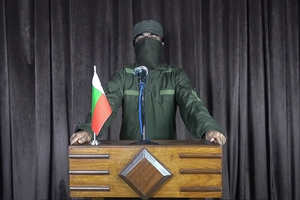
In a video message posted online, a masked spokesman identified as Mahmoud Baluch said the coalition aimed to increase the effectiveness of resistance against what he described as oppression by Iran’s ruling system.

While the group’s manifesto emphasized civil, media and political action, it did not renounce armed operations and claimed responsibility for recent attacks.

Jaish al-Adl – designated a terrorist organization by both Iran and the United States – has emerged as the dominant force within the coalition, analysts say.

The group formed around 2012 after the execution of Abdelmalek Rigi, the leader of its predecessor, Jundullah, and has since carried out bombings, ambushes and suicide attacks against Iranian police, border guards and the Revolutionary Guards.

Iranian state-linked media have sought to downplay the significance of the merger, portraying it as a rebranding of weakened factions aimed at attracting foreign backing. Some outlets have alleged links to Israeli intelligence, a claim the groups deny.

  • Iran militant group Jaish al-Adl announces new strategy as attacks continue

    Iran militant group Jaish al-Adl announces new strategy as attacks continue

  • Khamenei advisor says southeast development key to blunting sanctions

    Khamenei advisor says southeast development key to blunting sanctions

Shift in strategy

Security analysts say the emergence of the Popular Fighters Front reflects an attempt by Baluch militants to broaden their appeal beyond a narrowly defined Sunni ethnic insurgency.

Recent statements from the group have adopted more inclusive language, addressing Kurds, Arabs, Turks and other minorities and framing their struggle in terms of shared political and economic marginalization.

The shift follows years of intensified counterinsurgency operations by Iranian forces in Sistan-Baluchestan, including arrests, cross-border pressure near Pakistan, and heightened surveillance. Despite this, militant groups have continued to demonstrate the capacity to stage deadly attacks.

Iran’s southeast remains one of the country’s poorest regions, with longstanding grievances over discrimination, underdevelopment and heavy-handed security policies.

These tensions flared during the nationwide protests of 2022, when security forces carried out lethal crackdowns in Baluch and Kurdish areas.

According to an article by US-based Al-Monitor news website this week, while transforming a Baluch-based insurgency into a national movement would require organizational depth and cross-ethnic networks that militant groups have historically lacked, the new coalition “adds a layer of political complexity” for Tehran.

Iran health officials flag price rises as shortages loom over currency crunch

Dec 16, 2025, 07:26 GMT+0

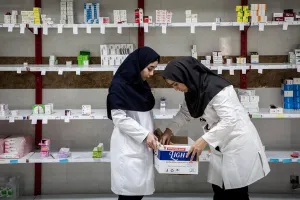
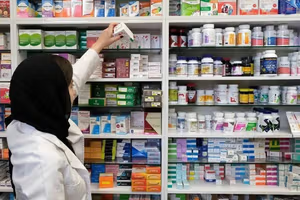
Iranian health officials warned that foreign currency bottlenecks and unpaid state debts are straining the drug supply chain, with the Food and Drug Administration chief signaling possible price rises for medicines and medical equipment to keep producers operating.

While authorities say medicines remain available for now, they acknowledge that delays in transferring allocated foreign exchange, growing arrears to suppliers and shrinking inventories have pushed the sector close to a breaking point, raising the risk of shortages in the final months of the year.

Mehdi Pirsalehi, head of Iran’s Food and Drug Administration, said on Tuesday that worsening currency constraints in recent months had left the industry in a sensitive position.

“There are significant foreign-currency debts to overseas suppliers, and resolving them requires serious cooperation from the government, parliament and other decision-making bodies,” he said, according to ISNA.

Pirsalehi apologized to the public for shortages of even “a single item” of medicine and said the agency considered itself accountable.

He added, however, that without adjusting drug and medical equipment prices in an inflationary environment, “it is not possible for manufacturers to sustain stable operations.”

He said that if prices had not been increased last year, “a significant part of the country’s pharmaceutical industry would have exited the production cycle by now.”

Officials argue that in an economy grappling with chronic inflation and currency volatility, holding drug prices steady shifts pressure onto manufacturers and ultimately threatens national drug security.

Price adjustments, they say, are an economic necessity to prevent factory shutdowns and protect domestic production, a move that could nonetheless increase pressure on patients unless insurers reimburse costs on time.

According to ILNA on Tuesday, a month-on-month rise in medicine prices, uneven insurance approvals and gaps in access to original drugs are pushing patients toward out-of-pocket purchases, leaving wealthier households able to buy on the open market while poorer patients increasingly walk away empty-handed.

  • Iran medical suppliers warn of worsening drug shortages

    Iran medical suppliers warn of worsening drug shortages

  • Iran drug stocks under two months, 800 medicines at risk as FX delays bite

    Iran drug stocks under two months, 800 medicines at risk as FX delays bite

  • Three in ten Iranians forego medication as prices soar

    Three in ten Iranians forego medication as prices soar

Debts, FX delays and thinning stocks

Alongside currency shortages, accumulated government and insurance arrears have emerged as one of the most serious challenges facing the market.

Ebrahim Hashemi, chairman of the board of the Association of Pharmaceutical Distribution Companies, said recently that debts to drug distributors had reached 1.57 quadrillion rials (about $1.2 billion at today’s rates) by November 2024, warning that failure to settle them could severely disrupt the production and import of essential medicines.

According to figures cited by industry representatives, distributors’ claims on medical universities alone exceed 31 trillion rials ($240 million), while total government liabilities – including those linked to social security and insurance funds – amount to about 47 trillion rials ($360 million).

“Which economic sector can survive more than a year without receiving its payments?” Hashemi asked, warning that the final three months of the year (ending on March 20) would be among the toughest for the drug sector.

Pharmacies, the frontline of access for patients, are also under acute liquidity pressure. Shahram Kalantari, head of Iran’s Pharmacists Association, has said insurers owe private pharmacies, and warned that each wave of currency volatility inflicts tens of trillions of rials in fresh losses, sharply reducing pharmacies’ ability to restock.

Kalantari said shelves and warehouses had grown “thinner” in recent months, with strategic reserves steadily eroding – a development he described as an early alarm for broader shortages.

Abdollah Abdollahi Asl, director general for medicines and controlled substances at the Food and Drug Administration, said inventories had fallen below critical thresholds: less than one month at factories, under two months at distribution companies and under three months at pharmacies, compared with a recommended minimum of three to four months.

He said around 800 of the roughly 3,000 medicines on Iran’s official list are in a shortage warning status, awaiting foreign exchange and liquidity. He added that 21 essential hospital medicines and 56 essential non-hospital drugs are already in short supply.

The warnings echo recent statements by industry figures who say Iran could face a sharp deterioration in drug supplies within months if current conditions persist.

Alireza Chizari, head of Tehran province’s association of medical and pharmaceutical equipment producers, said earlier this month that the crisis had not yet fully hit society because regulators were managing depleted warehouses, but warned the situation could become “disastrous within one or two months.”

Iran’s pharmaceutical sector has been squeezed by foreign exchange shortages, sanctions-related payment hurdles and rising costs. Drug prices, medical equipment and healthcare expenses have jumped by about 70% since the government removed a subsidized exchange rate for medicine imports earlier this year, while insurance coverage has lagged behind.

Medical specialists have cautioned that sudden switches from imported medicines to domestic alternatives can pose risks for some high-risk patients, even though local drugs are effective in most cases.

Canada sanctions 4 senior Iranian officials over protest crackdown

Dec 16, 2025, 01:04 GMT+0

Canada announced a new round of sanctions on four senior Iranian officials on Monday over their alleged role in Tehran’s violent crackdown on protests and dissent.

The officials named are Mohsen Karimi (Markazi Province commander), Ahmad Khadem Seyed al-Shohada (commander of Karbala Operational Base in southwest provinces), Mostafa Mohebbi and Hassan Akharian, all described as senior figures implicated in 'gross and systematic' human rights violations, the foreign ministry said in a statement.

Foreign Minister Anita Anand said the four are being listed under the Special Economic Measures (Iran) Regulations for facilitating and directing repressive policies in the Islamic Republic.

“Iranian security forces, including the Islamic Revolutionary Guard Corps (IRGC), continue to use excessive and lethal force to suppress protests, along with beatings, arbitrary arrests and torture, including in custody,” the statement said.

Ottawa formally listed the IRGC as a terrorist entity under the Criminal Code last year, which Canada blames for human rights abuses and the 2020 downing of flight PS752.

“Canada will not hesitate to highlight Iran’s persistent disregard for the human rights of its own people and call for change," the statement said. "It is imperative that Iran investigate all violations in line with international law, ensure justice for victims, and make certain that its policies and practices uphold its human rights obligations."

Ottawa also introduced a new measure last week, requiring any transaction with Iran, no matter the amount, to be reported. The previous $10,000 reporting threshold has been eliminated in favor of a zero-dollar threshold for any financial transaction to or from Iran.

Canada shuttered its embassy and cut diplomatic ties with Iran in 2012 over what it called security concerns for its diplomats and Iran’s alleged support for terrorism and human-rights abuses.