• العربية
  • فارسی
Brand
  • Iran Insight
  • Politics
  • Economy
  • Analysis
  • Special Report
  • Opinion
  • Podcast
  • Iran Insight
  • Politics
  • Economy
  • Analysis
  • Special Report
  • Opinion
  • Podcast
  • Theme
  • Language
    • العربية
    • فارسی
  • Iran Insight
  • Politics
  • Economy
  • Analysis
  • Special Report
  • Opinion
  • Podcast
All rights reserved for Volant Media UK Limited
volant media logo

June strikes destroyed 22,000 Iranian centrifuges, think tank says

Sep 9, 2025, 11:27 GMT+1Updated: 01:30 GMT+0
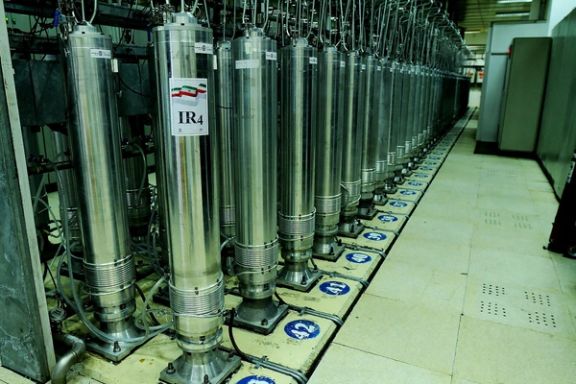
File photo of some of Iran’s centrifuges in Natanz nuclear site

Nearly 22,000 Iranian gas centrifuges at Fordow, Natanz and Isfahan were knocked out in June strikes, leaving “no identifiable route” to weapon-grade output at those plants, the Institute for Science and International Security said citing the UN nuclear watchdog’s latest reports.

In a paper assessing the International Atomic Energy Agency’s (IAEA) September quarterly reports, ISIS said the attacks “destroyed or made inoperative all of Iran’s installed centrifuges… at Iran’s three enrichment sites,” and severely damaged Iran’s ability to manufacture centrifuges and uranium hexafluoride feedstock.

The group, led by nuclear expert David Albright, added that Fordow, Natanz and Esfahan held enriched uranium stocks before the strikes, but the IAEA has lost on-site visibility since inspectors withdrew for safety reasons in late June and Iran later suspended cooperation.

The IAEA’s reporting showed Iran’s stock of uranium enriched up to 60% U-235 reached 440.9 kg (uranium mass) on the eve of the June 13 bombardment, with additional inventories of 20%, 5% and up to 2% material also on hand.

The agency said the 60% stockpile -- considered highly enriched uranium -- requires verification every 30 days under standard safeguards practice and that “its verification… is overdue” because inspectors have not had access for more than two and a half months.

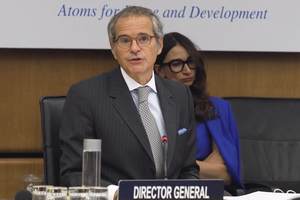
IAEA Director General Rafael Grossi told the Agency’s Board of Governors on Monday that Iran’s new domestic law curbing access “may create obligations domestically,” but “it cannot do so for the IAEA.”

He added that Iran’s NPT safeguards agreement remains in force and that inspection work must fully resume without delay. He said technical talks in Tehran and Vienna had made headway toward a practical arrangement, adding: “It is my sincere hope that within the next few days, it will be possible to come to a successful conclusion.”

ISIS said the IAEA reported Iran was in the process of declaring a new Isfahan Fuel Enrichment Plant (IFEP) at the Nuclear Reactors Fuel Company site before the war.

The think tank assessed the IFEP to be inside Esfahan’s mountain tunnel complex and said US strikes destroyed tunnel entrances and ventilation systems; while Iran has restored limited access to at least one portal, the plant “does not appear to be ready for operations.”

The IAEA planned a design-information visit on June 13 but canceled it as the attacks began.

Before the strikes, the IAEA counted “125 full-sized cascades” at the three declared enrichment plants, totaling more than 20,000 IR-1, IR-2m, IR-4 and IR-6 machines. ISIS estimated the installed total was closer to 22,000, including about 14,700 advanced centrifuges.

Based on satellite imagery cited by the IAEA, Fordow “suffered very significant damage,” Natanz’s underground halls were “extensively damaged,” and the above-ground pilot plant at Natanz was destroyed early in the conflict, ISIS said.

Since June 13, the IAEA said it has received no nuclear-material accountancy reports, no updated design information questionnaires, and has had no access to safeguarded sites other than the Bushehr nuclear power plant.

It reported a “loss of continuity of knowledge” over inventories of enriched uranium, as well as over centrifuge and heavy-water production since Iran halted JCPOA-related monitoring in 2021.

Grossi said only standard measures under Iran’s Comprehensive Safeguards Agreement were under discussion, because Tehran is not applying the Additional Protocol.

He also rejected claims that IAEA data had enabled attacks on Iranian facilities, calling such allegations an “absurd narrative,” and reiterated that the agency does not share confidential inspection information with any state.

European powers have moved to reimpose UN sanctions via the “snapback” mechanism, while Tehran has demanded international condemnation of the strikes on its nuclear sites.

Most Viewed

Iran International says it won’t be silenced after London arson attack
1

Iran International says it won’t be silenced after London arson attack

2

State media slam Araghchi's Hormuz tweet, say it let Trump claim victory

3
VOICES FROM IRAN

Hope and anger in Iran as fragile ceasefire persists

4
INSIGHT

How Tehran bends its own red lines to boost state rallies

5

Iran halts petrochemical exports to supply domestic market

Banner
Banner

Spotlight

  • Too early to tell who is winning Iran war, experts say
    PODCAST

    Too early to tell who is winning Iran war, experts say

  • How Tehran bends its own red lines to boost state rallies
    INSIGHT

    How Tehran bends its own red lines to boost state rallies

  • Iran blackout cripples freelancer, small business incomes
    VOICES FROM IRAN

    Iran blackout cripples freelancer, small business incomes

  • Ideology may be fading in Iran, but not in Kashmir's ‘Mini Iran'
    INSIGHT

    Ideology may be fading in Iran, but not in Kashmir's ‘Mini Iran'

  • US blockade enters murky phase as tankers spoof signals and buyers hesitate
    ANALYSIS

    US blockade enters murky phase as tankers spoof signals and buyers hesitate

  • Why the $100 billion Hormuz toll revenue is a myth
    ANALYSIS

    Why the $100 billion Hormuz toll revenue is a myth

  • Iran urges IAEA chief to condemn attacks on atomic sites ahead of Cairo talks

    Iran urges IAEA chief to condemn attacks on atomic sites ahead of Cairo talks

  • Iran’s law on restricting IAEA work cannot bind agency, Grossi says

    Iran’s law on restricting IAEA work cannot bind agency, Grossi says

•
•
•

More Stories

Khamenei aide’s son warns of possible assassination plot against leader

Sep 9, 2025, 08:27 GMT+1

Hamzeh Safavi, son of Yahya Rahim-Safavi, a senior military adviser to Supreme Leader Ali Khamenei, said Iran must be prepared for the possibility that Israel could attempt to assassinate the country’s top leader.

In a video interview, Safavi, a political science professor at Tehran University, repeatedly referred to the possibility of Khamenei’s killing, describing such scenarios as “disruptive and hostile acts” that Israel might pursue independently of US approval.

“If the issue of access to the number one or number two person in the country arises, they will carry it out at any cost, even at the risk of war,” Safavi said. “If Israel does this without America’s permission, the US will face a fait accompli, and Iran will be forced to think through its response.”

Former Israeli defense minister Yoav Gallant said last week that eliminating Khamenei should be part of Israel’s plan in any future conflict. Israeli officials, including Defense Minister Israel Katz, have also issued warnings aimed at the Supreme Leader, amid heightened rhetoric between Tehran and Tel Aviv following their 12-day war in June.

  • ‘You got beat to hell’: Trump says he saved Khamenei from death

    ‘You got beat to hell’: Trump says he saved Khamenei from death

  • Israel must kill Khamenei in next round of Iran war, ex-defense chief says

    Israel must kill Khamenei in next round of Iran war, ex-defense chief says

  • Israel threatens Khamenei after Iranian outlet publishes kill list

    Israel threatens Khamenei after Iranian outlet publishes kill list

Safavi said US President Donald Trump had once claimed he stopped Israeli plans to target Khamenei during the June conflict. Trump later boasted he had “saved” the Iranian leader from what he called a “very disgraceful and humiliating death.”

While Safavi said war with Israel remained possible, he warned of what he called a more dangerous scenario of “gradual humiliation and erosion” if Iran did not respond to escalating threats.

“The worst scenario is not war. The worst scenario is being worn down,” he said.

  • Iran security council move shines faint light on post-Khamenei future

    Iran security council move shines faint light on post-Khamenei future

  • Iran after Khamenei? Israeli and US threats push succession into view

    Iran after Khamenei? Israeli and US threats push succession into view

  • Succession debate flares after critic’s apparent backing of Khamenei’s son

    Succession debate flares after critic’s apparent backing of Khamenei’s son

Safavi also voiced rare criticism of Khamenei’s long-held stance on Washington, urging Iran to pursue what he called “comprehensive negotiations” with the United States that go beyond uranium enrichment.

“The nuclear deal was a single-issue agreement, and that is why it failed,” he said. “We need comprehensive talks with America.”

Rahim-Safavi, his father and Khamenei’s longtime military adviser, has himself said another war with Israel may be inevitable, but could be the last. “We soldiers always plan for the worst-case scenario,” he said in August.

South Korea drafts new UN resolution on Iran sanctions snapback

Sep 9, 2025, 01:37 GMT+1

South Korea, the rotating president of the United Nations Security Council this month, has finalized a draft resolution that would permanently lift international sanctions on Iran but is unlikely to be adopted, Reuters reported on Monday citing diplomats.

South Korea’s draft is not an initiative of its own, but a legal requirement under Resolution 2231 which endorsed the 2015 nuclear deal with Iran and is due to expire on October 18.

According to Resolution 2231, sanctions will automatically return unless the Council votes to keep them lifted. That is why the Council president must first table a resolution to “permanently lift” sanctions as its failure is what triggers the re-imposition.

The procedural step comes as part of the so-called “snapback” mechanism triggered by Britain, France, and Germany late last month, after they accused Tehran of violating its commitments under the deal.

The Security Council must vote by late September on whether to make sanctions relief permanent. For the resolution to pass, it would need at least nine votes in favor and no vetoes from the five permanent members: the United States, Britain, France, Russia, and China.

The adoption of the South Korean resolution is regarded as highly unlikely, as Washington and its European allies remain adamant that Tehran has failed to live up to its obligations, Reuters reported.

As no member tabled a resolution within ten days of the process being launched, it fell to South Korea, as Council president for September, to do so. Seoul’s move on Monday fulfills that requirement, though a date for the vote has not yet been set.

Britain, France, and Germany are still pressing Iran to meet three conditions before the end of the month, which could allow for a temporary delay in sanctions snapback and create space for new negotiations.

  • Nuclear crisis looms as Iran faces sanctions snapback, expert warns

    Nuclear crisis looms as Iran faces sanctions snapback, expert warns

Russia and China

Moscow and Beijing have taken a different approach. Late last month, they finalized their own draft resolution calling for a six-month extension of the nuclear deal, urging all parties to return to negotiations.

The resolution of extension of sanctions is expected to be put to vote once Tehran and European powers reach an agreement.

Should Russia and China move first, their text would almost certainly face a veto from the United States, France, or Britain.

Iran taps Doha to broker nuclear talks, signals flexibility on uranium stocks

Sep 9, 2025, 00:33 GMT+1

Iran’s Supreme Leader has sought Qatar’s mediation with the West as Tehran signals rare flexibility on its enriched uranium as part of efforts to avert UN sanctions snapback, multiple sources told Iran International.

On September 4, the emir of Qatar received Iranian President Masoud Pezeshkian's verbal message in a meeting in Doha with Iran's top diplomat Abbas Araghchi, the Qatari state news agency confirmed at the time.

Informed sources told Iran International that the message, sent upon Khamenei’s instruction, was a request for Sheikh Tamim bin Hamad to mediate between Tehran and Western powers to avert the reimposition of UN sanctions under the so-called “snapback” mechanism.

Sheikh Tamim has been asked to facilitate contacts with the United States and the E3 (France, Germany, UK) to resume nuclear diplomacy and prevent the return of sanctions, Iran International has learned.

According to the sources, Tehran is showing greater flexibility over discussions concerning the whereabouts and handling of its highly enriched uranium stockpiles, an issue it had refused to broach with interlocutors after recent US airstrikes.

UN nuclear watchdog

Foreign Minister Araghchi will meet with IAEA Director General Rafael Grossi in Cairo on Tuesday, Iranian foreign ministry spokesman Esmail Baghaei confirmed on Monday.

He said the meeting will aim to wrap up negotiations on the framework of Iran-IAEA cooperation.

The developments come amid intensified scrutiny from UN inspectors. The UN nuclear watchdog has said it has lacked visibility into the status or location of Iran’s highly enriched uranium since attacks on Iranian enrichment facilities began in mid-June.

The IAEA reported in August that Iran held roughly 440.9 kg of 60% enriched uranium, enough, if further refined, for around ten nuclear devices.

Diplomatically, the stakes are rising. Britain, France and Germany triggered the snapback mechanism under UN Security Council Resolution 2231 in late August, setting a timetable under which sanctions relief will lapse unless extended by another resolution.

The E3 are still pressing Iran to meet three conditions before the end of the month, which could allow for a temporary delay in sanctions snapback and create space for new negotiations.

These include allowing UN inspectors access to nuclear sites damaged in Israeli strikes, clarifying the status of its enriched uranium stockpile, and entering direct talks with the United States.

South Korea's resolution to lift sanctions

As the Council president for September, South Korea on Monday finalized a draft resolution that would permanently lift international sanctions on Iran. However, the resolution is unlikely to be adopted, Reuters reported citing diplomats.

South Korea’s draft is not an initiative of its own, but a legal requirement under Resolution 2231 which endorsed the 2015 nuclear deal with Iran and is due to expire on October 18.

According to Resolution 2231, sanctions are presumed to return automatically unless the Council votes to keep them lifted. That is why the Council president must first table a resolution to “permanently lift” sanctions as its failure is what triggers the automatic re-imposition.

The procedural step comes as part of the so-called “snapback” mechanism. Under the process, the Security Council must vote by late September on whether to make sanctions relief permanent.

For the resolution to pass, it would need at least nine votes in favor and no vetoes from the five permanent members: the United States, Britain, France, Russia, and China.

The adoption of the resolution is largely regarded as highly unlikely, as Washington and its European allies remain adamant that Tehran has failed to live up to its obligations.

If no member tabled a resolution within ten days of the process being launched, it fell to South Korea, as Council president for September, to act. Seoul’s move on Monday meets that requirement, though no vote date has yet been set.
Calls for Larijani to lead nuclear talks may signal push for rethink

Sep 9, 2025, 00:30 GMT+1
•
Behrouz Turani

A proposal to return control of Iran’s nuclear negotiations to the Supreme National Security Council (SNSC) has highlighted the growing influence of its new chief, Ali Larijani—and a potential readjustment of Tehran’s negotiation strategy as UN sanctions loom.

Supporters of the move argue that only the SNSC can bring coherence to policymaking, uniting rival political factions in a way the Foreign Ministry cannot.

That case was made most clearly in a rare joint commentary by moderate journalist Mohammad Ghoochani and conservative commentator Mohammad Mohajeri, published September 7 in the centrist daily Ham Mihan.

“(The council) is the only body capable of coordinating between the military, diplomats, revolutionaries, reformist and conservative politicians, the President and the Supreme Leader, or indeed between the government and the people,” they wrote.

Notably, they criticized the continued involvement of former SNSC secretary Ali Shamkhani in the nuclear talks and dismissed the idea of handing the file to Foreign Minister Abbas Araghchi, arguing that Iran could no longer afford the stagnation of recent years.

A day after the joint editorial, Iran’s former ambassador to Germany, Alireza Sheikh Attar, told the conservative daily Farhikhtegan that Larijani had been appointed on September 5 to oversee Iran’s entire nuclear dossier.

If confirmed, Larijani would once more take center stage in tough negotiations in the weeks ahead.

Regroup or rethink?

Although final authority rests with Khamenei, the emphasis on the Council’s coordinating role by Ghoochani and Mohajeri may point to Larijani’s potential to nudge the Leader toward a definitive decision on engagement with Washington.

Khamenei appeared to be abandoning his “neither war nor talks” line in his meeting with President Masoud Pezeshkian and his cabinet. The state of “no war, no peace,” he said, was “the enemies’ plan” and harmed the country.

Hints of movement are already emerging.

Conservative diplomat Alireza Sheikh Attar suggested on Monday that decisions have been made about resuming talks with the United States, possibly coupled with a request to delay activation of the snapback mechanism until negotiations yield results.

Whether these shifts mark a genuine rethink or simply a bureaucratic reshuffle remains uncertain.

Council on the rise?

The proposal by the two prominent editors also reflects frustration at the Council’s long decline.

Created in 1990 amid post-war turmoil, the SNSC was designed as a mechanism for cohesion, tasked with protecting national interests and reconciling state institutions with public needs.

Its first secretary, Hassan Rouhani, held the post for 16 years and was credited with pragmatism, particularly in preventing new wars.

The nuclear dossier was assigned to the Council in the early 2000s, but under president Mahmoud Ahmadinejad control shifted to the foreign ministry—and effectively to Ahmadinejad himself, whose chaotic management eventually forced Khamenei to open backchannels of his own.

Larijani’s return has been welcomed by moderates as a potential revival of rational governance, though his occasional firebrand remarks—such as threats against IAEA chief Rafael Grossi—have raised doubts.

Larijani may bring new energy to the Council. The question is whether he can direct diplomacy in ways others could not or his ascent merely repackages decisions that still flow from the top.

Iran urges IAEA chief to condemn attacks on atomic sites ahead of Cairo talks

Sep 8, 2025, 22:00 GMT+1

Iran has urged the International Atomic Energy Agency (IAEA) chief to denounce US and Israeli attacks on its nuclear facilities, ahead of a planned meeting between Rafael Grossi and Iran's foreign minister in Cairo.

In a speech to the IAEA on Monday, Iran’s ambassador to the United Nations and other international organizations in Vienna condemned the attacks and said the nuclear watchdog must address them in future.

"The unprecedented attacks by the US and the Zionist regime on Iran's nuclear facilities must be reflected in the IAEA Director General’s reports on nuclear safety and security," Reza Najafi said.

“These unprecedented and illegal actions pose a serious threat to international peace and security, undermine nuclear safety and security, and damage the non-proliferation regime,” Tasnim News quoted Najafi as saying.

His comments came shortly before Iran's foreign ministry confirmed that Foreign Minister Abbas Araghchi plans to meet the UN nuclear watchdog's chief during his Tuesday visit to Egypt.

The two sides will meet to finalize negotiations on the new framework for Iran-IAEA cooperation, Esmail Baghaei said.

The meeting will be held in Cairo, where Araghchi will stop over en route to Tunis, Iran Nuance website reported, adding that it will aim to “finalize the Iran-IAEA deal.”

Grossi delivered his report to the Board of Governors on Monday, outlining discussions with Iran on a possible agreement to resume inspections.

The Trump administration began 60 days of negotiations with Iran in April, setting a deadline for a new agreement. On June 13, one day after the deadline expired, Israel launched a surprise military campaign against Iran, targeting nuclear and military facilities and killing senior commanders and nuclear scientists.

On June 22, the United States began its own military intervention, dubbed Operation Midnight Hammer, striking three major nuclear sites in Esfahan, Natanz and Fordow.

The Israeli and US strikes were reportedly aimed at sites suspected of uranium enrichment activity, not civilian nuclear power plants such as Bushehr.

Iran drafting resolution to ban attacks

Najafi said that in recent years Iran has repeatedly urged the IAEA Board to include language prohibiting attacks or threats against nuclear facilities, but those calls went unanswered.

According to state media, Iran now plans to present a draft resolution on banning such attacks at the upcoming IAEA General Conference.

The General Conference is distinct from the Board of Governors and serves as a broad, annual policy-setting assembly for all member states. The Board of Governors is a smaller executive body that meets more frequently to handle ongoing issues.

The 69th Regular Session of the IAEA General Conference will convene from September 15 to 19 in Vienna.

Even if Iran’s draft on nuclear facility attacks fits the General Conference for its policy-oriented, normative goal, a Board resolution would be more relevant for enforcing specific safeguards or addressing violations.