• العربية
  • فارسی
Brand
  • Iran Insight
  • Politics
  • Economy
  • Analysis
  • Special Report
  • Opinion
  • Podcast
  • Iran Insight
  • Politics
  • Economy
  • Analysis
  • Special Report
  • Opinion
  • Podcast
  • Theme
  • Language
    • العربية
    • فارسی
  • Iran Insight
  • Politics
  • Economy
  • Analysis
  • Special Report
  • Opinion
  • Podcast
All rights reserved for Volant Media UK Limited
volant media logo

Iran's energy and pollution crisis wreaks economic damage
Dec 19, 2024, 12:39 GMT+0Updated: 15:17 GMT+0
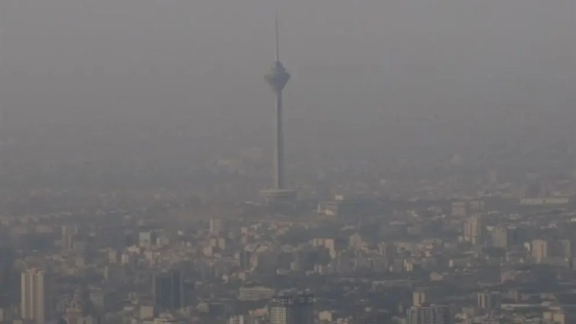
A view of Tehran shrouded in air pollution and experiencing blackouts

Government offices, schools, and universities in Tehran were shuttered on Thursday as the country's ongoing energy crisis escalated in a week of shutdowns across Iran.

Tehran's Governor Mohammad Sadegh Motamedian said closures of facilities this week have had little impact on reducing energy consumption or alleviating pollution.

"The closures have merely shifted the crisis from one point to another," he said, adding that they had led to more traffic, higher gasoline consumption, and, consequently, increased pollution.

The crisis has been unfolding across Iran. Ahmad Mousavi, CEO of the electricity distribution company in Golestan province, said that only a 10% decrease in consumption was seen after four-day closures.

The closures, which began earlier this week, are part of a broader set of measures taken across the country to combat both air pollution and the ongoing energy crisis.

It has seen the shutdown of 390 public and private swimming pools in Tehran alone. Additionally, industrial units have been forced to operate at reduced capacity, with small industrial units now working only two to three days a week due to ongoing energy shortages.

The economic cost of the closures is substantial for a country in the midst of the worst recession since the founding of the Islamic Republic, with losses estimated at 50,000 billion rials (over 63 million dollars) per day.

Industries face full wage payments despite significantly reduced working hours, and businesses are struggling to absorb the financial burden of both energy shortages.

The ongoing disruptions are also expected to exacerbate budgetary challenges for the government, which has projected a 39% increase in tax revenues for the next fiscal year—a target that may be difficult to meet given the widespread economic losses.

With the energy crisis showing no signs of easing, in spite of Iran's having one of the world's largest natural gas reserves and vast oil reserves, the situation is expected to worsen if international sanctions and domestic mismanagement continue to stifle necessary investment in the energy sector.

Energy expert Narsi Ghorban estimates that $250 billion is required to address oil and gas infrastructure issues, with an additional $19 billion needed for the electricity sector.

The looming threat of a return to stricter sanctions, particularly with the return of Donald Trump who has promised "maximum pressure" in his Iran policy, adds further uncertainty to Iran’s already fragile economic outlook.


Most Viewed

Iran International says it won’t be silenced after London arson attack
1

Iran International says it won’t be silenced after London arson attack

2
VOICES FROM IRAN

Hope and anger in Iran as fragile ceasefire persists

3
INSIGHT

How Tehran bends its own red lines to boost state rallies

4

Iran halts petrochemical exports to supply domestic market

5

US arrests Iranian national over alleged Basij-linked visa fraud

Banner
Banner

Spotlight

  • Too early to tell who is winning Iran war, experts say
    PODCAST

    Too early to tell who is winning Iran war, experts say

  • How Tehran bends its own red lines to boost state rallies
    INSIGHT

    How Tehran bends its own red lines to boost state rallies

  • Iran blackout cripples freelancer, small business incomes
    VOICES FROM IRAN

    Iran blackout cripples freelancer, small business incomes

  • Ideology may be fading in Iran, but not in Kashmir's ‘Mini Iran'
    INSIGHT

    Ideology may be fading in Iran, but not in Kashmir's ‘Mini Iran'

  • US blockade enters murky phase as tankers spoof signals and buyers hesitate
    ANALYSIS

    US blockade enters murky phase as tankers spoof signals and buyers hesitate

  • Why the $100 billion Hormuz toll revenue is a myth
    ANALYSIS

    Why the $100 billion Hormuz toll revenue is a myth

•
•
•

More Stories

Russia airlifted 4,000 Iranian troops from Syria to Tehran, Putin says

Dec 19, 2024, 12:11 GMT+0

Moscow evacuated 4,000 Iranian soldiers from Syria to Tehran by air after rebels took control of the country, Russian President Vladimir Putin said on Thursday, suggesting Iran depended on Russia to flee the country after it fell to rebels.

Just as Iran had originally requested Russia transport its units to Syria to back now ousted President Bashar al-Assad, Putin said in remarks carried by state media, Tehran again sought Moscow's aid to evacuate the soldiers.

"If earlier, for example, our Iranian friends asked us to help them transport their units to Syrian territory, now they asked us to withdraw them from there," Putin said. "We took 4,000 Iranian fighters to Tehran from the Hmeimim base. Some of the so-called pro-Iranian units left without a fight for Lebanon, some for Iraq."

But a senior commander of Iran’s Revolutionary Guards swiftly denied the claim later on Thursday, marking a rare public disagreement between the two partners in arms.

"A large number of Iranians have been living in Syria for a long time, and Russia relocated most of them to Iran," said Mohammad Jafar Asadi, deputy commander of the Khatam-al Anbiya Central Headquarters, a construction giant.

"These were not Iran's advisory forces; we withdrew our advisory forces from Syria ourselves," he added. "We do not allow Russia to relocate our military forces."

The Islamic Revolutionary Guard Corps (IRGC), a transnational military organization that lies at the heart of Iran's ruling establishment, has been a key ally of Russia in Syria and Ukraine.

Moscow has launched hundreds of IRGC-provided drones at Kyiv's forces while Iranian and Russian troops together fought the Islamist rebels now running Syria after they seized Damascus from President Bashar al-Assad.

Mohammad Jafar Asadi, deputy commander of the Khatam-al Anbiya Central Headquarters
100%
Mohammad Jafar Asadi, deputy commander of the Khatam-al Anbiya Central Headquarters

Staying in Syria

Putin suggested Russia's decades-old military presence was not set to be upended by Syria's upheaval, even as Iran appeared to have been decisively ejected.

“We maintain contact with all groupings in Syria and all countries in the region. They all say that it would be better if we kept our bases there,” Putin said in his first public comments on the subject.

Putin also said he had not yet met with former Syrian President Bashar al-Assad since his overthrow and subsequent flight to Moscow earlier this month but noted that he planned to do so.

Russia, which intervened in Syria in 2015 and shifted the course of the civil war in Assad's favor, had also informed other countries that they could use its air and naval base to deliver humanitarian aid to Syria, he said.

"You want to portray everything that is happening in Syria as some kind of failure, a defeat for Russia. I assure you, it is not. And I'll tell you why. We came to Syria 10 years ago to prevent a terrorist enclave from being created there," said Putin.

"On the whole, we have achieved our goal. It is not for nothing that today many European countries and the United States want to establish relations with them (Syria's new rulers). If they are terrorist organisations, why are you (the West) going there? So that means they have changed."

His comments come as European Union (EU) nations seek assurances from Syria's new leaders that they will distance themselves from Russia and Iran and work toward a peaceful future for the country after years of civil war.

“Russia and Iran are not your friends, (and) are not helping you if you are in trouble. They left Assad’s regime, and that is a very clear message showing that their hands are full elsewhere and they are weakened,” EU foreign policy chief Kaja Kallas said on Monday, addressing Syria’s new leaders.

Iran’s Central Bank to inject cash into market as rial hits record lows

Dec 19, 2024, 10:49 GMT+0

Iran’s Central Bank plans to sell foreign currencies next week in an effort to stabilize the rial, which has been losing value against the US dollar and other major currencies.

According to the Tasnim news website, affiliated with the Revolutionary Guard, the bank will inject 1.5 billion UAE dirhams and 300 million US dollars in cash into Tehran’s free exchange market.

The rial has depreciated by over 25% since September, driven by regional conflicts and Iran’s setbacks in Syria and Lebanon. On Thursday, the rial traded at nearly 770,000 per US dollar, a sharp drop from around 600,000 in September.

Since the establishment of the Islamic government in 1979, the Iranian currency has experienced an 11,000-fold decline in value.

Iranian Embassy probes deaths of two citizens in northern France shooting

Dec 19, 2024, 09:13 GMT+0

The Iranian Embassy in France announced Thursday that it is actively investigating the deaths of two Iranian citizens in a shooting in northern France.

“In line with the inherent duties of the Ministry of Foreign Affairs and diplomatic and consular missions to defend and support citizens abroad, the matter is being actively pursued,” the embassy said in a statement published by Iranian media.

According to Le Monde, five people were killed in northern France on Saturday, including two Iranian men, aged 19 and 30, who were living in a local migrant camp.

A 22-year-old suspect surrendered to authorities and was taken into custody on the same day.

Israel blames Iran for Houthi strike on school, launches wave of attacks

Dec 19, 2024, 07:27 GMT+0

Israel launched a series of airstrikes across Yemen on Thursday morning targeting key infrastructure in territories controlled by Iran’s Houthi allies in the wake of a missile strike overnight.

Since October 7, when Iran-backed Hamas invaded Israel sparking the Gaza war, Iran’s Houthis in Yemen have launched more than 200 missile and 170 drones at Israel, most of which were intercepted before reaching Israeli territory.

But the early Thursday morning attack, which badly damaged a school in Ramat Gan, north of Tel Aviv, triggered a wave of counterattacks, after almost daily firing from Yemen over recent weeks.

Israel sent 14 fighter jets that flew a distance of more than 1,700 kilometers, among the targets, the ports of Ras Issa, Hodeidah and al-Salif. A total of eight tugboats were attacked and in Sana'a, fuel tanks, oil, and a power plant were hit. Nine people were believed to have been killed in Yemen so far.

The attacks, which followed the missile strike on Israel at 2:38am, began at 3:15am, the first wave in the coastal area of ​​Yemen, and the second wave at 4:30am in the Sana'a area.

The Houthis have been targeting Israel directly along with imposing a maritime blockade on the Red Sea region. Initially aimed at forcing a ceasefire in Gaza, and targeting Israeli-linked shipping, it has since expanded to all international shipping, with dozens of international seamen taken hostage since it began in November 2023.

A statement from the Israeli military said IAF fighter jets worked with the direction of the Intelligence Directorate and the Israeli Navy.

Calling out Iran for its role in the more than one year bombardment, having funded, trained and armed the group, designated terrorists by countries including the US and UK, the military said: “The targets struck by the IDF were used by the Houthi forces for military purposes. The strikes degrade the Houthi terrorist regime, preventing it from exploiting the targets for military and terrorist purposes, including the smuggling of Iranian weapons to the region.

“Over the past year, the Houthi terrorist regime has been operating with the direction and funding of Iran, and in cooperation with Iraqi militias in order to attack the State of Israel and Israeli civilians, undermine regional stability and disrupt global freedom of navigation.”

Israeli Prime Minister Benjamin Netanyahu said on Thursday that the strikes represent the further collapse of Iran's network of military allies which Israel has been fighting in the wake of last year's Iran-backed Hamas invasion of Israel on October 7.

"After Hamas, Hezbollah and the Assad regime in Syria, the Houthis are almost the last arm of Iran's axis of evil. They are finding out, and will find out, the hard way that whoever harms Israel – will pay a very heavy price," he said, referring to a devastating campaign against Iran's largest ally, Hezbollah, in recent months, and more than a year of war against Gaza-based Hamas, which has left the group massively weakened.

In July, the US levied yet more sanctions against members of the Houthis for involvement in financing. “The Houthis in Yemen continue to receive vast revenues from the illicit shipment of Iranian commodities. This funding stream enables the Houthis’ ongoing attacks against commercial shipping in the Red Sea and surrounding waterways,” a statement from Matthew Miller, the State Department spokesman said.

According to the Council of Foreign Relations, Iranian military support to the Houthis began as early as 2009, amid the Houthis’ first war against Yemen’s government.

“Most experts agree that the Houthis were receiving weapons from Iran by 2014, the year they captured Sanaa. In both cases, military intervention against the Houthis by Iran’s regional rival, Saudi Arabia, likely catalyzed Tehran’s increased interest in the group,” research from the think tank found.

The group, like Hezbollah in Lebanon and Hamas in Gaza, have become part of what is known as Iran’s ‘axis of resistance’ of militia around the region, formed by Supreme Leader Ali Khamenei as a means to bolster power and bring down Israel and the US presence in the Middle East.

Israeli Defense Minister Israel Katz said on Thursday morning: ”We attacked strategic targets of the Houthi terrorist organization in Yemen once again tonight … We will not accept rockets being fired at Israel, nor damage to shipping lanes. We will strike with force and will not allow the continuation of the situation of shooting and threats against the State of Israel."

In the aftermath of the attacks, Muhammad al-Bahithi from the Houthi political bureau, said that "the American-Israeli attack on civilian facilities in Yemen, power plants and ports, exposes the hypocrisy of the West”, though Israel and the US had not confirmed their involvement in the strikes overnight.

The US and UK have, however, launched a series of joint strikes against the Houthis since the blockade began last year, the US heading an international coalition to combat the action which has massively impacted global shipping.

“Our military operations in support of Gaza will continue, escalation will be met with escalation until the genocide in Gaza stops and food, medicine and fuel are brought in for the residents,” al-Bahithi said.

On Thursday, the Israeli military said that an interception had led to shrapnel damage in the wake of the attack.

"It is likely that the damage was caused by partial interception of the missile launched from Yemen and that the missile warhead was the part that exploded and damaged the school," a statement said, an investigation underway.

Iran's currency was hollowed out by our sanctions, US says

Dec 18, 2024, 19:48 GMT+0

The US State Department said on Wednesday that its ongoing sanctions have played a significant role in the sharp devaluation of the Iranian rial to record lows against the US dollar.

During a briefing on Wednesday, Deputy Spokesperson Vedant Patel highlighted that the sanctions have contributed to Iran's inability to meet its budget projections.

“As a result of US sanctions, Iran's government has failed to meet its budget projections again this year,” Patel said. “The rial is the lowest it has ever been against the dollar."

He also pointed to the broader economic impact, saying that sanctions have disrupted Iran's access to essential goods, services and technology.

"These efforts all work to cut off Iran's ability to perpetuate destabilizing actions across the region," he added, stressing the ongoing determination of the United States and its allies to prevent Iran from generating revenue.

Critics of Biden's Iran policy have long argued that his administration has allowed China to increase imports of sanctioned Iranian crude oil since 2021, allowing the shipments to increase from less than 300,000 barrels per day in 2020 to around 1.5 million in 2024.

In the latest in a wave of sanctions, the State Department announced on Wednesday that it targeted Majid Mousavi Eftekhari, Deputy Commander of the IRGC Aerospace Force, and two entities based in Iran for their support of the development of Iran's ballistic missile and drone programs.

The Iranian rial’s dramatic fall continues to exacerbate the country’s economic crisis. On Wednesday, the rial was trading at over 780,000 to the US dollar.

This sharp decline, coupled with soaring inflation, has eroded the purchasing power of ordinary Iranians, leaving many struggling to afford basic goods and services.

Iran’s economic woes are further compounded by a severe energy crisis. The country is grappling with critical shortages in electricity and natural gas, with supply failing to meet demand, especially during the cold winter months.

Power outages have become a frequent occurrence, even in major cities like Tehran. The energy crisis has reached alarming levels, with insufficient infrastructure investment, inefficiencies in energy management, and sanctions blocking access to advanced technology further exacerbating the situation.

As Iran faces its most severe economic downturn in decades, the Iranian population’s resilience is being tested as never before, with increasing uncertainty about the government’s ability to manage the nation’s worsening crises.