• العربية
  • فارسی
Brand
  • Iran Insight
  • Politics
  • Economy
  • Analysis
  • Special Report
  • Opinion
  • Podcast
  • Iran Insight
  • Politics
  • Economy
  • Analysis
  • Special Report
  • Opinion
  • Podcast
  • Theme
  • Language
    • العربية
    • فارسی
  • Iran Insight
  • Politics
  • Economy
  • Analysis
  • Special Report
  • Opinion
  • Podcast
All rights reserved for Volant Media UK Limited
volant media logo

Iran's economy minister summoned over currency slump, MP says

Dec 19, 2024, 08:32 GMT+0
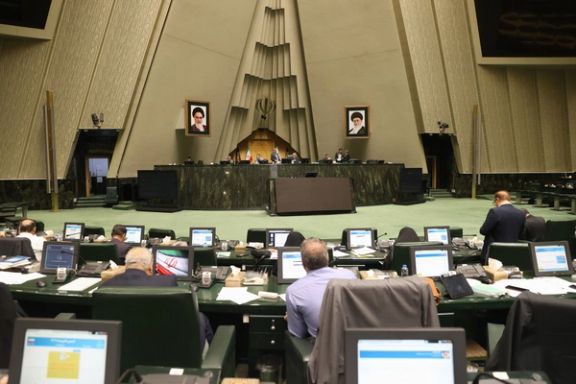
Iranian Parliament, December 17, 2024

Iran's minister of economy has been summoned to parliament for questioning due to currency fluctuations and their negative impact on the economy and people’s livelihoods, MP Abbas Goudarzi said Thursday.

“The representatives of the nation have summoned the minister of economy to parliament with questions, and if necessary, they will initiate impeachment proceedings,” Goudarzi said.

The Iranian rial plummeted to a historic low against the US dollar on Wednesday, trading at over 780,000 rials per dollar. The Iranian currency has lost about 50% of its value in less than a year.

A notable shock to the currency market occurred on November 6, when the dollar surged past 700,000 rials following news of Donald Trump’s victory in the US presidential election. However, the currency’s decline had already begun in September, triggered by severe setbacks inflicted by Israel on Iran's key regional proxy, Hezbollah, and an Israeli airstrike that destroyed much of Iran's air defenses.

Most Viewed

Iran International says it won’t be silenced after London arson attack
1

Iran International says it won’t be silenced after London arson attack

2
VOICES FROM IRAN

Hope and anger in Iran as fragile ceasefire persists

3

Iran halts petrochemical exports to supply domestic market

4
INSIGHT

How Tehran bends its own red lines to boost state rallies

5

US arrests Iranian national over alleged Basij-linked visa fraud

Banner
Banner

Spotlight

  • Hardliners push Hormuz ‘red line’ as US blockade tests Iran’s leverage
    INSIGHT

    Hardliners push Hormuz ‘red line’ as US blockade tests Iran’s leverage

  • Ideology may be fading in Iran, but not in Kashmir's ‘Mini Iran'
    INSIGHT

    Ideology may be fading in Iran, but not in Kashmir's ‘Mini Iran'

  • War damage amounts to $3,000 per Iranian, with blockade set to add to losses
    INSIGHT

    War damage amounts to $3,000 per Iranian, with blockade set to add to losses

  • Why the $100 billion Hormuz toll revenue is a myth
    ANALYSIS

    Why the $100 billion Hormuz toll revenue is a myth

  • US blockade targets Iran oil boom amid regional disruption
    ANALYSIS

    US blockade targets Iran oil boom amid regional disruption

  • Iran's digital economy battered by prolonged blackout
    INSIGHT

    Iran's digital economy battered by prolonged blackout

•
•
•

More Stories

Has Khamenei backtracked from strict hijab enforcement?

Dec 19, 2024, 07:15 GMT+0
•
Maryam Sinaiee

Iran's Supreme National Security (SNSC) may have shelved the controversial new hijab law, some lawmakers and the media outlets in Tehran say, most likely with the consent of Supreme Leader Ali Khamenei.

For months, the law imposing heavy fines and even prison sentences on women violating hijab regulations has sparked division among the public and even Islamic government politicians. During his election campaign, President Masoud Pezeshkian pledged to prevent the harsh treatment of women for hijab.

In response to a question from the semi-official Mehr News Agency Wednesday regarding the government’s actions concerning the Hijab and Chastity Law, which has been referred to the Supreme National Security Council (SNSC), Pezeshkian’s parliamentary deputy, Shahram Dabiri, told reporters that the government has so far requested the law “not to be promulgated, allowing for a decision to be made on it in the future.”

Dabiri added that Parliament Speaker Mohammad-Bagher Ghalibaf has urged the administration to propose an amendment bill, but whether such a bill will be submitted to the Parliament has yet to be decided.

The President heads the Security Council, but all its decisions require the Supreme Leader’s signature to come into effect.

Khamenei delivered a speech to a group of women Tuesday on the occasion of the birthday of the Prophet Mohammed’s daughter, Fatima, but quite uncharacteristically he did not make any reference to the new hijab law or the issue of hijab in general.

In a speech in April 2023, Khamenei asserted that flouting hijab was “religiously and politically haram (forbidden)”. He claimed that foreign intelligence services were encouraging Iranian women to disobey the mandatory hijab.

He also claimed that “the enemy” was working according to “a plan and plot” and urged authorities to have their own plan for dealing with the issue of women’s unveiling.

His statement at the time was widely interpreted as a directive to authorities to take whatever measures necessary to reassert control over women's appearance in public, a control that had diminished in the wake of the Woman, Life, Freedom protests.

A day after the speech, Ghalibaf said Khamenei's order was clear and promised to give precedence to any hijab-related motion or bill, and the police and other authorities including Tehran Metro security increased their pressure on women and businesses such as shops, restaurants, cafes to enforce hijab rules.

In recent days, several lawmakers, including Deputy Speaker Ali Nikzad, have confirmed that the Supreme National Security Council (SNSC) has decided to put the hijab law on hold for now. Speaking to the Khabar Online news website on Saturday, Nikzad admitted he was unsure how long the suspension of the law’s implementation would last.

Akbar Rajbarzadeh, another lawmaker, told Khabar Online that the SNSC's decision had to be obeyed because the Council is the highest decision-making body in national security matters.

“The Supreme National Security Council’s preclusion of the promulgation of a controversial law is almost unprecedented, or at least [such an incident] had never been given wide coverage by the media,” the conservative Khabar Online wrote Sunday.

It seems that with the SNSC’s interference, the public and the media will no longer be preoccupied with the controversial law, the conservative Tabnak on Sunday wrote. The step taken by the SNSC would help “the country’s stability and security given the extraordinary sensitivity of the regional and international situations.”

The SNSC consists of two representatives of the Supreme Leader, the heads of the three forces of the government, ministers of interior, intelligence, and foreign affairs, the chief of armed forces’ staff, the Revolutionary Guards (IRGC), and the regular Army commanders, and the head of the Planning and Budget Organization.
Iran's currency was hollowed out by our sanctions, US says

Dec 18, 2024, 19:48 GMT+0

The US State Department said on Wednesday that its ongoing sanctions have played a significant role in the sharp devaluation of the Iranian rial to record lows against the US dollar.

During a briefing on Wednesday, Deputy Spokesperson Vedant Patel highlighted that the sanctions have contributed to Iran's inability to meet its budget projections.

“As a result of US sanctions, Iran's government has failed to meet its budget projections again this year,” Patel said. “The rial is the lowest it has ever been against the dollar."

He also pointed to the broader economic impact, saying that sanctions have disrupted Iran's access to essential goods, services and technology.

"These efforts all work to cut off Iran's ability to perpetuate destabilizing actions across the region," he added, stressing the ongoing determination of the United States and its allies to prevent Iran from generating revenue.

Critics of Biden's Iran policy have long argued that his administration has allowed China to increase imports of sanctioned Iranian crude oil since 2021, allowing the shipments to increase from less than 300,000 barrels per day in 2020 to around 1.5 million in 2024.

In the latest in a wave of sanctions, the State Department announced on Wednesday that it targeted Majid Mousavi Eftekhari, Deputy Commander of the IRGC Aerospace Force, and two entities based in Iran for their support of the development of Iran's ballistic missile and drone programs.

The Iranian rial’s dramatic fall continues to exacerbate the country’s economic crisis. On Wednesday, the rial was trading at over 780,000 to the US dollar.

This sharp decline, coupled with soaring inflation, has eroded the purchasing power of ordinary Iranians, leaving many struggling to afford basic goods and services.

Iran’s economic woes are further compounded by a severe energy crisis. The country is grappling with critical shortages in electricity and natural gas, with supply failing to meet demand, especially during the cold winter months.

Power outages have become a frequent occurrence, even in major cities like Tehran. The energy crisis has reached alarming levels, with insufficient infrastructure investment, inefficiencies in energy management, and sanctions blocking access to advanced technology further exacerbating the situation.

As Iran faces its most severe economic downturn in decades, the Iranian population’s resilience is being tested as never before, with increasing uncertainty about the government’s ability to manage the nation’s worsening crises.

ECBA urges action after arrest of Iranian activist Reza Khandan

Dec 18, 2024, 13:55 GMT+0

The European Criminal Bar Association (ECBA) has issued an urgent request for international intervention on behalf of Iranian human rights activist Reza Khandan, the husband of prominent human rights lawyer Nasrin Sotoudeh.

Khandan was arrested on Friday after Iranian security forces raided his home. His daughter, Mehraveh Khandan, revealed in an Instagram post that her father was detained at his residence. The reason for his arrest has not been disclosed.

In its statement, the ECBA said Wednesday, “We call for an end to the judicial harassment of Reza Khandan and Nasrin Sotoudeh, in line with the UN Declaration on Human Rights Defenders and the UN Basic Principles on the Role of Lawyers.”

Khandan has been arrested in the past for his activism and his support of his wife’s campaign against Iran’s mandatory hijab laws.

Former Iranian President Rouhani: Hijab law neither just, Islamic, nor constitutional

Dec 18, 2024, 13:13 GMT+0

Former Iranian President Hassan Rouhani has criticized the newly approved hijab law, saying that it "aligns neither with the Constitution, nor with justice, nor with the Quran and Islamic culture."

"The Quran regards hijab as a means to ensure the safety of women, but unfortunately, some people view the issue of hijab as a tool for coercion," Rouhani said on Wednesday.

This comes as the Islamic Republic has officially postponed the implementation of the controversial hijab law, which imposes severe penalties on women and girls who defy veiling requirements, following significant backlash from both the public and the international community.

Iran's Supreme National Security Council, in a letter to the parliament on Saturday, requested that the process of implementing the Hijab and Chastity law be halted. A member of the Parliament's presiding board stated that the government intends to submit an amended bill to the parliament for further consideration.

Iran rejects reports of declining oil exports

Dec 18, 2024, 10:25 GMT+0
•
Mardo Soghom

Iran’s oil minister denied reports on Wednesday that oil exports have declined, even as the Iranian currency continued its downward spiral and the country faced acute shortages of natural gas and electricity.

Speaking after a weekly cabinet meeting, Mohsen Paknejat dismissed the reports as part of “the enemies’ psychological warfare,” pointing blame to the impact of global sanctions, stating, “We have no problems with selling oil, and measures have been put in place that will continue to prove effective in the future.”

The United States imposed third-party sanctions on Iran’s oil exports in 2018 when it withdrew from the 2015 JCPOA nuclear deal. China has been the only major buyer who has allowed Iranian oil to enter its refineries, gradually increasing the volume since 2021.

Earlier this month, reports surfaced suggesting a significant drop in Iran’s oil deliveries to its primary consumer, China, during October and November. A commodities trader added to the speculation last week by tweeting that sales to China halved in December, falling below 800,000 barrels per day, compared to nearly double that amount during the first eight months of 2024.

However, data from tanker tracking firm Kpler shows that there is no clear evidence of such a substantial decline, making conclusions about December's final numbers as yet unclear. Iranian oil offloading in China can fluctuate significantly day-to-day, with below-average deliveries in the first half of the month potentially being offset by above-average shipments in the second half.

Earlier this month, Iran International reported that Tehran’s oil deliveries to China showed a steadily decline in October and November, based on information received from tanker tracking firms.

The decline could have several reasons, among them the closure of the small Chinese refineries due to environmental reasons. Another reason could be the return of Donald Trump who has pledged to resume his “maximum pressure” on the Islamic Republic of Iran.

China accounts for 95% of Iran's oil exports, but it does not purchase the oil directly. Instead, small independent refineries buy Iranian oil after it is blended with crude from other countries, ensuring it is not labeled as Iranian by Chinese customs, in order not to overtly violate the US sanctions.

Nevertheless, as Iran offers significant discounts to Chinese buyers and absorbs the additional costs of concealing shipments to bypass sanctions, it fails to generate sufficient revenue to sustain its oil-dependent economy.

Since the imposition of US sanctions, Iran’s currency has depreciated 18-fold, while persistent inflation has exceeded 40% over the past five years. The sanctions have also hindered the country’s ability to invest in maintaining natural gas production and upgrading its power grid, resulting in severe energy shortages that have paralyzed the country.







