• العربية
  • فارسی
Brand
  • Iran Insight
  • Politics
  • Economy
  • Analysis
  • Special Report
  • Opinion
  • Podcast
  • Iran Insight
  • Politics
  • Economy
  • Analysis
  • Special Report
  • Opinion
  • Podcast
  • Theme
  • Language
    • العربية
    • فارسی
  • Iran Insight
  • Politics
  • Economy
  • Analysis
  • Special Report
  • Opinion
  • Podcast
All rights reserved for Volant Media UK Limited
volant media logo

Former Iranian President Rouhani: Hijab law neither just, Islamic, nor constitutional

Dec 18, 2024, 13:13 GMT+0
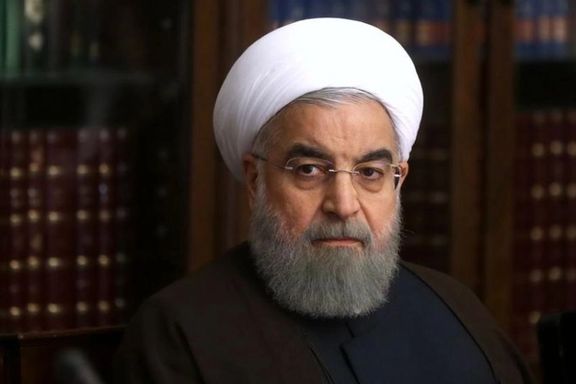
Former President Hassan Rouhani

Former Iranian President Hassan Rouhani has criticized the newly approved hijab law, saying that it "aligns neither with the Constitution, nor with justice, nor with the Quran and Islamic culture."

"The Quran regards hijab as a means to ensure the safety of women, but unfortunately, some people view the issue of hijab as a tool for coercion," Rouhani said on Wednesday.

This comes as the Islamic Republic has officially postponed the implementation of the controversial hijab law, which imposes severe penalties on women and girls who defy veiling requirements, following significant backlash from both the public and the international community.

Iran's Supreme National Security Council, in a letter to the parliament on Saturday, requested that the process of implementing the Hijab and Chastity law be halted. A member of the Parliament's presiding board stated that the government intends to submit an amended bill to the parliament for further consideration.

Most Viewed

Iran negotiators ordered to return after internal rift over Islamabad talks
1
EXCLUSIVE

Iran negotiators ordered to return after internal rift over Islamabad talks

2
ANALYSIS

US blockade enters murky phase as tankers spoof signals and buyers hesitate

3
ANALYSIS

Why the $100 billion Hormuz toll revenue is a myth

4

US tightens financial squeeze on Iran, warns banks over oil money flows

5
INSIGHT

Ideology may be fading in Iran, but not in Kashmir's ‘Mini Iran'

Banner
Banner

Spotlight

  • Hardliners push Hormuz ‘red line’ as US blockade tests Iran’s leverage
    INSIGHT

    Hardliners push Hormuz ‘red line’ as US blockade tests Iran’s leverage

  • Ideology may be fading in Iran, but not in Kashmir's ‘Mini Iran'
    INSIGHT

    Ideology may be fading in Iran, but not in Kashmir's ‘Mini Iran'

  • War damage amounts to $3,000 per Iranian, with blockade set to add to losses
    INSIGHT

    War damage amounts to $3,000 per Iranian, with blockade set to add to losses

  • Why the $100 billion Hormuz toll revenue is a myth
    ANALYSIS

    Why the $100 billion Hormuz toll revenue is a myth

  • US blockade targets Iran oil boom amid regional disruption
    ANALYSIS

    US blockade targets Iran oil boom amid regional disruption

  • Iran's digital economy battered by prolonged blackout
    INSIGHT

    Iran's digital economy battered by prolonged blackout

•
•
•

More Stories

Religious rules and abuse in Iranian schools drive suicides, students say

Dec 18, 2024, 10:40 GMT+0
•
Niki Mahjoub

Severe humiliation and abuse in schools are driving Iranian students to contemplate or attempt suicide, interviews conducted by Iran International reveal.

These firsthand accounts highlight the harsh conditions within the educational system under the Islamic Republic, where strict dress codes and conduct rules are strictly enforced. Students face extreme consequences for rule violations, often resulting in severe mental health struggles.

A survey referenced by the domestic Shargh media outlet in March, which included 46,000 students, revealed alarming figures: half of the students reported experiencing depression, 18% had attempted suicide, and 21% had contemplated suicide.

Since 2021, the Iranian Legal Medicine Organization has ceased publishing detailed suicide data, including age, gender, and dates, making it more challenging to assess the full scope of the crisis.

As of November, however, at least 31 school students in the country had attempted suicide over the previous eight months, with 26 fatalities, according to the HRANA rights group. Factors such as poverty, enforced hijab, forced marriage, and family conflicts have been cited as contributors to these attempts.

Iran’s teachers’ union recently stated that the latest suicide of a female student was part of a "harrowing cycle deeply rooted in flawed policies, systemic pressures within the education sector, ideological impositions, and the disregard of authorities for the growing mental health crisis in schools."

Amid this crisis, accounts by students, parents, and teachers shared with Iran International offer a glimpse into the emotional and psychological toll on teenagers in a school system that fails to support their well-being.

For security reasons, interviewees were provided pseudonyms, and all interviews with children were conducted with the consent of their parents or in their presence, ensuring that ethical and legal guidelines were followed.

According to several young female students, male school principals were often identified as the primary figures responsible for humiliating them, leaving them in severe emotional distress.

A 15-year-old girl shared how her principal’s violent behavior left her deeply traumatized.

“In the schoolyard, the principal shouted behind me, ‘How dare you come to school dressed like this? What do you think this is, Shahre-e-No?’” she said, referring to the red-light district that existed before the Islamic Revolution.

The principal berated her for her highlighted hair and manicured nails before physically pushing her. “Sit down! I’ll call your father and sort this out,” the principal said.

Her father described the aftermath: “The principal expelled my daughter and declared, ‘Shave her head completely!’”

In another case, a 16-year-old girl in Sanandaj, Kurdistan Province, shared how her school principal insulted her for shaping her eyebrows with her family’s permission.

“So, where’s your husband, then?” the principal taunted. After being slapped in front of classmates for complaining about the treatment, the girl contemplated suicide the same day. “If your parents cannot raise you properly, I will make you behave,” the principal told her.

In a northern Iranian city, a 14-year-old student was humiliated and shamed for wearing rainbow-colored trainers.

The principal forced her to remove her shoes in front of classmates and barred her from attending a class.

The child’s mother recalled the child’s distress, saying: “She broke down in tears and told me, ‘Mom, I want to die.’”

Systemic shortcomings in mental health support

The crisis is amplified by the severe shortage of mental health resources in Iranian schools, where students, already subjected to humiliation and abuse by staff, have no access to the support they need to recover from these often traumatic experiences.

Iran’s comprehensive counseling guidelines recommend having one counselor for every 12 students. However, the country’s schools currently employ only 13,000 counselors, leaving a significant gap of 37,000 professionals needed to meet this standard.

A psychotherapist in Tehran reported an increase in cases of children he had seen, contemplating suicide over the past year – with many experiencing depression due to abusive treatment in schools, including bullying by classmates or staff.

He noted that the severe shortage of counselors leaves many students without the support they desperately need.

“Not all families can afford the $60 to $90 per session for counseling. Iran lacks the infrastructure for suicide-related services,” he said. “Religious views and a lack of expertise mean this critical issue is either ignored or treated as a security matter.”

In contrast, other countries provide more robust support.

In neighbouring Turkey, psychological counseling and guidance services are available in many schools under laws aimed at safeguarding mental health, with some reports indicating these services are free of charge. Schools also contact families or relevant organizations when necessary.

The United Kingdom also mandates suicide prevention training for teachers, who are required to refer at-risk students to specialists. Support plans are created, and confidentiality is maintained unless the child’s life is at risk.

Hamed, a teacher in Tehran, believes the education system under the Islamic Republic is fundamentally broken.

“When the Supreme Leader of the Islamic Republic prevented the implementation of UNESCO’s 2030 Agenda, it was essentially a war on the minds and souls of the nation’s children,” he said.

The agenda’s goals include equal educational opportunities for girls, which were replaced with a national document prioritizing devout religious upbringing.

Hamed recounted the case of a student who attempted suicide two years ago after clerics at the school made inappropriate remarks about his family. Instead of addressing the issue, the school threatened the family, warning that speaking out would result in the student’s expulsion. Faced with this pressure, he said, the family decided to homeschool their child.

In addition to these pressures on students, experts have long noted the significant decline of Iran’s public education system under the Islamic Republic. Challenges such as reduced investments, increasing clerical control, and widening socioeconomic disparities have weakened the system.

Mass dropouts, declining academic performance, and the growing presence of clerics and Basij members—a paramilitary force under the IRGC tasked with enforcing ideological conformity—have further compounded the crisis, shifting the focus from education to ideological indoctrination.

Maryam, a teacher’s rights activist, said today’s educational atmosphere resembles the restrictive environment of the 1980s.

“Suicide is stigmatized in schools due to religious beliefs, and cultural factors also play a role. Society needs education on how to address this issue,” she said.

Another teacher activist stressed the need for widespread education on preventing suicide.

“These measures require funding, but neither the Ministry of Education, the Ministry of Health, nor the government is willing to invest,” he said. “The children of this land must enjoy mental health support to face future challenges. In Iran, however, it is considered either a luxury or a security matter.”

Although the “Student Social Care System” (NAMAD) was launched in the 2010s to address such issues, the program has been effectively abandoned, leaving students without adequate support.

Activists and educators warn that without urgent action, the mental health crisis among Iran’s youth will only deepen.
Iran rejects reports of declining oil exports

Dec 18, 2024, 10:25 GMT+0
•
Mardo Soghom

Iran’s oil minister denied reports on Wednesday that oil exports have declined, even as the Iranian currency continued its downward spiral and the country faced acute shortages of natural gas and electricity.

Speaking after a weekly cabinet meeting, Mohsen Paknejat dismissed the reports as part of “the enemies’ psychological warfare,” pointing blame to the impact of global sanctions, stating, “We have no problems with selling oil, and measures have been put in place that will continue to prove effective in the future.”

The United States imposed third-party sanctions on Iran’s oil exports in 2018 when it withdrew from the 2015 JCPOA nuclear deal. China has been the only major buyer who has allowed Iranian oil to enter its refineries, gradually increasing the volume since 2021.

Earlier this month, reports surfaced suggesting a significant drop in Iran’s oil deliveries to its primary consumer, China, during October and November. A commodities trader added to the speculation last week by tweeting that sales to China halved in December, falling below 800,000 barrels per day, compared to nearly double that amount during the first eight months of 2024.

However, data from tanker tracking firm Kpler shows that there is no clear evidence of such a substantial decline, making conclusions about December's final numbers as yet unclear. Iranian oil offloading in China can fluctuate significantly day-to-day, with below-average deliveries in the first half of the month potentially being offset by above-average shipments in the second half.

Earlier this month, Iran International reported that Tehran’s oil deliveries to China showed a steadily decline in October and November, based on information received from tanker tracking firms.

The decline could have several reasons, among them the closure of the small Chinese refineries due to environmental reasons. Another reason could be the return of Donald Trump who has pledged to resume his “maximum pressure” on the Islamic Republic of Iran.

China accounts for 95% of Iran's oil exports, but it does not purchase the oil directly. Instead, small independent refineries buy Iranian oil after it is blended with crude from other countries, ensuring it is not labeled as Iranian by Chinese customs, in order not to overtly violate the US sanctions.

Nevertheless, as Iran offers significant discounts to Chinese buyers and absorbs the additional costs of concealing shipments to bypass sanctions, it fails to generate sufficient revenue to sustain its oil-dependent economy.

Since the imposition of US sanctions, Iran’s currency has depreciated 18-fold, while persistent inflation has exceeded 40% over the past five years. The sanctions have also hindered the country’s ability to invest in maintaining natural gas production and upgrading its power grid, resulting in severe energy shortages that have paralyzed the country.

Iran's Revolutionary Guards control half of oil exports - Reuters

Dec 18, 2024, 10:03 GMT+0

Iran's Revolutionary Guards have tightened control over the country's oil industry and now manage up to half of exports, funding its military capabilities and those of armed allies across the Middle East according to a Reuters report.

Western officials, security experts, and Iranian trading sources cited by the news agency said the Islamic Revolutionary Guard Corps (IRGC) now control up to half of the country's oil exports, up from around just a fifth three years ago.

The Islamic Republic, despite harsh sanctions by the United States and its allies, generates more than $50 billion a year in oil revenue - a key lifeline for foreign currency.

Iran's entire oil industry has now fallen under the sway of the Revolutionary Guards, Reuters reported citing over a dozen interviewees, including the ships covertly transporting sanctioned crude to logistics and front companies facilitating oil sales.

China is Iran's top customer and China Haokun Energy, a front company operated by former Chinese military officials, remains an active conduit for the sales despite being slapped with US sanctions last year.

The sources, who requested anonymity due to the sensitivity of the topic, shared insights derived from intelligence documents and tracking ships linked to the IRGC.

Last week, Iran International reported that the Revolutionary Guards are attempting to sell oil stored in China ahead of tougher sanctions expected under US President-elect Donald Trump, according to an informed source.

The source, speaking on condition of anonymity, said that Iranian authorities have instructed the IRGC to sell the sanctioned oil stored at Dalian Port in northeast China through intermediary firms.

The IRGC’s increasing dominance in the oil sector strengthens its overall influence across Iran's economy and complicates the effectiveness of Western sanctions, as the organization is already designated as a terrorist group by the United States and its allies.

According to Iran’s national budget, at least $12.6 billion from oil exports is allocated to the IRGC. This revenue enables the group to sell oil primarily to Chinese buyers and fund its military capabilities and allied militias in the Middle East.

Iran circumvents US and allied sanctions by rebranding its oil, often using tankers from a dark or shadow fleet operating in Malaysian and Singaporean waters.

These tankers relabel Iranian oil as originating from Iraq, the UAE, Oman, or Malaysia, after which it is delivered to China's smaller independent refineries, known as teapots.

While Shandong Port in China remains the primary hub for this rebranded oil, tanker-tracking data shows a notable increase in shipments to Dalian Port this year.

In response, the US Treasury Department recently blacklisted 45 tankers involved in transporting Iranian oil to Shandong. Despite these measures, over 100 large vessels in the dark fleet remain unsanctioned, according to data from Vortexa, continuing to transport Iranian oil to China, albeit at reduced volumes.

Iranian MP: Stop American flags on clothing or risk Israeli flag tattoos

Dec 18, 2024, 08:41 GMT+0

Iranian MP Mojtaba Rahmandoust warned Tuesday that if American flags on youth clothing are not stopped, young people will soon start tattooing the Israeli flag.

The MP expressed concern that Iran’s regional allies might view such behavior among the youth unfavorably, interpreting it as a reflection of poor judgment rather than an affinity for these nations.

“Should foreign photographers or international media outlets circulate images of our people wearing garments adorned with the American or Israeli flag, our standing in the Islamic world and among the members of the Axis of Resistance [Tehran-backed armed groups] would be severely compromised," he added. "It must be emphasized that many of the young individuals who bear tattoos of the American flag or don attire featuring it do so out of ignorance, and not from any heartfelt belief in the United States or Israel."

This sentiment comes as Tehran hardliners regularly burn Israeli and US flags during rallies, chanting "Death to Israel" and "Death to the US" They also paint these flags on pavements to encourage people to trample them. However, for years, many Iranians—particularly students at universities—have actively avoided stepping on the American and Israeli flags painted by agents of the Islamic Republic.

Key figures call for major change to resolve Iran's political, economic deadlock

Dec 17, 2024, 21:55 GMT+0
•
Behrouz Turani

Three prominent centrist and conservative figures in Iran have suggested that the country’s political doctrine must change to address its ongoing problems, especially the economic impasse.

During a roundtable discussion hosted by Sazandegi newspaper, conservative politician and Expediency Council member Mohammad Reza Bahonar, former senior lawmaker and centrist politician Hossein Marashi, and Mahmoud Vaezi, a senior aide to former president Hassan Rouhani, carefully avoided directly naming Supreme Leader Ali Khamenei as the ultimate authority responsible for the country’s major shortcomings.

They spoke cautiously, as some of their critical remarks touched on highly sensitive topics, including constitutional changes and political reforms. The veteran political insiders would not have voiced such criticisms publicly two or three years ago, before Iran's regional influence began to wane and its economic situation reached a critical stage.

They highlighted issues including the government's lack of resources, largely due to massive expenditures in the Middle East aimed at undermining Israel—spending that was undertaken without the consent of the Iranian people or parliament (Majles), as they noted.

Marashi said, "Iran's priority should be addressing its economic crisis," and "politics in Iran should not be left to military organizations," likely referring to the central role the Revolutionary Guards play both in political and economic spheres.

Iranian centrist politician, Hossein Marashi. File photo
100%
Iranian centrist politician, Hossein Marashi. File photo

He added: “The government’s priorities remain focused on outdated ideological issues, such as enforcing the hijab on women and restricting access to information on the Internet, rather than tackling the country’s pressing economic crises.”

These failures have left the nation struggling in darkness and cold since November, as the oil-rich country continues to fall short in producing sufficient natural gas and electricity in generating sufficient oil export revenues.

A huge part of the country's income from oil is kept outside the government's treasury and under direct supervision of the Supreme Leader and the Revolutionary Guard.

On December 16 all government offices and schools in 26 of the 31 Iranian provinces were shut down due to blackouts, power shortages and consumption of pollutant fuels in many power plants.

Without elaborating on what was wrong with the Iranian Constitutional Law, Bahonar said that “all the articles of the constitution can be revised except a few that are about the essence of Islam and the nature of the political system as a republic.”

His remarks likely implied that institutions such as the Guardian Council, which hinder free and fair elections, could be dismantled, and that articles granting extraordinary powers to the Supreme Leader could be revised. This would help curb unnecessary spending on religious institutions and costly military ventures abroad.

Elsewhere in their debate, the three politicians said that many of Iran's problems are caused by flaws in the structure of its political system. Without saying how the current system has led to a dictatorship under the Supreme Leader, they called for a democratic political system like those in Japan, Pakistan, Germany, France and the United States.

Marashi criticized Pezeshkian for taking pride in lacking a clear plan for his government or a political party to advance his ideas. He also pointed to the Islamic Republic’s core doctrine, which centers on its ongoing struggle against what it calls “arrogant powers”—a concept now largely synonymous with anti-Americanism.

He argued that “this doctrine cannot drive meaningful progress and must be reformed, much like how China abandoned its rigid ideological approach to achieve development.”

Marashi went on to question the extensive powers of Iran's Judiciary and the absence of judicial independence. He also criticized the current Majles for consistently obstructing the government’s ability to fulfill its responsibilities.

Additionally, he emphasized that Iran’s economy has been held hostage by its nuclear program for the past 19 years. Highlighting the fall of Bashar al-Assad in Syria, he said: “Even maintaining our allies in power depends on prioritizing the economy.”

At the same time, perhaps in an effort to absolve President Masoud Pezeshkian of responsibility for the current crises, three other conservative figures, in reports published by Nameh News website, emphasized that "the Pezeshkian administration has inherited the current economic and political problems from previous governments."






