• العربية
  • فارسی
Brand
  • Iran Insight
  • Politics
  • Economy
  • Analysis
  • Special Report
  • Opinion
  • Podcast
  • Iran Insight
  • Politics
  • Economy
  • Analysis
  • Special Report
  • Opinion
  • Podcast
  • Theme
  • Language
    • العربية
    • فارسی
  • Iran Insight
  • Politics
  • Economy
  • Analysis
  • Special Report
  • Opinion
  • Podcast
All rights reserved for Volant Media UK Limited
volant media logo

Failure of talks with Europe may push Iran toward realism

Behrouz Turani
Behrouz Turani

Iran International

Dec 11, 2024, 10:44 GMT+0Updated: 12:11 GMT+0
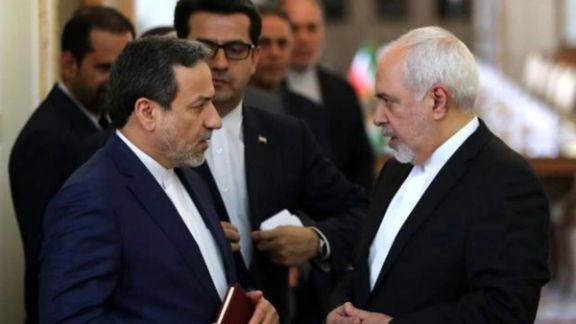
A file photo showing then-foreign minister Javad Zarif speaking with his deputy Abbas Araghchi.

The recent round of talks between Iran and Europe has left many Iranian diplomats and politicians disappointed. However, some observers argue that the failure of the November 29 talks in Geneva does not entirely close the door on diplomacy.

In a commentary for the relatively independent Rouydad24 website, conservative commentator and former lawmaker Jalal Khoshchehreh analyzed Tehran's options after the talks ended in what the outlet described as a deadlock. Contrary to the dominant view among Iranian commentators, diplomats, and politicians—who believe there may be no resolution to this impasse—Khoshchehreh suggested the setback might prompt Iran to adopt a more pragmatic and realistic approach in its relations with Europe.

He noted that Iran is aware a prolonged stalemate with Europe could open the door for Donald Trump’s aggressive policies toward Iran once he takes office as President of the United States in mid-January. According to Khoshchehreh, the latest talks aimed to demonstrate Iran's readiness to manage the crisis. He also emphasized that neither Iran nor Europe favors confrontation, which might encourage Tehran to take more proactive diplomatic steps to avoid a unified front against Iran by the US, Europe, and potentially the international community.

Khoshchehreh further highlighted the importance of balancing domestic political dynamics with foreign relations, asserting that focusing on one without the other is bound to fail. This was apparently a veiled reference to human rights violations and lack of political and social freedoms.

After the Geneva talks, hardliners and members of Iran’s Supreme Council of National Security openly criticized the Foreign Ministry's efforts to negotiate with Europe. Iran’s chief negotiator, Majid Takhtravanchi, walked back his earlier optimistic remarks, stating that what occurred in Geneva amounted to exchange of opinions rather than "negotiations."

This internal discord within Iran's fragmented political landscape has bolstered hardliners who opposed the negotiations from the start. They also attacked Vice President Mohammad Javad Zarif for suggesting that Iran remains open to talks with the United States. Tehran now faces a critical decision: whether to cling to its ideological "principles" or adopt a more realistic foreign policy approach, as Khoshchehreh urged, invoking former Chinese leader Deng Xiaoping’s call for courage in pursuing the right path. Tehran must now weigh its lofty ambitions against the realities it faces.

Conservative commentator Hassan Beheshtipour had remarked earlier that European nations might activate the trigger mechanism in the 2015 nuclear deal, which would reinstate pre-2015 UN sanctions on Iran. Beheshtipour argued that Europe would only take this step if Iran fails to alter its behavior. Breaking with the reluctance of many Iranian commentators to criticize former President Ebrahim Raisi, Beheshtipour claimed Europe’s tough stance is a result of Raisi’s evasive policies, which worsened Iran-Europe relations.

Last week, hardline newspapers Kayhan and Javan, along with the ultraconservative Raja News website, sharply criticized the Iranian government’s efforts to restore ties with Europe. Both Kayhan and Javan urged President Masoud Pezeshkian to replace his advisers, while Raja News questioned Zarif’s authority to make what it called “dangerous suggestions” regarding Iran’s stance toward the United States.

Beheshtipour advised Iran to hold off on prioritizing negotiations with Europe, given Trump’s unpredictable policies and existing US-European divisions over Iran. He suggested Tehran wait until late January to reassess Trump’s shifting positions and isolationist tendencies before deciding on further negotiations.

Most Viewed

State media slam Araghchi's Hormuz tweet, say it let Trump claim victory
1

State media slam Araghchi's Hormuz tweet, say it let Trump claim victory

2

Iran International says it won’t be silenced after London arson attack

3
INSIGHT

How Tehran bends its own red lines to boost state rallies

4

Iran halts petrochemical exports to supply domestic market

5
OPINION

The Hormuz get out of jail card turned to a grave

Banner
Banner

Spotlight

  • Too early to tell who is winning Iran war, experts say
    PODCAST

    Too early to tell who is winning Iran war, experts say

  • How Tehran bends its own red lines to boost state rallies
    INSIGHT

    How Tehran bends its own red lines to boost state rallies

  • Iran blackout cripples freelancer, small business incomes
    VOICES FROM IRAN

    Iran blackout cripples freelancer, small business incomes

  • Ideology may be fading in Iran, but not in Kashmir's ‘Mini Iran'
    INSIGHT

    Ideology may be fading in Iran, but not in Kashmir's ‘Mini Iran'

  • US blockade enters murky phase as tankers spoof signals and buyers hesitate
    ANALYSIS

    US blockade enters murky phase as tankers spoof signals and buyers hesitate

  • Why the $100 billion Hormuz toll revenue is a myth
    ANALYSIS

    Why the $100 billion Hormuz toll revenue is a myth

•
•
•

More Stories

Iranians draw a parallel between Syria events and situation at home

Dec 10, 2024, 10:11 GMT+0
•
Maryam Sinaiee

As images of brutality and prison abuses flood the internet following Bashar al-Assad’s fall, Iran’s tightly controlled media has cautiously criticized the deposed leader, hinting that a similar fate could befall the Islamic Republic.

“The lesson we should take is to be mindful so that [our] people do not get fed up and weary of the country and its circumstances and maintain their hope in the future,” conservative politician and journalist Naser Imani told Rouydad news website Monday.

While distancing Iran from Syria’s experience, he cautiously added, “The situation in the Islamic Republic is not comparable to Syria at all. Nevertheless, one should take note of the public opinion.”

Iran’s Supreme Leader, Ali Khamenei, has consistently praised Bashar al-Assad as a key figure in the “Axis of Resistance” and maintained unwavering support for him against adversaries. In 2019, during a meeting with the deposed Syrian president, Khamenei called him “the hero of the Arab world.”

Any strong criticism of Assad or Iran’s support for him could be interpreted as a challenge to Khamenei’s views, risking serious consequences for media outlets and public figures expressing such opinions.

The restrictions on criticizing Assad became apparent when several prominent public figures deleted critical social media posts soon after Assad’s ouster, often without explanation. These deletions were likely the result of pressure from security forces.

A commentary on the moderate conservative Asr-e Iran website suggested that foreign conspiracies may have played a role in Assad’s downfall, citing his support for the “Axis of Resistance.” However, it noted that Assad did not appeal to Syrians for support because he knew he would not get any.

“The question is should a government not be wise and discerning and treat its people with love and tolerance to protect itself if it is facing so much hostility from the outside?” the commentary asked, adding that ignoring the “views of the majority and the public’s demands” could be “the most damaging and fatal mistake a politician and a government can make,” as did Assad.

The Islamic Republic faces multiple crises at home and abroad, including Israeli strikes on its regional allies, economic devastation from Donald Trump’s “maximum pressure” campaign, setbacks in relations with Europe, and widespread corruption and decades-long human rights violations that have eroded public trust. Additionally, there is growing demand for greater social and political freedoms.

Ultra-hardliners dominating the Parliament have been pushing for the enforcement of a very controversial new hijab law, which even many conservatives and prominent clerics view as deeply damaging given the current circumstances.

Despite extensive moderation and the removal of “unpublishable” comments, some remarks published by the conservative Alef news website regarding recent events in Syria reveal that many ordinary Iranians are drawing parallels between Assad’s rule in Syria and the situation at home.

“A country’s power lies in its people, not its military force and the nuclear weapons,” a reader commented on an editorial Monday titled “Why Doesn’t the Syrian Army Fight [for Assad]?” The comment received 97 likes and only three dislikes, reflecting strong agreement among readers.

Another reader remarked, “There would be no civil war in Syria and not so much damage and loss of life if Assad had given its people some degree of political freedom and invited all political groups to participate in the government ten or fifteen years ago.”

This comment garnered 149 likes, with only six readers disapproving.

Similarly, readers gave strong approval to comments on another article, “Why Did Assad Fall?” published Sunday on the same website. The article attributed Assad’s downfall to his failure to reform the government.

One comment noted that Assad had claimed the backing of 95 percent of Syrians in elections held three years ago and emphasized, “social capital [is] the biggest asset of a government.”

Nearly 300 readers agreed with the comment, with only three expressing disapproval.

Iran hopes to build ties in bid to retain influence in Syria

Dec 9, 2024, 10:55 GMT+0

With the fall of the Assad government threatening Iran's key strategic foothold in the Levant, Tehran signals an interest in forging ties with Syria's new power holders, according to an Iranian official.

Long-time President Bashar al Assad fled the country at the weekend, leaving a vacuum in the country after both Iran and Russia had since 2011’s civil war, supported.

Reuters reported that talks had begun in an attempt to "prevent a hostile trajectory" between the countries after a rapid takeover saw the 50-year Assad family rule collapse in days.

The senior official told Reuters that Iran's clerical rulers, facing the loss of an important ally in Damascus and the return of Donald Trump to the white House in January, were open to engaging with Syria's new leaders.

Iran had multiple military bases across Syria, having controlled airports and sea ports which have been a key smuggling route to Iran’s military allies in the region, including its largest, Hezbollah in Lebanon. It is not clear if there is an Iranian presence left in Assad's traditional bastion, the Alawite coastal regions.

Syria was also a location for Iran’s oil sales amid global sanctions, allowing the Islamic Republic to circumvent the crippling economic grip imposed by the US and other nations.

"This engagement is key to stabilize ties and avoiding further regional tensions," the official said.

The fall of the Assad government came after the unification of multiple Sunni militia forces, led by Hay'at Tahrir al Sham, a former al Qaeda ally.

However, it is led by Muhammad al Jolani who, though a Sunni, is known to share Iran's hatred of Israel. His grandfather was displaced to Syria from the now Israeli occupied Golan Heights in 1967.

In a rare Western media interview in 2021 with PBS Frontline, he said he was radicalized by the second intifada in 2000, one of the bloodiest periods in the Palestine-Israel conflict.

Just like Iran's backing of Gaza-based Hamas, the alliance would not be the first time Iran had aligned with Sunni militants in a bid to erase its archenemy, Israel.

“I was 17 or 18 years old at the time, and I started thinking about how I could fulfil my duties, defending a people who are oppressed by occupiers and invaders,” he said at the time.

It is not only Iran which is worried about the new transition, in spite of the global relief of the fall of a man known as a brutal dictator, and whose rule saw the deaths of at least 300,000 civilians, including hundreds in a chemical weapons attack in 2013.

The US carried out dozens of targeted airstrikes on ISIS members and facilities as fears of a resurgence of extremism remained a priority.

“There should be no doubt – we will not allow ISIS to reconstitute and take advantage of the current situation in Syria,” CENTCOM Commander General Michael Erik Kurilla said in a statement.

“All organizations in Syria should know that we will hold them accountable if they partner with or support ISIS in any way.”

What are Iranian public figures saying about Assad’s fall?

Dec 9, 2024, 07:53 GMT+0
•
Maryam Sinaiee

In the aftermath of Bashar al-Assad's ouster in Syria, some Iranian politicians and commentators have pointed to his unpopularity and criticized the Islamic Republic for what they describe as the extensive resources wasted on keeping him in power.

Some of the more outspoken views about Assad, which could be seen as indirect criticism of Iran's Supreme Leader Ali Khamenei's policies, were conspicuously deleted after a few hours, possibly under pressure from authorities.

Khamenei has consistently praised Bashar al-Assad as a pivotal figure in the "Axis of Resistance" and has insisted on unwavering support for him against his opponents.

Conservative commentator Mohammad Mohajeri, tweeted Sunday, “In the last election, Bashar al-Assad had won 95 percent of the vote, but three years after that election, he fell from power without a single person from among ordinary people being willing to defend him." He later removed his post without an explanation.

Prominent commentator Sadegh Zibakalam, often labeled a reformist, reiterated his recent criticism of the Islamic Republic’s costly support for Bashar al-Assad in two tweets on Sunday.

Zibakalam, who has frequently condemned Iran's spending on arming and supporting groups like the Houthis and Hezbollah, as well as countries such as Venezuela, had also criticized the financial backing for Assad in a November 2023 interview.

In one of his tweets, Zibakalam who has also been very critical of Iran's costly nuclear program, said the Islamic Republic dedicated every possible assistance including the lives of its men to keep Assad in power but “never asked even once how this resistance leader treated his people.”

“Assad’s end was fortunate both for the Syrian people and Iranians. The people of Syria were saved from the suppressive rule of Baathists after half a century. The gain for the Iranians is that wastage of their country’s resources and throwing that into the bottomless well called Axis of Resistance to save a despotic and unpopular ruler ended,” he said in another post.

Zibakalam, who was imprisoned in May and later released for medical treatment, deleted his tweets after a few hours and made no further comments on Assad’s fall.

Parvaneh Salahshouri, a former reformist lawmaker and outspoken critic of the Islamic Republic’s policies, referred to Bashar al-Assad as a dictator in a brief post on X. “Assad’s destiny, the disgraceful fate of all dictators,” she wrote.

“The fate of over half a century of the Assad family dictatorship in Syria … must be a lesson for all authoritarian governments,” the former secretary general of the banned Freedom Movement of Iran Party, Mohammad Tavassoli, warned in an X post, adding that timely “return to the people” and giving them freedom and the power to exercise their wishes can “prevent such a costly process” as overthrowing the Assad family.

A similar view was expressed by Rahmatollah Bigdelli, a pro-Pezeshkian cleric and politician, who also in an X post said Assad’s fall should be a lesson for a government to surrender to the will of its people to stay immune to “internal and external threats”.

Assad’s reported $30 billion debt to Iran

In addition to deploying tens of thousands of fighters to support Bashar al-Assad’s forces against insurgents across Syria, the Islamic Republic provided his government with free oil and military equipment for years.

Iran's substantial support for Assad has contributed to sanctions being imposed on its prominent airline, Mahan Air, as well as the country's national carrier, Iran Air.

In May 2020, Heshmatollah Falahatpisheh, then-chairman of the parliamentary National Security Council and Foreign Policy Committee, said Iran had spent between $20 to $30 billion to support Assad and demanded that the debt be paid back.

“Syria … Iranians must rejoice now. Nobody has the right to spend the nation’s dollars to preserve the spider’s web,” Falahatpisheh tweeted Sunday.

Falahatpishes, too, removed his tweet Monday and in another tweet said he still considers the Assad family a "spider's web". "That's why I spent a decade of my life to recover Syria's debts to Iran," he wrote, but added that he distinguishes between the Assad family and the "true and rightful resistance movement."

Many of those who commented on his tweet accused him of cowardice for backing from his original position under pressure. "Look out of the window, the black van [of the security forces] has left the alleyway. It is too obvious that they called you to direct you to the right path,” one of the comments said.

Similar concerns were voiced by Bahram Parsaei, a member of parliament until 2020, who also claimed the Assad government owed $30 billion to Iran. “What will happen to this huge sum of money now?” he asked in an X post. He pointed out that according to Article 80 of the Iranian Constitution, any non-refundable foreign loans should have been approved by the Parliament.

Iran and Qatar forge unlikely bond over shared interests

Dec 8, 2024, 15:43 GMT+0
•
Shahin Modarres, Shir Mor, Ariel Admoni

The relationship between Qatar and the Islamic Republic of Iran is one driven by mutual interests over ideological alignment, helping both to fulfil regional and international objectives.

Qatar is a Sunni-led monarchy, while the Islamic Republic of Iran is a Shiite theocracy. This marked difference, however, has not undermined their relationship. Why? Because it serves both sides immensely.

For Qatar, this partnership balances its extensive Western ties with a regional power that opposes the United States. For Iran, it provides a diplomatic boost in international forums, helping circumvent its growing isolation.

In recent discussions, Iranian and Qatari officials emphasized expanding trade and economic cooperation. They outlined plans to facilitate business connections and improve infrastructure for bilateral projects. Notable examples include the initiative to construct the world’s longest undersea tunnel connecting the two countries and a joint currency exchange entity designed to bypass international sanctions and streamline financial transactions.

Amid rising tensions between Israel and Iran, Qatar has aligned itself closer to Tehran. This was evident during Iranian President Masoud Pezeshkian’s visit to Doha in October 2024. The two countries discussed enhancing cooperation in economy, energy, culture, and education, with a particular focus on resolving the $6 billion in Iranian assets frozen in Qatar.

The visit underscored Qatar’s role as a diplomatic mediator, as Pezeshkian met with regional leaders, including Hamas representatives, to address crises in Gaza and Lebanon. Such diplomatic collaborations draw much attention—and understandably so. But it often comes at the cost of closer look at realities that help explain the dynamics of this alliance.

The Reality in Iran

Under the leadership of Supreme Leader Ayatollah Ali Khamenei, Iran enforces Sharia law with a totalitarian grip. The regime systematically represses dissent through tactics like torture, extrajudicial killings, and harsh prison sentences targeting political dissidents, ethnic minorities, and women’s rights advocates.

The death of Mahsa Amini in 2022 ignited protests demanding gender equality and basic freedoms. In response, the regime imprisoned thousands, killed hundreds, and executed many in sham trials, showcasing its intolerance. Iran also targets dissidents abroad through abductions and assassinations, disregarding international norms.

Beyond its borders, Iran funds violence and instability across the Middle East through proxies like Hezbollah. These actions are often justified under the guise of “humanitarian support” but serve to advance Iran’s ideological and political agenda.

The Reality in Qatar

Qatar’s election to the UN Human Rights Council for 2025-2027 highlights a dissonance between its global image and its domestic record. Human Rights Watch has reported arbitrary arrests and abuse of LGBT individuals, along with discriminatory laws against women.

Labor law reforms, while significant, face concerns about enforcement, particularly after Qatar reinstated exit permits for domestic workers, increasing their vulnerability to exploitation.

Qatar's longstanding decision to host Hamas came under more scrutiny after October 7. It's a relationship that may be better described as seeking leverage---and not a humanitarian gesture, as Doha prefers to depict it.

A Masked Agenda

Though Qatar and the Islamic Republic of Iran present their partnership as a means to promote regional stability, their alliance is rooted in political and strategic interests.

The cooperation between Tehran and Doha is often framed in idealistic terms but conceals a deeper agenda focused on power, influence, and suppression.

Tehran faces a mega-crisis with seven challenges

Dec 7, 2024, 09:25 GMT+0
•
Morad Vaisi

The clerical government in Iran is currently grappling with at least seven significant domestic and international crises, creating what can be described as a "mega-crisis" for the whole political system and its leadership.

Crisis 1: Setbacks for Hamas, Hezbollah, and Bashar al-Assad

The severe defeats suffered by Iran's proxy groups, Hamas and Hezbollah, along with Bashar al-Assad in Syria facing downfall, have severely destabilized Iran's regional alliances.

Hamas and Hezbollah have been significantly weakened by heavy military losses and the elimination of key leaders. Meanwhile, Assad's forces have faced a string of defeats, particularly the rapid loss of vast areas of the country, key military bases and the apparent disintegration of its military units.

These developments have undermined Iran’s ability to rely on its regional allies against the United States, Israel, and other players, a stark contrast to just a year ago when Iranian officials boasted of their "strategic depth" and influence reaching the Mediterranean.

Crisis 2: Threat of Direct Confrontation with Israel

Iran’s long-held dream of directly confronting Israel has turned into a nightmare as the possibility of severe retaliation looms large.

Israel, leveraging current geopolitical conditions and the potential return of Donald Trump to the White House, is reportedly working to weaken not just Hamas and Hezbollah but also Iran-backed forces like Iraq’s Hashd al-Shaabi and Yemen’s Houthis. Additionally, Iran’s nuclear and missile programs could become targets of Israeli strikes. Israel’s October 26 air strike on key targets in Iran demonstrated the vulnerable state of Tehran’s air defenses and Israel’s modern military superiority.

Israeli intelligence’s deep penetration into Iran’s security infrastructure has heightened fears within Tehran, including concerns over the potential assassination of top officials, even Supreme Leader Ali Khamenei.

Crisis 3: Trump’s return and a hardline US administration

The prospect of Donald Trump returning to the White House with a team of hawkish policymakers poses a major challenge for the Islamic Republic.

Unlike the Biden administration, Trump’s team has no intention of immediately pursuing diplomacy with Iran, instead favoring a return to the "maximum pressure" campaign. Figures like Marco Rubio and Mike Waltz, known for their aggressive stance on Iran, are expected to play leading roles in this strategy.

Crisis 4: Europe’s shift toward a hardline stance

Europe has adopted a much tougher stance against Tehran, driven by concerns over Iranian missiles and drones supplied to Russia in the Ukraine war, Iran’s nuclear program, and its development of ballistic missiles.

This shift has resulted in new sanctions on key Iranian entities, including the Islamic Republic of Iran Shipping Lines and Iran Air. Europe now appears more aligned with the United States on its Iran policy.

Crisis 5: Domestic economic and financial collapse

Iran faces an unprecedented financial and economic crisis, marked by severe budget deficits, the inability to fund long-existing subsidies, pay pensions, or cover infrastructure costs.

Reports indicate that the National Development Fund, or Iran’s sovereign wealth fund, is nearly depleted, with much of its resources diverted to military and proxy activities. Energy shortages, including electricity, gas, and gasoline, have exacerbated the crisis, severely impacting both citizens and industries.

Crisis 6: Deepening divide between government and people

A significant and growing gap between the government and the public has fueled unrest. This divide spans economic, political, social, and cultural issues, with increasing dissatisfaction over the government’s inability to address basic needs like energy and its imposition of restrictive policies such as mandatory hijab and internet censorship.

Far from meeting promises of dignity and respect, particularly for women, these policies have only intensified public anger. The government’s disregard for protests and demands has deepened this rift, placing society on the brink of widespread unrest reminiscent of earlier mass uprisings in 2017, 2019 and 2022.

Crisis 7: The challenge of finding a successor to Ali Khamenei

One of the most pressing challenges for the system is the question of succession for Supreme Leader Ali Khamenei. This issue has consumed the leadership’s focus, raising serious concerns about navigating this critical transition without endangering the very survival of the ruling establishment.

Its inability to manage social and economic crises, combined with external pressures, has made the succession issue a complex and multifaceted challenge.

A mega-crisis

These seven interwoven crises have converged into a "mega-crisis," placing the Islamic Republic in one of the most challenging periods of its existence. The path forward remains uncertain, with mounting pressure from both internal and external fronts threatening the regime’s stability.