• العربية
  • فارسی
Brand
  • Iran Insight
  • Politics
  • Economy
  • Analysis
  • Special Report
  • Opinion
  • Podcast
  • Iran Insight
  • Politics
  • Economy
  • Analysis
  • Special Report
  • Opinion
  • Podcast
  • Theme
  • Language
    • العربية
    • فارسی
  • Iran Insight
  • Politics
  • Economy
  • Analysis
  • Special Report
  • Opinion
  • Podcast
All rights reserved for Volant Media UK Limited
volant media logo

UN nuclear watchdog censures Iran, urges more cooperation
Nov 21, 2024, 21:15 GMT+0Updated: 15:18 GMT+0
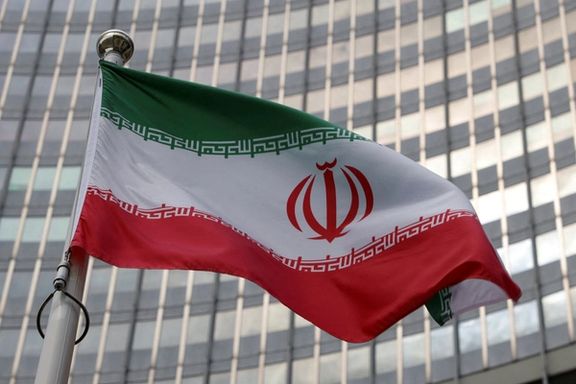
Iran's flag flies in front of the International Atomic Energy Agency (IAEA) headquarters in Vienna, Austria

The International Atomic Energy Agency's (IAEA) 35-nation Board of Governors passed a resolution on Thursday criticizing Iran and ordering better cooperation with the UN nuclear watchdog.

Iran condemned the move and ordered the activation of advanced centrifuges in response.

The resolution, backed by Western nations including France, Germany, and the United Kingdom (E3), follows months of heightened tensions over Iran’s uranium enrichment.

It cites ongoing violations of a 2015 international deal called the Joint Comprehensive Plan of Action (JCPOA), with Tehran now holding a stockpile of enriched uranium more than 32 times the limit under the agreement.

Nineteen countries voted in favor and three - China, Russia and Burkina Faso - against, with 12 abstaining during the quarterly meeting of the Board of Governors.

Iran bashed the resolution, saying it lacked the support of nearly half of the IAEA's member states and was pushed through by the United States and the three European sponsors to advance their political agendas.

Referring to a recent visit to Tehran by IAEA chief Rafael Grossi, Iran's foreign ministry said on X: "This politicized, unrealistic, and destructive approach undermines the positive atmosphere created and the understandings that have resulted from it."

The statement added that Iran was activating advanced centrifuges in retaliation but that the country's nuclear program would remain peaceful.

The resolution follows a similar IAEA rebuke in June calling on Iran to step up cooperation with the watchdog and reverse its recent barring of inspectors despite concerns Tehran would respond by boosting its activities.

The IAEA Board of Governors (Undated)
100%
The IAEA Board of Governors

E3 flags nuclear escalation

In a joint statement delivered to the IAEA board, France, Germany, and the UK expressed alarm over Iran’s stockpile of uranium enriched to 60%, a level well beyond civilian use and close to weapons-grade.

“Iran now has well over four IAEA significant quantities of uranium enriched up to 60%, the approximate amount of nuclear material from which the possibility of manufacturing a nuclear explosive device cannot be excluded,” The E3 said.

The statement said that over the past five months, Iran had installed six additional cascades of advanced centrifuges at its Natanz facility, significantly increasing its enrichment capacity.

It also criticized Iran’s continued restrictions on IAEA inspectors, including the de-designation, or revocation of accreditation, of experienced personnel which has impeded the Agency’s ability to verify Tehran’s claims of peaceful intentions.

Iran responds with warnings

Iranian officials had previously dismissed the resolution, accusing the E3 and their allies of undermining recent diplomatic efforts. Foreign Minister Abbas Araghchi told his French counterpart on Wednesday that the move complicates matters and contradicted the "positive atmosphere created between Iran and the IAEA.”

International Atomic Energy Agency (IAEA) Director General Rafael Grossi arrives on the opening day of the agency's quarterly Board of Governors meeting at the IAEA headquarters in Vienna, Austria, November 20, 2024.
100%
International Atomic Energy Agency (IAEA) Director General Rafael Grossi arrives on the opening day of the agency's quarterly Board of Governors meeting at the IAEA headquarters in Vienna, Austria, November 20, 2024.

Tehran had recently proposed halting its enrichment of uranium to 60% but only after accumulating a stockpile of 185 kilograms. While this offer was mentioned in Grossi’s latest report, Western diplomats dismissed it as insufficient, noting that the material could easily be further enriched for weapons purposes.

Iran has maintained that its nuclear program is solely for peaceful purposes, a claim met with skepticism by Western powers citing Iran’s lack of transparency and history of non-compliance.

Long-running disputes

The IAEA resolution also addressed unresolved issues, including the presence of unexplained uranium traces at undeclared sites and limited access for inspectors to critical facilities. Grossi’s recent trip to Tehran aimed to persuade Iranian leaders to improve cooperation and return to broader negotiations.

The resolution is seen as a step toward potentially referring Iran’s nuclear dossier back to the UN Security Council, where Western nations could trigger a so -called snapback mechanism to reinstate international sanctions lifted under the JCPOA.


Most Viewed

Iran negotiators ordered to return after internal rift over Islamabad talks
1
EXCLUSIVE

Iran negotiators ordered to return after internal rift over Islamabad talks

2
INSIGHT

Iran's digital economy battered by prolonged blackout

3
ANALYSIS

US blockade enters murky phase as tankers spoof signals and buyers hesitate

4
ANALYSIS

Why the $100 billion Hormuz toll revenue is a myth

5

US tightens financial squeeze on Iran, warns banks over oil money flows

Banner
Banner

Spotlight

  • Hardliners push Hormuz ‘red line’ as US blockade tests Iran’s leverage
    INSIGHT

    Hardliners push Hormuz ‘red line’ as US blockade tests Iran’s leverage

  • Ideology may be fading in Iran, but not in Kashmir's ‘Mini Iran'
    INSIGHT

    Ideology may be fading in Iran, but not in Kashmir's ‘Mini Iran'

  • War damage amounts to $3,000 per Iranian, with blockade set to add to losses
    INSIGHT

    War damage amounts to $3,000 per Iranian, with blockade set to add to losses

  • Why the $100 billion Hormuz toll revenue is a myth
    ANALYSIS

    Why the $100 billion Hormuz toll revenue is a myth

  • US blockade targets Iran oil boom amid regional disruption
    ANALYSIS

    US blockade targets Iran oil boom amid regional disruption

  • Iran's digital economy battered by prolonged blackout
    INSIGHT

    Iran's digital economy battered by prolonged blackout

•
•
•

More Stories

Government funding shortfall disrupts cash subsidy handouts

Nov 21, 2024, 18:49 GMT+0

Iran delayed cash subsidy payments for the last Iranian calendar month by a day citing insufficient funds, resulting in late payments for over 50 million people and underscoring the country's persistent economic malaise.

The government's Targeted Subsidies Organization, overseen by the Planning and Budget Organization, said on Thursday that the necessary funds from oil and gas revenues were not transferred to the government treasury, causing the delay.

Tasnim news agency quoted informed sources within the Planning and Budget Organization as saying that the Oil Ministry owes the Targeted Subsidies Organization approximately $700 million.

The monthly subsidy for Iran’s middle-income group, comprising 51 million people, is 3,000,000 rials (about $5) per person, requiring a monthly budget of about $255 million. The government also provides 4,000,000 rials (about $7) per month to low-income households, approximately 28 million people.

This means that the government needs a total amount of $440 million per month – or about $5.3 billion annually -- for the cash handouts. This is more than 6 percent of the total government annual budget. 

With soaring inflation and a depreciating currency, the cash handouts have become almost meaningless for the vast majority of recipients.

In 2010 when then-President Mahmoud Ahmadinejad introduced the cash handout scheme, the amount was 450,000 rials, a huge boon at roughly $45 a person or nearly $200 a month for a family of four.

The average income of an Iranian wage earner was equivalent to about $350 then. Today, the amount is about $150 to $250.

The budget deficit for subsidies has been a persistent problem for the government over the past year. The budget bill for the current Iranian year starting March 20 mandates the removal of subsidies for so-called ineligible households.

The definition of households ineligible for government support includes those classified as high-income. Specific examples of such households are those with members residing abroad or those who take five or more international trips annually.

Labor and Social Affairs Minister Ahmad Meydarihas said that this process will be gradual but has not indicated any plans to increase subsidies for the needy.

Deadliest ever Israeli attacks in Syria kill scores of Iran-linked fighters - monitor

Nov 21, 2024, 13:20 GMT+0

Israel launched its deadliest attack yet in Syria on Wednesday, the UK-based Syrian Observatory for Human Rights said, killing 79 people in airstrikes targeting militiamen linked to Iran in Palmyra in central Syria.

53 of those killed were Syrian members of armed groups allied with Iran, while 22 others were non-Syrians, primarily members of Iraq’s al-Nujaba militia, the rights group said on Thursday. Four Hezbollah operatives were also among the dead and 34 people were injured, including seven civilians.

The attacks, which the Syrian Observatory attributed to Israel, targeted three sites in Palmyra, including an arms depot in the Al-Jam’iya neighborhood, another location near an industrial area, and a meeting place for leaders of pro-Iranian militias, including al-Nujaba members and a Hezbollah commander.

Some of the locations were near Palmyra’s famed Roman-era archaeological sites, according to initial reports.

The Syrian Ministry of Defense said 10 Syrian soldiers were killed in the strike, which caused significant damage to infrastructure and buildings in the surrounding area.

Syria’s state-run SANA news agency, which also attributed the strike to Israel, said residential buildings, an industrial area, and a militia headquarters were among the targets.

The Israeli military has not commented on the airstrike, consistent with its usual policy on such operations. However, the attacks have been ongoing for several years as the Jewish state continues to target Iranian-backed groups in Syria and Iranian military infrastructure.

The attack follows strikes by the US Central Command (CENTCOM) earlier this month on nine targets linked to Iran in Syria. The strikes were intended to limit the operational capacity of Iran-affiliated groups accused of targeting US and coalition forces.

“Our message is clear. Attacks against US and coalition partners in the region will not be tolerated,” CENTCOM commander Army Gen. Michael Erik Kurilla said in a statement on the strikes on November 12. “We will continue to take every step necessary to protect our personnel and coalition partners and respond to reckless attacks.”

The Syrian Observatory for Human Rights, a UK-based monitoring group known for its opposition to the Assad regime. highlight the roles of foreign-backed groups operating in Syria’s ongoing conflict, including those supported by Iran.

Audit report unveils surge in loss-making Iranian state companies

Nov 21, 2024, 12:41 GMT+0

A recent report by the Supreme Audit Court of Iran (SAC) has shown a sharp rise in the number of loss-making state-owned companies during President Ebrahim Raisi's tenure, underscoring the country's deep economic malaise.

Presented to parliament by Ahmadreza Dastgheib, the head of the SAC, the budget deviation report for Iran's fiscal year ending in March 21 highlights a dramatic escalation in financial mismanagement, with losses exceeding earlier projections by large margins.

According to the report, the government estimated that 17 state-owned companies would incur losses, amounting to 210 trillion rials ($300 million). Instead, the actual figures soared to 3,540 trillion rials ($5.057 billion) in total losses, spread across 134 companies.

"Eighty percent of these losses are concentrated in just six companies, including the Government Trading Corporation of Iran and the Targeted Subsidies Organization," the report added.

The second, an organization affiliated with the National Budget and Planning Organization, is responsible for implementing the provisions of the Targeted Subsidies Law and managing the funds related to this legislation.

Among the worst-performing entities was the Government Trading Corporation of Iran, a state-owned company implicated in multiple corruption scandals. Its losses jumped from 390 trillion rials ($557 million) in 2021 to 1,370 trillion rials ($1.957 billion) by 2023, according to the report.

Despite the figures, the corporation continues to receive significant state-backed loans, ranking as the second-largest loan recipient among executive bodies.

The Ministry of Agriculture, under whose purview the company operates, has also faced repeated allegations of corruption, including irregularities in livestock feed imports and scandals such as the Debsh Tea case.

The Debsh Tea scandal, which emerged in 2023, is one of Iran's most significant corruption cases. The Debsh Agriculture and Industrial Group, led by CEO Akbar Rahimi, received approximately $3.37 billion in government-subsidized foreign currency between 2019 and 2022, intended for importing tea and related machinery. Instead, the company diverted about $1.4 billion of these funds, selling the currency on the open market at higher rates, resulting in substantial illicit profits.

While the Government Trading Corporation of Iran has faced public scrutiny, the problem is far from isolated. Other significant loss-makers include the Islamic Republic of Iran Broadcasting (IRIB) and the Iranian Health Insurance Organization. Collectively, these entities represent a growing financial burden on the state amid an already strained economy.

Supporters of the Raisi administration have portrayed its policies as a lifeline for struggling businesses and industries. However, the audit report starkly contradicts this narrative, exposing deep financial mismanagement and a growing crisis among state-owned enterprises.

As Iran grapples with economic constraints and public discontent, these revelations could fuel further scrutiny of the Raisi administration’s stated goal of revitalizing the country’s industries.

Iran conducts 1,500 surgeries for Hezbollah operatives

Nov 21, 2024, 11:14 GMT+0

Iran’s health minister said nearly 500 injured Hezbollah operatives were treated in Iran, with around 1,500 surgeries conducted to address eye and hand injuries in the wake of pager and walkie-talkie explosions carried out by Israel.

Speaking to student Basij leaders from medical universities, Mohammadreza Zafarghandi detailed Iran’s medical response to the recent Israeli operation in Lebanon targeting communication devices used by Hezbollah, the most devastating attack to the group since it was founded in 1982.

“The pager system was designed in such a way that, upon explosion, one or both hands of the victims would be severed, and in many cases, both eyes would be blinded,” Zafarghandi said.

He explained Iran’s efforts to provide comprehensive treatment to those affected by the blasts, which killed at least 49 people and injured around 3,000 more.

It was only this month that Israel confirmed it was responsible for the two-day operation in September.

In Iran, critics accused the government of prioritizing treatment for Hezbollah operatives over Iranian citizens blinded during the crackdown on protests in 2022.

“The Islamic Republic blinded Iranian protesters and didn’t allow them treatment, but treats Hezbollah's wounded in Iran,” one citizen said in a video sent to Iran International.

In the aftermath of the explosions, Pirhossein Kolivand, the head of Iran’s Red Crescent Society, announced that 95 members of Hezbollah, Iran's largest military ally in the region, had been transferred to Iran for advanced medical treatment.

Kolivand further confirmed that two teams of Iranian doctors, including eye specialists, were sent to Lebanon. In a separate interview, he mentioned that 12 doctors, along with nurses and paramedics from the Red Crescent, were also dispatched to provide assistance on the ground in Lebanon.

It comes while Iran is grappling with a severe health crisis, marked by a critical shortage of medicine and an exodus of healthcare professionals seeking better working conditions and higher salaries abroad.

US, Israeli diplomats warn over Iran’s enriched uranium stockpile

Nov 21, 2024, 10:31 GMT+0

Two senior diplomats from Israel and the United States raised concerns about Iran's uranium enrichment program in interviews with Iran International on Wednesday.

The discussions followed an International Atomic Energy Agency (IAEA) report highlighting the Islamic Republic’s growing stockpile of 20% and 60% enriched uranium.

Danny Danon, Israel's ambassador to the United Nations, described the findings as alarming.

“I think that the entire international community should be very worried about the findings. It proves the attempt of Iran to run for nuclear capabilities, and then the world should take action. It's not only IAEA responsibility; it's the responsibility of the entire Western democracies to stop Iran from achieving nuclear capabilities,” he said.

Danon also predicted that the new Trump administration would intensify pressure on Iran.

“I think there would be more pressure, and we expect it not only from the US but also from other European countries.”

Robert Wood, the US alternate ambassador to the United Nations, echoed a similar concern about the IAEA's report.

“The US' concerns have been all along about Iran engaging in enriching uranium to 60%. We're very concerned about it,” he said.

While Wood did not confirm whether the US would back a resolution proposed by France, Germany, and the United Kingdom at the IAEA Board of Governors, he added, “I know the IAEA Board is going to be looking at this issue. We're reviewing the report of the IAEA Director-General.”

The European draft resolution submitted to the IAEA Board condemns the Islamic Republic’s nuclear activities and calls for a comprehensive report from the agency’s director-general. The resolution could ultimately lead to referring Iran’s nuclear dossier back to the United Nations Security Council and reactivating the snapback mechanism, which would restore all previously suspended UN sanctions.

According to the IAEA’s report, the Islamic Republic currently possesses 182.3 kilograms of 60% enriched uranium. This level of enrichment places Iran significantly closer to producing weapons-grade material, a point of contention for Western powers.

The IAEA report also noted that Iran has proposed freezing further enrichment of 60% uranium at its current levels to avoid the adoption of the European resolution.

Despite this overture, the resolution appears likely to move forward, triggering strong reactions from Iranian officials.

Abbas Araghchi, Iran’s foreign minister, cautioned against the resolution during a phone call with IAEA Director-General Rafael Grossi on Wednesday.

“If the other parties disregard Iran's goodwill and cooperative approach and pursue unconstructive actions by issuing a resolution at the IAEA Board of Governors meeting, Iran will respond in an appropriate and proportional manner,” he said.

Kazem Gharibabadi, Deputy Foreign Minister for Legal and International Affairs, echoed this stance, warning of decisive measures if the resolution is adopted.

“We have explicitly stated beforehand that if the resolution is adopted, we will respond decisively and immediately, and the Atomic Energy Organization is ready to implement the decision the very hour it is adopted,” Gharibabadi said. He added that Iran seeks engagement with the IAEA but criticized European countries for their confrontational approach.

The escalating rhetoric underscores the deepening divide between Iran and Western nations over nuclear policy. While Iranian officials have hinted at retaliation, they have yet to specify what actions might entail.