• العربية
  • فارسی
Brand
  • Iran Insight
  • Politics
  • Economy
  • Analysis
  • Special Report
  • Opinion
  • Podcast
  • Iran Insight
  • Politics
  • Economy
  • Analysis
  • Special Report
  • Opinion
  • Podcast
  • Theme
  • Language
    • العربية
    • فارسی
  • Iran Insight
  • Politics
  • Economy
  • Analysis
  • Special Report
  • Opinion
  • Podcast
All rights reserved for Volant Media UK Limited
volant media logo

US, Israeli diplomats warn over Iran’s enriched uranium stockpile
Nov 21, 2024, 10:31 GMT+0Updated: 15:19 GMT+0
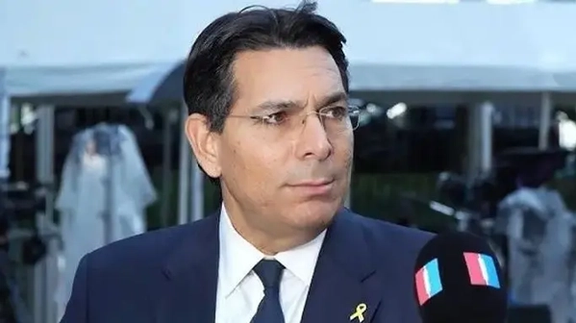
Danny Danon, Israel's ambassador to the United Nations speaking to Iran International on November 20, 2024.

Two senior diplomats from Israel and the United States raised concerns about Iran's uranium enrichment program in interviews with Iran International on Wednesday.

The discussions followed an International Atomic Energy Agency (IAEA) report highlighting the Islamic Republic’s growing stockpile of 20% and 60% enriched uranium.

Danny Danon, Israel's ambassador to the United Nations, described the findings as alarming.

“I think that the entire international community should be very worried about the findings. It proves the attempt of Iran to run for nuclear capabilities, and then the world should take action. It's not only IAEA responsibility; it's the responsibility of the entire Western democracies to stop Iran from achieving nuclear capabilities,” he said.

Danon also predicted that the new Trump administration would intensify pressure on Iran.

“I think there would be more pressure, and we expect it not only from the US but also from other European countries.”

Robert Wood, the US alternate ambassador to the United Nations, echoed a similar concern about the IAEA's report.

“The US' concerns have been all along about Iran engaging in enriching uranium to 60%. We're very concerned about it,” he said.

While Wood did not confirm whether the US would back a resolution proposed by France, Germany, and the United Kingdom at the IAEA Board of Governors, he added, “I know the IAEA Board is going to be looking at this issue. We're reviewing the report of the IAEA Director-General.”

The European draft resolution submitted to the IAEA Board condemns the Islamic Republic’s nuclear activities and calls for a comprehensive report from the agency’s director-general. The resolution could ultimately lead to referring Iran’s nuclear dossier back to the United Nations Security Council and reactivating the snapback mechanism, which would restore all previously suspended UN sanctions.

According to the IAEA’s report, the Islamic Republic currently possesses 182.3 kilograms of 60% enriched uranium. This level of enrichment places Iran significantly closer to producing weapons-grade material, a point of contention for Western powers.

The IAEA report also noted that Iran has proposed freezing further enrichment of 60% uranium at its current levels to avoid the adoption of the European resolution.

Despite this overture, the resolution appears likely to move forward, triggering strong reactions from Iranian officials.

Abbas Araghchi, Iran’s foreign minister, cautioned against the resolution during a phone call with IAEA Director-General Rafael Grossi on Wednesday.

“If the other parties disregard Iran's goodwill and cooperative approach and pursue unconstructive actions by issuing a resolution at the IAEA Board of Governors meeting, Iran will respond in an appropriate and proportional manner,” he said.

Kazem Gharibabadi, Deputy Foreign Minister for Legal and International Affairs, echoed this stance, warning of decisive measures if the resolution is adopted.

“We have explicitly stated beforehand that if the resolution is adopted, we will respond decisively and immediately, and the Atomic Energy Organization is ready to implement the decision the very hour it is adopted,” Gharibabadi said. He added that Iran seeks engagement with the IAEA but criticized European countries for their confrontational approach.

The escalating rhetoric underscores the deepening divide between Iran and Western nations over nuclear policy. While Iranian officials have hinted at retaliation, they have yet to specify what actions might entail.

Most Viewed

Iran negotiators ordered to return after internal rift over Islamabad talks
1
EXCLUSIVE

Iran negotiators ordered to return after internal rift over Islamabad talks

2
INSIGHT

Iran's digital economy battered by prolonged blackout

3
ANALYSIS

US blockade enters murky phase as tankers spoof signals and buyers hesitate

4
ANALYSIS

Why the $100 billion Hormuz toll revenue is a myth

5

US tightens financial squeeze on Iran, warns banks over oil money flows

Banner
Banner

Spotlight

  • Hardliners push Hormuz ‘red line’ as US blockade tests Iran’s leverage
    INSIGHT

    Hardliners push Hormuz ‘red line’ as US blockade tests Iran’s leverage

  • Ideology may be fading in Iran, but not in Kashmir's ‘Mini Iran'
    INSIGHT

    Ideology may be fading in Iran, but not in Kashmir's ‘Mini Iran'

  • War damage amounts to $3,000 per Iranian, with blockade set to add to losses
    INSIGHT

    War damage amounts to $3,000 per Iranian, with blockade set to add to losses

  • Why the $100 billion Hormuz toll revenue is a myth
    ANALYSIS

    Why the $100 billion Hormuz toll revenue is a myth

  • US blockade targets Iran oil boom amid regional disruption
    ANALYSIS

    US blockade targets Iran oil boom amid regional disruption

  • Iran's digital economy battered by prolonged blackout
    INSIGHT

    Iran's digital economy battered by prolonged blackout

•
•
•

More Stories

Trump will intensify pressure on Tehran, Iranian pundits say

Nov 21, 2024, 07:45 GMT+0
•
Behrouz Turani

Some Iranian analysts expect President-elect Donald Trump to pursue maximum pressure on Iran, while others see a chance for negotiations, though they admit talks with Trump would likely be difficult.

Foreign policy analyst Amir Ali Abolfath told the conservative Nameh News website in Tehran that Trump is almost certain to adopt a maximum pressure policy toward Iran. He noted that Trump would likely leverage the strength of the US economy and international bodies, such as the IAEA Board of Governors, to advance his hardline approach.

According to Nameh News, nearly all of the pessimistic assessments made by Iranian pundits are based on the combination of hardline political figures who have been named as the likely members of Trump's cabinet.

Abolfath stated that Trump believes his maximum pressure policy against Iran was not sustained under President Joe Biden and seeks to reinstate it. However, he questioned its potential effectiveness, remarking, "What Trump says is not important; we need to see what he can do."

Meanwhile, foreign policy analyst Qasem Mohebali told another Tehran website that the period of neither war nor peace for Iran’s Islamic government is over. Now it is time for either peace or war. Mohebali added, "Trump will most certainly offer to negotiate with Iran and will wait for Tehran's response. The situation is more complicated than eight years ago, and Iran needs to be careful not to turn the opportunity for negotiation into a threat."

Iranian commentator Qasem Mohebali. File photo
100%
Iranian commentator Qasem Mohebali. File photo

Mohebali said, "Eight years ago, Trump's policy hinged on harnessing Iran's nuclear activity and its influence in the region. With his maximum pressure policy, he tried to prevent Iran's access to financial resources needed to facilitate the country's development. However, that policy led to an escalation of tensions in the region and in Iran-US relations. Nonetheless, he is likely to resume his previous policy." Mohebali did not mention that Iran also needed the financial resources to maintain its proxy groups in the region that target Israel and US interests.

He noted that for the first time in 30 years, Republicans now control all key pillars of decision-making in the United States, a dynamic that could influence Tehran's relations with Washington. Mohebali suggested that this alignment might benefit Iran if Trump secures an agreement favorable to Tehran, as no one within the US political structure would be positioned to oppose or block his decision. Over the past three decades, Congress often had the power to obstruct deals made by presidents and their administration.

Over the next two months, Iran must consider all possibilities and prepare to negotiate if President Trump presents terms for a deal. Referring to Khamenei's "neither war nor negotiations" policy following Trump's 2018 withdrawal from the nuclear agreement, Mohebali suggested, without directly naming Khamenei, that this era has ended. He argued that Iran now faces a critical choice between war and peace, with Trump having the freedom to pursue either path.

Mehdi Motaharnia, another Iranian foreign policy analyst, said he believes the Trump administration will enter negotiations with Iran with all of its power. But this is going to be a negotiation much more difficult than holding talks with the Obama or Biden administrations.

Iranian analyst in Tehran, Mehdi Motaharnia
100%
Iranian analyst in Tehran, Mehdi Motaharnia

Motaharnia remarked that in his second term, "Trump aims to leave a lasting legacy both domestically and internationally. His team is made up of like-minded conservatives, and negotiating with Iran is a key objective of his foreign policy. However, he negotiates on his own terms, presenting both opportunities and threats during the process. These talks are unlikely to focus solely on the 2015 nuclear deal; instead, he seeks to broaden the scope to include other issues, aiming to extract as many concessions as possible."

However, Motaharnia cautioned that if Iran refuses to negotiate, the situation could become significantly more challenging. In such a scenario, the Trump administration may strengthen its ties with Tel Aviv, ensuring increased pressure on Tehran. This could leave Iran vulnerable to a range of difficulties.

The Iranian government appears to have its own conditions for potential negotiations. In an interview with the Mossallass website, Iranian government spokesperson Elias Hazrati stated, "Iran can negotiate with Trump if the United States refrains from interfering in Iran's internal affairs and does not target our interests. Since 1979, the United States has consistently sought to harm Iran with the intention of regime change."

This stance contrasts with Trump’s assertion that he does not pursue a policy of regime change in Iran.

UN resolution slams Iran rights record, urges revocation of hijab laws

Nov 20, 2024, 23:11 GMT+0

The UN General Assembly on Wednesday passed a resolution criticizing the Islamic Republic for its human rights record especially over women's rights, expressing special concern over mandatory hijab policies.

The resolution, drafted by Canada on November 6, was passed with 77 votes in favor, 66 abstentions and 28 votes against in a Wednesday session.

Russia, China, Belarus, Armenia, Cuba, Iraq, Indonesia, Oman, Pakistan, Algeria and Syria were among the countries that voted against the resolution.

100%

The resolution condemned "the intensified, targeted repression of women and girls by the Islamic Republic of Iran, both online and offline, and the lack of accountability and justice measures for human rights violations perpetrated against women and girls."

It also expressed "serious concern at the discriminatory compulsory veiling laws and policies of the Islamic Republic of Iran, which fundamentally undermine the human rights of women and girls, expressed concern at the escalation in the enforcement of these laws and policies... and reaffirmed calls for all such laws and policies to be repealed."

Iran's Foreign Ministry spokesman on Wednesday condemned the resolution, calling it a politically motivated and unjustifiable move.

Iranian women are facing tougher crackdowns for refusing to wear the compulsory hijab amid Iran’s conflict with Israel.

Morality police are also back on the streets in larger numbers, having been scaled back since the death of a young woman named Mahsa Amini in their custody in 2022.

Witnesses report a stronger presence around Tehran’s central districts, describing police foot patrols, detention vans and police motorcycle patrols.

A widely publicized incident earlier this month at the Islamic Azad University in Tehran brought the issue of hijab defiance back into the global spotlight. In protest against enforcement measures on campus, a female student named Ahoo Daryaei, removed her clothing in defiance of security staff intervening over her hijab.

Daryaei was transferred to a psychological center shortly after her arrest, drawing accusations from activists that the government is attempting to undermine her protest by portraying her actions as a sign of mental illness.

Screenshot of the video showing Ahoo Daryaei disrobing at Tehran's Science and Research branch of Azad University on November 2, 2024.
100%
Screenshot of the video showing Ahoo Daryaei disrobing at Tehran's Science and Research branch of Azad University on November 2, 2024.

Strong condemnation of execution spree

The Wednesday resolution passed by the UN General Assembly also condemned "in the strongest terms the alarming increase in the application of the death penalty by the Islamic Republic of Iran in violation of its international obligations, including executions undertaken against persons on the basis of forced confessions and without fair trial and due process."

The resolution expressed "serious concern at the disproportionate application of the death penalty to persons belonging to minorities, particularly ethnic and religious minorities, who are targeted for death sentences relating to their alleged involvement in political or religious groups, and at the continued execution of women, which has reached the highest number of reported executions of women since 2013."

The resolution comes against the backdrop of the Islamic Republic's uptick in executions over the past few years. At least 711 people have been executed in Iran since January, according to the latest report by the Norway-based Iranian rights group Hengaw.

A Saturday report by Hengaw said that 13 of the 711 documented executions this year involved political prisoners. The group also documented 21 fatalities in Iran’s prisons in 2024, including four deaths of political detainees and eight deaths attributed to torture.

Woman who confronted harasser makes court appearance from prison

Nov 20, 2024, 17:57 GMT+0

An Iranian activist who was detained after she confronted a motorcyclist who grabbed her from behind appeared from prison in a court hearing via video link, according to civil society group the Iranian Women Association.

The activist, Roshanak Molaei, was detained almost three weeks ago after she thwarted a harasser in a military uniform on a moped while she walked down a north Tehran street, putting the man in a headlock and summoning a crowd of bystanders.

Authorities have not clarified the grounds for her detention or any charges she faces.

CCTV footage of the incident went viral on social media, adding to the already raging debate in Iran over gender rights and perceived official misogyny under the ruling Islamic theocracy.

Molaei had posted the video on her X account, captioning it: "Being a woman in Iran."

Tehran police confirmed the encounter and said the motorcyclist was referred to judicial authorities for “harassment of women” without saying if the man had been arrested or charged.

The apparent disparity between the treatment of Molaei and his harasser as well as Molaei’s continued detention has drawn criticism from women’s rights advocates, who question why the victim of harassment is being prosecuted.

Molaei was arrested in November 2022 during widespread women's rights protests known as the Woman Life Freedom movement. She was sentenced to five years in prison for acting against national security, insulting Iran's supreme leader Ali Khamenei and appearing in public without the mandatory hijab.

IAEA chief says Iran agreed to cap 60% uranium stockpile

Nov 20, 2024, 14:08 GMT+0

IAEA Director General Rafael Grossi says that Iran has agreed to freeze its uranium stockpile enriched to 60% following his request during recent talks in Tehran.

"I made a request for Iran to stop increasing the stockpile of 60%, and this was accepted," Grossi said in his report to the agency's Board of Governors in Vienna on Wednesday.

The IAEA chief said the agreement to freeze the 60% uranium stockpile does not imply an immediate resolution to broader concerns about Iran’s nuclear activities, however.

The agency remains unable to verify certain aspects of Iran’s program due to limited access following Tehran's cessation of its JCPOA-related commitments in early 2021.

Citing reports to the body's member states, Reuters reported that Iran has offered to cap its stock of near weapons grade nuclear fuel on condition that no censure resolution will be issued at a Wednesday meeting of the UN nuclear watchdog.

The confidential reports by the International Atomic Energy Agency (IAEA) say Tehran has made preparations to cap the stockpile at around 185 kg (407 lbs). Iran also agreed to consider accepting the appointment of four additional experienced IAEA inspectors after having banned around one third, last year.

Diplomats informed Reuters that Western powers are advocating for a censure resolution at the IAEA Board of Governors, despite Iran's reported offer. Similarly, The Wall Street Journal cited sources stating that France, Britain, and Germany (the E3) plan to proceed with the resolution during Wednesday's meeting.

In his latest report to the Board of Directors, the Director General of the IAEA said Iran's nuclear program has continued to grow, in spite of global sanctions. “Following my last report, Iran’s stockpile of uranium enriched up to 20% and up to 60% U-235 continued to increase," he said.

The report also states that the IAEA's findings regarding particles of uranium of human origin at undeclared locations in Iran remain inconsistent, and the agency requires information about the current whereabouts of the nuclear materials or related contaminated equipment.

Grossi also addressed the destruction of a covert nuclear research facility of the Islamic Republic in Parchin following an Israeli attack, stating that the IAEA does not consider this site a nuclear facility, and there is no indication of nuclear material being present there.

Grossi visited Iran’s Fordow and Natanz enrichment facilities during his recent trip.

Referring to the long and turbulent process of monitoring Iran's nuclear program, he said "It takes effort, determination, and patience."

"This is not something that will be solved overnight," Grossi added.

While exchanges between Iran and the IAEA on verification measures are ongoing, Grossi acknowledged the need for "more information from Iran" to address the concerns comprehensively.

Iran threatens 'decisive' response against nuclear censure at IAEA

Nov 20, 2024, 14:00 GMT+0

Iran warned of an "immediate and decisive" retaliatory response if a widely anticipated Western-backed censure resolution is passed on Thursday and lobbied several member states of the UN's nuclear watchdog's governing body to reject it.

The foreign ministry's legal deputy was quoted by local media as saying, "We have clearly stated in advance that if the resolution is passed, we will respond decisively and immediately. The Atomic Energy Organization of Iran is prepared to implement the decision in the very hour the resolution is approved."

The United States, Germany, France and Britain are adamant to pursue a censure resolution at the quarterly meeting of the International Atomic Energy Agency for Tehran's lack of cooperation with the UN watchdog and other violations.

Foreign ministry's Kazem Gharibabadi blamed the sponsors of the resolution for disregarding Iran's recent gesture of promising to stop high-level uranium enrichment. "This move by Iran is, in fact, a response to the unconstructive approach of these few countries and their disregard for Iran's goodwill."

Gharibabadi attending a previous meeting of the IAEA in Vienna.
100%
Gharibabadi attending a previous meeting of the IAEA in Vienna.

The Iranian foreign minister Abbas Araghchi on Wednesday called the foreign ministers of Brazil, South Africa, Bangladesh, Algeria, Burkina Faso, Pakistan - all on the Board of Governors of the International Atomic Energy Agency (IAEA) - to warn against the adoption of the resolution put forward by Western powers.

"The push by France, Britain and Germany for a resolution against Iran would only weaken and disrupt the interactional processes between Iran and the Agency," Araghchi said, according to media reports in Iran.

He called on the member states voting on the resolution to block it.

Previous voting patterns suggest that proposals backed by the main Western countries easily pass. A successful resolution could pave the way for the three European powers to trigger a "snapback mechanism" to restore UN sanctions imposed on Iran before the 2015 nuclear deal.

The planned censure is due to be approved despite Tehran offering to cap its highly-enriched uranium stock.

IAEA Director General Rafael Grossi says that Iran has agreed to freeze its uranium stockpile enriched to 60% following his request during recent talks in Tehran.

"I made a request for Iran to stop increasing the stockpile of 60%, and this was accepted," Grossi said in his report to the agency's Board of Governors in Vienna on Wednesday. The freeze would not resolve broader issues about Iran’s nuclear activities, he added.

Iran began enriching uranium up to 60% after a 2015 international deal unraveled when Donald Trump unilaterally withdrew the United States from the agreement.

“The US concerns have been all along about Iran engaging in enriching uranium to 60%. We're very concerned about it,” US alternative ambassador to the United Nations Robert Wood told Iran International on Wednesday. “I know the IAEA Board is going to be looking at this issue. We're reviewing the report of IAEA Director-General."

The IAEA’s latest confidential report confirms that Iran has made preparations to cap its stockpile at around 185 kg, according to Reuters. Iran also agreed to consider accepting the appointment of four additional experienced IAEA inspectors after having banned around one third last year.