• العربية
  • فارسی
Brand
  • Iran Insight
  • Politics
  • Economy
  • Analysis
  • Special Report
  • Opinion
  • Podcast
  • Iran Insight
  • Politics
  • Economy
  • Analysis
  • Special Report
  • Opinion
  • Podcast
  • Theme
  • Language
    • العربية
    • فارسی
  • Iran Insight
  • Politics
  • Economy
  • Analysis
  • Special Report
  • Opinion
  • Podcast
All rights reserved for Volant Media UK Limited
volant media logo

Resistance forces will shape region's fate - Khamenei after Nasrallah's reported death

Sep 28, 2024, 11:38 GMT+1Updated: 15:47 GMT+0

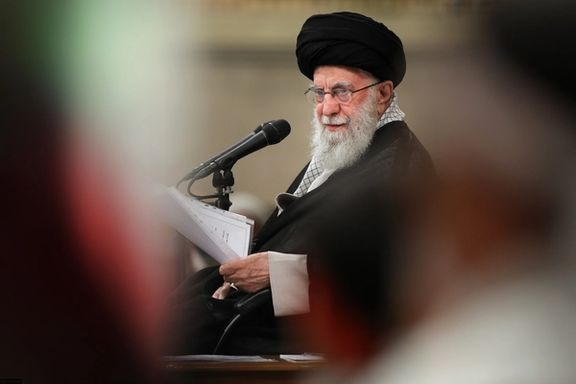
After the Israeli military said it had killed Hezbollah leader Hassan Nasrallah, Iran's Supreme Leader Ali Khamenei said from a secure location that Hezbollah is at the forefront the forces of resistance which will determine the fate of the region.

While Reuters cited unnamed sources as saying that Khamenei has been moved to secure location, the Supreme Leader issued a massage Saturday, calling on Muslims "to stand by the people of Lebanon and the proud Hezbollah with whatever means they have and assist them in confronting the ... wicked regime (of Israel)".

"Zionist criminals should know that they are far too insignificant to inflict any serious damage on the strong foundation of Hezbollah in Lebanon. All the resistance forces in the region stand alongside and support Hezbollah. The fate of this region will be determined by the resistance forces, with Hezbollah at the forefront,” he said in his message.

He added that "the Zionist regime had failed to learn from its year-long criminal war in Gaza" and was now repeating the same mistakes in Lebanon.

The Israeli military said on Saturday it had killed Nasrallah in an airstrike on the group's central headquarters in the southern suburbs of Beirut on Friday. However, uncertainty persists about the status of Hezbollah's leader as no official reaction has been made by the group or the Islamic Republic.

The Israeli military "eliminated ... Hassan Nasrallah, leader of the Hezbollah terrorist organization," Israeli army spokesperson Avichay Adraee wrote in a statement on X.

Later, in a briefing with reporters the IDF spokesman confirmed the killing of Hezbollah chief Hassan Nasrallah and added: "I want to say this very clearly—Nasrallah was one of the world's strongest and most influential terrorists, and one of the terrorists with the most capabilities in the world. He was a real threat, with the blood of thousands of people on his hands."

Government-controlled media in Tehran was simply repeating the news about the IDF announcement, while large banners were installed in the capital proclaiming “Hezbollah is alive.” There have been no explicit Iranian threats about a potential retaliation against Israel, although some hardliners have voiced the need for revenge.

Most Viewed

Iran negotiators ordered to return after internal rift over Islamabad talks
1
EXCLUSIVE

Iran negotiators ordered to return after internal rift over Islamabad talks

2
ANALYSIS

US blockade enters murky phase as tankers spoof signals and buyers hesitate

3
ANALYSIS

Why the $100 billion Hormuz toll revenue is a myth

4

US tightens financial squeeze on Iran, warns banks over oil money flows

5
ANALYSIS

US blockade targets Iran oil boom amid regional disruption

Banner
Banner

Spotlight

  • Hardliners push Hormuz ‘red line’ as US blockade tests Iran’s leverage
    INSIGHT

    Hardliners push Hormuz ‘red line’ as US blockade tests Iran’s leverage

  • Ideology may be fading in Iran, but not in Kashmir's ‘Mini Iran'
    INSIGHT

    Ideology may be fading in Iran, but not in Kashmir's ‘Mini Iran'

  • War damage amounts to $3,000 per Iranian, with blockade set to add to losses
    INSIGHT

    War damage amounts to $3,000 per Iranian, with blockade set to add to losses

  • Why the $100 billion Hormuz toll revenue is a myth
    ANALYSIS

    Why the $100 billion Hormuz toll revenue is a myth

  • US blockade targets Iran oil boom amid regional disruption
    ANALYSIS

    US blockade targets Iran oil boom amid regional disruption

  • Iran's digital economy battered by prolonged blackout
    INSIGHT

    Iran's digital economy battered by prolonged blackout

•
•
•

More Stories

Hardliner says US unlikely to respond to Pezeshkian's ‘pacifist’ comments

Sep 28, 2024, 10:54 GMT+1

A hardline academic in Tehran, frequently featured on Iranian state TV as a US politics expert, has claimed that the United States is unlikely to respond to Pezeshkian's “pacifist remarks” during his visit to the UN headquarters in New York.

The conservative Nameh News website quoted Tehran University lecturer Foad Izadi, who criticized certain Iranian politicians for repeatedly advocating negotiations with the United States, despite the lack of any signals from US officials indicating interest in dialogue.

Nameh News argued that the wars in Ukraine and the Middle East have dramatically changed the international landscape compared to when former President Hassan Rouhani attended the 2013 UNGA meeting, winning over American hearts and minds with a well-calculated publicity move. The website quoted Tehran University lecturer Foad Izadi, who noted that President Joe Biden referred to the 'Iranian threat' in his UNGA speech, and claimed that US presidents have consistently spoken against the Islamic Republic for the past 45 years.

Izadi went on to criticize those who believed Pezeshkian could revive the 2015 nuclear talks during his visit to New York, arguing that they have demonstrated a lack of true expertise. He pointed out that White House National Security Advisor John Kirby has already made it clear that, despite Pezeshkian’s calls for normalizing Iran’s relations with the West and even Israel, there is no possibility of negotiations with Iran.

The hardline academic noted that the negative reactions from State Department spokesperson Matthew Miller and President Joe Biden following Pezeshkian's pacifist remarks made the situation clear. Izadi further claimed that Vice President Kamala Harris’s stance on Iran is aligned with Biden’s, and referenced former President Trump’s actions, specifically the assassination of IRGC Quds Force Commander Qasem Soleimani. Izadi concluded, “No US official has made even a half-hearted positive comment about Iran."

Hardliners at the Iranian state TV have been using their influence to edit out Pezeshkian's positive comments about ties with the West from his speeches. Asr Iran website noted that news bulletins on the day after the speech did not broadcast key parts of Pezeshkian's UNGA speech.

According to Asr Iran, the state TV only aired the portion of the Iranian president's speech in which he condemned Israel's atrocities and criticized the United States for imposing sanctions on Iran and deploying forces in the region. The report noted that even this segment of the speech was broadcast half an hour into the main news bulletin.

There was also no mention of Pezeshkian's comments in which he said during a meeting with US media representatives: "We have no war to wage against any country."

Meanwhile, Nameh News quoted 'reformist' commentator Esmail Gerami Moqaddam, who remarked that 'hardliners are upset by Pezeshkian's pacifist remarks.' He claimed that Pezeshkian's statements have garnered positive international reactions, demonstrating to the world that Iran is pursuing peace and justice. Nameh News further asserted that these remarks have left Israel increasingly isolated in the international community.

Gerami Moqaddam said: "Hardliners in Iran are angry about Pezeshkian's pacifist stances because they want Iran to be sanctioned and even enter into a war as they benefit from sanctions. They welcome tension while the new government wants to have good ties with both East and West."

The politician said: "Through dialogue we can even make the United States to step back from its positions, but both Israel and Iran's hardliners do not want that." Iranians want the sanctions to be lifted and that is why they voted for Pezeshkian as their president, Gerami Moqaddam said.

Hezbollah leader confirmed dead, Israel vows to continue assassinations

Sep 28, 2024, 09:36 GMT+1

Iran-backed Hezbollah confirmed its leader Hassan Nasrallah was killed in an airstrike on the group's central headquarters on Friday, while Israel vowed to continue its wave of assassinations.

The Israeli military "eliminated ... Hassan Nasrallah, leader of the Hezbollah terrorist organization," Israeli army spokesperson Avichay Adraee wrote in a statement on X.

It was later confirmed by Hezbollah. In a statement on their Telegram channel, the group said Nasrallah, who had led the group for 32 years, had "joined his great immortal martyred comrades", calling him "a heroic, bold, brave, wise, insightful and faithful leader".

Meanwhile, the IDF warned of more assassinations to come. "We will reach everyone, everywhere,” it stated, as operations continued in full force. Last weekend, a wave of commanders were killed in a major operation just days after 1,500 operatives were impacted by pager and walkie-talkie explosions in the biggest blow to the group's security in its history.

Later, in a briefing with reporters the IDF spokesman confirmed the killing of Hezbollah chief Hassan Nasrallah and added: "I want to say this very clearly—Nasrallah was one of the world's strongest and most influential terrorists, and one of the terrorists with the most capabilities in the world. He was a real threat, with the blood of thousands of people on his hands."

"Hassan Nasrallah will no longer be able to terrorize the world," the Israeli military said in a post on X on Saturday.

Government-controlled media in Tehran was simply repeating the news about the IDF announcement, while large banners were installed in the capital proclaiming “Hezbollah is alive.” There have been no explicit Iranian threats about a potential retaliation against Israel, although some hardliners have voiced the need for revenge.

Israel launched a new wave of airstrikes on Beirut's southern suburbs and other areas of Lebanon on Saturday, a day after carrying out the massive attack on the southern suburbs of Beirut known as Dahiyeh.

Israel's military also announced on Saturday it has mobilized three reserve battalions to bolster its Central Command defense amid escalating conflict with Hezbollah in Lebanon meaning thousands more troops ready for a possible ground invasion after the most tense 10 days between the two sides since the second Lebanon war.

Earlier in the week the army had reported about other mobilizations, the equivalent of around 4,000 troops with talk of boots on the ground by Israel's commander-in-chief.

Following the assassination, the Israeli military continued to pound Lebanon. On Saturday, the IDF announced that weapons belonging to Hezbollah’s anti-ship missile unit embedded beneath civilian buildings in Beirut were struck. "These weapons posed a threat to international maritime routes, freedom of navigation and Israel's strategic assets in the region," they said.

It was buried beneath six civilian buildings in the heart of Danish in Beirut, the IDF said, with intelligence showing it was to be used imminently.

"For years, the Hezbollah terrorist organization built and developed a precision-guided anti-ship missiles systems, originating from Iran, that were aimed at threatening international maritime freedom and the strategic assets of Israel and the region. These missiles have ranges of hundreds of kilometers," the statement said.

IDF spokesman Daniel Hagari said on Saturday afternoon, "we have challenging days ahead of us," as the country readied for retaliatory actions from Iran's proxies around the region, including Yemen, Iraq and Syria.

In a press conference, he said that Hezbollah leader Nasrallah had been amid talks planning imminent attacks against Israel when he was hit in a precision strike Friday night.

He reiterated Hezbollah's own plans to repeat its own October 7 in an operation called 'Conquer the Galilee'. The IDF "will not let it happen", he warned.

"Our war is not with the Lebanese people, our war is with Hezbollah," he said, adding that for Hezbollah and Nasrallah's victims, "justice has been served".

"Israel doesn't seek a wider escalation. We seek two things. To bring the hostages home after a year in Hamas captivity, and to make sure our borders are safe and secure for our citizens."
Two years on, Sunni cleric slams Khamenei over 'Bloody Friday' massacre

Sep 28, 2024, 08:55 GMT+1

Two years after state forces killed almost 100 protesters in southeastern Iran—infamously known as Bloody Friday—a top Sunni cleric has called out Supreme Leader Ali Khamenei for his failure to uphold a promised investigation.

Speaking at Friday prayers in Sistan-Baluchestan, Molavi Abdolhamid denounced the state’s actions as a great tragedy and an injustice rarely seen in the world, renewing his demand for accountability and the punishment of the commanders responsible for the massacre.

Videos posted on social media show that on the eve of the second anniversary of the clampdown, a number of citizens in the capital of Zahedan chanted slogans such as "We swear by the blood of our comrades, we will stand till the end" and "Political prisoners must be released."

Military and security forces were visibly present around the Makki Mosque – one of Iran's largest Sunni mosques. Reports from citizens highlighted a heightened security atmosphere in the city ahead of the anniversary. According to the Hal-Vash news website, military personnel and plainclothes officers set up tents along main streets and roads leading to the mosque, where they conducted searches of worshippers.

On September 30, 2022, amid nationwide protests sparked by the killing of Mahsa Jina Amini, Iranian security forces killed at least 66 people, including children, and injured many more in an assault that marked “Bloody Friday" as a day of unprecedented violence. The reported rape of a 15-year-old girl by a police commander further fueled outrage and intensified the protests.

Multiple human rights groups, along with evidence from activists, victims’ families, eyewitnesses, and extensive documentation, indicate that the actual death toll in Zahedan is likely even higher.

Following the state’s onslaught after that day’s Friday prayers, another 16 people were killed in separate incidents across the city of Zahedan, as the state continued its suppression of dissent. Despite pressure on dissidents, protests continued for months.

Some of the worshippers at this Friday’s prayers at the Mosque held up banners and placards protesting the deadly attack. One of these placards read, "The crime of Bloody Friday will not be forgotten."

Molavi Abdolhamid, the cleric who has sometimes been dubbed ‘Iran’s Sunni dissident,’ became a voice of advocacy for the Sunni minority and broader societal concerns amid nationwide protests against the Islamic Republic.

Although he has called for an end to theocratic rule in Iran, he has also emphasized his stance against using violence to achieve that goal, advocating instead for peaceful reform and dialogue.

Recounting the events of “Bloody Friday,” Molavi Abdolhamid said that if Sunnis were present in institutions such as the Provincial Security Council and the National Security Council, similar incidents would not occur.

Since Masoud Pezeshkian became the President of the 14th Government of the Islamic Republic, Molavi Abdolhamid has repeatedly urged him to employ qualified women, ethnic groups, and religious minorities in the government.

Iranian media, experts debate Pezeshkian's New York outcome

Sep 28, 2024, 06:03 GMT+1

As President Massoud Pezeshkian returned to Tehran after attending the UN General Assembly in New York, Iranian media were abuzz, analyzing his actions and accomplishments during the trip.

Media focus on President Pezeshkian and Iran’s hopes to gain something from his largely low-key meetings in New York sharply contrasts with the public's attention on two other events: the football derby where Persepolis defeated Esteghlal, and a high-profile interview on Iran International TV with pop icon Shahram Shabpareh, who has entertained Iranians for nearly 60 years, spending 45 of those years in exile in the United States.

Iranian media are eager to uncover what truly transpired in New York and whether the factional debate over Pezeshkian's success or failure holds any merit. Pro-reform website Fararu noted in a Thursday report, "What’s been said publicly isn’t the issue—people want to know what happened behind the scenes." The report added that observers are approaching media coverage of Pezeshkian’s visit to New York "with a certain degree of caution."

The website also quoted Foreign Minister Araghchi as saying that "Iran is looking for a dignified way to revive the 2015 nuclear deal while it needs to reassure" the United States and Europe about the peacefulness of its ambitious nuclear program.

In an interview with Fararu, political analyst Rahman Ghahramanpour observed that European diplomats in New York approached the Islamic Republic with "a cautious sense of hope." He noted, "Their attitude was less pessimistic than it was toward former President Raisi, but not as optimistic as it had been with Rouhani’s team."

Commenting on the term "dignified" used by Araghchi, Ghahramanpour explained that it aligns with Khamenei's call for "dignified, thoughtful, and prudent" diplomacy. He added that the Pezeshkian administration needs an agreement with the West to strengthen its position against political rivals in Tehran. However, he pointed out that a potential nuclear deal faces opposition in both Tehran and Washington.

Fararu also quoted economist Morteza Afghah, who said Pezeshkian is under pressure to improve the country's economic situation. Afghah suggested that it was these economic pressures that led Iranian officials to adopt a softer tone in New York and move toward re-establishing diplomatic relations with the West after seven years. However, he did not comment on how this shift might affect Iran's ties with its new partners, Russia and China.

Another political observer in Tehran Abdolreza Faraji-Rad told Fararu that Pezeshkian has loud opponents in Tehran who control the country's state television and in order not to come under attack by them, he needs to coordinate his actions with "higher up", presumably meaning Supreme Leader Ali Khamenei.

Even when Pezeshkian faced backlash from hardliners over his controversial remarks in New York about mutual disarmament between Iran and Israel and calling on international organizations to restore security in the Middle East, some argued it wasn’t a slip of the tongue or a sign of political naivete. Instead, they suggested it indicated he had received approval from Khamenei to make such a bold statement.

Meanwhile, Ghahramanpour had another interview the centrist website Entekhab in Tehran in which he said "At the time being there is very little chance for an open, direct and comprehensive negotiations with the United States, but this does not mean there will be no negotiations." He added: "It appears the two sides have accepted to talk about the nuclear issue at a lower level and wait for a proper situation after the US Presidential elections."

Despite the meeting between Macron and Pezeshkian during which Macron called for the release of French hostages in jail in Tehran, according to Ghahramanpour, resumption of talks with Europe is likely to take place only with "medium priority" as the continuation of the meeting with the French was headed by Deputy Foreign Minister Majid Takht Ravanchi.

Israel targets Hezbollah in Beirut air strikes, Nasrallah fate unknown

Sep 27, 2024, 21:56 GMT+1

Israel said huge air strikes it unleashed on Beirut on Friday targeted Hezbollah's headquarters in an attack security sources told multiple media outlets aimed at the Iran-backed group's leader Hassan Nasrallah, though his status remained unknown.

The attack was Israel's largest of the vast suburb from which the Iran-backed Shia militant group draws its support in nearly a year of fighting.

The New York Times on Friday evening cited five Israeli officials saying intelligence agencies' initial assessment was that Hezbollah leader Hassan Nasrallah had been killed.

The indications were preliminary and might change, the officials added.

Hezbollah, which has yet to comment on Nasrallah's fate, said it fired missiles at the northern Israeli city of Safed in response.

Iran condemned the bombings without clearly pledging to retaliate directly.

"There is no doubt that this reprehensible crime and reckless behavior represent a serious escalation that changes the rules of the game and brings upon its perpetrator appropriate punishment and discipline," Tehran's embassy in Beirut said on X.

The attack leveled residential buildings in the Haret Hreik neighborhood and preliminary estimates by the Lebanese health ministry reported that two people were killed and 76 injured.

Middle East analyst Ghassan Ashour said Israel's ramped-up attacks have been met with little to no response from Tehran, in a trend which is likely to embolden Israel fruther.

“In case the Islamic Republic decides to retaliate against Israel, it would inevitably draw in the United States and other countries into the war, which is undesirable for Iran," Ashour told Iran International. "Even if Hassan Nasrallah were killed, Tehran would refrain from retaliation.”

"Long arm" of Israel

Further Israeli air strikes in the early hours of Saturday pounded the same south Beirut area after the country's military warned residents to flee certain areas there.

Residents fled the area in droves, according to imagery posted on social media.

Early on Friday, Israeli Prime Minister Benjamin Netanyahu told the United Nations General Assembly that Israel was winning in a multi-front war with Iran.

"There is no place in Iran that the long arm of Israel cannot reach. And that's true of the entire Middle East ... We are winning", Netanyahu said.

The United States said it had no foreknowledge or hand in the attack, President Joe Biden told reporters on Friday.

"We’re still gathering information; I can tell you — the United States had no knowledge of or participation in the IDF action," Biden said, referring to the Israeli military.

The top defense officials of both countries were speaking together on the phone at the time of the attack, Pentagon spokesperson Sabrina Singh told reporters, who declined to elaborate on the contents of their discussion.

Asked about whether Washington approved of Israeli actions or targeted killings, Secretary of State Anthony Blinken said the United States was still examining the intent and effects of the attack.

"What's necessary is to create the conditions, including moving forces back, such that people in both northern Israel and southern Lebanon have the confidence to return home," Blinken said, noting that efforts for a ceasefire and deal to withdraw Hezbollah forces northward were ongoing.

Beginning last week, bombing attacks widely attributed to Israel and air strikes across Lebanon targeting Hezbollah killed over 600 people, ramping up tensions between the Jewish state and an array of Islamist groups Iran arms and funds in the region.

Netanyahu on Thursday appeared to brush off an initiative by the US and other world powers for a 21-day ceasefire between the Jewish state and Iran-backed Hezbollah, saying military operations would continue with "full force".