• العربية
  • فارسی
Brand
  • Iran Insight
  • Politics
  • Economy
  • Analysis
  • Special Report
  • Opinion
  • Podcast
  • Iran Insight
  • Politics
  • Economy
  • Analysis
  • Special Report
  • Opinion
  • Podcast
  • Theme
  • Language
    • العربية
    • فارسی
  • Iran Insight
  • Politics
  • Economy
  • Analysis
  • Special Report
  • Opinion
  • Podcast
All rights reserved for Volant Media UK Limited
volant media logo

What are the clay tablets Iran's President brought back from the US?

Maryam Sinaiee
Maryam Sinaiee

Iran International

Sep 30, 2024, 10:28 GMT+1Updated: 15:45 GMT+0
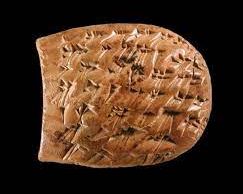
Elamite clay tablet from Persepolis inscribed in cuneiform

During President Masoud Pezeshkian's recent UN visit, the University of Chicago repatriated another collection of millennia-old clay tablets, originally loaned from Iran in the 1930s.

The shipment of 1,100 ancient Achaemenid-era clay tablets The tablets have now been transferred to the National Museum of Iran and will be publicly displayed in two weeks, according to the Ministry of Cultural Heritage.

While the repatriation has been dubbed by domestic Iranian media as Pezeshkian's "souvenir", it holds deep significance for Iranians, reconnecting the country with its ancient pre-Islamic heritage, nearly 1,000 years before Islam, and offering invaluable insights into the Persian Empire’s administration and daily life.

The Elamite cuneiform inscriptions were discovered by an archaeological team from the University of Chicago, led by renowned archaeologist Ernst Herzfeld, during the excavation of Persepolis (Takht-e Jamshid), the ceremonial capital of the Persian Empire, in the 1930s.

These clay tablets, written in cuneiform script, belonged to the Persepolis Fortification Archive, which held records from a single administrative organization around 500 BC and consisted of tens of thousands of fragile clay fragments.

The records provide a wealth of information about the lives of royals and ordinary working people, including women who served the royal household or worked as artisans, detailing their wages and rations, which were paid in silver or commodities such as wine, beer, and grains.

They also reveal the use of a highly effective accounting system. Many of the clay tablets were sent to the Persepolis archive from other regions of the Persian Empire for safekeeping, offering great insight into the empire’s vast history and transportation networks.

In 1935, the Iranian government loaned 30,000 pieces of the tablets to the University of Chicago’s Oriental Institute for three years to be reconstructed and deciphered. However, due to the complexity of the work and the fragile nature of the tablets, they remained at the institute until 1948, when the first batch, including 150 pieces, was returned to Iran.

The course of Iranian governance took a dramatic turn approximately 31 years later with the Islamic Revolution of 1979, which resulted in the establishment of a theocratic Islamic state, replacing the monarchy of the Shah.

In 2001, during the presidency of Mohammad Khatami–who is labeled by some as a reformist– another 300 inscribed tablets were repatriated after being fully pieced together, translated, and digitally cataloged. Another 300 tablets followed in 2004.

After this shipment, a legal dispute emerged from a group of Americans, seeking to collect on a $423.5 million judgment awarded to them as damages. They had sued the Iranian state, demanding the seizure and auction of the tablet collection as compensation.

The plaintiffs, victims of a 1997 Hamas bombing in Jerusalem, claimed Iran was responsible for the attack due to its ties with Hamas and argued that the tablets were commercial property of the Iranian government that could be sold as antiques. In 2006, a US federal court ruled in their favor.

After years of legal battle, a US court of appeals in Chicago rejected the request for the tablets' seizure in 2011. The plaintiffs continued to challenge the ruling until 2018, when the US Supreme Court upheld the appeals court decision.

As a result, the University of Chicago repatriated two more collections, including over 5,000 tablets, in 2019 and 2023. Some of these tablets are now on display at the Persepolis Museum.

The tablets are inscribed in Elamite, a language spoken in the ancient kingdom of Elam in southwestern Iran and during the Achaemenid period (559 BC to 331 BC). Elamite, unrelated to any other ancient or modern language, became extinct around 400 BC.

The language was recorded in pictographic, figurative, and later cuneiform characters from the middle of the 3rd millennium BC. Elamite served as one of the official languages of the Persian Empire, alongside Old Persian and Akkadian.

Iranian Elamitologist Abdul-Majid Arfaee (born 1939) has translated over 2,500 of these documents. Arfaee, who studied under American Elamologist and Assyriologist Richard Hallock at the University of Chicago in the 1970s, founded the Inscriptions Hall at the National Museum of Iran to house part of the collection returned to Iran in the 1980s.

Most Viewed

Iran International says it won’t be silenced after London arson attack
1

Iran International says it won’t be silenced after London arson attack

2
VOICES FROM IRAN

Hope and anger in Iran as fragile ceasefire persists

3

State media slam Araghchi's Hormuz tweet, say it let Trump claim victory

4
INSIGHT

How Tehran bends its own red lines to boost state rallies

5

Iran halts petrochemical exports to supply domestic market

Banner
Banner

Spotlight

  • Too early to tell who is winning Iran war, experts say
    PODCAST

    Too early to tell who is winning Iran war, experts say

  • How Tehran bends its own red lines to boost state rallies
    INSIGHT

    How Tehran bends its own red lines to boost state rallies

  • Iran blackout cripples freelancer, small business incomes
    VOICES FROM IRAN

    Iran blackout cripples freelancer, small business incomes

  • Ideology may be fading in Iran, but not in Kashmir's ‘Mini Iran'
    INSIGHT

    Ideology may be fading in Iran, but not in Kashmir's ‘Mini Iran'

  • US blockade enters murky phase as tankers spoof signals and buyers hesitate
    ANALYSIS

    US blockade enters murky phase as tankers spoof signals and buyers hesitate

  • Why the $100 billion Hormuz toll revenue is a myth
    ANALYSIS

    Why the $100 billion Hormuz toll revenue is a myth

•
•
•

More Stories

Iranian dailies clash over reaction to Nasrallah’s death

Sep 29, 2024, 13:15 GMT+1

Hezbollah leader Hassan Nasrallah's death has sparked reactions across Iran's government-controlled press, with conservative, hardline, and reformist newspapers offering their differing perspectives.

The conservative newspaper Jomhouri Eslami condemned Israeli Prime Minister Benjamin Netanyahu, likening him to historical figures such as Genghis Khan and Hitler. The paper also criticized the United Nations for allowing a "war criminal" to address the General Assembly, accusing it of giving Netanyahu a platform to "distort history" and make "false claims" in his defense.

Jomhouri Eslami called for Netanyahu’s prosecution at the International Criminal Court (ICC), noting that governments worldwide, along with the ICC, recognize him as a “war criminal.” The editorial urged for “decisive” international action, and stated that governments should jointly “seek justice to prevent further atrocities.”

On September 27, the Israel Defense Forces announced air strikes on Hezbollah's main headquarters in Beirut, in an operation aimed at assassinating Hassan Nasrallah. The following day, Hezbollah confirmed his death.

Vatan-e Emrooz, a hardline daily, focused on what it saw as the consequences of inaction following the earlier assassination of Hamas leader Ismail Haniyeh. In a commentary titled "Escape from War, an Inevitable War," columnist Hamid Malekzadeh argued that Israel’s actions were a result of two factors: confidence in Western support, particularly from the US, and a lack of political will in Tehran to respond effectively to hostile actions against Iran and its allies.

Malekzadeh criticized Iran’s restraint after Haniyeh’s death, describing it as a “misinterpretation of diplomacy” that led to inaction. He contended that Iran should have issued a “firm ultimatum” to Israel, rather than engaging in what he called an “ineffective policy of restraint.” The columnist concluded that Israel’s killing of Nasrallah reflected the failure of this approach and underscored the necessity of internal unity and preparedness for conflict in international relations.

Hezbollah leader Hassan Nasrallah who was killed in an Israeli airstrike on September 27, 2024.
100%
Hezbollah leader Hassan Nasrallah who was killed in an Israeli airstrike on September 27, 2024.

The IRGC-affiliated Javan newspaper reported on Hezbollah’s official response to Nasrallah’s death, stating that the group confirmed his martyrdom 18 hours after the attack in Beirut’s Dahiyeh. It said Hezbollah’s statement emphasized that the leadership remains committed to continuing its "jihad" against Israel and supporting Gaza and Palestine as confirmed by Supreme Leader Ali Khamenei.

Kamyar Behrang, journalist told Iran International that "There is a significant difference between Khamenei's message regarding the death of Hassan Nasrallah and his previous messages. In January 2020, after the killing of Qasem Soleimani, Ali Khamenei explicitly referred to hard revenge in his message. But today, like a religious leader, he only issued a call for jihad."

In contrast to hardline stances, the moderate reformist daily Ham-Mihan cautioned against the dangers of media-driven hype and “raising unrealistic expectations.” The newspaper stressed that pushing for “military confrontation” or creating the perception that war is the only option would not benefit the country or its leaders.

It called for calm, measured policy-making in foreign affairs, warning that either “unfulfilled demands” would lead to “public disappointment” or the country would be forced into a “weak negotiating position,” with “predictable negative outcomes.” Ham-Mihan also pointed out that Israel, aside from its attack on Iran’s embassy in Damascus in April, has attempted to distance itself from direct actions against Iran. The paper warned of the risks of escalating regional tensions, as Israel’s “ultimate goal is to involve global powers in the conflict, changing the dynamics in its favor.”

Politicians warn Pezeshkian against nepotism and his 'super project'

Sep 29, 2024, 12:05 GMT+1

A conservative politician and several centrist figures have publicly offered key advice to President Pezeshkian, raising questions about why it was shared in the media rather than in private discussions.

Former conservative lawmaker Mohsen Kouhkan has urged President Pezeshkian and Vice President Mohammad Reza Aref to prevent their close relatives from interfering in politics, warning that some individuals may exploit their family ties for personal gain.

In an interview with Khabar Online, Kouhkan referred to cases including Pezeshkian's son-in-law Hassan Majidi's appointment as the executive assistant to Pezeshkian's chief of staff and previous accusations about his daughter's influence in the government-owned Petrochemical Company of Iran, as well as rumors about Vice President Aref's son's intervention in the affairs of the government, and warned the president and his aides not to allow their relatives to meddle with the affairs of the state.

Amid the silence of both Pezeshkian and Aref, a presidential supporter stated in an interview that he has seen no "destructive" interference by top officials' relatives in state affairs. He accused those raising concerns of nepotism of attempting to stir political trouble to undermine the officials.

However, such opinions could either amplify the accusations or reveal a disconnect between administration officials and the country’s political elite. It also highlights the failure of Pezeshkian's vision for national accord, even among prominent politicians.

The idea od ‘national accord’ heralded by Pezeshkian has been criticized as a political jargon for cooperation among Islamic Republic factions rather than a true social contract with the populace.

In another development, former Tehran mayor Gholamhossein Karbaschi, a key supporter of Pezeshkian, warned the President about the concept of national accord, emphasizing that it should encompass all branches of government, not just a small sector. He stressed that Pezeshkian must engage with Supreme Leader Ali Khamenei, the Majles, the Judiciary, the IRGC, the Ministry of Intelligence, and other key institutions to address the country’s challenges effectively.

In an interview with Fararu, Karbaschi also reminded that Pezeshkian has not done anything so far to stand by his promise to provide easy access to the Internet and social media. Furthermore, he said that the current situation of the Internet in Iran is a torture for citizens.

Fararu, in its own interpretation of the issue, noted that Iranian society is weary of the current situation, and some politicians believe that Pezeshkian’s proposal for national accord is an attempt to address the challenges he has pledged to resolve.

In still another development, the former head of Iran's state TV and a brother of former President Akbar Hashemi-Rafsanjani, Mohammad Hashemi told reportersthat the meaning of national accord has been already distorted by those who do not want the idea to take hold.

Hashemi, a founding member of the centrist Executives of Construction Party, remarked that some politicians are deliberately ignoring both the problems and the idea of national accord as a solution. He stated, "Iran, with over 88 million people, has a rich diversity of cultural, social, political, religious, and ethnic backgrounds. It's unrealistic for the government to satisfy every one of those 88 million citizens, and both the government and its President must recognize this."

He observed, "The President likely understands this, which is why he has referred to national accord as a 'super project.'" He explained that national accord aims to engage all Iranians in political, social, and economic activities. Hashemi also quoted Pezeshkian, who recently said, "If we exclude individuals based on their past stances, we'll find that no one can be deemed entirely innocent."

While Hashemi acknowledged that Pezeshkian seems to grasp the concept of national accord, he stressed the urgency of the nation’s problems and remarked, "Pezeshkian should at least outline what steps are needed to achieve this super project and how much time it will take."

Iran's hardliners demand closure of Hormuz, building nuclear bomb

Sep 29, 2024, 11:04 GMT+1
•
Maryam Sinaiee

The Islamic Republic should close the Strait of Hormuz in the Persian Gulf and build a nuclear bomb, Iran's ultra-hardliners have been demanding on social media in the wake of Israel’s killing of Hassan Nasrallah.

In recent days, ultra-hardliner social media activists, largely supporters of former nuclear negotiator Saeed Jalili, have been criticizing President Masoud Pezeshkian and his government for their "inaction" against Israel, despite its recent deadly operations in Gaza and Lebanon. They have suggested that Iran is avoiding confrontation with Israel.

Ultra-hardliners have, however, remained conspicuously silent on the fact that the decision to launch a military response against Israel ultimately rests with Supreme Leader Ali Khamenei, as commander-in-chief of the Armed Forces, not with the president or parliament.

In a series of X posts Saturday after Nasrallah’s demise was confirmed, Khamenei called on all Muslim nations to stand by the people of Lebanon but fell short of vowing revenge by Iran for his killing and the killing of Ismail Haniyeh in Tehran in July as hardliners and ultra-hardliners had expected.

“Only breaking red lines [by us] can stop [the enemy from] breaking [our] red lines,” a Jalili supporter tweeted while suggesting that the Islamic Republic should end its so-called “strategic patience” and build a nuclear bomb, threaten to leave the UN and refuse to allow the passage of Western commercial vessels through the Strait of Hormuz for a week by holding a week-long naval drills.

Former nuclear negotiator Saeed Jalili (undated)
100%
Former nuclear negotiator Saeed Jalili

“Why can Yemen block the main passageway of oil [in the Bab al-Mandab Strait] but we are not doing the same in the Strait of Hormuz?” an ultra-hardliner asked in a tweet Saturday.

Another ultra-hardliner suggested that Iran must target the economic interests of the Western, Israeli, and Arab countries in the region before taking any other action.

“Iran's first step should be closing this strategic passageway to prevent an all-out war in the region,” he tweeted while suggesting that failing to take such a step may bolden Israel to make the “strategic mistake” of attacking Iran.

Iranian officials have on many occasion in the past threatened to close the Strait of Hormuz, but this can lead to a clash with the US and other naval forces, leading to a regional war.

“Whether we like it or not, Iran must direct its military doctrine towards building a nuclear bomb. Iran has wasted the cards it held in the past and the only card that it holds now is a nuclear bomb. This is the only means to bring the West to the negotiation table,” Sohrab Salehi, a university professor of medicine who also supports ultra-hardliners on social media tweeted Saturday.

“You gentlemen in charge, one must have nuclear power against such an enemy. Test the first nuclear bomb for the sake of Iran's security and in reaction to the actions of the notorious regime [of Israel],” Mohammad-Mehdi Dehghannejad, an ultra-hardliner social media activist tweeted.

These demands have drawn criticism from other netizens, who argue that closing the Strait of Hormuz would only escalate tensions. They also point out that building a nuclear bomb, despite the official claim that Khamenei has issued a religious ban on weapons of mass destruction, including nuclear arms, would not shield the Islamic Republic from Israel.

“In the highly unlikely case that we succeed [in building a bomb], how can a system that can’t protect its highest officials manage to guard that bomb? Or let’s say you built it...how are you going to make a deal using the nuclear bomb card?” a netizen on X asked the advocates of Iran becoming nuclear to protect itself against Israel.

A netizen on X contended that ultra-hardliners will brag about the closure of the Strait of Hormuz for some time but their ruckus will soon be forgotten as in the past.

Meanwhile, Abdolreza Davari, a former ultra-hardliner and close confidante of Mahmoud Ahmadinejad, who supported Pezeshkian over Saeed Jalili in the presidential election, offered a surprising assessment of the situation and Hamas's role in it following Nasrallah’s death.

Highlighting the upcoming anniversary of the October 7 attack that ignited the latest round of conflict, Davari argued in a tweet that an analysis of the “cost-benefit of the operation and its impact on the Resistance Front and the Zionist enemy” reveals that the operation resulted in “nothing but pure damage.”

In another tweet, Davari suggested that Iran should reassess the factors behind the “devastating blow” to the Resistance Front and prioritize “pursuing Iran's interests” in line with the shifting dynamics of the region in the post-Nasrallah era.

Hardliners block Sunni lawmaker from joining Pezeshkian's government

Sep 28, 2024, 16:51 GMT+1
•
Maryam Sinaiee

Iran's Parliament has blocked the resignation of a lawmaker set to join Masoud Pezeshkian’s cabinet as deputy, sparking speculation over whether Pezeshkian will fight to keep the Sunni lawmaker in his ranks.

Abdolkarim Hosseinzadeh would have been the first Sunni cabinet member in the history of the Shia-majority Islamic Republic if the hardline-dominated parliament had let him leave.

Iran's Sunnis say they have been systematically blocked in the past forty-five years from holding higher government positions due to their religion.

Hosseinzadeh submitted his resignation to the Parliament on September 25 while Pezeshkian was in New York to attend the UN General Assembly. The resignation was put to vote on the same day. 129 of the 247 lawmakers present at the session, voted against the resignation, and five abstained.

This was the first time the Parliament ever objected to a resignation for joining the government.

In an interview with CNN’s Christine Amanpour Thursday before leaving New York, Mohammad-Javad Zarif, Pezeshkian’s Strategic Affairs Deputy, referred to the appointment of a Sunni, and four women, to the cabinet as one of the biggest achievements of the Pezeshkian administration. However, Zarif did not mention Parliament’s vote.

In a meeting with expatriate Iranians in New York on Thursday Pezeshkian also said the appointment of two Sunni Kurds, one as a deputy and the other as a province governor, was an unprecedented initiative his government had taken but made no reference to the Parliament’s objection.

“The issue surrounding Abdolkarim Hosseinzadeh’s role in the cabinet is expected to be resolved upon the President’s return to Tehran, following his remarks to expats in New York, where he emphasized that Hosseinzadeh is viewed as a deputy president,” the conservative Tabnak news website reported Thursday.

Lawmakers opposing the resignation did not raise Hosseinzadeh’s religion during the debate, instead arguing that their decision was aimed at ensuring his constituents wouldn’t lose their representative.

Pezeshkian appointed the reformist Hosseinzadeh who has three times been elected to the Parliament from a predominantly Sunni, Kurdish constituency in West Azarbaijan Province as his Rural Development, Deprived Areas, and Nomads deputy in late August.

Some lawmakers and activists have criticized the Parliament’s decision and even urged Hosseinzadeh to submit another resignation letter or suggested that Pezeshkian appoint another Sunni lawmaker in his place.

In his Friday sermon in Zahedan, capital of the province of Sistan-Baluchestan, Mowlavi Abdolhamid, a leading Sunni cleric, criticized the Parliament’s objection to Hosseinzadeh’s resignation and barring his way to entering Pezeshkian’s cabinet although resignation of other lawmakers to join the cabinet had always been accepted before.

Abdolhamid who wields much influence among the large Sunni, Baluchi population of the province and other Sunni-populated regions has repeatedly criticized the government for discrimination against Sunnis.

Ali-Akbar Ranjbarzadeh, a member of the Parliament’s presiding board, pointed out in an interview with the Iranian Labour News Agency (ILNA) Friday that in similar circumstances three years ago, the Parliament had accepted the resignation of hardliner Amir-Hossein Ghazizadeh-Hashemi when Ebrahim Raisi appointed him as his deputy.

“The Parliament was subservient to the administration during Raisi's time. Were you worrying about people’s votes? No! Your problem is something else!” journalist Mohammad-Hassan Najmi protested in a tweet while reminding that not one but three lawmakers were allowed to join Raisi’s cabinet.

“Not to accept [the resignation] of a Sunni person was not decent ... After all, he represented hope to the Sunni population and could bear a very positive message to them,” he said.

The parliament's opposition conveys to the Iranian Sunni community that they will continue to be blocked from higher management positions and impede Pezeshkian from carrying out his campaign promises of creating a “national unity” government, the reformist Ham-Mihan newspaper wrote Thursday.

Reformist lawyer and activist Minoo Khaleghi and some others have argued that based on an interpretation of the Constitution by the Guardian Council in 1981, which has not been annulled in later years, acceptance of a government position by a lawmaker can automatically be considered as resignation and no official resignation is required.

After UN visit, Iranian president signals imminent nuclear talks with EU leaders

Sep 27, 2024, 15:00 GMT+1

Concluding his three-day visit to New York, Iranian President Masoud Pezeshkian announced that discussions on the nuclear deal with European countries will be revisited soon.

"It was also decided to hold a meeting in Europe. We discussed the JCPOA (Joint Comprehensive Plan of Action). We expressed our concerns to Europe, and it was agreed that the foreign ministers would review this matter again," Pezeshkian told domestic reporters at the Tehran airport on Thursday.

The Iranian President also took a moment to blame the US for "tearing up" the agreement -- claiming that most of the European leaders were "upset about it."

The Joint Comprehensive Plan of Action (JCPOA), signed in 2015 between Iran and world powers, sought to limit Iran's nuclear activities in exchange for sanctions relief. However, in 2018, then-US President Donald Trump withdrew from the agreement, citing concerns that it did not address Iran’s missile program.

Pezeshkian also appeared to emphasize the Iranian state's goal to "resolve" the nuclear issue through "dialogue."

Attempts to revive the deal over the years have seen indirect talks, with European diplomats often mediating between US and Iranian officials, though these efforts have largely failed.

In August, Iran’s Foreign Minister declared the JCPOA "beyond revival," stating, "Under the new government, our focus is not on restoring the nuclear deal but on lifting the sanctions."

Despite this, President Pezeshkian has shown a desire to re-engage with Western powers, pledging to work towards reviving the agreement and lifting the sanctions imposed following the US withdrawal. The country's Supreme Leader, Ali Khamenei, opened the door to future talks in August.

In his first press conference in Tehran, Pezeshkian reiterated that Iran is not seeking nuclear weapons but is instead focused on fulfilling its scientific and technical needs. He stressed Iran’s continued adherence to the JCPOA framework, stating, "By tearing up the JCPOA, the West forced us into actions we did not intend to take. If they don't continue, we won’t either. If they uphold their commitments, we will fulfill ours as well." During his speech at the UN General Assembly (UNGA), Pezeshkian also expressed Tehran's readiness to negotiate with JCPOA partners.

However, doubts remain over the future of the deal. French President Emmanuel Macron said on Monday that he does not believe any new proposals can revive the nuclear agreement in the near future.

Speaking on France Inter radio, Macron cautioned, "I would still be very cautious. I don't think there will be new proposals right now to save the nuclear deal." He added that the political situation in Iran, where widespread protests have erupted, has "changed the situation a lot" and further weakened the chances of reaching a new agreement.

Western powers have also expressed concerns over uranium traces found at three sites in Iran. Last week, they stressed that it is "essential and urgent" for Iran to provide explanations. Iran has agreed to a visit from the UN nuclear watchdog this month to address these concerns. However, another unresolved issue involves Iran’s refusal to allow several UN inspectors access to its nuclear sites.

In June, the IAEA’s 35-nation Board of Governors passed a resolution calling on Iran to increase cooperation and reverse its barring of these inspectors, technically referred to as "de-designation." Despite this, Rafael Grossi, head of the IAEA, confirmed in a recent interview that Iran’s government has refused to lift the ban. "They won’t do that," Grossi said. "As I said to one of your colleagues, that ship has sailed."

Meanwhile, in July, the White House National Security Council spokesperson indicated that the Biden administration is not prepared to resume nuclear negotiations with Iran under its new administration.

In an interview with Tehan-based Entekhab, international relations expert Rahman Ghahramanpour expressed a nuanced view on the prospects of negotiations with the US. He noted, "At present, the chances of open, direct, and comprehensive negotiations with the US are slim, but this does not mean that negotiations will not occur." Ghahramanpour further remarked that both sides seem to have agreed to engage in discussions on the nuclear issue at a lower level, with hopes of a more favorable environment emerging after the US presidential elections.

He also suggested that the resumption of talks with Europe will likely be approached with "medium priority," citing the fact that Deputy Foreign Minister Majid Takht Ravanchi is leading the upcoming meeting with France.