• العربية
  • فارسی
Brand
  • Iran Insight
  • Politics
  • Economy
  • Analysis
  • Special Report
  • Opinion
  • Podcast
  • Iran Insight
  • Politics
  • Economy
  • Analysis
  • Special Report
  • Opinion
  • Podcast
  • Theme
  • Language
    • العربية
    • فارسی
  • Iran Insight
  • Politics
  • Economy
  • Analysis
  • Special Report
  • Opinion
  • Podcast
All rights reserved for Volant Media UK Limited
volant media logo

Head of Iran's stock exchange resigns amid loan scandal

Sep 7, 2024, 16:38 GMT+1Updated: 15:57 GMT+0
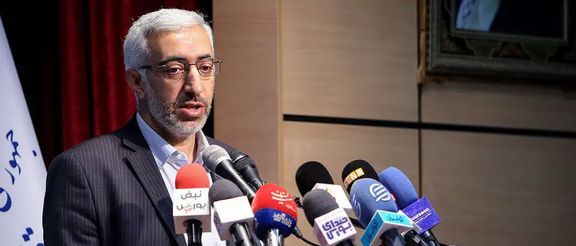
Majid Eshghi, Iran’s Securities and Exchange Organization

Majid Eshghi, head of Iran’s Securities and Exchange Organization, has officially stepped down following the public outcry over the revelation of billion-rial loans granted to him and several board members at low interest rates.

The resignation came after Shargh daily, a pro-reform newspaper in Tehran, exposed the personal loans, totaling 105 billion rials ($175,000), sparking widespread outrage.

These officials, appointed during President Ebrahim Raisi’s tenure, approved the loans in the final days of his government, bypassing orders from acting president Mohammad Mokhber and president-elect Masoud Pezeshkian. Experts warn that this move undermines investor confidence and further destabilizes Iran’s struggling capital market.

Eshghi personally received the largest share of the loans—27 billion rials ($45,000)—with a lenient 4% interest rate and a 10-year repayment plan. To put this into perspective, an ordinary Iranian worker earns just $200 a month, highlighting the extreme disparity in access to financial resources.

Iran’s exchange market headquarters in Tehran ( Undated)
100%
Iran’s exchange market headquarters in Tehran

The loans, initially justified by Eshghi as being "in accordance with laws and regulations" approved by the Supreme Council of the Stock Exchange, have been met with skepticism. Eshghi defended the decision, stating, “The claim that the board of directors approved loans for themselves is a big lie." He argued that the council is responsible for determining board salaries and benefits, and the loan amounts were based on official resolutions.

Despite these defenses, critics were not convinced. The scandal has been dubbed the "Eshghi Loan" and sparked backlash across political lines. Conservative political activist Mohammad Mohajeri called out the government’s audacity, stating, “Not only astronomical loans, but also astronomical audacity; this is what corruption did to the Raisi administration!"

Alireza Salimi, a member of the Iranian Parliament, responded on the social network X, writing: "I once mentioned in parliament that Mr. Eshghi is running the stock exchange based on personal whims. He sent a legion of reporters to attack me to whitewash his performance."

Salimi added, "Now it turns out Eshqi has indeed been taking billions in low-interest loans for himself."

One user on X shared a photo of the Tehran Stock Exchange board and commented: "They ask why the stock market is always in the red. Well, maybe if they gave fewer of these loans to board members, the market might turn a bit green."

The incident has further fueled criticism of Iran's broader financial system, which is already under fire for granting exorbitant loans to bank employees and subsidiaries. A recent report by Iran’s Central Bank revealed that in 2023 alone, major banks funneled over 9,100 trillion rials ($1.5 billion) to their own employees and executives, while ordinary citizens struggle to secure basic loans for housing, marriage, or small businesses.

Iran’s Securities and Exchange Organization in Tehran (Undated)
100%
Iran’s Securities and Exchange Organization in Tehran

As Iran’s economy crumbles under the weight of corruption, mismanagement and sanctions, the elite continue to enrich themselves, leaving ordinary citizens to bear the burden of inflation, poverty, and unemployment. According to observers, Eshghi’s resignation, while symbolic, may do little to restore public trust in a system marred by “kleptocracy”.

This is not the first instance of Iranian officials abusing their positions or embezzling public funds. In many cases, there has been no follow-up or report on whether they were made to return their illicit gains. Similarly, in this latest case, despite widespread criticism, there has been no discussion of requiring them to repay the loan if it was unlawfully allocated.

Most Viewed

Iran negotiators ordered to return after internal rift over Islamabad talks
1
EXCLUSIVE

Iran negotiators ordered to return after internal rift over Islamabad talks

2
ANALYSIS

US blockade enters murky phase as tankers spoof signals and buyers hesitate

3

US tightens financial squeeze on Iran, warns banks over oil money flows

4
INSIGHT

Ideology may be fading in Iran, but not in Kashmir's ‘Mini Iran'

5
INSIGHT

Hardliners push Hormuz ‘red line’ as US blockade tests Iran’s leverage

Banner
Banner

Spotlight

  • Hardliners push Hormuz ‘red line’ as US blockade tests Iran’s leverage
    INSIGHT

    Hardliners push Hormuz ‘red line’ as US blockade tests Iran’s leverage

  • Ideology may be fading in Iran, but not in Kashmir's ‘Mini Iran'
    INSIGHT

    Ideology may be fading in Iran, but not in Kashmir's ‘Mini Iran'

  • War damage amounts to $3,000 per Iranian, with blockade set to add to losses
    INSIGHT

    War damage amounts to $3,000 per Iranian, with blockade set to add to losses

  • Why the $100 billion Hormuz toll revenue is a myth
    ANALYSIS

    Why the $100 billion Hormuz toll revenue is a myth

  • US blockade targets Iran oil boom amid regional disruption
    ANALYSIS

    US blockade targets Iran oil boom amid regional disruption

  • Iran's digital economy battered by prolonged blackout
    INSIGHT

    Iran's digital economy battered by prolonged blackout

•
•
•

More Stories

Holiday photos that garnered 40 million views on Persian X

Sep 7, 2024, 14:50 GMT+1
•
Maryam Sinaiee

A tweet from a young Iranian woman sharing images of her designer birthday gifts during a family trip to Switzerland has sparked backlash against the country's rich elite amid a dire economic depression.

A comment on the images went viral, garnering 40 million views, and quickly became an excuse for thousands of Iranians living under the country's darkest economic times to share childhood photos, pairing them with dark humor in a bid to mock the original tweet.

“Stop it you Iranians, a trip [to Europe] is nothing so special. Everyone’s been at least once to Europe as a child,” the comment protested to someone who quoted the original tweet and sarcastically said that only rich people should have children, not those who can’t even afford to buy an ice cream for their kids, a reflection of the challenges facing families in Iran.

The viral comment has been viewed nearly forty million times since August 28 and broken the record of views of any most-viewed Persian language tweet by at least 30 million more views. The original tweet’s views were under 750,000 during the same time.

“The number of this tweet’s views surpassed the total of [Masoud] Pezeshkian and [Saeed] Jalili’s votes [in the presidential elections,” a netizen posted on X.

Caption: A trip to Langjökull glacier in Iceland, one of the largest and most beautiful natural glaciers of Europe

Over 70 percent of Iranians have never traveled abroad according to Ali Mohammadzadeh who was involved in a survey by Iran's Ministry of Culture and Islamic Guidance in 2023.

Caption: Europe is a joke! On a spaceship minutes before travelling to Mars.

In response to those who accused her of “showing off”, Saba, the original tweet's author, explained that she has lived in Germany since childhood and had not meant to show off.

Most of the childhood photos other Twitterati posted showed them as children of very ordinary families in Iran in the 1980s and 90s during imaginary trips abroad.

Caption: Modeling for Gucci in Madagascar with three friends I met during my European trip

Some Iranian journalists also joined in the rich bashing. “1989, Utrecht, Netherlands. If I look angry it’s because of hearing the news of the mess [Mikhail] Gorbachev had made,” Iranian journalist and blogger Foad Shams captioned the photo that showed him as a frowning little boy in a valley of yellow flowers in Iran.

“Racing, Britain’s Grand National, Liverpool, 1975,” expatriate Iranian journalist Mehrdad Farahmand’s caption to the photo of a barefoot little boy on a donkey read.

Caption: Me and my French playmates in a village in Normandy, late 1980s.

Many netizens commented that the genre of hilarious childhood photos on Twitter showed the resilience of Iranians who display such a sense of humor despite the difficulties that they experience in life while others said the tweets evoked a sense of togetherness and nostalgia besides being fun.

A recent report revealed that almost one in every three Iranians is currently living below the poverty line as a result of extreme inflation in the past five years.

Another study by the Parliament Research Center found that families in Iran are struggling as the country's minimum wage fails to meet the poverty line. The report, which analyzed poverty trends from March 2022 to March 2023, has underscored a disparity between the minimum wage and the poverty threshold in Iran's provinces.

Incomes are inadequate to cover the living expenses for a family of three the study said.

IRGC arrest 12 Afghans amid intensified crackdown on migrants

Sep 7, 2024, 12:05 GMT+1
•
Azadeh Akbari

Twelve Afghan nationals were arrested on Friday in southwestern Iran, accused of attempting to "abduct several children and teenagers," according to a statement from Iran's Revolutionary Guard Corps (IRGC).

The arrests were conducted by local security forces in collaboration with IRGC during a "surprise operation" also involving the intelligence ministry as reported by the IRGC-affiliated Tasnim News Agency. Following their detention, the suspects, allegedly armed with knives, were handed over to judicial authorities for further legal proceedings.

The IRGC’s history of using trumped-up charges to detain vulnerable populations raises concerns about the legitimacy of these arrests and the broader human rights implications on marginalized Afghan communities.

The arrests come against the backdrop of Iran's intensified efforts to reduce its burgeoning Afghan immigrant population. The Iranian Parliament recently proposed a plan to decrease the number of foreign nationals by 10 percent annually. Although the legislation does not specify any particular nationality, it is widely interpreted as targeting Afghan migrants, who constitute a significant portion of Iran's foreign population. According to a report by state-affiliated ISNA, the proposed policy includes stringent limitations on residence and employment for foreign nationals, with the Ministry of Interior tasked with ensuring compliance and overseeing the population reduction.

Since the Taliban's takeover of Afghanistan in 2021, millions of Afghans have flooded into Iran, exacerbating the country’s own economic crisis and straining its already inadequate education, healthcare, and housing systems. The Afghan population has reportedly surged from 2.5 million to as high as 10 million in just three years. This influx has sparked public anger, with accusations that the Iranian government allows this migration to advance its own agenda, possibly recruiting Afghan fighters, a tactic Tehran has previously employed in Syria for military purposes.

Additionally, these actions reinforce the IRGC’s influence within the Iranian government and its ability to enforce stringent policies under the leadership of the new President Masoud Pezeshkian who during his presidential candidacy campaign in June had promised to seal the borders with Afghanistan to prevent the influx of migrants into Iran.

Recently, there have been reports of mass arbitrary arrests of Afghan nationals, with many Afghan migrants reporting harassment, even when they possess legal residency documents.

Amnesty International has previously raised alarm about Afghan nationals being “routinely arbitrarily detained” in Iran and “subjected to torture and other ill-treatment.”

Last month, the rights organization Hengaw issued a warning about the escalating government and societal racism toward Afghan migrants in Iran, describing the situation as "catastrophic."

Given the current political climate in Iran, where Afghan migrants face increasing scrutiny and the government seeks to reduce their presence, the IRGC’s involvement may reflect its intent to justify its actions and strengthen public support by framing these operations as necessary for protecting social stability—whether the threats are real or fabricated.

Should we be worried about Iran's missiles and nuclear ambitions?

Sep 7, 2024, 11:30 GMT+1
•
Negar Mojtahedi

Iran has reportedly supplied missiles to Russia for its war in Ukraine, defying Western opposition. This development coincides with Tehran’s increasing proximity to becoming a nuclear power, raising further global concerns

This comes as a new report by the Associated Press questions just how accurate Iran’s long-valued missile program is, raising doubts about the abilities of Iran’s missile arsenal.

The report by the James Martin Center for Nonproliferation Studies has not been posted online yet and was shared exclusively with the AP. Iran International reached out to the center’s analysts who were not able to provide an interview.

Farzin Nadimi, a Senior Fellow at the Washington Institute, specializing in the security and defense affairs of Iran and the greater region, and Jay Solomon, an investigative reporter with The Free Press, joined Iran International’s English podcast, ‘Eye for Iran’ to provide insight into the nature of Iran’s missile program and how it relates to getting closer to a nuclear bomb.

To analyze the precision of Iran’s missile program, Nadimi, said we need to look at the whole picture. Sometimes it can be a failure like many Iranian missiles failing to launch and crashing before their intended target, but other times it can be successful and deadly.

Analysts at the non-proliferation center studied the Islamic Republic’s strike on the Nevatim Air Base in Israel with what was believed to be its Emad missile and assumed that Iran was targeting Israeli F-35I fighter jet hangers. They measured the distance between the hangars and the impact zones of the missiles, concluding an accuracy range of 1.2 kilometers, which is far less than the advertised.

“At least since 2017, Iran has been using ballistic missiles attacking neighboring countries with a series of solid propellant missiles fired at targets in Syria and Iraq and on several occasions, they were very accurate. In fact, in 2018 they managed to strike the very room in a certain building in Iraqi Kurdistan where a group of dissident Iranian Kurds were meeting and they managed to kill and injure several of the dissident Kurdish members,” said Nadimi.

Understanding just how much danger Iran’s missiles can pose is significant.

The Iranian government continues to vow at striking Israel, promising to avenge the killing of Hamas Leader Ismail Haniyeh in Tehran. The Israelis have not claimed responsibility but are believed to be behind it. And as Russia pounds Ukraine with missile attacks, the Wall Streel Journal reports that Iran has sent several short-range ballistic missiles to Russia citing US and European allies. Bloomberg also recently reported an imminent delivery of Iranian ballistic missiles to Russia, citing European allies of Ukraine.

Knowing the accuracy of Iran’s missile arsenal would help determine how much of a hit civilians would take in Ukraine – and the severity of any potential attack on Israel.

Iran's missile capabilities and nuclear ambitions are intricately linked. Ballistic missile defense can complement, but not substitute for, the role of nuclear weapons in deterrence. US officials have said the ease at which Israel and its allies intercepted hundreds of Iranian missiles and drones launched at them in April could propel Iranian authorities to obtain greater military capabilities. 

A recent report by the Foundation for Defense of Democracies (FDD) claims Iran could have a nuclear bomb before the US presidential election. The organization warned that while most US officials monitor Iran’s capacity to enrich uranium to 90%, the Islamic Republic is taking covert steps toward a nuclear weapon.

Iranian government documents, obtained and reviewed by The Free Press, reveal that Tehran is expanding the activities and funding for a Department of Defense unit believed to be at the center of nuclear weapons development.

The organization, known by its Farsi acronym, SPND, has been followed closely by the US, Israel and the United Nations because it's believed to play a key role in covert nuclear weapons research.

“This office has been the focus for a while of this is where the weaponization work has happened,” said Solomon on the Eye for Iran podcast.

Solomon said the expansion of SPND would be in an honor of a nuclear scientist, Mohsen Fakhrizadeh, who was allegedly the head of Iran’s nuclear weapons program. Fakhrizadeh was killed near Tehran in 2020 allegedly with a remote-controlled machine gun.

After his death, the government said Fakhrizadeh's department would have virtually unlimited funding. "And if you look at these three pillars of Iran's program, the missiles that we'll be talking about, the fissile material, and then actual weaponization work, the fact that SPND is now being ramped up is very troubling," said Solomon.

For more on just how accurate Iran's ballistic missiles are and how it relates to Iran getting closer to becoming a nuclear power, watch the full episode on YouTube or listen on Spotify, Apple, Castbox, or Amazon.

Pezeshkian’s economic 'surgery': Will it heal or hurt Iran?

Sep 7, 2024, 09:55 GMT+1
•
Majid Mohammadi

This week, Iran's new president, Masoud Pezeshkian, pledged an "economic surgery" to address the nation’s worsening crisis. With millions of impoverished citizens expecting relief, he faces mounting pressure to deliver reforms.

"If people know what is in their interest, they will leave themselves in the hands of an expert surgeon…Naturally, we have to have surgeries in many areas to get the country out of this situation," Pezeshkian said. He emphasized that people must be brought onboard of any reforms and must agree with government actions.

Pezeshkian and other Islamic Republic leaders recognize the political risks of a major economic "surgery," which could cause immediate hardship for citizens before showing benefits. However, Pezeshkian is banking on two factors. First, cooperation from all regime factions: "If we want to do surgery, we must join hands with all politicians and officials," he said, a strategy that helped secure parliamentary approval for his cabinet. Second, he hopes the economic pain will not impact a large portion of the population, emphasizing the need to protect vulnerable groups.

The key question is what kind of "surgery" Pezeshkian envisions to pull the government out of its deepening economic crisis. To answer this, we must first assess the current crises. By mid-2024, the Iranian government faces six major socio-economic challenges, each of which has the potential to trigger security risks.

1. Energy crisis: Iran faces a growing gap between energy production and consumption. Electricity demand exceeds supply by 10,000 megawatts, leading to power outages of up to 8 hours in some areas, including industries. Gasoline consumption is 10 to 12 million liters higher than production, forcing the government to import fuel at a cost of $4 to $8 billion annually. Additionally, natural gas shortages result in winter outages, highlighting the urgent need for energy sector reforms.

2. Government budget deficit: A 50% budget deficit crisis, led to money printing in the past 6 years and over 40% annual inflation.

3. Crisis in the banking system: Chronic issues like the government’s budget deficit, excessive borrowing, high levels of bank debt, sanctions, and misaligned credit policies plague Iran’s banking system. Many banks are burdened with debts that exceed their assets, creating a severe financial imbalance. These systemic problems contribute to instability, making the banking sector a significant weak point in the country’s economy.

4. Environment - Iran faces severe environmental crises, including water resource depletion, soil erosion, and air pollution, which have led to the depopulation of half of the country’s villages. Urban and agricultural land subsidence, critical water shortages in many provinces, and the drying up of lakes and rivers have compounded the problem. These issues have pushed water availability to critical levels, resulting in the collapse of many farming operations and the widespread bankruptcy of farmers, further destabilizing the country’s rural economy.

5. Pension fund crisis: Iran's pension funds are effectively bankrupt. The National Pension Fund currently covers only 4% of retirees' salaries, leaving the government to cover the remaining 96%, placing immense pressure on public finances.

6. Employment crisis: With 24 million employed out of a working-age population of 65 million, the government’s unemployment figures appear unreliable. After accounting for students and conscripts, about 55 million are eligible to work, meaning roughly 55% of the population is outside the labor market, signaling a severe employment gap.

The Pezeshkian administration does not plan to address the third to sixth crises and lacks the capacity to do so. However, to tackle the energy crisis and budget deficit (and, by extension, inflation), Pezeshkian proposes removing energy and wheat subsidies and reallocating funds to the government budget and low-income groups, who now make up around 70% of the population. He believes that by increasing energy costs, consumption will decrease, reducing gasoline imports and bread waste. However, similar efforts by previous administrations failed to yield these results.

Pezeshkian has few options left. The Rouhani and Raisi administrations already pushed taxes to the market's capacity, and any further increases risk igniting widespread strikes.

The only viable option left for the current administration is to raise the prices of bread and energy, particularly gasoline, which constitute a large portion of the subsidies. This move comes despite the deadly consequences of the 2019 gasoline price hike, which led to over 1,500 deaths. However, the likelihood of a similar gasoline price surge as seen in 2019 is very small. Pezeshkian faces difficult choices, as further tax increases would likely provoke strikes, leaving subsidy cuts as the only remaining path.

The authorities may consider several approaches to raising gasoline prices, but regardless of the approach, raising gasoline prices will have widespread economic consequences, affecting the cost of nearly everything and significantly driving up inflation, which poses a substantial challenge for the government.

As seen during Rafsanjani's economic adjustments in the 1990s and Ahmadinejad’s energy subsidy cuts, such "economic surgeries" in the Islamic Republic have historically worsened poverty without addressing structural issues. Institutionalized corruption and lack of transparency remain major obstacles to meaningful reform. These policies have consistently led to widespread public unrest, with protests erupting across dozens of cities in the 1990s and hundreds of cities in the 2010s. The risk of repeating these outcomes remains high if similar measures are pursued without structural changes.
Iran ‘more active than ever’ in attempts to sway US voters

Sep 7, 2024, 05:52 GMT+1

Iran is doing more than ever to influence American voters in the run-up to the November elections, a senior US intelligence official said on Friday, in the latest warning about potential foreign influence in US politics.

In recent months, US officials, cybersecurity experts, and global tech corporations like Microsoft and Meta have reported Iranian-linked attempts to hack American individuals and organizations with the specific aim to “stoke discord and erode trust” in the US institutions.

On Friday, a senior US intelligence official once again mentioned Iran along with Russia and China as actors attempting to sway the November 2024 presidential election, saying that Tehran has stepped up its involvement compared to previous years.

US intelligence agencies have issued warnings to those targeted by foreign influence campaigns, the American official said.

"Pro-Iran" websites

In a report released on Friday, the Foundation for Defense of Democracies (FDD) named 19 websites as part of a "pro-Iran" network aimed at destabilizing the US political system. The report did not explicitly link the sites to the Iranian government but urged US authorities to shut down the sites with the cooperation of allied countries where the websites may be hosted.

The FDD also recommended further investigations to identify Iranian actors behind the influence campaign, proposing sanctions or legal action as necessary.

Among the websites flagged by the FDD, two are highlighted for their audience reach: Afro Majority and Not Our War. The former, FDD says, targets African American communities, with content hostile to former President Donald Trump and supportive of Vice President Kamala Harris. The latter has focused on US veterans, criticizing both Trump and current President Joe Biden, promoting a narrative that undermines trust in the US, according to FDD.

Examples include a post on Not Our War headlined "The Bitter Choice: Biden vs. Trump and the Illusion of Democracy in the US" and a post on Afro Majority praising Iran’s Supreme Leader Ali Khamenei for his backing of anti-Israel protests.

The scope of Iran's activities extends beyond disinformation. In yet another recent report, Microsoft and Google warned about attempts to breach U.S. presidential campaigns in the lead-up to the November election.

Last month, Meta (formerly Facebood) said it had thwarted attempts by Iranian hackers to compromise the WhatsApp accounts of US officials connected to Joe Biden and Donald Trump. The hackers allegedly posed as technical support representatives from companies like Google and Microsoft to gain unauthorized access. Meta said it had quickly intervened, blocking the accounts before any significant breaches occurred.

Some experts have warned that foreign actors, including Iran, Russia, and China, are increasingly sophisticated in their attempts to influence American voters, even inciting violence against political figures to create chaos and undermine the integrity of the upcoming elections.







