• العربية
  • فارسی
Brand
  • Iran Insight
  • Politics
  • Economy
  • Analysis
  • Special Report
  • Opinion
  • Podcast
  • Iran Insight
  • Politics
  • Economy
  • Analysis
  • Special Report
  • Opinion
  • Podcast
  • Theme
  • Language
    • العربية
    • فارسی
  • Iran Insight
  • Politics
  • Economy
  • Analysis
  • Special Report
  • Opinion
  • Podcast
All rights reserved for Volant Media UK Limited
volant media logo

Pakistan Designates Iran-Backed Shiite Militant Group Zainebiyoun
Iran International Newsroom
Apr 11, 2024, 17:39 GMT+1Updated: 17:21 GMT+0
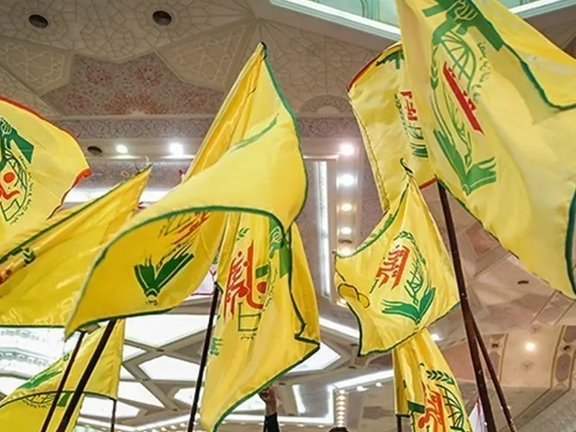
Flags of the Zainebiyoun Brigade, also known as Liwa Zainebiyoun

On Thursday, Islamabad designated the Zainebiyoun Brigade, an Iran-backed Shiite militant group, as a terrorist organization.

Formed by the IRGC after the Syrian civil war began, the Zainebiyoun Brigade, also known as Liwa Zainebiyoun, mobilized Pakistani Shiite militants who were then sent to fight forces opposed to Syrian ruler Bashar al-Assad, a close ally of Iran and Russia.

The Iranian regime has been an active actor in the Syrian conflict which started in 2013 and has so far claimed the lives of around 500,000 people, at least 60 percent of whom were civilians.

To help maintain Assad’s rule, Iran dispatched its other proxies to Syria as well, including Hezbollah, Iraq’s Nujaba Movement, and also the Fatemiyoun Division, which was composed of Afghan Shiite fighters.

Iranian officials and state media frequently credit former IRGC commander Qassem Soleimani as the man behind launching, training and funding all these militant groups. Soleimani, who served as the Iranian regime’s top military and intelligence operator in the Middle East, was killed in a US drone strike in January 2020 in Iraq’s capital, Baghdad.

Observers contend that Tehran’s attempts to mobilize Shiite militant groups, such as Zainebiyoun, and their active participation in the Syrian war fanned the flames of sectarian violence in the Middle East, provoking Sunni communities to employ a similar strategy in the region.

This photo shows a funeral procession of pro Iran militia members killed in Syria, and buried in Qom, Iran. The flag of Zainabiyoun Brigade, which is made up of Pakistani nationals, is in the foreground May 25, 2017.
100%
Photo shows a funeral procession of pro-Iran militia members killed in Syria, and buried in Qom, Iran. The flag of Zainabiyoun Brigade, which is made up of Pakistani nationals, is in the foreground May 25, 2017.

Pakistan’s decision to designate the Zainebiyoun Brigade threatens to further strain ties between Tehran and Islamabad. The two countries witnessed unprecedented tensions in January when the IRGC attacked positions in Pakistan in what it called an attempt to target terrorists. Pakistan retaliated by attacking locations in southeastern Iran.

Days after the mutual attacks, Pakistan's Counter-Terrorism Department (CTD) announced it arrested a suspect in the 2019 assassination attempt on a top Pakistani cleric, saying the suspect was a "trained terrorist" who belonged to the Zainebiyoun Brigade.

Pakistan’s CTD added that Syed Mohammad Mehdi was arrested in an operation at a bazaar in Karachi, accusing him of targeting clerics in the provincial capital and of working for Iranian intelligence.

The insurgent Sunni Baluch group known as Jaish al-Adl (Army of Justice) has been a source of tension between Iran and its nuclear neighbor, Pakistan, for years, labeled as a terrorist organization by Iran, Pakistan, and the United States.

Iranian officials have on several occasions in the past decade, including in 2019, complained that Islamabad has taken no action against the members of Jaish al-Adl finding refuge in its territory despite Iran's provision of relevant information, including locations of the militants’ hideouts.

A militant group advocating for enhanced rights and improved living conditions for the Baluch ethnic minority, Jaish al-Adl has recently intensified its operations against Iranian security forces in Sistan and Baluchistan, an economically challenged province in southeastern Iran adjacent to Afghanistan and Pakistan and home to a substantial Sunni community.

On Tuesday, six law enforcement officers were killed by Jaish al-Adl militants during an ambush on police vehicles along the Sib and Suran county route. The group also launched simultaneous attacks against military posts in Chabahar and Rask last week, killing 16 police forces.


Most Viewed

Ghalibaf defends Iran-US talks amid hardline backlash
1
INSIGHT

Ghalibaf defends Iran-US talks amid hardline backlash

2
INSIGHT

100 days after carnage: Iran economy reels from war, inflation, unemployment

3
INSIGHT

A nation in limbo: 100 days after the massacre, has the world moved on?

4
ANALYSIS

From instability to influence: Pakistan’s pivotal role in US-Iran diplomacy

5
ANALYSIS

100 days on: why Iran’s January protests spread across social classes

Banner
Banner

Spotlight

  • War-hit homeowners feel abandoned as Iran’s reconstruction aid fades

    War-hit homeowners feel abandoned as Iran’s reconstruction aid fades

  • 100 days on: the anatomy of Iran’s January crackdown
    INSIGHT

    100 days on: the anatomy of Iran’s January crackdown

  • Ghalibaf defends Iran-US talks amid hardline backlash
    INSIGHT

    Ghalibaf defends Iran-US talks amid hardline backlash

  • 100 days on: why Iran’s January protests spread across social classes
    ANALYSIS

    100 days on: why Iran’s January protests spread across social classes

  • From instability to influence: Pakistan’s pivotal role in US-Iran diplomacy
    ANALYSIS

    From instability to influence: Pakistan’s pivotal role in US-Iran diplomacy

  • A nation in limbo: 100 days after the massacre, has the world moved on?
    INSIGHT

    A nation in limbo: 100 days after the massacre, has the world moved on?

•
•
•

More Stories

German FM Urges Iranian Restraint In Call With FM

Apr 11, 2024, 17:29 GMT+1

German Foreign Minister Annalena Baerbock called for de-escalation in the region amid an Iran-led proxy war, in a call with his Iranian counterpart.

“No one can have an interest in a wider regional escalation. We urge all actors in the region to act responsibly and exercise maximum restraint,” German Foreign Ministry wrote on X following the phone call with Hossein Amir-Abdollahian on Thursday.

Tensions have risen between Iran and Israel, two archenemies, since Israel’s deadly April 1 strike on the Iranian embassy compound in Damascus and subsequently, Tehran’s daily threats to retaliate. Two IRGC commanders were killed along with other key personnel.

On Wednesday, the foreign ministers of Saudi Arabia, Qatar, Iraq and UAE contacted their Iranian counterpart in an attempt to persuade Tehran to avoid further tensions with Israel.

The mediation of the four Arab countries was conducted at the request of Brett McGurk, the White House Middle East envoy.

Meanwhile, Russia warned all sides against wider tensions in the region.

"Right now it's very important for everyone to maintain restraint so as not to lead to a complete destabilization of the situation in the region, which doesn't exactly shine with stability and predictability," Kremlin spokesperson Dmitry Peskov stressed.

Earlier in the day, Russia told its citizens not to travel to the Middle East amid rising tensions.

Bloomberg reported on Wednesday that a major missile or drone attack by Iran or its proxies on Israel seems imminent in the coming days.

On Thursday, Israeli Prime Minister Benjamin Netanyahu said the country is ready for all scenarios in the region: "Whoever harms us, we will harm them. We are prepared to meet all of the security needs of the State of Israel, both defensively and offensively.”

Russia Issues Warning Against Travel To Middle East

Apr 11, 2024, 15:40 GMT+1

Russia has advised citizens not to travel to the Middle East as a regional proxy war orchestrated by Iran continues to escalate.

“We strongly recommend that Russian citizens refrain from traveling to the region, especially to Israel, Lebanon and the Palestinian territories, except in cases of extreme necessity,” read the statement issued Thursday by the Russian Foreign Ministry.

In October, Russia issued a similar travel warning after Iran-backed Hamas militants attacked Israel, killing around 1,200 people and abducting at least 250 hostages to the Gaza Strip.

“The tense situation in the Middle East region persists … The situation in the Palestinian-Israeli conflict zone, as well as in the area of the ‘Blue Line’ between Lebanon and Israel, remains unstable,” added Russian Foreign Ministry in its Thursday statement.

The announcement came hours after German airlines Lufthansa suspended flights to and from Tehran for 24 hours amid concerns of a potential military escalation.

Iran has been threatening to retaliate against an Israeli precision missile strike on April 1 that killed two top IRGC generals and five other officers in the Iranian consulate compound in Syrian capital Damascus.

On Wednesday, Iran's Supreme Leader, Ali Khamenei, said that Israel "must be punished and it shall be" for the deadly offensive.

Since the Hamas invasion of Israel, Iran's proxies in Yemen, Syria, Iraq and Lebanon have become embroiled in the proxy war against Israeli and US targets.

Citing unnamed American and Israeli officials, Bloomberg reported on Wednesday that a major missile or drone attack by Iran or its proxies on Israel seems imminent in the coming days.

Meanwhile, Israeli Foreign Minister Israel Katz warned that Israel will respond if Iran attacks Israel from its own soil. "If Iran attacks from its own territory, Israel will respond and attack in Iran," he wrote on X.

Fear Grows Among Iranian Clerics Over Hijab Rebellion

Apr 11, 2024, 14:51 GMT+1
•
Maryam Sinaiee

Recent statements from top clerics and Supreme Leader Ali Khamenei reflect their rising concerns about the weakening of their ideological control due to growing defiance against hijab.

Khamenei and other clerics, who previously dismissed women opposing mandatory hijab as a small minority influenced by "the enemy," are now framing unveiling as a "challenge" and advocating for stricter enforcement of hijab laws.

During a recent address to government officials, Khamenei claimed to have received "reliable reports" of women being paid to unveil, allegedly by "the enemy," to undermine the hijab. He labeled hijab defiance as "an imposed challenge," suggesting it was orchestrated to weaken societal adherence to hijab.

Furthermore, Khamenei stated that "the enemies" aim to revert women's status to pre-Islamic Revolution times when their behavior, attitude, and presence in society were deemed unacceptable.

In his Eid al-Fitr sermon a week later, Khamenei also addressed defiance against Ramadan restrictions for the first time, signaling a broader concern over challenges to Islamic norms and values.

Women at a café in the southern city of Shiraz  (April 2024)
100%
Women at a café in the southern city of Shiraz

“This year I received some reports about deliberate disregard of fasting in some public places. The Islamic Republic certainly does not seek to force people to piety, but it has a responsibility regarding religious norms being broken. Authorities and people should not neglect this and those who do amr-e be marouf va nahy az monkar should carry out their duty,” he said.

Amr-e be marouf va nahy az monkar means calling others to enjoin what is good, such as hijab and fasting, and forbid them from doing what is wrong or sinful. Vigilantes often confront others, sometimes even violently, for hijab and fasting by arguing that they are only carrying out their religious duty.

Defiance of hijab, once only noticeable in larger cities such as Tehran, has now spread even to smaller and more conservative cities and towns including the religious city of Qom, the home of the majority of the country’s seminaries.

Defiance of hijab has become a symbol of defying the Islamic government in the perceptions of Iranians. This is perhaps the main reason for the discomfort clerics feel about the phenomenon.

In his Monday lecture to seminarians, the conservative Ayatollah Mohammad-Javad Fazel-Lankarani criticized the “cultural authorities” for “not doing anything in the past forty years [about hijab]” while alluding to the spread of unveiling to Qom. He, too, accused “the enemy” of seeking to restore the circumstances in the society to before the Islamic Revolution when hijab was a personal choice.

“Can’t we even reform the city of Qom? One regrets getting out of the house because of the things one sees,” he asked, referring to women’s manifest defiance of compulsory hijab.

A girl on a street in the religious city of Mashhad (undated)
100%
A girl on a street in the religious city of Mashhad

Until a couple of decades ago, even women who covered their hair and wore loose, long tunics were in minority in the very conservative city of Qom where the long black veil called chador was the dominant form of hijab. Many women now only very partially cover their hair, wear heavy makeup and tight-fitting clothes, or even drop their headscarves on their shoulders to much chagrin of clerics and political hardliners of the conservative city.

Qom is Iran's second most important holy city after Mashhad, the country’s second-largest city and home to the shrine of the eight Shia Imam, where the spread of unveiling of women has been even more noticeable.

In his Eid al-Fitr sermon Wednesday, Mashhad’s ultra-hardliner imam, Ahmad Alamolhoda, also referred to the “current challenge over hijab” which he called “a puppet movement” that seeks to destroy Islam.

“The women who unveil and those who do not fully comply with the rules “should be aware that they are collaborating with the enemy who has not only targeted Islam but also the pure land of this country,” he said.

Tehran Threatens US Against Defending Israel In Case Of Iran’s Reprisal

Apr 11, 2024, 14:40 GMT+1
•
Iran International Newsroom

Iran has threatened to target US forces in the Middle East if Washington helps Israel defend itself against any retaliatory Iranian action after its deadly airstrike in Damascus.

According to The Intercept’s report, “on Monday night, Iran conveyed to the Biden administration that if it involved itself in defending Israel were Tehran to undertake a retaliatory strike, it would consider the United States a viable target as well.”

Israel targeted Iran's consulate building in Damascus on April 1, killing 7 IRGC forces, including Mohammad Reza Zahedi, the highest-ranking commander of the Iranian Revolutionary Guards Quds Force (IRGC-QF) in Lebanon and Syria. Since then, senior Iranian officials have vowed revenge against Israel.

The US National Security Council held a meeting on Tuesday to discuss Tehran’s threats, added The Intercept which claims to have reviewed notes of the meeting.

US officials have time and again stressed that Washington had no part in Israel’s strike on Iran’s consulate and seeks no further escalations in the region. However, President Joe Biden has vowed Washington’s “ironclad” support for Israel in the case of Iran’s reprisals.

"We're going to do all we can to protect Israel's security," he stressed on Wednesday.

On Monday, Iran’s Foreign Minister Hossein Amir-Abdollahian claimed that the US had given Israel the green light to strike Iran’s consulate in Damascus.

While failing to provide any evidence for the allegation, Amir-Abdollahian said that Israeli Prime Minister Benjamin Netanyahu “would not have been able to do such a thing without the US green light.”

Iranian Activists Protest Islamic Scholar's Arrest For Criticizing Supreme Leader

Apr 11, 2024, 14:36 GMT+1

In response to the arrest of a Islamic scholar Sedigheh Vasmaghi, imprisoned for criticizing compulsory hijab laws and Iran's Supreme Leader, 320 Iranian political and civil activists have campaigned for her release.

The activists called for the immediate release of all political and ideological prisoners in Iran, particularly Vasmaghi who “has shown over the past four decades her care and concern for both Iran and Islam.”

The campaigners pointed out the reversal of the promises made in 1979 on the founding of the Islamic Republic, when it had promised freedom and justice at its inception.

Security forces arrested Vasmaghi, 63, on March 16 and subsequently transferred her to the notorious Evin Prison in Tehran. The arrest came after the scholar described Supreme Leader Ali Khamenei as a dictator and the ruling system as oppressive, slamming the compulsory hijab laws which have been at the heart of the 2022 Women, Life, Freedom movement.

She was arrested while attending the funeral of 16-year-old Armita Geravand, killed by hijab-enforcement agents in the Tehran metro last year.

Vasmaghi suffers from ill health and her condition has deteriorated since her arrest. Iran’s judiciary, however, has denied her sufficient medical treatment and has repeatedly denied her hospital treatment.





