• العربية
  • فارسی
Brand
  • Iran Insight
  • Politics
  • Economy
  • Analysis
  • Special Report
  • Opinion
  • Podcast
  • Iran Insight
  • Politics
  • Economy
  • Analysis
  • Special Report
  • Opinion
  • Podcast
  • Theme
  • Language
    • العربية
    • فارسی
  • Iran Insight
  • Politics
  • Economy
  • Analysis
  • Special Report
  • Opinion
  • Podcast
All rights reserved for Volant Media UK Limited
volant media logo

Iran's Faces More Economic Problems In Coming Months

Mardo Soghom
Mardo Soghom

Iran International

Nov 7, 2022, 17:26 GMT+0Updated: 17:42 GMT+1
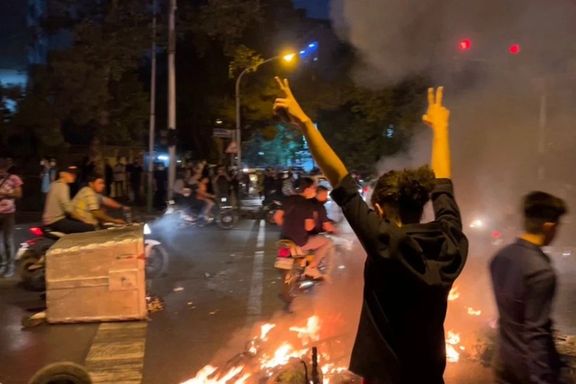
A scene from protests in Iran in October

As antigovernment protests continue in Iran, the government will face a multitude of additional economic problems and energy crisis in the coming months.

The most urgent problem is a fast-falling national currency that began to nosedive in early November, dropping to historic lows almost on daily basis. The US dollar has risen from 295,000 rials to 365,000 in two months. But that is just an early signal of what is to come.

The retail sector is having its own multiple problems. First, during protests people are buying less, as recently the garment industry complained of very low sales to consumers who are in no mood to go shopping.

Second, a draconian denial of access to the Internet by the government, to contain the protests, has badly hurt hundreds of thousands of small businesses dependent on sales through social media.

Third, Iranian consumers have begun boycotting large retailers and businesses believed to be controlled by the Revolutionary Guard and other regime entities, as another tool in their civil disobedience movement.

Digikala, "Iran's Amazon" faces a public boycott over protests
100%
Digikala, "Iran's Amazon" faces a public boycott over protests

Digikala, Iran’s Amazon, and Mihan dairy and food company have been targeted by activists on social media, who tell the people not to enrich the government’s suppression machine. In a matter of days, there are signs of lower sales by both companies, which sponsored appeals from their workers who asked the public not to harm their livelihoods.

Fourth, and the perhaps the most predictable is a looming shortage of natural gas in the winter, as pressure in Iran’s South Pars maritime fields in the Persian Gulf are gradually falling. The country has failed to secure capital and western technology to improve drilling and pumping system to boost production.

Iran has the world’s second largest natural gas reserves after Russia with almost 30 trillion cubic meters of potential supply, but it needs to invest $50 billion and use special technology only a few western firms can provide to keep its level of daily production at around 700 million cubic meters.

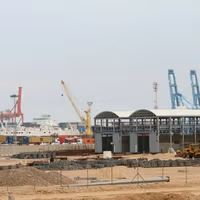
A production platform in Iran's South Pars gas fields
100%
A production platform in Iran's South Pars gas fields

The former head of the national gas company, Hamidreza Eraghi told ILNA news website in Tehran on November 7, that this winter the country might be forced to buy gas from Turkmenistan to be able to supply electricity and keep industries in business. Already, in the past few years as consumption has risen, there have been both shortages of electricity and gas. The government sells energy at ridiculously cheap rates and consumers have no incentive to save, with usage fast increasing each year.

There are also ongoing strikes in the oil and gas sectors in solidarity with nationwide protests, which will further hurt production.

What Iran needs most is imported technology for horizontal drilling for gas, Eraghi said, and this winter imports should increase to prevent an industrial shutdown.

The government has periodically highlighted the need to boost prices to lower consumption, but that would anger a public that has become impoverished in the past four years after the United States imposed sanctions on Iran’s oil exports. Already, with nationwide antigovernment protests raging, the government has no way to increase energy prices.

Ordinary Iranians have fallen victim to high inflation rate for years. No one knows exactly what the current annual inflation rate is, but if one would believe the government, it is at least 40 percent, with food prices having risen by 100 percent in the past 12 months. The falling national currency will accelerate inflation as Iran imports a significant part of its food and raw materials.

With a convergence of so many negative economic developments there is very little the regime can do to stop the protesters, who openly say they want to get rid of the Islamic Republic, not only for its economic mismanagement but also for its draconian denial of social freedoms.


Most Viewed

Iran negotiators ordered to return after internal rift over Islamabad talks
1
EXCLUSIVE

Iran negotiators ordered to return after internal rift over Islamabad talks

2
ANALYSIS

US blockade enters murky phase as tankers spoof signals and buyers hesitate

3
ANALYSIS

Why the $100 billion Hormuz toll revenue is a myth

4

US tightens financial squeeze on Iran, warns banks over oil money flows

5
INSIGHT

Ideology may be fading in Iran, but not in Kashmir's ‘Mini Iran'

Banner
Banner

Spotlight

  • Hardliners push Hormuz ‘red line’ as US blockade tests Iran’s leverage
    INSIGHT

    Hardliners push Hormuz ‘red line’ as US blockade tests Iran’s leverage

  • Ideology may be fading in Iran, but not in Kashmir's ‘Mini Iran'
    INSIGHT

    Ideology may be fading in Iran, but not in Kashmir's ‘Mini Iran'

  • War damage amounts to $3,000 per Iranian, with blockade set to add to losses
    INSIGHT

    War damage amounts to $3,000 per Iranian, with blockade set to add to losses

  • Why the $100 billion Hormuz toll revenue is a myth
    ANALYSIS

    Why the $100 billion Hormuz toll revenue is a myth

  • US blockade targets Iran oil boom amid regional disruption
    ANALYSIS

    US blockade targets Iran oil boom amid regional disruption

  • Iran's digital economy battered by prolonged blackout
    INSIGHT

    Iran's digital economy battered by prolonged blackout

•
•
•

More Stories

Islamic Republic Resorts To Threats To Keep Footballers Out Of Protests

Nov 7, 2022, 15:18 GMT+0
•
Iran International Newsroom

Islamic Republic officials have issued threatening messages to members of its beach football team as well as the United Arab Emirates that recently hosted the Beach Soccer Intercontinental Cup. 

In a short article published Monday by Iran Daily, the official mouthpiece of the government, the Islamic Republic threatened the UAE of consequences over its lack of action to stop spectators who chanted slogans against the Islamic Republic after a match between the Iranian and Emirati national teams in Dubai on Saturday.

Criticizing the UAE police for a lack of confrontation with the people, the paper said that the UAE government’s attitude is “not compatible with good neighborliness.”

It added that “if the country does not react appropriately [against spectators], it must accept the consequences of this anti-Iranian action,” threatening that UAE will soon see “the consequences of this hostile action.”

100%

The Iranian beach football federation also issued a statement to downplay the protest by Iranian spectators, describing them as “unwise and opportunistic.”

The federation also threatened the players of the national squad for their acts of solidarity with the current wave of antigovernment protests, ignited by the death of 22-year-old Mahsa Amini in the hands of the hijab – or ‘morality’ -- police. 

The national team players did not cheer or celebrate after winning the cup following their final victory against Brazil and also refused to sing the national anthem of the Islamic Republic at the beginning of their semifinal match against the UAE. 

100%

During the final, Iranian striker Saeed Piramoun expressed his solidarity with Iranian protesters by miming the hair cutting gesture after scoring a goal, a move that has drawn enormous appreciation by Iranian social media users and renowned footballers alike. His move has also inspired several graffiti and digital art pieces. 

100%
100%

While the national anthem was being played before the match started, Iranian players seemed to have been forced to sing along this time, but the Iranians present at the stadium kept booing until it ended. 

Vowing to punish the players, the Islamic Republic’s federation said according to regulations by world football governing body FIFA, players should avoid "any political act." It said some of the players did not observe "professional ethics." 

Mentioning FIFA’s regulations is unexpected from the Islamic Republic’s authorities who have been ignoring such rules when it comes to allowing women into stadiums or female referees to officiate matches in men’s leagues. 

Iranian President Ebrahim Raisi has expressed concern over possible problems that may happen during the FIFA World Cup scheduled to open later in the month. Earlier in November, he tasked the Foreign Ministry to contact Qatari officials regarding the issue to find ways “to predict and prevent possible problems."

Earlier in the month, FIFA President Gianni Infantino wrote to the World Cup teams asking them to concentrate on soccer in Qatar and not let ideological “battles” be dragged into football fields. “We know football does not live in a vacuum and we are equally aware that there are many challenges and difficulties of a political nature all around the world… [but] at FIFA, we try to respect all opinions and beliefs, without handing out moral lessons to the rest of the world,” Infantino said in his letter.

He wrote the letter in reaction to calls by a group of Iranian sports personalities and lawyers who have requested FIFA to eliminate Islamic Republic’s team from the World Cup. 

Sosha Makani, the ex-goalkeeper of Iran’s national team told Iranians in a video on his Instagram late in October that it is wrong to go to Qatar to watch football matches because the Iranian regime will exploit their presence in stadiums to tell the world they support the Islamic Republic.

Since March, many Iranians have been urging FIFA to ban Team Melli from the World Cup for forcibly barring women from entering stadiums to watch matches. Under FIFA pressure, Iranian authorities started to let in a cherrypicked group of women so they would not face bans and penalties. However, since the start of the current uprising and a lackluster support from the national squad, the calls on FIFA to ban Iran have become stronger.


Iran’s Health Ministry Destroyed Medicines, Supplies Despite Shortages

Nov 7, 2022, 12:10 GMT+0
•
Iran International Newsroom

The Islamic Republic’s authorities have destroyed large amounts of imported medical products without undergoing legal procedures despite dire shortages across Iran.

While there are numerous reports about shortages of medicines and medical products, including basic drugs and IV fluids in recent months, the country’s health ministry has destroyed a huge amount of the imported supplies without the required examination by relevant organizations, said Saheb Hojjati, the head of the Iranian organization in charge of confiscated goods. 

Large amounts of IV fluids were destroyed earlier this year while the country was suffering from severe shortages, he underlined.

Hojjati added that according to law, the Health Ministry and the Standards Organization must test the drugs and their expiration dates to see if they are safe to be used and announce the results in written documents to the Organization for Collection and Sale of State-owned Properties of Iran (OCSSPI), but this procedure is not being followed at the moment. The OCSSPI is affiliated to the Ministry of Economic Affairs and Finance, with its main purpose being the collection, storage, management and sale of properties that by law are under the ownership, possession, custody or management of the government. 

Hojjati added that if the process is accelerated, the OCSSPI can sell the products in the market to the highest bidders. “This is while we are in an economic war situation and all organizations and institutions should help the government and people,” he noted.

Saheb Hojjati, the head of the Organization for Collection and Sale of State-owned Properties of Iran (file photo)
100%
Saheb Hojjati, the head of the Organization for Collection and Sale of State-owned Properties of Iran

According to Hojjati, over 7.8 trillion rials (about $26 million) worth of products, including basic medical and food items such as vegetable oil, sugar and rice, have been destroyed in the last seven months. The Islamic Republic has been claiming that United States sanctions prevent procurement of medicines, while Washington insists that humanitarian aid is exempt from sanctions. Iran has been importing more than $1.5 billion of medicines a year.

The Islamic Republic has been claiming that United States sanctions prevent procurement of medicines, while Washington insists that humanitarian aid is exempt from sanctions. Iran has been importing more than $1.5 billion of medicines a year.

Considering the incessant bemoaning by the Islamic Republic’s officials about the effect of US sanctions on shortages of medicine in the country, not only does the move seem the result of a cumbersome bureaucratic process, but it also strengthens speculations that the government is pleased with psychological effects of the shortages on foreign audiences. 

However, as per the US sanctions, the Islamic Republic is legally allowed to import medicine, agricultural commodities, and medical products. According to a mandate by the US Department of Treasury, it is not necessary to acquire any permit for selling agricultural commodities, medicine, and medical devices to Iranian buyers.

In September, an Iranian lawmaker warned about the failure of the government’s Medicine Assistance Plan to make prices affordable amid high inflation and rising poverty. “Patients, particularly those with rare diseases, have been facing problems since the removal of medicine import subsidies,” Mohammad-Taghi Naghdali, a member of the parliament's judicial and legal committee, said, adding that lawmakers have warned that without allocation of cheap foreign currency to pharmaceutical imports the government's Medicine Assistance Plan is bound to fail.

President Ebrahim Raisi announced in early May that his government had begun the process of removing up to $15 billion import subsidies for basic foods, medicine, and animal feed despite warnings of more inflation and hardship. Raisi also said the government would be paying cash assistance to most Iranians as compensation.

The removal of import subsidies meant that manufacturers would no longer receive cheap dollars from the government to import raw materials to produce medicine.

Hundreds Of Iranian University Professors Urge Release Of Students

Nov 7, 2022, 11:58 GMT+0

Nearly 600 university professors and researchers in Iran have called for the unconditional release of students arrested during current antigovernment protests.

In a statement on Monday, the academics demanded the cancellation of “all anti-civil right decrees against students.”

They described the most important duty of the government as providing “psychological, educational and professional security” for students, which, according to the signatories, has been neglected for a long time “deliberately or due to the incompetence of officials.”

Protests and sit-ins continue at various universities in the second month of the uprising against the Islamic Republic, despite violent repression against students.

“Unfortunately, a significant number of students in educational centers are facing punishments like arrests, academic suspension, ban on entering universities and dormitories, etc., and they and their families have been subjected to physical and mental threats and harassment in an organized and targeted manner,” reads the statement.

These professors also warned that if their demands are not met, they will use all the civil and protest channels to achieve their rights along with their students.

Meanwhile, the Coordination Council of Trade Unions of Iranian Cultural Organizations demanded the unconditional release of Iranian dissident rapper Toomaj Salehi who was arrested on October 30 after publishing songs to support the popular protests.

Regime Insider Warns Of 'Bloody Confrontations’ In Iran

Nov 7, 2022, 09:06 GMT+0
•
Iran International Newsroom

Former government spokesman Ali Rabiei has warned that there might be "bloody confrontations" ahead as Iran's nationwide uprising rages on for seven weeks.

Rabiei, a long-time member of the Islamic Republic's intelligence community, wrote in a commentary in the reformist Etemad newspaper that some officials and political groups have marginalized "moderates" to facilitate Iran's destruction by those who keep creating fault-lines in the Iranian society.

Already, security forces have killed more than 300 protesters according to human rights monitoring groups, among than more than 40 children.

He argued that some "are exerting maximum pressure to disrupt the efforts of mediators between the government and the protesters. He said that there has been a security approach in the government aimed at systematically weakening the civil society and influential reference groups.

Rabiei was obviously referring to Iranian hardliners who attempt to get rid of all their political rivals and to monopolize power within Iran's ultraconservatives. Rabiei pointed out: "The political participation of various political groups and parties was extremely limited in two consecutive elections. As a result, the ballot box lost its function of creating mediators who played as go-betweens among various generations and their demands."

The former government spokesman, an experienced operator, was referring to the elimination of so-called ‘reformists’ from centers of power in the last two years. Since late 1990s the ‘reformists’ were urging rational and relatively moderate policies by the regime, but were gradually pushed aside by hardliners enjoying the support of the Revolutionary Guard and Supreme Leader Ali Khamenei.

Former government spokesman, Ali Rabiei
100%
Former government spokesman, Ali Rabiei

Rabiei said that the government refused to pay attention to warnings about the Iranian society's vulnerabilities. He warned that throughout the course of history the absence of mediation between the government and the people has brought the two face to face in bloody loggerheads. He warned that without the moderates, there will be no way for even minimal understanding between the government and the masses.

Meanwhile, he also pointed out the dangerous situation resulting from the weakening of national media. In series of tweets, reformist commentator Ahmad Zeidabadi also noted the perils of Iranian media losing their role as the point of reference for the nation.

Zeidabadi wrote that Iranian officials have failed to understand that they have lost the "media war" to foreign-based Persian speaking media. He pointed out that Iranians find the state television reliable only when it tells the time. Otherwise, the state TV has said so many lies that its viewers cannot believe anything broadcast as news. Viewers will not believe the state TV even when it makes a point that is absolutely true, said Zeidabadi.

Meanwhile, understanding the need to change this situation, some Iranian officials speak of need for a change. Majles Speaker Mohammad Bagher Ghalibaf has said: "I hope security will be completely restored in the country soon, so that legitimate and necessary changes would begin to establish a new kind of governance in economic, social and political areas within the frameworks of the Islamic Republic." Social media users reminded him that only two weeks agio, he publicly and officially called for harsher measures against the protesters. They told him that the government should first change its behavior if it wants to reduce tensions.

This comes while Rahim Mohammadi, the representative of the Iranian Sociological Association has acknowledged in a speech at the Tehran Bar Association that the current protest ‘movement’ has become a household word and future change in governance will be unavoidable..

He said "The right to protest, non-violent struggle, and holding dialogue for public good" are some of the essential parts of this movement. He said its other characteristic is that Iranians are talking about their common dreams. Mohammadi added that old forms of government in Iran are outdated, and Iranians are currently looking for a new form of government based on their rights, their freedom, and their aspirations.

Tehran Residents Hold Protests Backing Kurdish, Baluch Cities

Nov 6, 2022, 22:38 GMT+0

The nationwide antigovernment protests in Iran continued Sunday with intense clashes in the Kurdish-majority city of Marivan following the death of another young Kurdish woman. 

Following the funeral service for Nasrin Ghaderi -- a PhD candidate in philosophy who died on Saturday after being beaten by security forces with batons during Friday protests in Tehran -- the outraged citizens in the city of Marivan held rallies and chanted slogans against the Islamic Republic’s ruler, Ali Khamenei. Kurdish cities in western Iran have been a hotbed of anti-government protests after Mahsa Amini, who was also Kurdish, was killed by police in mid-September.

Nasrin Ghaderi (file photo)
100%
Nasrin Ghaderi

Until well into the night, the streets of Marivan were scenes of clashes while continuously shots were heard in videos posted on social media, while protesters set fire to tires and city trash cans as their only weapon against government forces. In some videos, people are also seen hurling stones at the city hall. 

People in other Kurdish cities, such as Kermanshah and Sanandaj, were also out in the streets, chanting antigovernment slogans. 

Other cities throughout the country, from the northeastern cities of Mashhad and Sabzevar to the southwestern city of Ahvaz as well as the central city of Esfahan (Isfahan) and capital Tehran were also scenes of protest rallies or clashes between people and security forces. 

In one video from Ahvaz, a young man is seen setting fire to a base of Basij paramilitary forces and fleeing while waving the victory sign. 

Fars news agency, affiliated with Iran’s Revolutionary Guard, said earlier in the day that the IRGC’s Intelligence Organization had identified and dismantled “a terrorist team” backed by a European country in Ahvaz, the capital of the southwestern oil-rich Khuzestan Province.

People in many neighborhoods of the capital also held protest rallies, chanting slogans such as “This is the year of blood, When Seyyed Ali will be gone” and “Death to dictator,” referring to Supreme Leader Ali Khamenei. In a video, people are seen saving one protester from agents who want to arrest him. 

People in Tehran also expressed support for the citizens of Kurdish cities as well as the southeastern province of Sistan and Baluchestan after at least 16 people were killed by security forces on November 4. The provincial capital Zahedan is the city where the bloodiest crackdowns have been taking place since the start of the current wave of protests with security forces frequently using assault rifles to quash the rallies. 

According to Tasnim news, a media outlet with links to the IRGC, protesters in Khash, another city in the province with a high number of casualties – most of them children – fought back with guns and killed a regime agent. 

Sistan and Baluchestan is a Sunni-majority province in predominantly Shiite Iran. Zahedan, close to Iran's southeastern border with Pakistan and Afghanistan, is home to a Baluch people estimated to number up to two million. They have faced discrimination and repression for decades, according to human rights groups.

Schoolgirls during the protests in Zahedan (November 6, 2022)
100%
Schoolgirls during the protests in Zahedan

Molavi Abdolhamid, the religious leader of Iran’s Sunni Baluch population, called for an internationally monitored referendum on Friday, saying by killing and suppression the government cannot push back a nation. Earlier in October he blamed Iran's ruler Ali Khamenei for the Bloody Friday killings September 30 and called for accountability.

The Islamic Republic has killed over 300 including 41 children and 24 women since then during protests. 

Concurrent with the protests on the streets, students at many universities also held protests on Sunday while strikes take place in dozens of industrial centers across the country.