• العربية
  • فارسی
Brand
  • Iran Insight
  • Politics
  • Economy
  • Analysis
  • Special Report
  • Opinion
  • Podcast
  • Iran Insight
  • Politics
  • Economy
  • Analysis
  • Special Report
  • Opinion
  • Podcast
  • Theme
  • Language
    • العربية
    • فارسی
  • Iran Insight
  • Politics
  • Economy
  • Analysis
  • Special Report
  • Opinion
  • Podcast
All rights reserved for Volant Media UK Limited
volant media logo

Iran’s Health Ministry Destroyed Medicines, Supplies Despite Shortages
Iran International Newsroom
Nov 7, 2022, 12:10 GMT+0Updated: 17:44 GMT+1

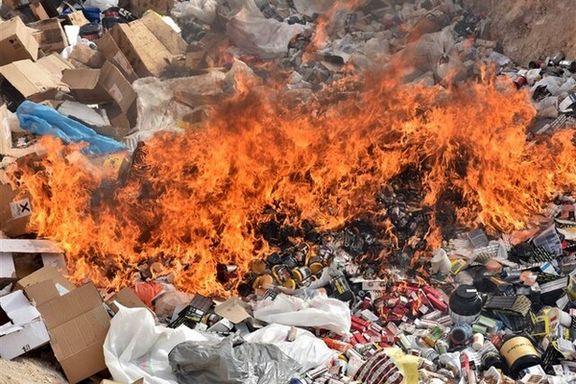
The Islamic Republic’s authorities have destroyed large amounts of imported medical products without undergoing legal procedures despite dire shortages across Iran.

While there are numerous reports about shortages of medicines and medical products, including basic drugs and IV fluids in recent months, the country’s health ministry has destroyed a huge amount of the imported supplies without the required examination by relevant organizations, said Saheb Hojjati, the head of the Iranian organization in charge of confiscated goods. 

Large amounts of IV fluids were destroyed earlier this year while the country was suffering from severe shortages, he underlined.

Hojjati added that according to law, the Health Ministry and the Standards Organization must test the drugs and their expiration dates to see if they are safe to be used and announce the results in written documents to the Organization for Collection and Sale of State-owned Properties of Iran (OCSSPI), but this procedure is not being followed at the moment. The OCSSPI is affiliated to the Ministry of Economic Affairs and Finance, with its main purpose being the collection, storage, management and sale of properties that by law are under the ownership, possession, custody or management of the government. 

Hojjati added that if the process is accelerated, the OCSSPI can sell the products in the market to the highest bidders. “This is while we are in an economic war situation and all organizations and institutions should help the government and people,” he noted.

Saheb Hojjati, the head of the Organization for Collection and Sale of State-owned Properties of Iran (file photo)
100%
Saheb Hojjati, the head of the Organization for Collection and Sale of State-owned Properties of Iran

According to Hojjati, over 7.8 trillion rials (about $26 million) worth of products, including basic medical and food items such as vegetable oil, sugar and rice, have been destroyed in the last seven months. The Islamic Republic has been claiming that United States sanctions prevent procurement of medicines, while Washington insists that humanitarian aid is exempt from sanctions. Iran has been importing more than $1.5 billion of medicines a year.

The Islamic Republic has been claiming that United States sanctions prevent procurement of medicines, while Washington insists that humanitarian aid is exempt from sanctions. Iran has been importing more than $1.5 billion of medicines a year.

Considering the incessant bemoaning by the Islamic Republic’s officials about the effect of US sanctions on shortages of medicine in the country, not only does the move seem the result of a cumbersome bureaucratic process, but it also strengthens speculations that the government is pleased with psychological effects of the shortages on foreign audiences. 

However, as per the US sanctions, the Islamic Republic is legally allowed to import medicine, agricultural commodities, and medical products. According to a mandate by the US Department of Treasury, it is not necessary to acquire any permit for selling agricultural commodities, medicine, and medical devices to Iranian buyers.

In September, an Iranian lawmaker warned about the failure of the government’s Medicine Assistance Plan to make prices affordable amid high inflation and rising poverty. “Patients, particularly those with rare diseases, have been facing problems since the removal of medicine import subsidies,” Mohammad-Taghi Naghdali, a member of the parliament's judicial and legal committee, said, adding that lawmakers have warned that without allocation of cheap foreign currency to pharmaceutical imports the government's Medicine Assistance Plan is bound to fail.

President Ebrahim Raisi announced in early May that his government had begun the process of removing up to $15 billion import subsidies for basic foods, medicine, and animal feed despite warnings of more inflation and hardship. Raisi also said the government would be paying cash assistance to most Iranians as compensation.

The removal of import subsidies meant that manufacturers would no longer receive cheap dollars from the government to import raw materials to produce medicine.


Most Viewed

Iran negotiators ordered to return after internal rift over Islamabad talks
1
EXCLUSIVE

Iran negotiators ordered to return after internal rift over Islamabad talks

2
ANALYSIS

US blockade enters murky phase as tankers spoof signals and buyers hesitate

3
ANALYSIS

Why the $100 billion Hormuz toll revenue is a myth

4

US tightens financial squeeze on Iran, warns banks over oil money flows

5
ANALYSIS

US blockade targets Iran oil boom amid regional disruption

Banner
Banner

Spotlight

  • Hardliners push Hormuz ‘red line’ as US blockade tests Iran’s leverage
    INSIGHT

    Hardliners push Hormuz ‘red line’ as US blockade tests Iran’s leverage

  • Ideology may be fading in Iran, but not in Kashmir's ‘Mini Iran'
    INSIGHT

    Ideology may be fading in Iran, but not in Kashmir's ‘Mini Iran'

  • War damage amounts to $3,000 per Iranian, with blockade set to add to losses
    INSIGHT

    War damage amounts to $3,000 per Iranian, with blockade set to add to losses

  • Why the $100 billion Hormuz toll revenue is a myth
    ANALYSIS

    Why the $100 billion Hormuz toll revenue is a myth

  • US blockade targets Iran oil boom amid regional disruption
    ANALYSIS

    US blockade targets Iran oil boom amid regional disruption

  • Iran's digital economy battered by prolonged blackout
    INSIGHT

    Iran's digital economy battered by prolonged blackout

•
•
•

More Stories

Islamic Republic Suffered Blow From Protests - Official

Nov 6, 2022, 20:48 GMT+0

A top aide to Supreme Leader Ali Khamenei says the Islamic Republic’s establishment is still undefeated but it has received a blow from the protest movement.

Rasool Sanaei-Rad said during a TV program Saturday that “We must accept the differences and open a space for dialogue through free-thinking platforms… but in the first step, our actions must be aimed at suppressing riots.”

He divided the opposition into “domestic” and “foreign” saying the establishment must have self-restraint dealing with those opponents not serving foreign interests.

He also added that the Islamic Republic is “flexible” against the domestic opposition because they are like “our children”.

“Today, we are dealing with a multi-dimensional and multi-layered social phenomenon... we have overlooked excessive use of cyberspace by young people and teenagers during the COVID pandemic” claimed the deputy of the Political Ideological Bureau of the Commander-in-Chief.

The Political Ideology Bureau is part of Khamenei's extensive office, and responsible for “policy-making, coordination, inspection and supervision of the affairs and duties of the representative of the Supreme Leader in the Iranian Armed Forces.” The head of the Bureau, appointed by the Supreme Leader, is currently a mid-ranking cleric, Ali Saeedi, Khamenei's former representative in the Islamic Revolution Guards Corps.

Sanaei-Rad’s claim about “self-restraint and flexibility” is made while the Oslo-based Iran Human Rights Organization has reported that at least 304 people, including 41 children and 24 women, have been killed by government forces during the last 50 days of protests.

Iranian Lawmakers Urge Judiciary To Sentence Protesters To Death

Nov 6, 2022, 15:10 GMT+0
•
Iran International Newsroom

A group of 227 parliament members in Iran has called on the Judiciary to issue death sentences for people arrested during the ongoing antigovernment protests.

The parliament, elected in a non-competitive election in February 2020, is packed with hardliners and Revolutionary Guard officers.

In a statement that was read out in the parliament on Sunday, the lawmakers called the protesters ‘mohareb’ -- which literally means warrior in Arabic, but in Islamic law or sharia it means ‘enemy of God’ that carries the death penalty. They also compared the protesters to members of ISIS, who "attack people's lives and property..."

The Iranian regime has so far charged several people with ‘moharebeh,’ “corruption on earth,” “assembly and collusion against national security” and “confrontation with the Islamic Republic” for participating in the protests.

Describing the current wave of popular protests as “riots,” the MPs claimed that “the US and other enemies” are inciting violence, organizing rallies, and providing financial support and weaponry to commandeer the protests. They also said “thugs and mobs” have killed tens of people and disrupted the security of the country.

Echoing the Islamic Republic’s propaganda line, the lawmakers said that “the enemies have been defeated in Iraq, Syria, Palestine, Lebanon and Yemen” therefore they organized the “riots” as a reaction to “victories of the Islamic Republic.”

Without mentioning any individuals or groups, the hardline lawmakers also asked the judiciary to take legal actions against “the politicians who incited the rioters.”

Mohammd Bagher Ghalibaf, parliament speaker in an undated phot with IRGC's Qasem Soleimani
100%
Mohammd Bagher Ghalibaf, parliament speaker in an undated phot with IRGC's Qasem Soleimani

Earlier in the parliament session, Speaker Mohammad Bagher Ghalibaf (Qalibaf) said that main elements of Mossad, CIA and their allied groups are behind the unrest in the country.

Late in October, hardliner MP Mohammad Esmail Kowsari, also a high ranking IRGC officer, implicitly threatened that the government will respond differently to the ongoing protests from now on.

While protests continue across Iran, the Islamic Republic’s Judiciary has also announced that it has indicted over 1,000 people who were arrested during the demonstrations.

Authorities have been claiming that “separatists” and “instigators” are behind the efforts to overthrow the government and break Iran into areas controlled by ethnic groups, a claim routinely denied by Iranians on streets and social media.

The claim that protests are instigated by foreign enemies was first made by Supreme Leader Ali Khamenei and loyal officials now repeat his conspiracy theory.

President Ebrahim Raisi on October 25 accused “enemies of the Islamic Republic” of fomenting the protests, echoing what Khamenei said a day earlier. Parliament Speaker Mohammad-Bagher Ghalibaf in turn vowed that parliament would take action to change the ways of the morality police in a bid to calm the protesters.

“Death sentences against people for exercising their right to freedom of expression, after the killings of peaceful protesters, abductions and gunning down children, and other atrocities, indicate a government that is out of control and willing to quash protests at any cost,” said a statement by Center for Human Rights in Iran.

The Norway-based human rights organization also expressed concern regarding the fate of the detained protesters saying, “dozens of them have been charged with the security-related charges of ‘moharebeh’ and ‘corruption on earth’ which carry the death penalty.”

The Islamic Republic’s history and current evidence indicate that they intend to use the death penalty as a tool of political repression to intimidate their opposition.

Earlier in November, 40 Iranian lawyers issued a statement saying most people no longer want the Islamic Republic and called on their peers to speak up and defend the people.

Iran has been gripped by protests since the death in custody of Mahsa Amini, a 22-year-old Iranian of Kurdish origin who had been arrested on September 13 for allegedly breaching the Islamic dress code and died three days later from severe head trauma. Protests spread fueled by public outrage over a crackdown that led to the deaths of other young men, women, and children. Now in their seventh week, the protests show no sign of ending.

Iran's Currency In Freefall As Protests Sweep The Country

Nov 5, 2022, 17:27 GMT+0
•
Mardo Soghom

Iran's battered currency, the rial, was in a freefall on Saturday, hitting a historic low of more than 360,000 against the US dollar amid continuing protests.

Since August, when there were some hopes for a nuclear deal with the United States, the rial has lost more than 20 percent of its value, hit by the double impact of an impasse in the negotiations and nationwide protests.

The Iranian currency fell almost 20,000 points after the Friday weekend, from around 340,000 on Thursday to 360,000 when the markets reopened on Saturday. By evening, the rial made slight gains in what could have been a central bank intervention, but the fate of the currency remains bleak.

It is not clear how much foreign currency the government has injected into the market since the first week of September when the rial began to fall. Often, the Central Bank of Iran (CBI) withholds such information.

There have been unconfirmed reports that people associated with the government have been sending their capital out of the country as protests show no signs of stopping. Unlike past nationwide unrest, this time it is clear that protesters want an end to the clerical regime of the Islamic Republic and will not be easily satisfied with minimal concessions, even if the hardliner core of the regime decides to offer an olive branch.

The government insists that it is successfully circumventing US sanctions on its oil exports, selling more than one million barrels of crude per day, mostly shipped to China that silently ignores Washington's threat to penalize third parties for buying Iranian oil.

However, it is not clear how much discount Tehran is offering Chinese buyers and how much foreign currency it receives despite parallel US banking sanctions. Some have argued that most of Iran's oil is shipped in lieu of goods in illicit barter trades, which according to former Tehran officials costs the country more than 20 percent in lost value.

The freefall in the exchange value of the rial signals insufficient CBI resources to effectively intervene in the market. A relatively stable rial is politically vital for a government under siege by growing protests.

During the 1979 Iranian revolution the rial stayed at 70 to the dollar until after the overthrow of the monarchy when the currency began its 43-year-long decline, which has surpassed a 5,000-fold loss of value.

The unprecedented currency crisis will have a direct impact on inflation and especially food prices, which can lead to more people joining the protests and severely destabilizing the government. Annual inflation is already around 50 percent and food prices have risen by 100 percent since last year.

While the clerical regime still has hundreds of thousands of Revolutionary Guard troops, Basij militia and vigilantes to confront the people on the streets, and no major defections have been reported so far, the currency crisis will contribute to an image of a government in disarray, facing its most serious crisis in 43 years.

So far, hardliners in charge of the military, the presidency and parliament have shown no willingness to compromise with the populace, but even major concessions may prove to be insufficient to quell the young generation that has tasted success in defying a fearsome suppression machine fore almost 7 weeks.

The government is talking about a 20-percent raise for workers in its sprawling state-sector economy, but the rial's steep fall has already eaten away at any benefit for workers who make less than $200 a month.

On the contrary a big raise at this point would mean that the CBI has to print more money and push the inflation rate higher.

Iran’s Hardliners Attack Sunni Cleric For His Criticism

Nov 5, 2022, 15:32 GMT+0

The Islamic Republic has upped the ante against the Sunni cleric of Zahedan for his harsh criticism of the brutal and non-democratic approach of the government to protests.

Tasnim News Agency, affiliated to the Islamic Revolutionary Guard Corps (IRGC), called Molavi Abdolhamid the source of insecurity in Sistan and Baluchestan, telling him to ask his “dictator Saudi friends to hold a referendum.”

Molavi Abdolhamid, who called for a plebiscite in Iran during his Friday prayer sermon November 4, wrote in a statement the same day, “Unfortunately, another crime was committed in Baluchestan and this time an unfortunate incident took place in the city of Khash in which protesters were killed in cold blood.”

His statement confirmed the “martyrdom of at least 16 people” and dozens of more injuries while teenagers and young people were chanting slogans and throwing stones at governor’s office in Khash, but they were “directly targeted by live rounds.”

He further called the “bloody tragedy in Khash” as well as the “Bloody Friday in Zahedan [September 30]” as the epitome of “the extent of oppression and discrimination” that he had warned against many times in the past.

The Sunni cleric asked the seminaries of Qom and the authorities to listen to the voice of the people and to “acquiesce to nation’s request, which is the main criterion.”

The Bloody Friday Protests In Iran Continued Overnight

Nov 5, 2022, 08:12 GMT+0
•
Iran International Newsroom

Despite security forces killing multiple people in Iran during the day on Friday, antigovernment protesters surged back to the streets after the nightfall.

Demonstrators in Tehran, Ahvaz, Bushehr, Sanandaj, Kerman, Lahijan and even in some small towns and villages like Nimvar in Markazi province and Podol in southern Hormozgan province held nightly protests.

In the capital, Javadieh, Tehranpars, Ekbatan and other neighborhoods in different corners of Tehran people took to the streets after dark, lighting fires, blocking roads, and chanting anti-government slogans.

Hours after regime forces opened fire on unarmed people in several cities in Sistan and Baluchestan Province, Zahedan’s Sunni Imam, who had earlier in the day called for a referendum during his prayer sermon, once again strongly condemned the Islamic Republic's crackdown on protesters in the city of Khash.

The moment when security forces open fire and shoot three people in Khash

Molavi Abdolhamid said security forces killed at least 16 and injured dozens of others on Friday by opening fire on protesters who were throwing stones at the governor's office.

He slammed the way the government deals with protests in Sistan and Baluchestan saying that it reveals the “depth of cruelty and discrimination.”

Armed government agents also shot at the family of Shirin Alizadeh, one of the victims of the protests in Esfahan, during a memorial on the 40th day of her death, injuring at least three. These forces also insulted Shirin Alizadeh's family and prevented them from continuing the ceremony.

Meanwhile, a shocking video proving the regime’s extreme brutality emerged Friday night that shocked many. The video shows the family of Momen Zand Karimi washing the dead body of their teenage son before laying him to rest in a remote village Thursday night as government officials did not allow them to bury him in his home city of Sanandaj.

Momem Zand Karimi was killed by birdshots fired from shotguns during Wednesday protests when he was on a short leave from his military service.

Scenes of a vigil held for another victim Erfan Zamani in the northern city of Lahijan and also the video of the dead body of a young boy in Khorramdasht near Karaj, who was shot in the head and carried away by a police pickup truck on Thursday, were among other videos going viral.

While using lethal force against demonstrators, the government tried to bring out its supporters on Friday to mark the anniversary of taking American diplomats hostage in 1979.

However, the attempt was a disaster, as the Islamic Republic failed to mobilize its supporters and in some cities people who showed up were a few dozen or a few hundred. The state TV began using old footage to claim a big turnout. For Sanandaj, a hotbed of protests the TV showed a large crowd marching in rain, while the weather was sunny in the city.

The state TV was also forced to air some similar shots for different locations to show the presence of a large crowd.