• العربية
  • فارسی
Brand
  • Iran Insight
  • Politics
  • Economy
  • Analysis
  • Special Report
  • Opinion
  • Podcast
  • Iran Insight
  • Politics
  • Economy
  • Analysis
  • Special Report
  • Opinion
  • Podcast
  • Theme
  • Language
    • العربية
    • فارسی
  • Iran Insight
  • Politics
  • Economy
  • Analysis
  • Special Report
  • Opinion
  • Podcast
All rights reserved for Volant Media UK Limited
volant media logo

Iran Says Exposed Israeli Team Planted Explosives At Sensitive Site
Iran International Newsroom
Jul 24, 2022, 18:17 GMT+1Updated: 17:32 GMT+1
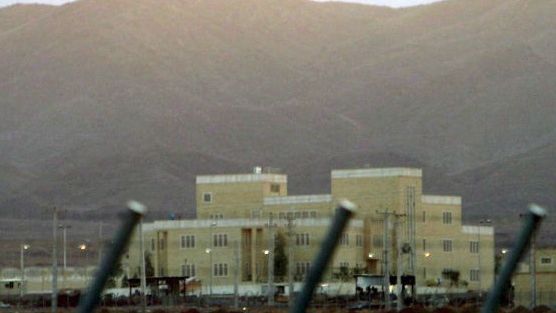
Part of the Natanz nuclear enrichment complex in Esfahan province. Undated

Iran claims an “Israeli-linked” sabotage team it recently arrested had planned to destroy a sensitive facility in the central Iranian province of Esfahan.

According to a Sunday report by Nour News, a website affiliated with the secretary of Iran's Supreme National Security Council (SNSC), Ali Shamkhani, “These individuals (Mossad-linked agents) had identified a sensitive center in Esfahan, planted strong explosives there, and only a few hours were left until the explosion” when they were arrested.

The report added that the members of the network were trained in an African country for months and had simulated the planned operation several times.

It claimed that Iran’s security forces were monitoring the team even before it arrived in Iran and all its members and contacts both inside and outside the country were identified by the Intelligence Ministry several months before they entered the country.

The report did not disclose the name of the site, but Esfahan is home to Iran’s largest multi-purpose nuclear research complex with about 3,000 scientists. It also operates a conversion facility, a fuel production plant, a zirconium cladding plant, and four small nuclear research reactors -- all supplied by China – as well as other facilities and laboratories. Moreover, it could also mean the all-important Natanz uranium enrichment facility, which is located in the province of Esfahan.

Natanz was the target of two major sabotage acts in the past two years- in July 2020 and April 2021, both ascribed to Israeli intelligence.

In January, Iran told the International Atomic Energy Agency (IAEA) that it would move production of crucial nuclear components from a plant in Karaj to a facility in Esfahan. The Karaj TESA plant was producing parts for uranium enrichment machines or centrifuges.

IAEA nuclear facility monitoring device shown in December 2021
100%
IAEA nuclear facility monitoring device shown in December 2021

In April, Tehran said that before the 2015 nuclear deal is revived it will not give the IAEA access to data from cameras at the new centrifuge parts plant in Esfahan.

In a short announcement from the Intelligence Ministry on Saturday, July 23, Iran claimed that “a network from the spy agency of the Zionist regime who were sent to the country for terrorist operations” were identified and arrested.

"This network's members were in contact with (Israel's) Mossad spy agency through a neighboring country and entered Iran from (Iraq's) Kurdistan region with advanced equipment and strong explosives," the ministry said.

Since March, Iran has at least three times made similar claims without presenting any evidence or information about what investigators discovered from the persons allegedly detained.

The intelligence ministry’s announcement came two days after Iran International in an exclusive report on July 21 said that Israel’s Mossad had captured a senior Revolutionary Guard official on Iranian soil and interrogated him about weapons shipments to Iran’s proxies in the region. After the interrogation the man was released.

Since mid-2020 a series of high-profile mysterious attacks have hit Iran’s nuclear and military installations around the country, widely believed to have been Israeli sabotage operations. In November 2020, Mohsen Fakhrizadeh, a key figure in Iran’s controversial nuclear program was assassinated in a complex operation on the outskirts of Tehran. His killing resembled more a Hollywood thriller, with a heavy, remotely controlled gun mounted in the back of a pickup truck that fired on Fakhrizadeh’s car on a highway.

In May, several IRGC officials were killed or died in suspicious circumstances, prompting Tehran to blame Israel, which has never officially taken credit for these operations.

In June, a major reshuffling of IRGC intelligence and counter-intelligence leadership took place, widely attributed to reported Israeli infiltration and the inability of Iran’s security bodies to deal with the situation.


Most Viewed

State media slam Araghchi's Hormuz tweet, say it let Trump claim victory
1

State media slam Araghchi's Hormuz tweet, say it let Trump claim victory

2
OPINION

The Hormuz get out of jail card turned to a grave

3

Iran International says it won’t be silenced after London arson attack

4
INSIGHT

How Tehran bends its own red lines to boost state rallies

5

Iran halts petrochemical exports to supply domestic market

Banner
Banner

Spotlight

  • Too early to tell who is winning Iran war, experts say
    PODCAST

    Too early to tell who is winning Iran war, experts say

  • How Tehran bends its own red lines to boost state rallies
    INSIGHT

    How Tehran bends its own red lines to boost state rallies

  • Iran blackout cripples freelancer, small business incomes
    VOICES FROM IRAN

    Iran blackout cripples freelancer, small business incomes

  • Ideology may be fading in Iran, but not in Kashmir's ‘Mini Iran'
    INSIGHT

    Ideology may be fading in Iran, but not in Kashmir's ‘Mini Iran'

  • US blockade enters murky phase as tankers spoof signals and buyers hesitate
    ANALYSIS

    US blockade enters murky phase as tankers spoof signals and buyers hesitate

  • Why the $100 billion Hormuz toll revenue is a myth
    ANALYSIS

    Why the $100 billion Hormuz toll revenue is a myth

•
•
•

More Stories

Iran's Hardline Media Call For Backing Russia In Ukraine Conflict

Jul 24, 2022, 11:24 GMT+1
•
Iran International Newsroom

If NATO wins in Ukraine, Iran would be its next target, the hardline Kayhan wrote Sunday, reinforcing Tehran’s support for Russia and calling for "pre-emptive defense."

Kayhan’s strong endorsement of Ali Khamenei’s support for Putin during their meeting in Tehran on July 20, was coupled with an editorial in the Revolutionary Guard Javan newspaper Sunday. Javan spoke of “pre-emptive legitimate defense”, without naming Ukraine, but in the context of defeating the West.

Javan argued that when Muslims are endangered it is legitimate to strike pre-emptively and side even with a “despotic ruler”, although it clarified that Putin is not such a leader.

The Kayhan and Javan editorials signal an attempt to justify Iran siding with Russia in the Ukraine war, by offering military assistance, by raising the far-fetched “pre-emptive legitimate defense” argument when neither Russia nor Ukraine have borders with Iran.

The Kayhan editorial was written by its ultra-hardliner editor Hossein Shariatmadari, who enjoys the title of Khemeni’s representative at the flagship conservative newspaper and is seen as reflecting the views of the Supreme Leader.

Shariatmadari described Khamenei’s praise for Putin’s “initiative” to attack Ukraine as “a serious warning to America and its allies” who “are playing with the lion’s tail.” He also wrote that “Iran is one of the next main targets” of NATO, if the Western alliance wins in Ukraine, which would justify a preemptive reaction.

The Iranian Mohajer drone is the most likely candidate to be supplied to Russia
100%
The Iranian Mohajer drone is the most likely candidate to be supplied to Russia

Khamenei also told Putin in Tehran that if the Russian ruler had not taken the initiative, NATO was preparing to start a war in Ukraine in any case.

When the Russian invasion of Ukraine started in February, Iran tried to exhibit neutrality, calling for an end to hostilities, but blaming the West for triggering the war by expanding NATO.

At the same time the 11-month-long negotiations in Vienna to revive the 2015 nuclear deal, JCPOA, came to a halt less than two weeks after the invasion and Tehran has since refused to accept an offer the West had made in December, insisting on more demands that Washington considers “extraneous” to the nuclear issue.

In mid-July the United States warned that Russia was preparing to acquire military drones from Iran to use in the war. A few days later Putin traveled to Tehran, where Khamenei clearly sided with the Kremlin on the Ukraine issue.

Shariatmadari insisted that the Islamic Republic “considers Russia’s confrontation with America and NATO in Ukraine as part of its own security and logically and naturally will support it.”

Javan argued that Iran “is pursuing legitimate pre-emptive defense” and will spare no efforts in neutralizing “the enemy’s evil plans” and weaken Western “hegemony and the establishment of a new world order.”

The invasion of Ukraine and Russia’s confrontation with the West fits perfectly with Khamenei’s anti-Western ideology that has determined Iran’s foreign policy for more than three decades. The United States is often labeled as “World arrogance” by Khamenei and his supporters who have rejoiced at any sign of Chinese-US or Russian-US tensions.

Khamenei in his speeches has constantly called for a tilt toward the East, as Iran’s best strategic path, praising relations with Moscow and Beijing, although both sided with the West in early 2010s to limit Tehran’s nuclear program.

The pro-Russia foreign policy has been criticized by former politicians and pundits in Tehran, who often cite the Islamic Republic’s original motto of “Neither East nor West.”

Israel, US Discuss Defense Cooperation Against Iranian Threat

Jul 24, 2022, 10:06 GMT+1

Israeli Defense Minister Benny Gantz met with US National Security Advisor Jake Sullivan to discuss deepening bilateral defense cooperation in face of the Iranian threat.

The two held a meeting on the sidelines of the Aspen Security Forum on Friday, where they also discussed President Joe Biden’s visit to Israel and Saudi Arabia and its effects on ways to strengthen regional cooperation.

“We discussed the growing threat posed by Iran to the world, the region and to the State of Israel via its nuclear program and growing aggression via proxies, maritime activities, cyberattacks and more, and ways to create a united front against the region’s biggest destabilizer,” Gantz tweeted.

Gantz also held separate meetings with former US secretary of state Condoleezza Rice, former secretary of defense Mark Esper, and Iowa’s Republican Senator Joni Ernst. 

In an interview during the Aspen forum, Gantz noted that war with Iran was the least desired option, saying, “Should we jump to a war at the first opportunity we have? No. Should we be able to conduct military operations to prevent it [a nuclear Iran] if needed, the answer is ‘yes.’ Are we building the ability [for war]? Yes. Should we use it as a last case? Yes – and I hope that we will get US support.”

During Biden’s trip, the Jerusalem US-Israel Strategic Partnership Joint Declaration was issued in which Washington reaffirmed its commitment “never to allow Iran to acquire a nuclear weapon” and promised that “Israel had a right to defend itself by itself.”

France Tells Iran It's Disappointed To See No Progress In Nuclear Talks

Jul 23, 2022, 22:46 GMT+1

In a two-hour telephone conversation Saturday, French President Emmanuel Macron told Iran's Ebrahim Raisi that he is disappointed with results of nuclear talks.

Macron expressed his disappointment to his Iranian counterpart Raisi at the lack of progress over talks on the 2015 nuclear agreement, the Elysee Palace said in a statement.

In June, Iran began removing essentially all the monitoring equipment of the International Atomic Energy Agency (IAEA), installed under its 2015 nuclear deal with world powers.

Iran has been enriching uranium at 20 and 60 percent since early 2021, raising alarm in Western capitals and among regional countries of getting closer to a nuclear breakout point.

The French leader urged Raisi to make a "clear choice" to reach a deal and go back to the implementation of Iran's commitments under the 2015 nuclear agreement, the Elysee Palace said.

Macron said he was convinced that such an outcome was still possible but that it should take place "as soon as possible," the French presidency said.

According to the official Iranian news agency IRNA, Raisi reiterated Iran's demands of receiving guarantees of full economic benefits to make a nuclear deal possible.

Macron also urged the liberation of four French citizens that he said were "held arbitrarily" in Iran.

Iran Claims It Arrested Israeli-Linked Sabotage Team

Jul 23, 2022, 19:20 GMT+1
•
Iran International Newsroom

Iran claimed on Saturday that it had arrested all members of a sabotage team sent by Israel through the Iraqi border, following months of mysterious attacks.

A short announcement from the Intelligence Ministry said, “A network from the spy agency of the Zionist regime who were sent to the country for terrorist operations” were identified and arrested.

"This network's members were in contact with (Israel's) Mossad spy agency through a neighbouring country and entered Iran from (Iraq's) Kurdistan region with advanced equipment and strong explosives,"

Since March, Iran has at least three times made similar claims without presenting any evidence or information about what investigators discovered from the persons allegedly detained.

The last instance was on June 14, when the state broadcaster released a video claiming that criminals who were working for Mossad and planning kidnappings and assassinations were arrested. The report called these individuals “thugs and hooligans” and claimed they were involved in a wide range of criminal activities including human and weapons trafficking before being recruited by Israeli agents.

The intelligence ministry’s announcement came two days after Iran International in an exclusive report on July 21 said that Israel’s Mossad had captured a senior Revolutionary Guard official on Iranian soil and interrogated him about weapons shipments to Iran’s proxies in the region. After the interrogation the man was released.

Iran International had obtained video of the interrogation showing a man introducing himself as Yadollah Khedmati, deputy commander of the Revolutionary Guard (IRGC) Logistics, says he regrets his involvement in shipping weapons to Iran’s proxy groups in Syria, Iraq, Lebanon, and Yemen and urges other IRGC officials to avoid engagement in such activities.

Iranian government media on Saturday confirmed the report, saying that criminal elements had indeed detained the IRGC officer.

Since mid-2020 a series of high-profile mysterious attacks hit Iran’s nuclear and military installations around the country, widely believed to have been Israeli sabotage operations. In November 2020, Mohsen Fakhrizadeh, a key figure in Iran’s controversial nuclear program was assassinated in a complex operation on the outskirts of Tehran. His killing resembled more a Hollywood thriller, with a heavy, remotely controlled gun mounted in the back of a pickup truck that fired on Fakhrizadeh’s car on a highway.

In May, several IRGC officials were killed or died in suspicious circumstances, prompting Tehran to blame Israel, which has never officially taken credit for these operations.

In June, a major reshuffling of IRGC intelligence and counter-intelligence leadership took place, widely attributed to reported Israeli infiltration and the inability of Iran’s security bodies to deal with the situation.

The intelligence ministry’s announcement can be an attempt to show that Iran is not hapless in the face of repeated acts of sabotage. It can always detain criminals and showcase them as spies or saboteurs with no follow-up information later, as has been the case over the years.

The announcement did not say how many people were arrested and did not divulge their nationality. The network planned "acts of sabotage and unprecedented terrorist operations in sensitive locations", its statement said, without giving details.

Iran-Backed Hashd Al-Shaabi Forces Hold Military Parade In Iraq

Jul 23, 2022, 15:47 GMT+1

Iran-backed Shiite militia Hashd al-Shaabi, also known as Popular Mobilization Forces, held a military parade Saturday to mark the eighth anniversary of its formation. 

The Saturday ceremony was held in al-Khalis, located about 15 kilometers (9 miles) northwest of the city of Baqubah in Diyala Province, and was attended by Prime Minister Mustafa al-Kadhimi, Chairman of the Popular Mobilization Forces Falih al-Fayyadh, Secretary General of the Badr Organization Hadi al-Amiri and a number of high-ranking military officials.

The militia also unveiled new weapons and military equipment, including al-Rasid (Monitor) and al-Hassib (Auditor) systems to control unmanned aerial vehicles and overhauled Russian T-52 tanks.

Al-Hashd al-Shaabi was established back in 2014, following a fatwa (a decree or ruling in Islamic sharia law) by influential Iraqi religious authority, Ali al-Sistani, to fight ISIS, which controlled four governorates and reached the borders of the capital Baghdad at the time. The Iraqi state-sponsored umbrella organization is composed of approximately 67 different armed factions, with around 128,000 fighters that are mostly Shia Muslim groups, but also include Sunni Muslim, Christian, and Yazidi groups. 

Earlier in July, Moqtada al-Sadr, the most influential Shiite cleric in Iraq, who is against Iran’s presence in Iraq -- renewed his call to reorganize the Hashd al-Shaabi, which was led by former Iraqi militia commander Abu Mahdi al-Muhandis before he was killed alongside Qasem Soleimani in January 2020 by a US drone strike.

He said Hashd al-Shaabi should not be involved in sectarian conflicts, should withdraw from the Sunni-dominant areas, and should be kept away from foreign interventions – an indirect reference to Iran.