• العربية
  • فارسی
Brand
  • Iran Insight
  • Politics
  • Economy
  • Analysis
  • Special Report
  • Opinion
  • Podcast
  • Iran Insight
  • Politics
  • Economy
  • Analysis
  • Special Report
  • Opinion
  • Podcast
  • Theme
  • Language
    • العربية
    • فارسی
  • Iran Insight
  • Politics
  • Economy
  • Analysis
  • Special Report
  • Opinion
  • Podcast
All rights reserved for Volant Media UK Limited
volant media logo

Lebanon-Israel Gas Dispute Sends New Ripples Across Region
Iran International Newsroom
Jun 7, 2022, 00:14 GMT+1Updated: 17:26 GMT+1
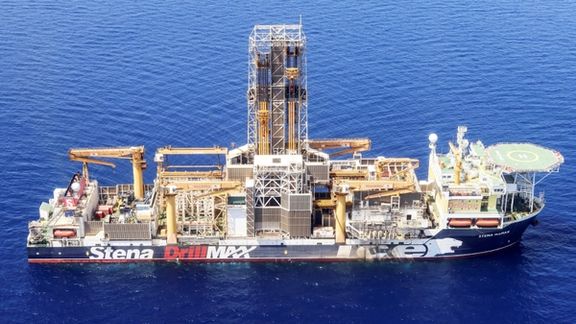
London-based Energean’s drill ship begins drilling at the Karish natural gas field offshore Israel in the east Mediterranean May 9, 2022.

International energy politics upturned by US and European sanctions against Russia took a further twist Monday as the Lebanese party Hezbollah threatened force against Israel.

Deputy leader Naim Qassem told Reuters that Hezbollah was ready for action against Israeli gas operations in disputed sea waters, a day after a London-based vessel operated by drilling company Energean arrived at Israel’s bidding to develop the Karish gas field.

Energean, which is listed in London and Tel Aviv, said its floating production storage and offloading vessel was set up 80 km (50 miles) west of Haifa and would be operational by the third quarter of 2022.

Qassem said Hezbollah would act only with the authorization of the Lebanese government, which has warned Israel against the offshore work. Beirut said Monday that with discussions stalled for a year it would now invite Amos Hochstein, a United States mediator, to help resolve matters. Lebanon and Israel have no diplomatic relations.

“When the Lebanese state says that the Israelis are assaulting our waters and our oil, then we are ready to do our part in terms of pressure, deterrence and use of appropriate means – including force,” Qassem said.

“The issue requires a decisive decision from the Lebanese state,” he added, and that Hezbollah “urged the government to hurry up, to set a deadline for itself.” Qassem said Hezbollah would act even at the risk of a wider conflict with Israel.

Preventing escalation

Lebanon hopes offshore gas reserves could alleviate its chronic financial problems, including one of the world’s largest public debts, but is currently struggling to form a government after parliamentary elections last month.

Caretaker Prime Minister Najib Mikati wrote on Twitter that the government aimed at “completing the negotiations to demarcate the southern maritime border and to work on concluding the issue as fast as possible to prevent any escalation that would not serve the state of stability in the region.” Mikati said any Israeli drilling or exploration in a disputed area was “a provocation and an act of aggression.”

With several gas discoveries made in the 2000s in the eastern Mediterranean and Lebanon slow to exploit the resource, there is a significant area where Israel and Lebanon dispute the border.

In a statement on Sunday, the Lebanese presidency said Lebanon had written to the United Nations that Karish was within the disputed area, but Israeli Energy Minister Karine Elharrar told Tel Aviv radio 103 FM there was “unequivocally no” encroachment by Israel.

“Everything to do with the dispute will be resolved in the framework of negotiations between us and Lebanon, mediated by the United States,” Israeli Defense Minister Benny Gantz said in televised remarks.v

While Lebanon and Israel have not been involved in a major conflict since 2006, the fall in Russian energy exports, including both gas and oil, has pushed up world energy prices and increased the attraction of moving ahead with new projects.

Iran, which according to the BP 2021 Statistical Review of World Energy, has the world’s second largest gas reserves, after Russia, and the third largest oil reserves, is closely aligned to Hezbollah. Some analysts suggest Iran has an opportunity to increase its own energy exports, especially to Europe, assuming US sanctions are lifted with restoration of the 2015 Iran nuclear deal, the JCPOA (Joint Comprehensive Plan of Action).


Most Viewed

100 days after carnage: Iran economy reels from war, inflation, unemployment
1
INSIGHT

100 days after carnage: Iran economy reels from war, inflation, unemployment

2
INSIGHT

Ghalibaf defends Iran-US talks amid hardline backlash

3
INSIGHT

A nation in limbo: 100 days after the massacre, has the world moved on?

4
ANALYSIS

From instability to influence: Pakistan’s pivotal role in US-Iran diplomacy

5
ANALYSIS

100 days on: why Iran’s January protests spread across social classes

Banner
Banner

Spotlight

  • War-hit homeowners feel abandoned as Iran’s reconstruction aid fades

    War-hit homeowners feel abandoned as Iran’s reconstruction aid fades

  • 100 days on: the anatomy of Iran’s January crackdown
    INSIGHT

    100 days on: the anatomy of Iran’s January crackdown

  • Ghalibaf defends Iran-US talks amid hardline backlash
    INSIGHT

    Ghalibaf defends Iran-US talks amid hardline backlash

  • 100 days on: why Iran’s January protests spread across social classes
    ANALYSIS

    100 days on: why Iran’s January protests spread across social classes

  • From instability to influence: Pakistan’s pivotal role in US-Iran diplomacy
    ANALYSIS

    From instability to influence: Pakistan’s pivotal role in US-Iran diplomacy

  • A nation in limbo: 100 days after the massacre, has the world moved on?
    INSIGHT

    A nation in limbo: 100 days after the massacre, has the world moved on?

•
•
•

More Stories

US Treasury Sanctions 3 Individuals, 2 Terror Outfits Over IRGC Links

Jun 6, 2022, 21:39 GMT+1

The US Treasury Department has sanctioned 16 individuals and groups affiliated with terrorist organizations, including three associated with Iran’s Revolutionary Guards' Quds Force.

The Terrorist Financing Targeting Center of the Office of Foreign Assets Control at the Department of the Treasury on Monday targeted a broad range of financiers of terrorism from a variety of regional terrorist designated organizations, including two groups affiliated the IRGC, whose “goal is to pave the way for Iran to exert greater influence in Bahrain and beyond.”

“The targets included three individuals associated with Iran’s Islamic Revolutionary Guard Corps Qods (Quds) Force, four ISIS-associated individuals and one company, six Boko Haram financiers, and terrorist groups Saraya al-Ashtar and Saraya al-Mukhtar,” read the treasury’s statement.

According to the treasury, Ali Qasir, Meghdad Amini, and Morteza Hashemi are part of two networks directed by and providing financial support to the Quds force and its Lebanese proxy group Hezbollah. The complex networks of intermediaries allow the Quds Force to obfuscate its involvement in selling Iranian oil.

Amini and Qasir are financial facilitators who direct a network of nearly 20 individuals and front companies, located in multiple countries, that has facilitated the movement and sale of tens of millions of dollars’ worth of gold, electronics, and foreign currency. Hashemi controls multiple companies based out of Hong Kong and mainland China and has used his access to the international financial system to broker contracts aimed at laundering vast sums of money.

Iran’s Central Bank Claims Highest Ever Foreign Currency Reserves

Jun 6, 2022, 19:28 GMT+1

The Central Bank of Iran (CBI) claims it currently enjoys the highest ever foreign currency reserves in cash, saying it will utilize it to stabilize the market.

CBI governor Ali Salehabadi said on Monday that the bank has the largest cash currency reserve in the history of the country, “therefore we have no problem in balancing supply and demand in the foreign exchange market.”

His remarks came as the bank has reportedly started injecting cash dollars into the market to stop the current freefall of the Iranian rial as it has hit record lows against major currencies, while nuclear talks with the United States remain in limbo, prices are rising and popular protests continue.

Iran has increased oil exports despite United States sanctions since last year and claims to have been able to repatriate the revenues. However, it is not clear why the rial is falling and the economic crisis continuing if it has large foreign currency reserves.

The rial has been sliding since mid-March when year-long multilateral talks in Vienna to revive the 2015 nuclear agreement known as the JCPOA came to an abrupt halt. Washington and Tehran apparently were too far apart on some issues, including Iran’s demand that its Revolutionary Guard should be removed from the US list of terrorist organizations.

Since 2018, when Washington withdrew from the 2015 nuclear deal with six powers and reimposed sanctions, Iran's economic crisis has deepened with inflation rate reaching 50 percent and the rial losing over 75 percent of its value.

Thailand Police On Lookout For Iranian Spies

Jun 6, 2022, 17:13 GMT+1

Following warnings that Iran was planning attacks on Israeli citizens in various parts of the world, Thailand’s police have are on high alert to find the Islamic Republic’s agents.

A police source told the Bangkok Post on Monday that the Royal Thai Police (RTP) has issued a secret order to officers across the country to keep an eye out for spies from Iran believed to be in the region after one was arrested in Indonesia last year.

According to the source, security agencies are closely monitoring the movements of Iranian nationals and gathering intelligence about some Shiite Thai Muslims who are suspected to be working as the Islamic Republic’s agents.

The source said the order cited an incident in May last year when Indonesian authorities were tipped off that a man named Ghassem Saberi Gilchalan arrived in the country carrying a fake Bulgarian passport.

He was arrested just before departing for Qatar, and was sentenced to two years in jail. Police found that he entered the country more than 10 times using false papers and had 11 mobile phones with the names of some Thai Muslims saved on them.

Following interrogations, Gilchalan confessed that he had been given several assignments by a former Iranian diplomat in Malaysia to act as a spy both there and in Indonesia several times, the latest of which involved lobbying Indonesian authorities to release the Iranian-flagged MT Horse oil tanker apprehended there January last year.

IRGC colonel Sayys-Khodaei dead in his car after assailants fired five shots. May 22, 2022
100%
IRGC colonel Sayys-Khodaei dead in his car after assailants fired five shots. May 22, 2022

In May, an Israeli informed source told Iran International that security measures are tight around the Israeli embassy in the Indian capital New Delhi reportedly over a serious possibility of an attack by Iran-backed elements.

Late in May, President Ebrahim Raisi said Iran will “definitely” take revenge for the spectacular assassination of Revolutionary Guard Qods (Quds) Force colonel Hassan Sayyad-Khodaei in Tehran. Sayyad-Khodaei, who Israeli media say was the acting commander of an elite Qods Force unit, Unit 840, was shot dead behind the wheel of his car by two gunmen who fled the scene on a motorbike.

A few days later, Fars news website in Iran affiliated with the IRGC published an article profiling several Israeli businesspeople, using thinly veiled threatening language.

Moreover, conflicting reports are still circulating about the death of Iranian aerospace scientist Ayoob Entezari -- who held a PhD in mechanical and aerospace engineering -- with some calling it an assassination and government saying he died of food poisoning.

Reports about Entezari’s fate came a day after Iran confirmed the death of a colonel from the Quds Force, Ali Esmailzadeh of the Islamic Revolutionary Guard Corps. Iranian government and IRGC media said that Col. Esmailzadeh died “in an incident in recent days” at his home without mentioning any details after Iran International quoted sources in Iran as saying that the IRGC killed him over suspicions of espionage.

Last week, Israel issued a warning to citizens traveling or planning to travel to Turkey that they could be targeted by Iranian operatives seeking to avenge the recent assassination. The National Security Council explicitly identified “Iranian terrorist operatives” as being the source of the threat to Israelis in Turkey and nearby countries. Israel’s Channel 12 news reported on Sunday that Israel is considering expanding the travel warning to additional countries.

Early in May, a short audio recording was published by Israeli media with a photo of a man introduced as Iranian national Mansour Rasouli, 52. In the audio recording, Rasouli says he was sent to Turkey by the Revolutionary Guards (IRGC) to establish an operational network to assassinate an Israeli diplomat in Istanbul, a Germany-based US general, and a journalist in France.

Later in May, Israel’s security agency Shin Bet uncovered an alleged plot by Iranian intelligence to lure Israeli academics and former defense officials to travel abroad in order to kidnap them. The Iranian operatives used the stolen identities and relevant cover stories in an attempt to gather intelligence about Israelis and to invite them to locations abroad -- some under the guise of a conference -- in order to abduct or harm them.

As Prices Rise, Will US Ease Off Pressure On Iran Oil Exports?

Jun 6, 2022, 14:25 GMT+1
•
Iran International Newsroom

Uncertainties in global energy were highlighted Sunday in a Bloomberg report that the United States may “turn more of a blind eye” to buyers of Iranian oil.

With oil prices up 50 percent in 2022 to almost $120 a barrel, Bloomberg reported a claim from Vitol Group, the world’s biggest independent crude trader, that the US might want to see more Iranian oil flow given mid-term elections looming in November.

Washington has since 2018, with its ‘maximum pressure’ sanctions, threatened punitive action against any third party buying Iranian crude or dealing with Tehran’s financial sector. While this slashed Iran’s exports from 2.5 million barrels per day (bpd) in 2017 to 400,000 bpd in 2020 with many buyers wary of being punished by the US, Iran is now selling around 800,000 bpd, mainly to China, and has developed means of hiding the trade from prying eyes.

Opec+, led by Saudi Arabia and Russia, agreed last week to accelerate output increases and President Joe Biden’s scheduled visit to Riyadh, although postponed until July, may signal an improvement in strained Saudi-US relations even if Riyadh maintains its good relations with Moscow.

But Vitol’s head of Asia Mike Muller told Bloomberg that prospects for the global oil market were confused by constraints on Russian exports and by production weaknesses across Opec. “There are people who think the market’s going to $135-$140 a barrel,” he said. “And there are people who think we’re going below $100 again.”

US gasoline hits $4.80

Analysts and diplomats are sanguine over prospects for renewing the 2015 Iran nuclear deal, the JCPOA (Joint Comprehensive Plan of Action), which would require the US ending ‘maximum pressure’ and lead to an additional 500,000-1 million bpd of Iranian oil reaching world markets.

Iran has around 100 million barrels in storage that could be eased onto the market even more quickly should the US turn a “blind eye” and ‘allow’ Iran to sell more oil. While Republicans and many Democrats oppose easing any Iran sanctions, especially ahead of Tehran returning its nuclear program to the limits set by the lapsed JCPOA, gasoline reaching $4.80 a gallon in the US, up from $3.80 in late February, piles political pressure on Biden and the Democratic Party.

Muller told Bloomberg he did not expect the US seizure of an Iranian-flagged vessel off Greece last month, which prompted Iran to detain two Greek tankers in the Persian Gulf, to signal more US tanker seizures.

Lawrence Norman of the Wall Street Journal tweeted that a well-informed source dismissed Vitol’s report that the Biden Administration might ‘allow’ Iran to sell more oil.

Critics of the Biden administration and supporters of ‘maximum pressure’ have accused the US of being lax in not taking more punitive action against buyers of Iranian crude. Nonetheless, Jason Brodsky, of the advocacy group United Against a Nuclear Iran, dismissed the Bloomberg report as “speculation.”

Lebanon Warns Israel Against Gas Production In Disputed Territorial Waters

Jun 5, 2022, 18:44 GMT+1

Tensions have risen between Israel and Lebanon after a natural gas production ship arrived off the coast in disputed waters to produce gas for Israel.

Lebanon warned Israel against any “aggressive action” when President Michel Aoun said any activity in the disputes area would amount to an act of aggression and a provocation.

Both countries are keen to develop considerable natural gas fields in the Mediterranean, but they have no diplomatic relations and Lebanese politics is dominated by Iran-backed militant Hezbollah group.

In 202 the United States tried to mediate between the two countries to reach a compromise over their maritime boundaries, but the indirect talks have not produce any results.

While Israel has more military and economic leverage to explore for gas, Lebanon’s military is no match, and it would not be easy for Beirut to secure participation by international investors. Lebanon desperately needs the potential income amid a catastrophic economic crisis since 2019.

There was no immediate response from Israel to Aoun's statement. Israeli Energy Minister Karine Elharrar welcomed the vessel's arrival and said she hoped it would be brought online quickly.

"We will continue to work to diversify the energy market and maintain stability and reliability," she said.

Gas production in eastern Mediterranean could potentially benefit Europe as it tries to replace Russian gas in the aftermath of Moscow’s invasion of Ukraine.





