• العربية
  • فارسی
Brand
  • Iran Insight
  • Politics
  • Economy
  • Analysis
  • Special Report
  • Opinion
  • Podcast
  • Iran Insight
  • Politics
  • Economy
  • Analysis
  • Special Report
  • Opinion
  • Podcast
  • Theme
  • Language
    • العربية
    • فارسی
  • Iran Insight
  • Politics
  • Economy
  • Analysis
  • Special Report
  • Opinion
  • Podcast
All rights reserved for Volant Media UK Limited
volant media logo

Iran Says Gas Stations Were Target Of Cyberattack To Foment Unrest
Iran International Newsroom
Oct 28, 2021, 10:24 GMT+1Updated: 17:38 GMT+1
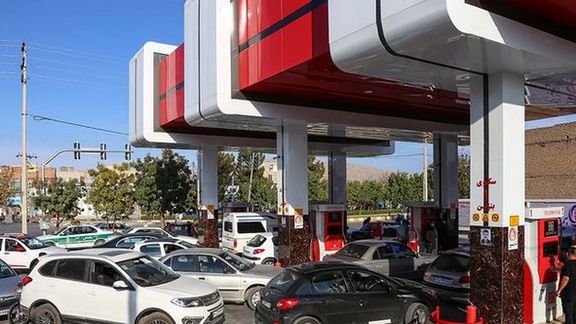
Cars trying to pump gas in Tehran amid disruption. October 27, 2021

Kayhan Daily, a flagship hardline newspaper in Tehran, has accused Israel and the United States of launching an apparent cyberattack on Iran’s gas stations.

The newspaper, controlled by Supreme Leader Ali Khamenei’s office, in an editorial called Israel and the US the leading suspects in what Iran has said was a cyberattack that for two days has paralyzed gas stations nationwide. The paper also said that creating a national intranet and cutting the country off from the Internet should be a top priority, similar to producing accurate missiles and military drones.

President Ebrahim Raisi had insisted on Wednesday that the cyberattack was meant to anger the people to create unrest in the country.

Iran’s interior minister Ahmad Vahidi said the incident was plot by “the enemy” before the anniversary of the 2019 November unrest, that has become a symbol of the regime’s brutality for opponents and critics. During a few days of nationwide protests in mid-November 2019, government security forces killed hundreds of protesters using military ammunition.

Vahidi said the enemy has plans for the anniversary and the disruption of the fuel system was the first act. However, he said that the public was calm and showed no reaction, which he said proved that people believe in the sincerity of the authorities.

Interior Minister Ahmad Vahidi, former IRGC commander
100%
Interior Minister Ahmad Vahidi, former IRGC commander

Iran has not officially confirmed the source of the apparent cyberattack. The head of civil defense agency has said that authorities have not confirmed foreign involvement in the attack.

So far, only 700 gas stations out of around 4,000 have returned to normal operations. The incident affected smart cards that people use to buy rationed gasoline at half price. Pumps were not affected that gasoline was sold at higher prices.

Immediately as the disruption began, speculation started on Iranian social media that the incident was not a cyberattack and it was orchestrated by the government to raise gasoline prices, which are heavily subsidized in Iran. However, unlike November 2019 when a sudden hike in fuel prices led to unrest, this time the situation was calm.

President Raisi has taken credit for the peaceful handling of the situation and hardliners have compared it with 2019 when the fuel price hike was said to have been so sudden that it triggered immediate protests.

Fereydun Abbasi, a member of parliament’s energy committee and a former head of Iran’s nuclear energy agency said the cyberattack by “the enemy” was meant “to anger the people” to create unrest. He urged that major vulnerable points in the country should be defended. He added that the enemy uses its best scientists to disrupt people’s lives and will launch new attacks with novel plans.

Iran has experienced several major cyberattacks and sabotage attacks since July 2020. Its uranium enrichment facility in Natanz was targeted twice with devastating effect and a few months ago its railroad system was crippled by a cyberattack. Both Iran as well as foreign experts and media have said Israel was behind the attacks, but no one has claimed responsibility. But Israel has repeatedly said it will not allow Iran to produce nuclear weapons and is ready to use even military force.


Most Viewed

US blockade enters murky phase as tankers spoof signals and buyers hesitate
1
ANALYSIS

US blockade enters murky phase as tankers spoof signals and buyers hesitate

2
INSIGHT

Ideology may be fading in Iran, but not in Kashmir's ‘Mini Iran'

3
INSIGHT

Hardliners push Hormuz ‘red line’ as US blockade tests Iran’s leverage

4
VOICES FROM IRAN

Hope and anger in Iran as fragile ceasefire persists

5

US sanctions oil network tied to Iranian tycoon Shamkhani

Banner
Banner

Spotlight

  • Hardliners push Hormuz ‘red line’ as US blockade tests Iran’s leverage
    INSIGHT

    Hardliners push Hormuz ‘red line’ as US blockade tests Iran’s leverage

  • Ideology may be fading in Iran, but not in Kashmir's ‘Mini Iran'
    INSIGHT

    Ideology may be fading in Iran, but not in Kashmir's ‘Mini Iran'

  • War damage amounts to $3,000 per Iranian, with blockade set to add to losses
    INSIGHT

    War damage amounts to $3,000 per Iranian, with blockade set to add to losses

  • Why the $100 billion Hormuz toll revenue is a myth
    ANALYSIS

    Why the $100 billion Hormuz toll revenue is a myth

  • US blockade targets Iran oil boom amid regional disruption
    ANALYSIS

    US blockade targets Iran oil boom amid regional disruption

  • Iran's digital economy battered by prolonged blackout
    INSIGHT

    Iran's digital economy battered by prolonged blackout

•
•
•

More Stories

Iran State Media Unexpectedly Focuses On Nepotism, Exposing Mayor

Oct 28, 2021, 09:11 GMT+1
•
Iran International Newsroom

Nepotism was a top issue for Iran's official media that unexpectedly did not censor the news about Tehran's mayor appointing his son-in-law as his adviser.

When protest escalated in the press and on the state television and attracted everyone's attention with a mixture of jokes and sarcasm, mayor Alireza Zakani said that his son-in-law, Hossein Haydari is supposed to work for free.

Zakani was a hardline member of parliament before becoming a candidate in the June presidential election and lost. The newly elected city council, also with a majority of hardliners reluctantly appointed him mayor in August.

In a surprising development, the state television aired footage dating back to the June presidential election which showed Zakani promising as that he will not employ his relatives if he is elected President. The video went viral on social media in a matter of minutes.

He was not elected president, but he gave jobs to his relatives and his friends' relatives and even the daughter-in-law of an influential cleric in Shiraz, possibly hoping to use the cleric's influence in case political waters got rough, the media reminded.

Zakani and his son-in-law Hossein Haydari
100%
Zakani and his son-in-law Hossein Haydari

Many unemployed social media users as well as those not happy with their jobs regretted that they should have more carefully chosen their fathers-in-law rather than being picky about choosing their wives.

It appears that following recent changes in the management of state television, transparency and exposing nepotism and corruption is on its agenda, at least depending on who the target of criticism might be.

The new approach of reporting on such cases might be an attempt to restore credibility after years of sweeping scandals under the rug.

The public knows that appointing relatives to senior government posts is not just securing a job for them, but the influence and opportunity of networking and illicit incomes that come with the position.

The founder of the Islamic Republic Ayatollah Ruhollah Khomeini gave top jobs at the government and the Judiciary to his sons-in-law. In Iran under Ali Khamenei as Supreme Leader, his relatives including current Majles Speaker Mohammad Bagher Ghalibaf and former Majles Speaker Gholamali Haddad Adel have always had top positions in the government.

Mohsen Rezaei and his son-in-law Mehdi Ahmadi
100%
Mohsen Rezaei and his son-in-law Mehdi Ahmadi

Reformist daily Sharq on Wednesday, October 27 listed some of the sons-in-law in top positions. One who has been appointed most recently is Mehdi Ahmadi, a son-in-law of Mohsen Rezaei, Vice President for economic affairs. Ahmadi was appointed as the CEO of Bank Saderat Iran, one of the most prominent financial institutions in the country. However, he told Sharq that he has quit his new job “after he consulted the Koran.” Ahmadi, who is also a relative of Ghalibaf, is still a board member and acting CEO of Bank Shahr.

Another top son-in-law was Ali Ashraf Riahi the husband of a former industry minister's daughter. He fled the country after being convicted in a major financial corruption case, Sharq wrote.

Former President Hassan Rouhani's son-in-law Kambiz Mehdizadeh Farsad had to quit his job as deputy industry minister after critics charged that his appointment to the post was illegitimate. In his resignation letter, Farsad said he would return to his former "trench" as a research scientist.

Another controversial son-in-law was Mohammad Hadi Razavi, who is married to one of the daughters of Rouhani's former labor minister Mohammad Shariatmadari. When the son-in-law was being tried in a major financial corruption case, Shariatmadari said, "No one can blackmail me even if they slaughter my child." Razavi was eventually sentenced to 20 years in jail for disrupting the country's economic order.

Haddad Adel's son-in-law Ruhollah Rahmani had to resign his top position at the ministry of communication for quietly holding US citizenship. Haddad had said on state TV: "My son-in-law is a citizen of America and comes from a family that nurtures martyrs." Haddad's other son-in-law is Khamenei's son Mojtaba.

Former President Mahmoud Ahmadinejad's brother-in-law Mehdi Khorshidi was first appointed as the head of Iran's Standardization Organization. His appointment was cancelled after the Majles protested, but one of Ahmadinejad's vice presidents appointed him as an adviser.

Political Prisoner Tries To Commit Suicide By Self-Immolation In Iran Jail

Oct 28, 2021, 07:49 GMT+1

A political prisoner in Tehran’s Evin prison has reportedly tried to commit suicide by self-immolation after his please for conditional release were ignored.

Mehdi Darini, a 35-year-old independent activist was arrested in 2019 and sentenced to10 years for "unlawful assembly to disrupt national security” and “propaganda against the regime”, vague political charges commonly used to convict activists and protesters.

Kayvan Samimi, another political prisoner, reported about the suicide attempt on his social media account. He said that Darini set himself on fire and was rescued by other detainees and guards who took him to the prison infirmary. He said his condition is satisfactory.

Darini is a production engineer and his family owns a company that produces kitchen appliances.

According to Samimi, he repeatedly asked for conditional release, but his interrogator and judicial authorities ignored him.

At least more than a dozen political prisoners have died under suspicious circumstances in Iranian jails in the past 12 years. Some had obvious signs of torture, while in many cases it was not independently possible to determine the exact cause of death.

Afghan Neighbors Meeting In Iran Weighs Up How To Deal With Taliban

Oct 27, 2021, 22:08 GMT+1
•
Maryam Sinaiee

A meeting of Afghanistan’s neighboring states in Tehran condemned violent attacks "in all shapes and forms including those against ethnic and religious groups."

The foreign ministers of Iran, Pakistan, Turkmenistan, Uzbekistan, Tajikistan, China, and Russia called Wednesday for an "inclusive and broad-based political structure with the participation of all ethno-political groups," and urged the world, including the United Nations, to provide urgent economic and humanitarian assistance.

The message of the conference in Tehran was clear, Iranian foreign minister Hossein Amir-Abdollahian tweeted Wednesday afternoon: "Peace will only stem from [an] inclusive government [and] respect for [the] will of Afghan people."

In a press conference after the meeting, Amir-Abdollahian said the Taliban were in charge of a caretaker government. Amir-Abdollahian said Afghan assets held by foreign banks should be released before winter sets in, and that humanitarian and economic support should be provided to prevent insurgents exploiting hardships.

Iran’s neighbors have delayed formal recognition of the new authorities but there is growing acceptance internationally of the new reality in Kabul. The European Union is soon to reopen its diplomatic mission, withdrawn to Qatar in August.

Iran has said that one aim of holding the Tehran meeting was to convey the message of "opposition to foreign interference," a sideswipe at the United States, which ended in August its 20-year military presence. The Russian and Chinese foreign ministers participated via video-link, while United Nations Secretary General Antonio Guterres sent a message.

The Taliban were apparently not invited but welcomed the initiative. Opinions in Iran over how to deal with the situation in Afghanistan are mixed, with reformist and some conservative voices opposing recognizing the Taliban without offering a clear alternative.

Russia has suggested it would recognize the Taliban if it met several conditions. Amir- Abdollahian said participants had reached basic agreement on the Taliban joining the next neighbors’ gathering provided representatives of all major Afghan ethnic groups were present.

The meeting came a week after the meeting in the Russian capital of ‘Moscow Format Consultations on Afghanistan,’ which brought together Russia, China, Iran, India, Pakistan, and four central Asia republics. A closing statement – from which Tehran dissented for reasons that remain unclear – assessed the Taliban as de facto rulers of Afghanistan irrespective of formal recognition internationally.

Erdogan Says Iran Must Act With A 'Sound Mind' Toward Azerbaijan

Oct 27, 2021, 17:08 GMT+1

Turkish President Recep Tayyip Erdogan has said that if Iran acts with a “sound mind”, it will have no difficulty with the neighboring Republic of Azerbaijan.

Media in Baku quoted Erdogan after his visit to Azerbaijan this week as saying that President Ilham Aliyev has an “unshakable position and will not compromise”.

Relations between Tehran and Baku became tense in September when Azerbaijan arrested two Iranian truck drivers on their way to Armenia and then conducted military exercises with Turkey and Pakistan. Iran retaliated by holding its own large-scale drills near the border. Media in the two countries adopted an adversarial tone, but foreign ministers held talks to reduce tensions.

Erdogan, who is a close ally of Aliyev, said Iran’s protests that Baku has close ties with Israel will not change Azerbaijan’s decision making.

Top Iranian officials, including Supreme Leader Ali Khamenei have criticized Baku’s close ties with Israel.

Last week, Erdogan had said Iran would not continue tensions with Azerbaijan as it is concerned about its own Azari-speaking population. Iran’s national security chief responded by dismissing Erdogan’s comments and referring to Turkey’s tensions with its own minorities.

Iranian Kickboxer Reportedly Defects To Ask Asylum In Germany

Oct 27, 2021, 14:47 GMT+1

A young Iranian kickboxer who had traveled to Italy for a tournament has left his hotel and reportedly gone to Germany to apply for political asylum.

Omid Ahmadisafa has received permission from Iran’s boxing federation to travel to Italy, where he left his hotel and never returned, according to Khabar Online website in Tehran. Informed sources believe he might have gone to Germany to apply for asylum.

Several Iranian athletes in the past two years have defected from Iranian national teams and sought asylum in other countries. Some took part in the year’s Olympics in Tokyo as non-state athletes.

One of the main issues forcing Iranian sports people to defect is Tehran’s policy of not allowing them to compete against Israelis. Apparently Ahmadisafa was also forced to lose weight to compete in a lower weight class to avoid an Israeli opponent.

Refusing to compete against an opponent for political reasons is banned in international sports, but various federations have so far given Iran a free pass. Iran also does not allow women as spectators in men’s games such as soccer, basketball and volleyball.

Iranian media say Ahmadisafa is a promising young star in light-weight boxing and kickboxing. He has a gold medal from Asian games and a champion in kickboxing.