• العربية
  • فارسی
Brand
  • Iran Insight
  • Politics
  • Economy
  • Analysis
  • Special Report
  • Opinion
  • Podcast
  • Live TV
  • Iran Insight
  • Politics
  • Economy
  • Analysis
  • Special Report
  • Opinion
  • Podcast
  • Live TV
  • Theme
  • Language
    • العربية
    • فارسی
  • Iran Insight
  • Politics
  • Economy
  • Analysis
  • Special Report
  • Opinion
  • Podcast
  • Live TV
All rights reserved for Volant Media UK Limited
volant media logo

Finnish grocery brand drawn into Khamenei funeral spectacle in Iraq

Jul 9, 2026, 08:30 GMT+1Updated: 11:26 GMT+1
Screengrab from a Reuters video shows a refrigerated vehicle carrying the coffin of Iran’s former Supreme Leader Ali Khamenei in Karbala, Iraq, on July 9, 2026.

A Finnish supermarket group has found itself unexpectedly drawn into Ali Khamenei’s funeral ceremonies after footage from Iraq appeared to show his coffin being unloaded from a refrigerated truck carrying K-Group branding.

The scene, filmed in Karbala and circulated by Reuters, showed a large crowd surrounding a refrigerated truck marked with orange-and-white logos resembling those of Finland’s K Group, part of the retail giant Kesko. Men in dark clothing then pulled a coffin from the frosted rear compartment and carried it above the crowd.

100%
Supermarket K Market, Kallio, Helsinki

The footage was filmed during the Iraqi leg of Khamenei’s funeral processions, which moved through Najaf and Karbala before his planned burial in Mashhad on July 9.

The image quickly drew attention in Finland, where Finnish tabloid Ilta-Sanomat described the sight as “incredible” and said Finns may have had to “rub their eyes” when they saw what looked like familiar K-Market-style branding in the middle of Khamenei’s funeral. Helsingin Sanomat, Finland’s largest daily newspaper, also reported the story.

Yle, Finland’s public broadcaster, ran the story under the headline: “Was Khamenei’s coffin pulled from a K-Group vehicle in Iraq?” It said the Reuters video showed a cold transport truck with orange coloring and repeated K letters that appeared to resemble K Group logos.

Kesko told Yle it had no information about the vehicle and had only become aware of the case through the images.

The company said its deliveries are handled by partner-owned vehicles and that Kesko does not have its own fleet. It suggested one possibility was that a transport partner had sold a vehicle onward without removing K-Group markings.

“This may be a situation where one of our transport partners failed to remove decals referring to us when selling equipment onward,” Kesko told Yle by email.

The company said it would remind transport operators that such decals must be removed before vehicles are sold.

There is no indication that Kesko or K-Market had any involvement in Khamenei’s funeral procession or that the company owned or operated the truck.

The strange visual detail stood out because of the contrast: one of the Islamic Republic’s most symbolic funeral ceremonies, a coffin kept cold after months of delayed burial, and what appeared to be the branding of a Finnish grocery chain on the vehicle carrying it through Karbala.

Most Viewed

Iran’s oil industry has too many masters
1
OPINION

Iran’s oil industry has too many masters

2
ANALYSIS

Why Trump said no to Iran’s Hormuz proposal

3

Tehran seeks negotiated way out as Washington maintains pressure

4
PODCAST

Trump may be buying time on Iran until after the midterms

5

Iran wrong to expect midterms to restrain Trump, former US official says

Banner
Banner

Spotlight

  • Why Trump said no to Iran’s Hormuz proposal
    ANALYSIS

    Why Trump said no to Iran’s Hormuz proposal

  • Iran’s oil industry has too many masters
    OPINION

    Iran’s oil industry has too many masters

  • Iran wrong to expect midterms to restrain Trump, former US official says

    Iran wrong to expect midterms to restrain Trump, former US official says

  • Trump may be buying time on Iran until after the midterms
    PODCAST

    Trump may be buying time on Iran until after the midterms

  • Pezeshkian’s Fox News nuclear overture draws hardline backlash
    INSIGHT

    Pezeshkian’s Fox News nuclear overture draws hardline backlash

  • US and Iran want a deal, but neither wants to move first
    ANALYSIS

    US and Iran want a deal, but neither wants to move first

Banner
Banner
•
•
•

More Stories

Iran summons British ambassador after London calls in senior diplomat

Jul 9, 2026, 08:28 GMT+1
100%

Iran summoned the British ambassador in Tehran on Thursday, two days after Britain called in Iran's most senior diplomat in London following the conviction of two Romanian men over the stabbing of an Iran International journalist.

Iran's foreign ministry said it handed the ambassador a protest note rejecting what it called "groundless and false" British statements that Tehran had sought to carry out security-related activities in the United Kingdom.

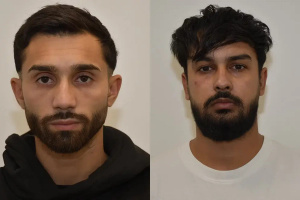
Britain summoned Iran's chargé d'affaires on Tuesday after George Stana and Nandito Badea were sentenced to 12 years and eight years in prison, respectively, for their role in the 2024 attack on Pouria Zeraati, an Iranian-British journalist who works for Iran International.

Zeraati was stabbed three times in the leg near his home in southwest London in March 2024.

British prosecutors said the two Romanian nationals were acting as proxies for the Iranian government. They had pleaded not guilty to wounding with intent but were convicted at London's Woolwich Crown Court.

Judge links attack to Iranian state

The British Foreign Office said the judge had concluded that the attack was carried out "in the interests of, and on behalf of, the Iranian state."

According to a police statement, the judge ruled that the "foreign power condition" under Britain's National Security Act was met in Stana's case because of "extensive planning and his lengthy involvement in the plot", indicating that he knew, or at least should have known, of the connection to the Iranian state.

  • Romanian men get combined 20 years over Iran International journalist attack

    Romanian men get combined 20 years over Iran International journalist attack

The police statement said the condition was not met in Badea's case because he was not aware of the Iran connection as the reason for the attack.

Tehran rejects British move

Iran's foreign ministry rejected Britain's statements as "groundless and false" and said they amounted to an attempt to divert attention from Britain's own conduct.

Britain's Foreign Office said the case followed "a longstanding pattern of hostile activity by the Iranian intelligence services on UK soil" and said Iran must stop such activity immediately. Iran's embassy in London has rejected what it called "unfounded, politically motivated and hostile allegations."

Iran's foreign ministry also called on Britain to stop hosting media outlets that Tehran said were "funded and directed by the Israeli regime." It said Britain should end such activity "as soon as possible."

Hamas gives up Gaza government, but not Iran ties

Jul 8, 2026, 16:05 GMT+1
•
Negar Mojtahedi
100%
A senior Hamas official meets Iran's parliament speaker Mohammad Bagher Ghalibaf on the sidelines of the funeral ceremonies for slain supreme leader Ali Khamenei, July 4, 2026

Hamas says it is stepping away from governing Gaza. But is it actually giving up power or turning away from its longtime backers in Tehran?

The group’s announcement that it is dissolving the governing body that administered Gaza for nearly two decades has been presented as a significant political concession under a US-backed roadmap for the enclave’s future.

But analysts who spoke to Iran International say the move is largely cosmetic, leaving Hamas’s military structure intact and doing little to alter its long-standing relationship with Iran.

Rather than abandoning Hamas, Iran has simply shifted its priorities, they argue, placing Hezbollah and Lebanon ahead of Gaza while quietly maintaining ties with the group.

"It's not even symbolic, it's a lie," said Beni Sabti, an Iran researcher at the Institute for National Security Studies (INSS). "The real thing is not even the disarmament. The ideology is still there."

The announcement dissolves Hamas’s civilian governing body, but leaves unanswered whether the group is willing to surrender its weapons and relinquish control over Gaza’s security apparatus.

For Sabti, that omission is the entire story.

"Iran is acting behind the curtains, also for Hamas," he said.

Recent developments suggest the relationship remains active despite Tehran’s muted public rhetoric.

Before the Iran-US memorandum was signed, a Hamas military spokesman said Iranian officials had pledged to help secure a ceasefire in Gaza.

Hamas representatives also traveled to Tehran for Ali Khamenei’s funeral, where they met senior Iranian officials, including Parliament Speaker Mohammad Bagher Ghalibaf.

To Sabti, those contacts suggest Tehran has not changed its long-term strategy. Instead, it has temporarily reordered its priorities.

"Hezbollah is the most important," he said, arguing Iran has historically never abandoned its proxy groups.

The timing of Hamas’s announcement also reflects mounting pressure on the group.

It comes amid a US-backed political process for Gaza’s future, sustained pressure from Egypt and Qatar, renewed political competition from Palestinian Authority President Mahmoud Abbas and growing anti-Hamas protests inside Gaza itself.

Dalia Ziada, a Middle East analyst with ISGAP, argues Hamas’s announcement was designed to respond to those pressures without making the one concession demanded by Israel and much of the international community.

"They were forced to say something, not to do something," she said.

According to Ziada, Hamas has not agreed to disarm, dismantle its military wing or remove the network of loyalists embedded throughout Gaza’s civilian institutions.

"The international community is dealing with Hamas as a political entity," she said. "But no. This is a terrorist militia."

Ziada believes Tehran’s current restraint reflects pragmatism rather than a strategic break.

"Hamas is not profitable anymore," she said, arguing the group has become more of a liability than an asset following Israel’s campaign against its leadership. "If Hamas survives this situation... of course Iran will snap back."

Former Israeli intelligence official Avi Melamed agrees Hamas’s announcement should not be mistaken for a genuine transfer of power.

"I don't think that anyone really takes it seriously," he said.

Melamed argues Iran views Hamas primarily as a strategic instrument rather than an ideological partner.

"The relationship has been always clear. Hamas is a useful servant for the Iranian regime."

For Tehran, he says, Hezbollah remains the crown jewel of its regional network, while Hamas occupies a lower place in what he describes as the "food chain."

"Hamas and Islamic Jihad know their place in the food chain," Melamed said.

That hierarchy helps explain why Lebanon featured prominently in the Iran-US memorandum while Gaza did not.

The announcement may ease diplomatic pressure and create space for negotiations over Gaza’s future. But without disarmament, analysts argue, it changes little about the balance of power on the ground.

Hamas may be stepping away from civilian administration. Its military structure remains intact. And despite Tehran’s public silence, few expect Iran’s relationship with Hamas to disappear.


Khamenei to end Eje'i’s judiciary tenure after one term

Jun 30, 2026, 20:48 GMT+1
100%

Iran's Supreme Leader Mojtaba Khamenei plans to remove judiciary chief Gholam-Hossein Mohseni Eje'i at the end of his first five-year term and appoint a new figure to lead the judiciary, sources familiar with the matter told Iran International.

Sources inside Iran told Iran International that Khamenei does not intend to extend Eje'i’s term for another five years, breaking with a practice followed for nearly four decades in which judiciary chiefs have usually served two consecutive five-year terms.

The sources, who spoke on condition of anonymity, said the decision is not aimed at judicial reform but is part of a broader reshaping of power after the recent war.

They said the new supreme leader is seeking to replace key officials in major state institutions with figures more closely aligned with him.

Eje'i’s expected removal could mark one of the first major signs of Khamenei’s effort to rebuild control over the Islamic Republic’s judicial, security and political apparatus after the transfer of power.

Hardliners step up pressure on Eje'i

The decision comes amid growing criticism of Eje'i from hardline figures after the names of Supreme National Security Council members who voted in favor of a memorandum of understanding with the United States were disclosed.

Critics say Eje'i’s vote was at odds with Khamenei’s stated position, after the leader said in a letter that he had, in principle, held a different view on the memorandum of understanding.

Signs of dissatisfaction with Eje'i’s five-year record have also appeared in recent official and semi-official commentary close to the power structure.

In a message marking Judiciary Week, Khamenei did not clearly endorse Eje'i’s continuation in office. Instead, he addressed the judiciary as an institution and called for the “actualization” of demands previously made by former Supreme Leader Ali Khamenei.

The message repeated calls for the implementation of the judicial transformation document, fighting corruption inside the judiciary, reviving public rights, blocking the use of recommendations and lobbying, and improving communication with the public.

Eje'i seeks to defend his record

A day later, Eje'i published a letter to Khamenei in deferential language, defending the judiciary’s performance and pledging to continue the path of “judicial transformation.”

“I and all components of the judiciary consider ourselves obliged to carry out Your Excellency’s binding commands precisely, swiftly and without any reduction,” Eje'i wrote.

Media outlets and figures close to the establishment criticized Eje'i for not publishing such a letter before Khamenei’s message. Some also described the new leader’s renewed emphasis on his father’s demands as a negative assessment of Eje'i’s record, arguing that their repetition showed the judiciary had failed to deliver practical results under him.

Rival factions inside the establishment have also stepped up attacks on Eje'i, accusing him of distancing himself from the leadership’s demands.

Media close to Parliament Speaker Mohammad Bagher Ghalibaf and President Masoud Pezeshkian have described the attacks as part of an effort by the faction aligned with Saeed Jalili, a member of Iran’s Supreme National Security Council, and the Paydari Front to create divisions among senior officials and weaken the postwar political path.

Media close to the judiciary and Eje'i’s supporters have sought to portray his five-year record as successful, citing reduced imprisonment, electronic court proceedings, shorter trials, anti-corruption efforts and public outreach.

Rights groups point to record of repression

Human rights groups and activists say Eje'i is not a reformist figure but a long-standing part of the Islamic Republic’s repressive judicial and security apparatus.

They point to his record in the Special Clerical Court, the Ministry of Intelligence, and later as first deputy and head of the judiciary, saying his tenure has been marked by continued heavy sentences against protesters, political activists, journalists, prisoners of conscience and minorities.

Rights advocates say the judiciary under Eje'i has continued to act as the legal and executive arm of security institutions in political and security cases.

They also argue that replacing Eje'i alone would not bring meaningful change without structural reform, an end to security interference in judicial cases, guaranteed access to lawyers, a halt to forced confessions, the annulment of political verdicts and respect for fair trial standards.