• العربية
  • فارسی
Brand
  • Iran Insight
  • Politics
  • Economy
  • Analysis
  • Special Report
  • Opinion
  • Podcast
  • Iran Insight
  • Politics
  • Economy
  • Analysis
  • Special Report
  • Opinion
  • Podcast
  • Theme
  • Language
    • العربية
    • فارسی
  • Iran Insight
  • Politics
  • Economy
  • Analysis
  • Special Report
  • Opinion
  • Podcast
All rights reserved for Volant Media UK Limited
volant media logo

US 'losing the war' in Iran and better exit from conflict, Rep. Moulton says

May 27, 2026, 22:08 GMT+1

Democratic member of the House of Representatives and Armed Services Committee member Seth Moulton said on CNN on Wednesday that the war with Iran “has been a failure every step of the way,” arguing that the United States is “losing the war.”

“This war has been a failure every step of the way. And amazingly, the Trump administration seemed to finally realize this, which is why they’ve backed off and are seeking a deal with Iran. Let’s be clear, it’s not Iran begging for a deal. It’s the Trump administration,” Moulton, a former Marine, said.

“But it’s still the best course of action that they can take at this point, because escalating it only risks getting us more deeply involved and makes it harder to pull out. At this point, we’re losing the war. We’ve got to cut our losses and go home,” he added.

Most Viewed

Text of US-Iran memorandum released
1

Text of US-Iran memorandum released

2

Toronto shooting probe uncovers trail leading to Tehran

3

US says Iran won't get funds upfront under MoU

4
INSIGHT

Can Iranians cheer Team Melli without cheering the state?

5

US says Iran deal will end enrichment, destroy uranium stocks, cap missiles

Banner
Banner
Banner

Spotlight

  • Who in Tehran is opposing a deal with Washington?
    INSIGHT

    Who in Tehran is opposing a deal with Washington?

  • A fragile compact: ambiguities that could undermine US-Iran MoU
    ANALYSIS

    A fragile compact: ambiguities that could undermine US-Iran MoU

  • A thaw with the US won't fill Iranian tables overnight
    INSIGHT

    A thaw with the US won't fill Iranian tables overnight

  • Why some think a weakened Iran could emerge stronger
    ANALYSIS

    Why some think a weakened Iran could emerge stronger

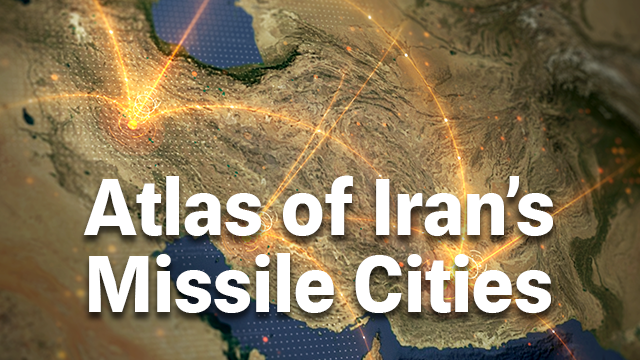
  • Atlas of Iran missile cities: The hidden network behind Tehran’s missile power
    SPECIAL REPORT

    Atlas of Iran missile cities: The hidden network behind Tehran’s missile power

  • Toronto shooting probe uncovers trail leading to Tehran

    Toronto shooting probe uncovers trail leading to Tehran

•
•
•

More Stories

Iran’s partial internet return exposes rift inside ruling system

May 27, 2026, 20:59 GMT+1

Iran’s partial restoration of international internet access after nearly three months of blackout has opened a new fight inside the ruling system, with hardliners accusing President Masoud Pezeshkian’s government of bypassing powerful security and cyberspace institutions.

The dispute centers on a “special headquarters” set up earlier this month under First Vice President Mohammad-Reza Aref to determine how and when broader access to the global internet should resume after wartime restrictions imposed during the recent conflict between Iran and Israel.

Hardliners have portrayed the body as a parallel institution created to sideline opponents inside the Supreme National Security Council and the Supreme Council of Cyberspace, two of Iran’s most influential policymaking bodies on security and internet governance.

The backlash intensified after the headquarters voted on Monday to move forward with restoring international internet access.

In response, four hardline members of the Supreme Council of Cyberspace filed a complaint with Iran’s Administrative Justice Court, seeking to halt implementation of the decision and dissolve the newly formed body.

Continue reading...

Iran says US presence in South Caucasus would undermine security

May 27, 2026, 20:57 GMT+1

Iran’s Foreign Ministry spokesperson Esmaeil Baghaei said Tehran opposes what he called a destabilizing US presence in the South Caucasus, while responding to developments around the so-called TRIPP plan, the Trump Route for International Peace and Prosperity.

Speaking to ISNA, Baghaei said Iran’s position on security in the South Caucasus was clear and that Tehran supported expanding economic ties and reopening transport routes.

But he said the Islamic Republic had deep suspicion about US intentions, citing what he called Washington’s record of aggression in other regions, and said Tehran had openly opposed any destabilizing US presence in the South Caucasus.

Baghaei said the South Caucasus is Iran’s immediate neighborhood and that peace, stability and economic development there serve Iran’s national interests.

Iran’s partial internet return exposes rift inside ruling system

May 27, 2026, 20:54 GMT+1
•
Maryam Sinaiee
Iran’s partial internet return exposes rift inside ruling system
100%

Iran’s partial restoration of international internet access after nearly three months of blackout has opened a new fight inside the ruling system, with hardliners accusing President Masoud Pezeshkian’s government of bypassing powerful security and cyberspace institutions.

The dispute centers on a “special headquarters” set up earlier this month under First Vice President Mohammad-Reza Aref to determine how and when broader access to the global internet should resume after wartime restrictions imposed during the recent conflict between Iran and Israel.

Hardliners have portrayed the body as a parallel institution created to sideline opponents inside the Supreme National Security Council and the Supreme Council of Cyberspace, two of Iran’s most influential policymaking bodies on security and internet governance.

Hardliners go to court

The backlash intensified after the headquarters voted on Monday to move forward with restoring international internet access.

In response, four hardline members of the Supreme Council of Cyberspace filed a complaint with Iran’s Administrative Justice Court, seeking to halt implementation of the decision and dissolve the newly formed body.

The court quickly ordered the suspension of the headquarters’ decisions pending a final review. But the government later moved ahead with reconnection, and within hours home internet services began returning in parts of the country, followed later by access through some mobile operators.

The legal complaint drew particular attention because of the people involved. Iranian media identified the four plaintiffs as figures affiliated with the ultra-conservative Paydari, or Steadfastness, camp who also serve on the Supreme Council of Cyberspace.

Reports also suggested that the complaint was encouraged by Mohammad-Amin Aghamiri, secretary of the Supreme Council of Cyberspace, who was appointed during the administration of former president Ebrahim Raisi. Reformist allies of Pezeshkian have repeatedly called for Aghamiri’s removal, but he has remained in office.

According to reports from inside the meeting chaired by Aref, nine members voted in favor of restoring broader internet access, while three opposed it. Those reportedly opposed included Aghamiri and Peyman Jebelli, head of Iran’s state broadcaster.

Both men have consistently opposed access to the global internet and have publicly supported a “Chinese-style” internet governance model, centered on a heavily controlled domestic network often described by critics as the “Iranian internet.”

Attacks on government

Hardline criticism has focused less on the technical restoration itself than on who had the authority to make the decision.

Hamshahri, a newspaper run by Tehran Municipality and heavily influenced by hardline factions, argued that restrictions should remain because cyberspace had become one of the main fronts of war.

“Is it really still unclear that today’s war is no longer fought only on land, in the air and at sea, and that cyberspace has become one of the principal battlefields?” the newspaper wrote.

The IRGC-linked Fars News Agency wrote that critics of the government were concerned that “legal mechanisms in the country’s macro-decisions” could gradually be weakened if the authority of other institutions were compromised.

Hamid Rasaee, a hardline member of parliament, wrote on X that the committee formed by Aref had submitted its resolution to the president for approval, “but Pezeshkian himself knows that although he is the head of the Supreme National Security Council, he has no authority to violate its resolutions."

Hamed Nikoonahad, a law professor at Shahid Beheshti University, also told state television that without a resolution from the Supreme National Security Council, the internet should not return to its previous state unless a higher authority, meaning the Supreme Leader, orders it.

Raja News, which reflects the views of Saeed Jalili and the Paydari Front, criticized the silence of other conservatives who support Pezeshkian’s administration. In a note titled “The government’s fabricated headquarters bypassed the Supreme National Security Council resolution,” it demanded that they take a clear position.

Partial and fragile access

The restoration remains limited.

The partial return is far from a full reopening. Internet monitor NetBlocks said access remains heavily filtered, with new restrictions on messaging platforms and app stores, while unstable connections continue to leave many users dependent on VPNs.

According to NetBlocks, access has recovered to slightly more than 60 percent of normal levels.

Neda, an interior designer in Tehran, told Iran International that past experience had made her skeptical of the sudden change. She recalled how internet access improved briefly after the January unrest, only to be restricted again when the war began.

She said nearly three months of total disconnection had changed public expectations.

“As the saying goes, they made us look at death so we would settle for a fever,” she said.

Iran lawmaker says Lebanon clause is only clear gain in draft deal

May 27, 2026, 20:19 GMT+1

Iranian lawmaker Malek Shariati said the reported 14-point text under negotiation with the United States contains only one provision fully aligned with Tehran’s demands.

Shariati, a member of parliament’s Energy Committee, wrote that the only clearly favorable point for the Islamic Republic was the inclusion of Lebanon in a clause calling for a permanent end to the war on all fronts involving allies of Tehran and Washington.

He argued, however, that even that provision had already been violated before any agreement, citing what he described as repeated Israeli ground and air attacks.

Iran lawmaker says possible US deal does not match Tehran’s claimed victory

May 27, 2026, 20:16 GMT+1

Ebrahim Rezaei, spokesperson for Iran’s parliament National Security Committee, criticized reports of a possible agreement between Tehran and Washington, saying the draft did not match what he called the Iranian people’s “great victory” in the 40-day war.

Writing on X, Rezaei said the reported text was only a draft and nothing had been finalized, but argued that it was not proportionate to the outcome of the war as described by Iranian officials.

Rezaei had earlier said the Islamic Republic should not make any nuclear commitment that would weaken its deterrent power.