• العربية
  • فارسی
Brand
  • Iran Insight
  • Politics
  • Economy
  • Analysis
  • Special Report
  • Opinion
  • Podcast
  • Iran Insight
  • Politics
  • Economy
  • Analysis
  • Special Report
  • Opinion
  • Podcast
  • Theme
  • Language
    • العربية
    • فارسی
  • Iran Insight
  • Politics
  • Economy
  • Analysis
  • Special Report
  • Opinion
  • Podcast
All rights reserved for Volant Media UK Limited
volant media logo

UN experts say efforts to end Iran war must address Iranians’ rights
Mar 30, 2026, 18:26 GMT+1

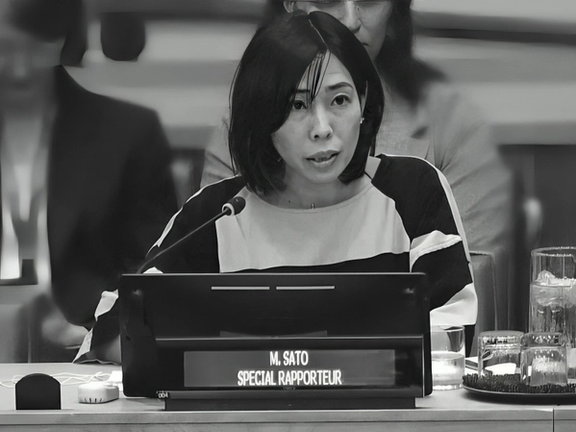
United Nations experts said on Monday that any effort to end the war between the United States, Israel and Iran must prioritize the human rights of people in Iran, warning that recent strikes have worsened an already severe situation.

“The people of Iran are under attack from outside and from within,” the experts said.

They said military strikes by the United States and Israel had increased civilian casualties, displacement and pressure on infrastructure, while longstanding human rights concerns persisted.

“The US-Israeli military strikes not only violate the UN Charter but have dramatically worsened these conditions and intensified internal repression,” they said.

The experts also pointed to executions, restrictions on civil liberties and limited access to information, including a prolonged internet shutdown.

“An end to the war is urgent and necessary but it will not on its own resolve Iran’s human rights crisis,” they said.

They called for any diplomatic process to include the release of detainees, restoration of internet access, accountability for violations and broader protections for civilians.


Most Viewed

IRGC-linked media hints at threat to Persian Gulf undersea internet cables
1

IRGC-linked media hints at threat to Persian Gulf undersea internet cables

2

Iran Guards say two ships seized in Hormuz after ceasefire extension

3
EXCLUSIVE

Strikes on petrochemical hubs leave Iran short of plastics

4
EXCLUSIVE

Family told missing teen was alive, then received his body 60 days later

5
TEHRAN INSIDER

The future has been switched off here

Banner
Banner

Spotlight

  • As Tehran digs in, ordinary Iranians pay the price
    INSIGHT

    As Tehran digs in, ordinary Iranians pay the price

  • Internet Pro or Censor Pro? Iran rolls out a new service
    ANALYSIS

    Internet Pro or Censor Pro? Iran rolls out a new service

  • Strikes on petrochemical hubs leave Iran short of plastics
    EXCLUSIVE

    Strikes on petrochemical hubs leave Iran short of plastics

  • Diplomacy tolls at Hormuz as conflict returns to its doorstep
    OPINION

    Diplomacy tolls at Hormuz as conflict returns to its doorstep

  • Opposition to US talks grows in Tehran as ceasefire deadline nears
    INSIGHT

    Opposition to US talks grows in Tehran as ceasefire deadline nears

  • The future has been switched off here
    TEHRAN INSIDER

    The future has been switched off here

•
•
•

More Stories

Watch: A Massacre in Iran, Part Three - Mashhad, Najafabad and Isfahan

Mar 30, 2026, 18:22 GMT+1

Iran's security forces killed thousands of protesters in Mashhad and Isfahan during the January 8–9 protests, among the deadliest days of the nationwide uprising.

The third episode of “A Massacre in Iran” examines the nights of killings in Mashhad, Najafabad, and Isfahan, including previously unseen footage.

Narrated by Iran International’s Farnoush Faraji, the documentary draws on eyewitness accounts and local sources.

Iran urges four Arab states not to allow use of their territory against it

Mar 30, 2026, 17:14 GMT+1

Iran’s ambassador to the United Nations said Tehran, in separate letters to the UN secretary-general and the Security Council, urged the United Arab Emirates, Saudi Arabia, Qatar and Kuwait to prevent the use of their territories for attacks against the country.

“Iran has expressed its strong and unequivocal protest against the aforementioned illegal actions and strongly calls on the United Arab Emirates, Saudi Arabia, Qatar and Kuwait to observe the principles of good neighborliness and to prevent the continued use of their territories against the Islamic Republic of Iran,” state media quoted Amir Saeid Iravani as saying.

He added that Iran reserves the right to take all necessary measures, including self-defense, to protect its sovereignty and territorial integrity.

Trump says we'll find out in a week whether US can work with Ghalibaf

Mar 30, 2026, 17:05 GMT+1

US President Donald Trump said the United States would soon determine whether Iran’s parliament speaker Mohammad Bagher Ghalibaf is willing to work with Washington, the New York Post reported.

“We’re gonna find out,” he said when asked about Ghalibaf.

“I’ll let you know that in about a week,” he added.

Iran’s FM tells French counterpart Iran to continue defensive operations

Mar 30, 2026, 16:18 GMT+1

Iran's foreign minister in a phone call with his French counterpart on Monday said Tehran would continue its attacks against what he called aggressors, including military bases and facilities located in regional countries.

“We emphasize the continuation of Iran’s defensive operations against aggressors, including their military bases and facilities that are stationed in the territory of countries in the region,” Abbas Araghchi said.

“The reason for Iran’s defensive operations in the region is the United States’ use of the territory, bases and facilities located in these countries to carry out an illegal war against Iran,” he added.

“Any provocative action by aggressors and their supporters, including in the United Nations Security Council regarding the situation in the Strait of Hormuz, will only make the situation more complicated,” he said.

EU extends Iran human rights sanctions until April 2027

Mar 30, 2026, 16:03 GMT+1

The Council of the European Union said on Monday it had extended its sanctions regime over serious human rights violations in Iran until April 13, 2027, citing ongoing concerns over repression and abuses.

“The Council today decided to extend EU restrictive measures responding to serious human rights violations in Iran until 13 April 2027,” the Council of the EU said in a statement.

The sanctions list now includes 262 individuals and 53 entities, after one deceased individual was removed, the statement added.

The EU first introduced the sanctions regime in 2011 and has extended it annually, expanding measures in recent years amid concerns over rights violations.