• العربية
  • فارسی
Brand
  • Iran Insight
  • Politics
  • Economy
  • Analysis
  • Special Report
  • Opinion
  • Podcast
  • Iran Insight
  • Politics
  • Economy
  • Analysis
  • Special Report
  • Opinion
  • Podcast
  • Theme
  • Language
    • العربية
    • فارسی
  • Iran Insight
  • Politics
  • Economy
  • Analysis
  • Special Report
  • Opinion
  • Podcast
All rights reserved for Volant Media UK Limited
volant media logo

IEA warns energy crisis triggered by Iran war ‘very severe’

Mar 23, 2026, 02:23 GMT+0

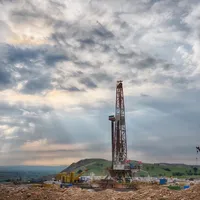
The head of the International Energy Agency warned Monday that the crisis triggered by US-Israeli strikes on Iran and Iranian retaliation is “very severe,” even worse than the oil shocks of the 1970s.

Fatih Birol said the agency is assessing market conditions and discussing options with member countries if disruptions to energy flows worsen.

“If it is necessary, of course, we will do it. We look at the conditions, we will analyse, assess the markets and discuss with our member countries,” Birol told the National Press Club in Canberra.

IEA members agreed on March 11 to release a record 400 million barrels of oil from strategic reserves to counter a surge in global crude prices following the outbreak of the war.

Most Viewed

IRGC-linked media hints at threat to Persian Gulf undersea internet cables
1

IRGC-linked media hints at threat to Persian Gulf undersea internet cables

2

Iran Guards say two ships seized in Hormuz after ceasefire extension

3

Iran executes former atomic agency employee over alleged spying for Israel

4
EXCLUSIVE

Disputes within Iran leadership blocked negotiators’ trip to Islamabad

5
ANALYSIS

Internet Pro or Censor Pro? Iran rolls out a new service

Banner
Banner

Spotlight

  • Tehran stocks head for reopening, but it risks triggering a new crisis
    ANALYSIS

    Tehran stocks head for reopening, but it risks triggering a new crisis

  • Power vacuum in Tehran emboldens hardliners
    INSIGHT

    Power vacuum in Tehran emboldens hardliners

  • Inflation spikes, basic goods slip out of reach for Iranians, citizens say
    VOICES FROM IRAN

    Inflation spikes, basic goods slip out of reach for Iranians, citizens say

  • Iran turns to citizenship and assets as tools of pressure beyond its borders

    Iran turns to citizenship and assets as tools of pressure beyond its borders

  • Who backs war now? Tehran flips the script
    INSIGHT

    Who backs war now? Tehran flips the script

  • As Tehran digs in, ordinary Iranians pay the price
    INSIGHT

    As Tehran digs in, ordinary Iranians pay the price

•
•
•

More Stories

Top Senate Democrat urges end to Iran war

Mar 23, 2026, 01:45 GMT+0

US Senate Democratic leader Chuck Schumer called for an end to the war in Iran, saying even some Republican lawmakers do not understand the administration’s strategy in the Middle East.

“Even some Republican Senators are openly admitting they have no clue what the Administration is trying to accomplish in the Middle East,” Schumer wrote on X Sunday.

“Enough is enough. End this war,” he added.

US CENTCOM chief says Iran targeting civilians out of ‘desperation’

Mar 23, 2026, 00:51 GMT+0
•
Samira Gharaei

The commander of US Central Command said Iran has increasingly targeted civilian sites across the Middle East out of "desperation" as its military capabilities deteriorate in the third week of the war.

"They're operating in a sign of desperation... In the last couple of weeks, they've attacked civilian targets very deliberately, more than 300 times," Adm. Brad Cooper said in an interview with Iran International.

Cooper also said Iran’s strain has reduced the volume of its attacks.

“At the beginning of the conflict, you saw large volumes in the dozens of drones and missiles. You no longer see that. It’s all one or two at a time,” Cooper said this in his first interview since the start of the war between Iran and the United States on Feb. 28.

Iranian officials have vowed to sustain a prolonged conflict and deny that their military capabilities are fading.

In one of its most severe attack on Israel to date, Iran targeted the Israeli towns of Arad and Dimona on Saturday, leaving dozens of people injured, according to Israeli authorities.

'Hormuz is physically open'

US and allied forces are working to secure shipping lanes in the Strait of Hormuz—through which about a fifth of the world’s oil passes—by weakening Iran’s naval capabilities, Cooper said.

He added that coalition operations have sunk or severely damaged about 140 vessels since the start of the campaign.

“The Strait of Hormuz is physically open to transit,” he said. “The reason ships are not transiting right now is because the Islamic Republic is shooting at them with drones and missiles.”

President Donald Trump warned on Saturday that the United States could strike Iran’s power plants within 48 hours if Tehran does not fully open the waterway.

Iranian officials have warned such a move would trigger retaliation against energy and water systems across the region.

'Ahead or on plan'

Cooper blamed Tehran for the continued conflict, saying it was putting the lives of civilians at risk.

“They could stop this war right now, absolutely, if they chose to do so,” he said, "They need to stop putting the wonderful Iranian people at risk by firing missiles and drones from inside populated areas... They need to stop immediately attacking civilians throughout the Middle East region."

US and Israeli forces launched strikes on Iran as the two sides failed to reach an agreement over the Tehran’s nuclear program.

Cooper said the military campaign was progressing faster than expected. US forces were “ahead or on plan” in efforts to dismantle Iran’s military assets used to project power beyond its borders.

"We're also going after the manufacturing," he said. "So it's not just about the threat today. We're eliminating the threat of the future, both in terms of the drones, the missiles, as well as the navy."

He added that it would be up to Trump to decide how and when the war ends.

The United States and its allies in the region have established “the largest umbrella of air defense in the Middle East history,” Cooper said, adding that there is now “a very thick defensive umbrella” over countries across the region.

He also pointed out that Israel has played an important role in countering Iranian threats against neighboring countries: "Israel is attacking drones and ballistic missiles that are aimed at Arab countries, attacking and defeating them."

Commanders in safe bunkers

Cooper said there was a sharp contrast between Islamic Republic officials, who remained in safe bunkers, and the soldiers who bore the brunt of the war.

"I'd like everyone to note is I've watched this over the last week, this extraordinary contrast between the comfort and protection that you're seeing with the senior generals in the Islamic Republic, at least those that are still alive, who are up in deep bunkers and facilities in and around Tehran. And contrast that with the soldiers who are down on the ground who are unprotected. The generals are protected. The soldiers are not protected."

Cooper warned Iranian civilians to exercise caution, saying the government did not care about their safety.

"They're launching missiles and drones from populated areas and you need to stay inside for right now," he said. "There will be a clear signal at some point, as the President has indicated, for you to be able to come out."


Japan stocks slide as trading opens after Trump’s Iran ultimatum

Mar 23, 2026, 00:40 GMT+0

Japan’s stock market fell in early trading on Monday as investors braced for another turbulent week driven by escalating tensions in the Iran war and threats to energy infrastructure.

The benchmark Nikkei 225 index dropped about 3.55 percent at the start of trading in Tokyo.

Markets were rattled after President Donald Trump threatened strikes on Iran’s energy infrastructure and Tehran said it would retaliate against energy sites across the region.

Japan is particularly sensitive to turmoil in the Middle East because it relies heavily on imported oil and gas from the region.

Starmer calls emergency meeting on Iran war’s economic fallout

Mar 22, 2026, 23:21 GMT+0

British Prime Minister Keir Starmer will chair an emergency meeting on Monday to assess the economic impact of the war in Iran, the government said.

Officials said the so-called COBRA emergency meeting would focus on the crisis’s impact on families and businesses, energy security and the resilience of industry and supply chains, as well as the broader international response.

Britain is watching the crisis with particular concern. Its heavy reliance on imported natural gas, persistent inflation and strained public finances have already pushed government bonds into a sharper decline than those of many international peers.

German MEP warns Trump ultimatum could escalate Iran war

Mar 22, 2026, 22:54 GMT+0

Chair of the European Parliament’s Iran delegation has warned that President Donald Trump’s threat to target Iran's power plants risks dragging the region into wider chaos.

“Trump’s ultimatum won’t deter or defeat IRGC — they are ready to drag everyone into the abyss,” German MEP Hannah Neumann wrote on X.

“Hitting civilian infrastructure in Iran, especially nuclear sites, risks disaster and punishes only those fighting for a Free Iran,” she added. “This is not strategy, this is madness.”