• العربية
  • فارسی
Brand
  • Iran Insight
  • Politics
  • Economy
  • Analysis
  • Special Report
  • Opinion
  • Podcast
  • Iran Insight
  • Politics
  • Economy
  • Analysis
  • Special Report
  • Opinion
  • Podcast
  • Theme
  • Language
    • العربية
    • فارسی
  • Iran Insight
  • Politics
  • Economy
  • Analysis
  • Special Report
  • Opinion
  • Podcast
All rights reserved for Volant Media UK Limited
volant media logo

Russia, China push back against Hormuz restrictions
Mar 23, 2026, 12:38 GMT+0
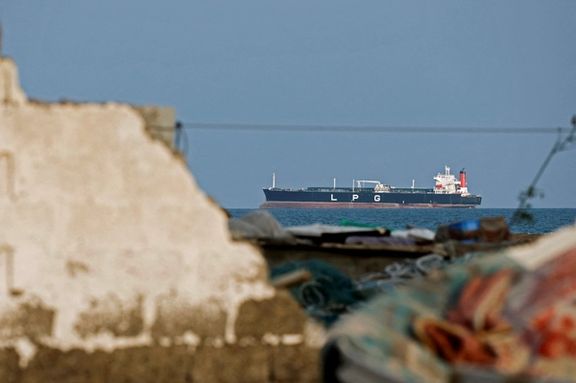
A LPG gas tanker sits anchored as the traffic is down in the Strait of Hormuz, amid the US-Israeli conflict with Iran, in Shinas, Oman, March 11, 2026.

Russia and China expressed concern on Monday over restrictions in the Strait of Hormuz and warned that further escalation could widen the conflict and disrupt global energy supplies.

Russia’s foreign ministry said on Monday it opposed any blockade of the waterway but added that the situation should be viewed within a broader global context, according to Interfax.

China urged all sides to halt military activity and return to negotiations, warning that continued confrontation risks destabilizing the region.

“Should hostilities continue to escalate and the situation deteriorate further, the entire region will be plunged into chaos,” foreign ministry spokesperson Lin Jian said. “The use of force will only lead to a vicious cycle.”

Disruptions shake energy markets

Recent limits on shipping through the strait have disrupted energy flows and driven oil prices higher, highlighting the route’s role as a conduit for roughly one-fifth of global crude and liquefied natural gas.

The disruption follows rising tensions that have curtailed maritime traffic and raised concerns among energy-importing countries over prolonged supply constraints.

US President Donald Trump on Monday said he would postpone planned strikes on Iranian energy infrastructure after what he described as constructive talks with Tehran.

“Based on the tenor and tone of these in-depth, detailed, and constructive conversations, I have instructed the Department of War to postpone any and all military strikes against Iranian power plants and energy infrastructure for a five-day period,” Trump wrote on Truth Social.

The remark follows his earlier 48-hour ultimatum warning Iran to reopen the strait or face military action targeting its energy sector.

This comes weeks after large-scale US and Israeli strikes on Iran began on February 28, killing Supreme Leader Ali Khamenei, senior commanders and destroying military infrastructure.

Iran sets terms for access

Iran’s Defense Council said on Monday that passage through the strait would depend on coordination with Tehran for countries it described as non-belligerent.

“The only way to pass through the Strait of Hormuz for non-belligerent states is by coordinating passage with Iran,” the council said.

The statement warned that any attack on Iran’s energy infrastructure would draw a strong response and raised the possibility of mining maritime routes if Iranian territory were targeted.

Diplomatic push to keep waterway open

NATO Secretary General Mark Rutte said 22 countries were working together to ensure the strait remains open, reflecting growing international concern.

Earlier this month, China held discussions with Iran aimed at securing safe passage for oil and liquefied natural gas tankers through the Strait of Hormuz as the conflict intensified, according to three diplomatic sources talking to Reuters.


Most Viewed

Ghalibaf defends Iran-US talks amid hardline backlash
1
INSIGHT

Ghalibaf defends Iran-US talks amid hardline backlash

2
INSIGHT

Iran diplomacy wobbles as factions compete to avoid looking soft on US

3
VOICES FROM IRAN

Bread shortages, soaring prices strain households in Iran, residents say

4
ANALYSIS

The politics of pink: how Iran uses cuteness to rebrand violence

5

War-hit homeowners feel abandoned as Iran’s reconstruction aid fades

Banner
Banner

Spotlight

  • Lights out, then gunfire: Witnesses recount Mashhad protest crackdown
    VOICES FROM IRAN

    Lights out, then gunfire: Witnesses recount Mashhad protest crackdown

  • Family told missing teen was alive, then received his body 60 days later
    EXCLUSIVE

    Family told missing teen was alive, then received his body 60 days later

  • Is Iran entering its Gorbachev moment?
    INSIGHT

    Is Iran entering its Gorbachev moment?

  • Iran crackdown reaches cemeteries as graves of slain protesters defaced
    EXCLUSIVE

    Iran crackdown reaches cemeteries as graves of slain protesters defaced

  • Iran diplomacy wobbles as factions compete to avoid looking soft on US
    INSIGHT

    Iran diplomacy wobbles as factions compete to avoid looking soft on US

  • The politics of pink: how Iran uses cuteness to rebrand violence
    ANALYSIS

    The politics of pink: how Iran uses cuteness to rebrand violence

  • Bread shortages, soaring prices strain households in Iran, residents say
    VOICES FROM IRAN

    Bread shortages, soaring prices strain households in Iran, residents say

  • Iran signals it will not back down after Trump power grid threat

    Iran signals it will not back down after Trump power grid threat

  • South Pars strike stirs debate among Iranians over impact and intent

    South Pars strike stirs debate among Iranians over impact and intent

•
•
•

More Stories

Strikes hit Tehran safe houses as checkpoints spread nationwide

Mar 23, 2026, 11:15 GMT+0

Several safe houses in Tehran were targeted in attacks early on Monday, according to reports received by Iran International, as security deployments intensified across the country.

The strikes hit locations in multiple parts of the capital, including Aghdasieh, Majidiyeh and Chizar. It was not immediately clear who had been staying at the sites at the time of the attacks.

The strikes came as eyewitness accounts described a growing security presence nationwide from late Sunday into early Monday, with Basij patrols and checkpoints reported in several cities.

In Tehran, security forces were seen stationed in Park-e Shahed, while witnesses reported the movement of vehicles marked as “Basij Patrol,” contributing to a heavy security atmosphere.

Checkpoints were also reported at the entrances to the industrial town of Arak and across the northern city of Rudsar, while in Sari, witnesses said IRGC forces and equipment had been repositioned within the city.

Suspected Iran-linked group claims north London Jewish ambulance arson

Mar 23, 2026, 10:50 GMT+0

An Iran-aligned militant network has claimed responsibility for the arson attack on Jewish ambulances in north London early Monday, a monitoring organisation said, linking the incident to a string of similar fires across Europe.

The SITE Intelligence monitoring service said a group calling itself the Islamic Movement of the People of the Right Hand had carried out the attack near a synagogue in Golders Green, adding it had also been behind fires in Belgium, Greece and the Netherlands.

Prime Minister Keir Starmer described the incident as “a deeply shocking antisemitic arson attack,” adding: “My thoughts are with the Jewish community who are waking up this morning to this horrific news. Antisemitism has no place in our society.”

Police said four ambulances operated by the Hatzola volunteer emergency service were set ablaze shortly after 01:30 GMT, triggering explosions from gas cylinders onboard and damaging nearby residential buildings.

No injuries were reported, though dozens of residents were evacuated as a precaution after windows in a nearby apartment block were shattered.

Police search for suspects

The Metropolitan Police said officers were examining CCTV footage and searching for three suspects seen approaching the vehicles before the fire.

Fire crews deployed six engines and around 40 firefighters to contain the blaze, which was brought under control shortly after 03:00 GMT.

Religious leaders and officials condemned the targeting of an emergency medical service run by volunteers.

London mayor Sadiq Khan said police patrols would be increased in the area.

Israel’s embassy in Britain called for decisive action in response to the attack.

“Enough is enough,” the embassy said. “There must be a thorough investigation and decisive action to put an end to this climate of intimidation before it spirals further.”

Rising incidents since 2023

Antisemitic incidents have increased in Britain and globally since the October 2023 Hamas attack on Israel and the war in Gaza that followed.

British officials have recorded a sustained rise in such cases, including a deadly attack on a synagogue in Manchester in 2025.

Starmer said earlier this month the government would work with Jewish and Muslim organisations to strengthen protections at sensitive sites.

No leniency for January protesters, Iran judiciary warns

Mar 23, 2026, 10:09 GMT+0

Cases tied to the January protests have been reviewed, with some reaching final verdicts and now being carried out, Iran’s judiciary said on Monday, warning that those convicted would face no leniency.

“The cases of enemy terrorist elements and the January unrest protesters have been reviewed. Some of these cases have resulted in final verdicts and are being carried out, and several have been implemented in recent days, with further information to be announced.” the first deputy judiciary chief said.

Hamzeh Khalili said those convicted would not receive any clemency and added that the judiciary would deal harshly with people the judiciary has accused of collaborating with the enemy.

In recent weeks, Iranian authorities have stepped up executions and security measures linked to the January protests, drawing criticism from rights groups and foreign governments.

On March 19, three protesters – Mehdi Ghasemi, Saleh Mohammadi and Saeed Davoudi – were executed after being accused of killing two police officers during protests in Qom earlier in the year, according to the judiciary-linked Mizan news agency. Authorities also alleged the three had links to Israel and the United States, a recurring accusation against protesters.

A day earlier, Mizan reported the execution of Kourosh Keyvani, a Swedish-Iranian dual national convicted of espionage for Israel. Swedish Foreign Minister Maria Malmer Stenergard said a Swedish citizen had been executed and criticized the legal process as falling short of due process standards.

The crackdown has extended beyond the courtroom. Iran has been under a nationwide internet blackout lasting more than three weeks, with international connectivity largely unavailable to the public, according to NetBlocks, limiting access to information during the ongoing crisis.

The executions follow a broader and far deadlier wave of repression. Documents reviewed by Iran International show that more than 36,500 people were killed during a two-day crackdown on protests on January 8–9, in what would mark the deadliest protest suppression in modern history.

Reports and evidence also point to extrajudicial killings of detainees, including cases in which wounded individuals were allegedly shot while receiving medical treatment.

British prisoner in Iran urges Starmer to ‘step out of shadows’

Mar 23, 2026, 10:09 GMT+0

A British man jailed on espionage charges in Iran called on Prime Minister Keir Starmer to step out of the shadows and publicly declare that he and his wife are innocent.

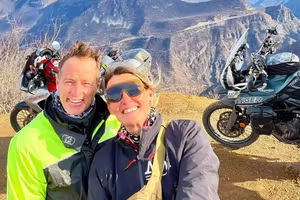
Craig Foreman, speaking in a voice message recorded from Evin prison, said he and his wife Lindsay were facing worsening conditions more than three weeks into US-Israeli attacks on Iran.

“My name is Craig Foreman… We are both currently serving 14 months into a 10-year prison sentence… for crimes that were never committed,” Foreman said, adding that the case against them was built on “falsified evidence.”

  • British couple sentenced to 10 years in Iran for espionage, family says

    British couple sentenced to 10 years in Iran for espionage, family says

  • British couple detained in Iran to face court on espionage charges

    British couple detained in Iran to face court on espionage charges

The couple were sentenced in February after Iranian authorities accused them of spying for Britain and Israel, allegations they have consistently denied.

Lindsay and Craig Foreman, both in their 50s, were arrested in January 2025 while on a motorcycle trip through Iran.

“We are proud to be British, but by now we feel let down, alone, and completely frustrated by the lack of public defence,” Foreman said.

“You know we are innocent. Go public with the information you have to clearly step up, step out of the shadows and help us.”

  • Fears grow for Iranian prisoners as war raises risk of another Evin disaster

    Fears grow for Iranian prisoners as war raises risk of another Evin disaster

Prison conditions deteriorate

Foreman described an increasingly dangerous environment inside Evin prison, where nearby explosions earlier in March shattered windows and forced detainees to take cover.

“We are now in a prison in a war zone. We have gone from a challenging situation to a life-threatening situation,” Foreman said. “Our lives are constantly at risk.”

He added that the couple had received “zero information” from British authorities about contingency plans if conditions worsen.

Family members echoed those concerns. Joe Bennett, Foreman’s stepson, said officials had avoided publicly asserting the couple’s innocence despite being aware of the circumstances of their case.

“They are not spies, and our government knows that,” Bennett said, describing worsening physical and psychological conditions in detention.

Government response

Britain’s foreign ministry has previously called the sentences “totally unjustifiable” and said supporting detained nationals remains a priority.

The case has drawn renewed attention as security conditions in Iran have deteriorated, with foreign nationals advised to leave and diplomatic staff periodically withdrawn.

Rights groups and Western governments have long accused Iran of engaging in so-called “hostage diplomacy” by detaining foreign nationals to gain political or economic concessions, an allegation Tehran rejects, saying it faces Western intelligence infiltration.

Rights group says over 1,400 civilians killed in Iran in three weeks of war

Mar 23, 2026, 04:29 GMT+0

More than 1,400 civilians have been killed in Iran during the first three weeks of the war with the United States and Israel, according to figures compiled by the rights group HRANA.

The Iran-focused Human Rights Activists News Agency (HRANA) said in a report on Sunday that it had confirmed at least 1,407 civilian deaths since the war began on Feb. 28, including at least 214 children.

Iran International could not independently verify the figures.

HRANA said the numbers are based on incidents documented across the country and compiled through the organisation’s network of field sources, local contacts and publicly available evidence such as images and videos.

HRANA has documented human rights abuses and state repression in Iran for more than a decade through a network of activists and researchers.

Military officials in Washington say Iranian forces have increasingly launched missiles and drones from populated areas, putting civilians at risk.

US Central Command chief Vice Adm. Brad Cooper told Iran International on Sunday that the Islamic Republic could end the war at any time if it chose to do so.

Tehran province accounted for the largest share of recorded incidents, according to HRANA’s preliminary analysis, with about 39 percent of attacks, followed by Hormozgan province on the shores of the Persian Gulf.

The organization also recorded 657 deaths whose status could not yet be determined—military or civilian.

Iran’s health ministry said around 210 children have been killed and that more than 1,500 people under the age of 18 have been injured. It also said 300 health and emergency facilities had been damaged during the fighting.

Some of the damaged sites appeared to fall under categories protected by international humanitarian law, including residential buildings, sports facilities and power plants, according to HRANA.

In several cases, the damage appeared to have been caused by nearby strikes or secondary effects rather than direct targeting.

Human rights groups say the true toll of the war may be significantly higher, as ongoing hostilities, communication disruptions and restricted access to affected areas have made it difficult to verify casualties in real time.