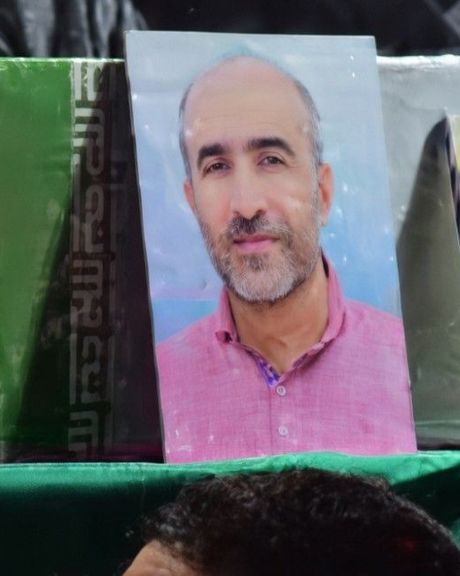
Body of Shamkhani guard to be buried nearly a month after his death


The funeral of Mohammad Ghanbari, a bodyguard for Ali Shamkhani, will be held on Monday in Juybar, according to an Instagram story posted by Mahdieh Shademani, the daughter of a killed commander of Iran’s Khatam al-Anbiya Central Headquarters.
The timing suggested Ghanbari’s body was recovered nearly a month after the strikes in which he was killed.
Ali Shamkhani, secretary of Iran’s Supreme Defense Council, was killed in US and Israeli strikes on February 28.


A loud steam release at the Montazer Ghaem power plant in Fardis, near Tehran, was caused by a technical fault and not an attack, a local official said on Sunday.
The governor of Fardis said the noise came from high-pressure steam released due to a defect in one of the plant’s boilers.
He added that there was no problem in the area and no cause for concern, and said any incidents requiring public awareness would be announced through official channels.
Montazer Ghaem is one of the five major plants around Tehran along with Damavand, Rajaei, Roudshour (Rudshur), and Mofatteh, which play a central role in supplying electricity.
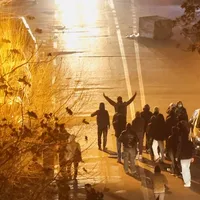
Security deployments, Basij patrols and checkpoints were reported in several parts of Iran from late Sunday into early Monday, according to eyewitness accounts sent to Iran International.
In Tehran, security forces were reported stationed in Park-e Shahed, with a possible checkpoint expected in the Sardar Jangal area. Witnesses also said white Samand cars with green license plates were moving through the city after removing their plates and marking the vehicles as “Basij Patrol,” creating a heavy security atmosphere.
In Arak, in Iran’s central Markazi province, nighttime checkpoints were reported at the entrances to the industrial town.
In Rudsar, a city in Gilan province on the Caspian coast, checkpoints were said to be in place at all entrances to the city. In Sari, the capital of Mazandaran province in northern Iran, witnesses reported that IRGC forces and equipment were moved from Imam Square to the Red Crescent building on Imam Reza Boulevard.
China’s state-owned refiners have begun exploring purchases of Iranian crude after Washington allowed the sale of some oil already loaded onto tankers, Bloomberg reported, citing people familiar with the matter.
Representatives of the National Iranian Oil Company and intermediary traders have also been quietly sounding out potential buyers among Chinese and other Asian refiners, according to the report, which also said that the discussions were not public.
China is Iran’s most important oil buyer, but purchases have typically come from smaller private refiners with less exposure to international markets, while large state-owned companies have largely stayed away for fear of US sanctions.
The latest US Treasury waiver, covering seaborne Iranian oil for one month, followed similar steps aimed at easing access to Russian oil as the White House sought to limit supply pressure and cool global prices.
Iran’s Revolutionary Guards warned that Tehran would retaliate against electricity infrastructure if the United States attacks Iran’s power grid.
In a statement released Monday, the Guards said any strike on Iran’s electricity system would trigger retaliation against power plants in Israel and in regional countries supplying electricity to US bases.
“If you hit electricity, we will hit electricity,” the statement said.
The Guards also accused the United States of attacking civilian infrastructure during the conflict.
“You hit our hospitals, we did not do the same. You hit our relief centers, we did not do the same. You hit our schools, we did not do the same. But if you hit electricity, we will hit electricity,” the statement said.
More than 1,400 civilians have been killed in Iran during the first three weeks of the war with the United States and Israel, according to figures compiled by the rights group HRANA.
The Iran-focused Human Rights Activists News Agency (HRANA) said in a report on Sunday that it had confirmed at least 1,407 civilian deaths since the war began on Feb. 28, including at least 214 children.
Iran International could not independently verify the figures.
HRANA said the numbers are based on incidents documented across the country and compiled through the organisation’s network of field sources, local contacts and publicly available evidence such as images and videos.
HRANA has documented human rights abuses and state repression in Iran for more than a decade through a network of activists and researchers.
Military officials in Washington say Iranian forces have increasingly launched missiles and drones from populated areas, putting civilians at risk.
US Central Command chief Vice Adm. Brad Cooper told Iran International on Sunday that the Islamic Republic could end the war at any time if it chose to do so.
Tehran province accounted for the largest share of recorded incidents, according to HRANA’s preliminary analysis, with about 39 percent of attacks, followed by Hormozgan province on the shores of the Persian Gulf.
The organization also recorded 657 deaths whose status could not yet be determined—military or civilian.
Iran’s health ministry said around 210 children have been killed and that more than 1,500 people under the age of 18 have been injured. It also said 300 health and emergency facilities had been damaged during the fighting.
Some of the damaged sites appeared to fall under categories protected by international humanitarian law, including residential buildings, sports facilities and power plants, according to HRANA.
In several cases, the damage appeared to have been caused by nearby strikes or secondary effects rather than direct targeting.
Human rights groups say the true toll of the war may be significantly higher, as ongoing hostilities, communication disruptions and restricted access to affected areas have made it difficult to verify casualties in real time.