• العربية
  • فارسی
Brand
  • Iran Insight
  • Politics
  • Economy
  • Analysis
  • Special Report
  • Opinion
  • Podcast
  • Iran Insight
  • Politics
  • Economy
  • Analysis
  • Special Report
  • Opinion
  • Podcast
  • Theme
  • Language
    • العربية
    • فارسی
  • Iran Insight
  • Politics
  • Economy
  • Analysis
  • Special Report
  • Opinion
  • Podcast
All rights reserved for Volant Media UK Limited
volant media logo

Oil prices jump as US, Iran trade infrastructure threats

Mar 22, 2026, 22:40 GMT+0

Oil prices rose on Sunday after Iran threatened to shut down the Strait of Hormuz indefinitely in response to President Donald Trump’s ultimatum demanding the restoration of oil traffic through the strategic waterway.

Brent crude, the global benchmark, climbed 1.69% to about $114.09 a barrel, while US crude rose 2% to $100.29.

Analysts say markets are increasingly pricing in the risk of prolonged disruption to energy flows through the strait, a route that normally carries about a fifth of global oil and liquefied natural gas shipments.

Goldman Sachs said Friday that elevated prices could persist through 2027.

Most Viewed

IRGC-linked media hints at threat to Persian Gulf undersea internet cables
1

IRGC-linked media hints at threat to Persian Gulf undersea internet cables

2

Iran Guards say two ships seized in Hormuz after ceasefire extension

3

Iran executes former atomic agency employee over alleged spying for Israel

4
EXCLUSIVE

Disputes within Iran leadership blocked negotiators’ trip to Islamabad

5
ANALYSIS

Internet Pro or Censor Pro? Iran rolls out a new service

Banner
Banner

Spotlight

  • Tehran stocks head for reopening, but it risks triggering a new crisis
    ANALYSIS

    Tehran stocks head for reopening, but it risks triggering a new crisis

  • Power vacuum in Tehran emboldens hardliners
    INSIGHT

    Power vacuum in Tehran emboldens hardliners

  • Inflation spikes, basic goods slip out of reach for Iranians, citizens say
    VOICES FROM IRAN

    Inflation spikes, basic goods slip out of reach for Iranians, citizens say

  • Iran turns to citizenship and assets as tools of pressure beyond its borders

    Iran turns to citizenship and assets as tools of pressure beyond its borders

  • Who backs war now? Tehran flips the script
    INSIGHT

    Who backs war now? Tehran flips the script

  • As Tehran digs in, ordinary Iranians pay the price
    INSIGHT

    As Tehran digs in, ordinary Iranians pay the price

•
•
•

More Stories

Iran signals it will not back down after Trump power grid threat

Mar 22, 2026, 22:35 GMT+0

Tehran signalled on Sunday that it would not back down after President Donald Trump threatened to strike Iran’s electricity grid within 48 hours, warning that it would retaliate by targeting regional infrastructure if such an attack takes place.

The exchange of threats marks a sharp escalation in the three-week-old war and raises the prospect of tit-for-tat strikes on civilian infrastructure across the region.

“If Iran’s fuel and energy infrastructure is attacked by the enemy, all energy infrastructure, as well as information technology and water desalination facilities belonging to the United States and the regime in the region will be targeted,” Iranian military spokesman Ebrahim Zolfaqari said, according to state media.

Much of the region depends heavily on energy-intensive desalination plants for drinking water, including systems that supply all potable water in Bahrain and Qatar and the majority of water used in the United Arab Emirates.

Iran’s parliament speaker Mohammad Baqer Ghalibaf warned on X that attacks on Iranian power plants could lead to the “irreversible destruction” of energy facilities across the Middle East.

Foreign minister Abbas Araghchi struck a softer tone, saying that Tehran had not yet moved to choke off global shipping through the Strait of Hormuz.

“The Strait of Hormuz is not closed,” he wrote on X. "hips hesitate because insurers fear the war of choice you initiated—not Iran."

Iran’s Revolutionary Guards also warned that the Strait of Hormuz — the route through which roughly a fifth of global oil and liquefied natural gas normally passes — would remain shut until Iranian power plants damaged in the conflict are rebuilt.

The escalating rhetoric comes as fighting between Iran and Israel continued overnight.

Dozens were reported injured in Iranian missile strikes on the southern towns of Arad and Dimona on Sunday night.

The rising threats have prompted diplomatic intervention.

In a call with Saudi Crown Prince Mohammed bin Salman, France’s President Emmanuel Macron urged all sides to halt attacks on energy and civilian infrastructure and called on Iran to restore freedom of navigation in the Strait of Hormuz.

“It is more essential than ever that all parties agree to establish a moratorium on energy and civilian infrastructure,” Macron said in a post on X.

More than 2,000 people have been killed since the United States and Israel launched attacks on Iran on February 28, a conflict that has rattled global markets, pushed up fuel prices and raised fears of a broader regional war.
Aramco chief cancels US energy event amid Iran war

Mar 22, 2026, 22:04 GMT+0

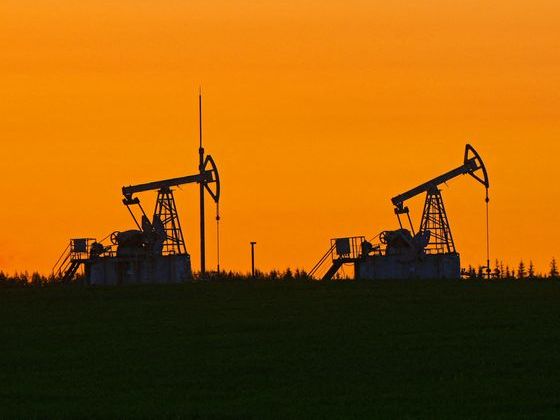
Saudi Aramco Chief Executive Amin Nasser has cancelled his planned appearance at the CERAWeek energy conference in Houston, choosing to remain in Saudi Arabia as tensions linked to the Iran conflict continue to escalate, an industry source told Reuters.

Nasser, who has led the world’s largest oil exporter for more than a decade, is typically one of the headline speakers at the conference, one of the energy industry’s biggest annual gatherings.

CERAWeek, organised by S&P Global and opening on Monday, brings together top executives, government officials and policymakers from around the world to discuss the outlook for global energy markets.

Nasser’s withdrawal underscores the pressure facing energy producers in the region as the Iran crisis deepens.

Iran says Hormuz ‘not closed,’ ships hesitate over war risks

Mar 22, 2026, 21:47 GMT+0

Iran’s foreign minister Abbas Araghchi said on Sunday that commercial shipping through the Strait of Hormuz has slowed because insurers are wary of the conflict, blaming the United States for creating the conditions that have unsettled maritime traffic.

“The Strait of Hormuz is not closed,” Araghchi wrote on X. “Ships hesitate because insurers fear the war of choice you initiated—not Iran.”

“Freedom of Navigation cannot exist without Freedom of Trade. Respect both—or expect neither,” he added. “No insurer—and no Iranian—will be swayed by more threats. Try respect.”

War jitters hit Dubai: markets slide, property deals slow

Mar 22, 2026, 20:58 GMT+0

The Dubai Financial Market (DFM) General Index has fallen sharply since the start of hostilities, Reuters reported on Sunday.

After closing at 6,503.50 on Feb. 27, the day before military action against Iran began, the index dropped to 5,550.24 by March 18, the last trading day before the Eid al-Fitr holiday — a decline of about 14.7 percent.

Property transactions have cooled markedly, with Dubai Land Department data showing deals falling from 9,029 in the second half of February to 6,541 in the first two weeks of March, a drop of 27.6 percent.

UAE foreign minister says country will not be 'blackmailed by terrorists'

Mar 22, 2026, 20:51 GMT+0

UAE foreign minister and deputy prime minister Sheikh Abdullah bin Zayed Al Nahyan said the country would not be “blackmailed by terrorists” in a post on X on Sunday, responding to criticism of remarks by UAE presidential adviser Anwar Gargash.

“We will never be blackmailed by terrorists,” Abdullah bin Zayed said.

His comment came in reply to former French ambassador Gérard Araud, who criticized Gargash’s remarks on Iran’s attacks and the strengthening of security partnerships with Washington.