• العربية
  • فارسی
Brand
  • Iran Insight
  • Politics
  • Economy
  • Analysis
  • Special Report
  • Opinion
  • Podcast
  • Iran Insight
  • Politics
  • Economy
  • Analysis
  • Special Report
  • Opinion
  • Podcast
  • Theme
  • Language
    • العربية
    • فارسی
  • Iran Insight
  • Politics
  • Economy
  • Analysis
  • Special Report
  • Opinion
  • Podcast
All rights reserved for Volant Media UK Limited
volant media logo
INSIGHT

From rainbows to tremors: Wartime Nowruz feels surreal, yet hope endures

Maryam Sinaiee
Maryam Sinaiee

Iran International

Mar 22, 2026, 11:18 GMT

Many Iranians say the year 1404 (which ended on March 20) was among the darkest they remember, yet as Nowruz arrives, its rituals offer a fragile but enduring sense of hope in even the most desperate times.

For many Iranians, the holiday is more than a celebration—it is an assertion of life in the face of uncertainty, a reminder that renewal is always possible, even in the darkest of years.

Iranians celebrate Nowruz at the exact moment of the spring equinox, which fell on the afternoon of March 20 this year. In Tehran, the atmosphere on Friday was described as surreal.

As people waited for the official announcement on television, a brief rain gave way to sunlight, and a double rainbow stretched across the sky. Images quickly circulated online, with many calling it a good omen for the country.

But the moment of celebration was short-lived. Just after the New Year was announced and greetings began, air defenses roared to life and explosions echoed across the capital. This marked the first time since the 1980s that Iranians were observing Nowruz during wartime.

For many, the outgoing year was defined by loss and upheaval. Social media has been filled with accounts describing it as a period of “pain and calamities,” marked by two wars, widespread displacement, and the bloodiest crackdown in history. Hundreds of thousands have reportedly fled their homes—twice in a single year—seeking safety elsewhere.

Davoud Heshmati, an Iranian journalist, captured the sentiment in a short post: “In these final hours of the year, it seems to me that what we can all agree on is that the year 1404 was a year of darkness.”

Grief remains fresh. Many mourn those killed in January, victims of the recent strikes and those of the 12-day war in June, and at least five young men executed in the final days of the year for political reasons.

Yet amid the trauma, the rhythms of Nowruz persist, albeit with far less energy and enthusiasm than in the past. In markets and homes, people continue to prepare for the holiday, clinging to rituals that symbolize renewal.

One user wrote: “The city is truly buzzing with the vibrancy of the holiday—shopping for sprouted grains, flowers, and sweets. How fortunate we are that, amid the war and its endless fear, Nowruz still keeps us standing tall.” Another added: “As long as Nowruz is alive we are too.”

Images from Tehran’s Tajrish Bazaar—once packed with shoppers buying new clothes, sweets, and traditional items for the Haft-Seen table—have circulated widely in recent days. The display typically includes symbolic objects such as sabzeh (grain sprouts), wheat pudding, flowers, candles and goldfish. This year, however, the crowds appear thinner.

“Street vendors say in all these years, even during COVID, the place was never this quiet,” one Tehran resident noted online.

For those who did venture out, the experience was shaped by the realities of war. Faezeh, a Tehran resident, described using a brief period of calm to prepare for the holiday. “While laying the Haft-Seen I was thinking about how to place things so they won’t fall by tremors from the strikes. How resilient are humans?” she wrote.

In another post, she recounted how the sound of explosions and air-defense systems has become part of everyday life, along with the unsettling sight of destroyed buildings that had stood only hours earlier.

Yet even amid such scenes, many emphasize the symbolic power of Nowruz. “Above our heads is the roar of fighter jets and the sound of explosions, but here in the heart of the city, the pulse of life beats for Nowruz. Amid such darkness, we buy flowers and lay the Haft-Seen; because this ritual is our fortress. What has remained proud and eternal through the tempests of history... is Iran, Iran, Iran,” another user wrote.

Economic pressures have compounded the sense of crisis. Prices have surged, jobs have been lost, and some businesses—already weakened by the June conflict and the January crackdown—have shut down or failed to pay New Year bonuses. Reports from both media and social platforms suggest layoffs are becoming widespread.

At the same time, a prolonged internet shutdown—now stretching into its third week—has deepened the isolation felt by many Iranians. For families split between Iran and the diaspora, the inability to communicate during the New Year has been especially painful.

In a reflection of this frustration, Vahid Online played on the traditional greeting “May your every day be Nowruz!” by writing: “May your every day be ‘online’!”

Most Viewed

US terminates green cards of 3 Iranians tied to Islamic Republic
1

US terminates green cards of 3 Iranians tied to Islamic Republic

2
PODCAST

Worst outcome is Islamic Republic’s survival, ex-CIA official says

3
ANALYSIS

Iran brings unusually broad team to US talks to blunt future blame

4
INSIGHT

Tehran sends tough message but keeps diplomacy door open

5

Zoroastrian religious figure arrested in Iran

Banner
Banner

Spotlight

  • Tehran sends tough message but keeps diplomacy door open
    INSIGHT

    Tehran sends tough message but keeps diplomacy door open

  • Worst outcome is Islamic Republic’s survival, ex-CIA official says
    PODCAST

    Worst outcome is Islamic Republic’s survival, ex-CIA official says

  • Why the Iran-US truce is more likely to buy time than peace
    ANALYSIS

    Why the Iran-US truce is more likely to buy time than peace

  • Engaged but uncommitted: China watches Iran and US fight and talk
    ANALYSIS

    Engaged but uncommitted: China watches Iran and US fight and talk

  • A truce for the world, a reckoning for Iran’s economy
    ANALYSIS

    A truce for the world, a reckoning for Iran’s economy

  • Why the world failed to bypass the Strait of Hormuz
    ANALYSIS

    Why the world failed to bypass the Strait of Hormuz

•
•
•

More Stories

Vahid, the life-saving ‘one-man army’ Iranians turn to when news is censored

Mar 21, 2026, 01:05 GMT

As Tehran tightens control over wartime information, one of Iran’s most influential citizen journalists has come under renewed pressure: Vahid Online, long anonymous, is now stepping into the open.

For more than a decade, the anonymous operator behind Vahid Online built a vast following by aggregating videos, images and reports from inside Iran—often capturing events that state-controlled media ignore or suppress.

During the January protests, he was among the first to publish images from inside a Tehran morgue showing people searching for missing loved ones among rows of body bags.

During the 2022 Woman, Life, Freedom movement, many of the most iconic images—of both defiance and repression—first appeared on his channels.

Now, as the current conflict drives demand for real-time, uncensored information, his channels have once again surged in prominence.

Videos of strikes, damaged buildings and their aftermath are sent directly to him, along with a steady flow of messages from across Iran reporting explosions, air defense activity or fighter jets passing overhead—often with timestamps and locations attached.

The messages Vahid shares not only serve as a lifeline during the information blackout, but can also literally save lives, as evidenced by a recent case in which a user said two lives were saved thanks to a warning he had shared.

What sets the platform apart is not just speed, but trust. Over years of steady, often relentless posting, Vahid Online has built a reputation that prompts people inside Iran to send material directly—text messages, photos, audio and video.

“I rely on direct, independent material sent to me,” he wrote during the January protests. “If I were just reposting what’s already out there, there would be no point—many accounts are already doing that.”

That relationship often carries a distinctly personal tone. Messages frequently begin simply: “Vahid, this happened,” or “Vahid, please publish this.” The exchange resembles less a tip line than a direct appeal to a trusted intermediary—someone anonymous, yet familiar.

That approach—prioritizing original submissions over viral content—has shaped both his influence and its limits. It means he is sometimes slower in the early stages of unrest, when little verified material is available, and more visible once footage begins to flow from the ground.

The volume and intensity of that material come at a cost. He has written at times about the strain of constant monitoring, sleepless nights and exposure to graphic or distressing images—an emotional and physical toll that has, on occasion, affected his health.

The figure behind the account had long remained elusive. Describing himself only as a “curious netizen” based in the US state of Maryland, he has consistently avoided interviews or public exposure.

Iranian state media recently claimed—without independent verification—to have uncovered his identity, publishing what they said were personal details alongside an AI-generated image. In response, he said some details were accurate but dismissed the image as not resembling him.

"The Islamic Republic has known my official identity for years. The day just finally came when they decided to reveal it and pretend they had obtained it in some special way," Vahid said in a post on his Telegram channel on March 17.

"The information they cited from my identity documents appears to be correct," he said.

Three days later, he officially signed off his Nowruz message on X with the name released by Iranian state media: Mir-Vahid Hassantabar.

For many Iranians—inside the country and across the diaspora—Vahid Online functions as a kind of real-time window onto events that might otherwise go unseen. Admirers sometimes describe him as a “one-man army.”

Vahid operates primarily on Telegram—where he has 1.2 million subscribers—and to a lesser extent on X, where he has about 700,000 followers.

His rise dates back to the aftermath of Iran’s disputed 2009 presidential election, when protests erupted following the reelection of Mahmoud Ahmadinejad.

Then a blogger, he gained attention by publishing mobile phone footage of a raid on the campaign headquarters of opposition leader Mir-Hossein Mousavi. As repression intensified, he left Iran—reportedly via Turkey—and later sought asylum in the United States.

Since then, Vahid Online has become a central node in the circulation of information about Iran, particularly during waves of unrest. Major international outlets have at times drawn on such material.

Supporters credit the platform with helping bridge an information gap created by censorship, pointing to practices such as blurring faces, withholding identifying details and selectively posting material to protect sources. The operator himself has described his role more modestly—as an “audience member” highlighting what others might miss or suppress.

Iranian state media accuse the platform of foreign backing or links to intelligence services—claims made without publicly verifiable evidence. Vahid has dismissed such allegations as routine smear tactics, writing recently: “I am an ordinary citizen with no links to anyone.”

As conflict deepens and information becomes another battleground, Vahid Online is far more than an ordinary citizen. His platform is no longer peripheral, but part of the story—one that may, in time, be written with material he helped bring to light.

In his March 17 statement, he said now that the Islamic Republic has exposed his identity and "this barrier had been removed," he has been pushed into "a new phase of life."

"Now I’m not sure what new things I might want to do that I couldn’t before because of these limitations."

A new year dawns in Iran, shadowed by loss and war

Mar 19, 2026, 16:17 GMT
•
Behrouz Turani

Nowruz and the turning of the year have always carried, even in the happiest times, a blend of celebration and sorrow. Remembering the departed is part of welcoming the new year.

Among Iranians, Nowruz has long been tied to renewal and to the idea of the “triumph of good over evil.” Yet Iran’s turbulent history has often cast a shadow over the holiday, turning it into a moment marked by loss, war and unresolved grief.

This year carries all three.

Since 2022, a continuous national mourning has taken hold. The dead of the Woman, Life, Freedom movement—some known, many unnamed—have left their mark on the country’s rituals.

At Nowruz tables across Iran, mothers sit with clenched throats and tearful eyes, or stand beside the graves of their children.

Iran has seen such Nowruzes before. During the war with Iraq, the new year arrived under the sound of missiles falling on cities, as young men were sent to the front in waves. Celebration persisted, but it did so alongside fear and loss—often shaped by what many would later call the “ignorance and irresponsibility” that drove a generation to war.

The death of the young has long been among the deepest sorrows in Iranian culture.

The story of Siyâvash, the innocent prince killed unjustly, still carries the grief of mourning mothers. In the Shahnameh, his death comes on the eve of Nowruz. The holiday marks renewal, yet in Ferdowsi’s telling it is shadowed by war and sacrifice.

That grief echoes in one of the epic’s most enduring lines: “If death is justice, then what is injustice?”

Over time, mourning became ritual. The death of Siyâvash gave rise to Suvâshun ceremonies, observed for centuries in parts of greater Iran. The convergence of death and renewal came to symbolize a belief that justice, however delayed, would prevail.

Today, the Siyâvashes are many. Their images appear on walls, in homes and in the hands of protesters, carried like the banner of Kaveh the Blacksmith.

One custom, known as now‘id, marks the first Nowruz after a loss, when families visit the bereaved. Last year, at one such table, a young woman sat silently, her hair turned white by grief for her slain son. Then she broke the silence: “Was it not enough to kill him? What did you do to my child’s head?”

Her question lingers. So do many others like it.

Nowruz has long been intertwined with remembrance. In ancient belief, the days before the new year—Farvardegân—were a time when the spirits of the dead returned. Homes were cleaned and tables set not only for the living but for those who had passed. The bond between the two was renewed.

In recent years, many of the dead have been buried in unmarked graves, or in cemeteries where tombstones are repeatedly destroyed and rebuilt by grieving families. Flowers return, even when they are torn away.

And yet Nowruz endures.

Neither war nor repression, nor the hostility of those who reject Iran’s pre-Islamic traditions, has erased it. Each year, after the fires of Chaharshanbeh Suri are lit and the dead are honored, the new year arrives again.

As one line often recited at gravesides has it: “If we feared the sword, we would not dance in the gathering of lovers.”

Iranians celebrate Nowruz as they always have: with hope that the coming year may bring a more just life—one in which rights are equal, dignity is preserved and the state serves its people rather than stands above them.

Wrestler’s execution raises fears for detained athletes in Iran

Mar 19, 2026, 13:49 GMT
•
Hooman Abedi

The hanging of a 19-year-old wrestler on Thursday intensified concerns over the fate of other detained athletes, with fears growing that more executions could follow in cases linked to protests earlier this year.

Three protesters – Mehdi Ghasemi, Saleh Mohammadi and Saeed Davoudi – were executed on Thursday after being accused of killing two police officers during unrest in January, according to the judiciary-linked Mizan news agency.

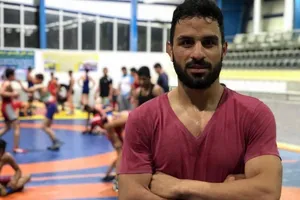
Mohammadi, a national-level wrestler who had competed internationally, denied the charges in court and said his confession had been obtained under torture, according to accounts from those close to him. Members of Iran’s wrestling community had also defended him, saying he had no history of violence.

Mohammadi had represented Iran in international wrestling events, including the 2024 Saitiev Cup in Russia, where he won a bronze medal.

His execution has drawn comparisons to wrestler Navid Afkari, whose case became a symbol of the use of capital punishment following protests.

Afkari was sentenced to death and executed in Shiraz after being accused and convicted of murdering a security guard during the 2018 Iranian protests.

  • Five years on, a wrestler's execution still haunts Iran—and demands action

    Five years on, a wrestler's execution still haunts Iran—and demands action

  • Iran executes champion wrestler ahead of Afkari's remembrance

    Iran executes champion wrestler ahead of Afkari's remembrance

Athletes remain in custody

A growing list of athletes, coaches and referees remain detained, many linked to the recent wave of protests as well as earlier unrest.

Among those named are footballer Mohammad Hossein Hosseini, water polo goalkeeper Ali Pishevarzadeh, marathon runner Niloufar Pas, kickboxing champion Benjamin Naghdi, teenager footballer Abolfazl Dokht, and boxer Mohammad Javad Vafaei Sani.

Others include basketball coach Payam Vahidi, billiards coach Hamzeh Kazemi, aerobics coach Narges Heidari and former footballer Amir Reza Nasr Azadani, whose earlier arrest had already drawn international concern.

Several detainees are young athletes, including Amirhossein Ghaderzadeh, 19, and Abolfazl Dokht, raising alarm among campaigners who say they face similar charges and judicial processes.

Boxer Mohammad Mahshari, a bronze medalist at the 2024 Asian youth and under-23 championships, is also reported to be in custody.

The list extends to referees and lesser-known competitors, showing how deeply the crackdown has reached into Iran’s sporting community.

Pattern of executions after protest trials

Authorities accused those executed of acting on behalf of Israel and the United States, an allegation frequently used in cases linked to protests.

Cases linked to protest-related violence have repeatedly raised concerns over due process, including forced confessions, lack of access to legal representation and the exclusion of defense witnesses.

Saleh Mohammadi’s case followed that pattern, with those close to him saying CCTV evidence did not identify him and that alibi witnesses were not allowed to testify.

Sporting community under pressure

The crackdown has reverberated across Iran’s sporting world, where athletes have increasingly become visible participants in protests.

There is no single confirmed, comprehensive number specifically for athletes killed in the January 2026 protests. However, according to compiled lists from activists and sports networks, at least 65 athletes, coaches and referees have been identified among those killed during a crackdown in January.

The scale of the violence remains contested. Iran International reviewed documents proving that more than 36,500 Iranians were killed by security forces during the January 8-9 crackdown on nationwide protests, making it the deadliest two-day protest massacre in history, while other estimates suggest it could be significantly higher.

Earlier, more than 200 athletes signed open letters urging the International Olympic Committee to take stronger action and questioning its continued engagement with officials they say are tied to Iran’s security apparatus.

For those still in detention, Mohammadi’s execution has deepened fears that similar cases could be pushed rapidly through the courts.

The combination of protest-related charges, allegations of foreign links and the use of forced confessions has left many families fearful and uncertain about the fate of detained athletes.

South Pars strike stirs debate among Iranians over impact and intent

Mar 19, 2026, 12:31 GMT

Messages sent to Iran International and posts on social media showed a split reaction to Wednesday’s strike on Iran’s South Pars gas field, with some welcoming the hit on state-linked assets and others warning of civilian costs.

Messages sent to Iran International and posts on social media were divided over Wednesday’s strike on the South Pars gas field in southern Iran, with some welcoming the hit on state-linked assets and others warning of civilian costs.

US President Donald Trump said Israel had struck Iran’s South Pars gas field “out of anger” over developments in the Middle East, describing the damage as limited and warning there would be no further attacks unless Iran targeted Qatar again.

The strike marked a shift in a conflict that has spread across the Persian Gulf, disrupting energy flows after Iranian missiles targeted facilities in Qatar and Saudi Arabia.

  • Iran floats Hormuz transit tolls as Persian Gulf states warn of military response

    Iran floats Hormuz transit tolls as Persian Gulf states warn of military response

Strike seen as blow to state-linked networks

Some messages sent to Iran International framed the attack as a setback for institutions tied to the Islamic Revolutionary Guards Corps.

“Israel, by hitting South Pars, saved us from more theft… the money was turned into bullets fired at our children,” one citizen wrote.

Another, who said he had worked on projects in the field, downplayed the long-term impact.

“Even with the complete destruction of all 24 gas refineries… they will return to production in less than three months,” he wrote, adding that supply lines from offshore platforms would shut automatically and protect reserves.

A separate message from an engineer challenged concerns about offshore facilities.

“The platforms are not even fully operational because of sanctions… after the Islamic Republic, they can be rebuilt better,” he wrote, contrasting them with higher-quality installations on the Qatari side.

Others shifted the focus away from infrastructure entirely.

“The main infrastructure was the young people they took from us… the rest can be rebuilt with better technology.”

Social media posts echoed that line in sharper language. “Don’t worry about infrastructure,” one post read. “What infrastructure are you talking about? What life was left that needed infrastructure?” it added.

Concerns over civilian impact

Other messages cautioned that strikes on energy infrastructure would translate directly into hardship for civilians.

“Don’t look at infrastructure so simply,” one user wrote. “Lack of electricity and gas means death – cold, hunger, medicine shortages.”

Another post rejected attacks on non-military targets. “Hitting Iran’s infrastructure by any side is condemnable. It belongs to all Iranians,” the message read.

Some called for limiting strikes strictly to military-linked targets. “Please just hit those responsible and leave non-military infrastructure alone.”

One message also questioned the timing. “Hitting South Pars at this moment is not the last and best solution,” it read.

Back to corruption and rebuilding

Even among those critical of the strike, some framed the debate through long-standing economic grievances.

“If infrastructure belonged to the people, no one would be searching in trash for food.”

Another argued that damaged facilities could ultimately be replaced. “That worn-out infrastructure… will be rebuilt better – but those lives won’t return,” the user wrote referring to thousands of people killed during the January protests.

Others pointed to historical reconstruction. “Germany and Japan were flattened in World War II – where are they now?” one user said.

Across the exchanges, a recurring thread linked both support for and opposition to the strike back to mistrust of the Islamic Republic, with many portraying the country’s energy wealth as mismanaged or diverted, and arguing that any future recovery depends less on infrastructure than on political change.

Vacuum in Tehran: who can fill Larijani's role?

Mar 18, 2026, 19:24 GMT
•
Maryam Sinaiee

The assassination of Ali Larijani has opened a rare gap at the center of Iran’s security system, raising immediate questions about who can replace him and whether anyone can perform the same role.

With a career spanning both the Islamic Revolutionary Guard Corps (IRGC) and the political establishment, including a decade as parliament speaker, Larijani functioned as a bridge between Iran’s military and civilian centers of power.

That position—part coordinator, part mediator—made him one of the system’s most important internal stabilizers. His removal further narrows the circle of actors capable of managing competing interests within the system.

Supreme Leader Mojtaba Khamenei praised him in a brief statement Wednesday, vowing to avenge his blood.

Senior officials sought to project continuity. President Masoud Pezeshkian said Larijani’s “path of resistance combined with rationality” would continue, while Foreign Minister Abbas Araghchi insisted that the absence of any individual cannot destabilize the Islamic Republic’s “powerful political structure.”

Even with continuity, however, the system Larijani helped manage now faces a more immediate test: succession.

Formally, the secretary of the SNSC is appointed by the president, but the role only acquires real authority when the Supreme Leader designates the holder as his representative, granting voting power within the council.

Early indications suggest that Mojtaba Khamenei is overseeing key appointments. Whether he does so here will shape both the balance of power and the direction of decision-making.

Two names dominate early speculation.

Mohammad-Bagher Ghalibaf, the current speaker of parliament, is already a member of the council and holds voting rights, making his elevation procedurally straightforward.

A former IRGC Air Force commander and national police chief, he brings operational experience and political stature. But his appointment carries risks. His high profile and role in recent military operations could place him near the top of potential Israeli target lists, raising questions about durability and continuity.

Ali-Akbar Ahmadian, a senior IRGC naval commander, represents a more technocratic option. He previously served as both secretary of the council and the Supreme Leader’s representative before being reassigned in 2025.

His return would provide institutional familiarity, but he would require reappointment by the new leadership to regain full authority. Compared to Ghalibaf, he offers less political reach but fewer immediate security liabilities.

Other figures—including former IRGC commander Mohsen Rezaei and former SNSC secretary Saeed Jalili—have been mentioned but appear less likely contenders, either because they would require additional endorsement or because of political frictions within the current leadership.

Larijani’s influence rested less on formal authority than on his ability to navigate between institutions that do not always align: the IRGC, the presidency, parliament, and the clerical establishment. Replacing that function may prove harder than filling the office.

His absence therefore raises a broader question about the system’s internal cohesion. Without a figure capable of managing competing centers of power, the risk of renewed factionalism increases—particularly at a time when external pressure is intensifying.

Iran’s leadership insists the system remains stable. The coming appointment will test that claim.