• العربية
  • فارسی
Brand
  • Iran Insight
  • Politics
  • Economy
  • Analysis
  • Special Report
  • Opinion
  • Podcast
  • Iran Insight
  • Politics
  • Economy
  • Analysis
  • Special Report
  • Opinion
  • Podcast
  • Theme
  • Language
    • العربية
    • فارسی
  • Iran Insight
  • Politics
  • Economy
  • Analysis
  • Special Report
  • Opinion
  • Podcast
All rights reserved for Volant Media UK Limited
volant media logo

Wrestler’s execution raises fears for detained athletes in Iran

Hooman Abedi
Hooman Abedi

Iran International

Mar 19, 2026, 13:49 GMT

The hanging of a 19-year-old wrestler on Thursday intensified concerns over the fate of other detained athletes, with fears growing that more executions could follow in cases linked to protests earlier this year.

Three protesters – Mehdi Ghasemi, Saleh Mohammadi and Saeed Davoudi – were executed on Thursday after being accused of killing two police officers during unrest in January, according to the judiciary-linked Mizan news agency.

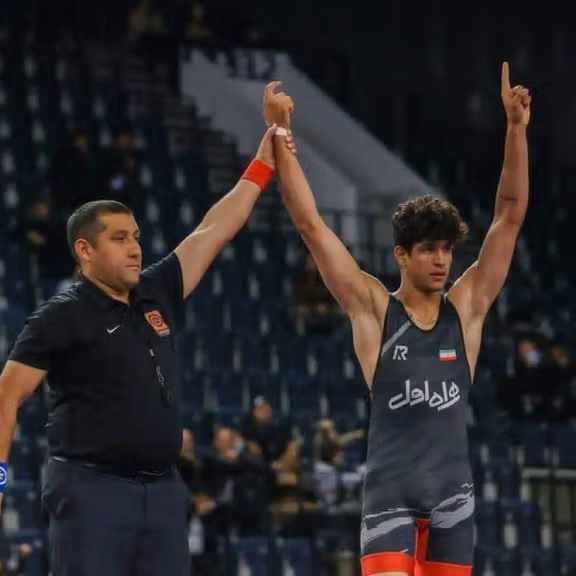
Mohammadi, a national-level wrestler who had competed internationally, denied the charges in court and said his confession had been obtained under torture, according to accounts from those close to him. Members of Iran’s wrestling community had also defended him, saying he had no history of violence.

Mohammadi had represented Iran in international wrestling events, including the 2024 Saitiev Cup in Russia, where he won a bronze medal.

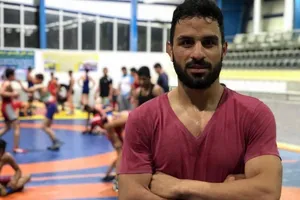
His execution has drawn comparisons to wrestler Navid Afkari, whose case became a symbol of the use of capital punishment following protests.

Afkari was sentenced to death and executed in Shiraz after being accused and convicted of murdering a security guard during the 2018 Iranian protests.

Athletes remain in custody

A growing list of athletes, coaches and referees remain detained, many linked to the recent wave of protests as well as earlier unrest.

Among those named are footballer Mohammad Hossein Hosseini, water polo goalkeeper Ali Pishevarzadeh, marathon runner Niloufar Pas, kickboxing champion Benjamin Naghdi, teenager footballer Abolfazl Dokht, and boxer Mohammad Javad Vafaei Sani.

Others include basketball coach Payam Vahidi, billiards coach Hamzeh Kazemi, aerobics coach Narges Heidari and former footballer Amir Reza Nasr Azadani, whose earlier arrest had already drawn international concern.

Several detainees are young athletes, including Amirhossein Ghaderzadeh, 19, and Abolfazl Dokht, raising alarm among campaigners who say they face similar charges and judicial processes.

Boxer Mohammad Mahshari, a bronze medalist at the 2024 Asian youth and under-23 championships, is also reported to be in custody.

The list extends to referees and lesser-known competitors, showing how deeply the crackdown has reached into Iran’s sporting community.

Pattern of executions after protest trials

Authorities accused those executed of acting on behalf of Israel and the United States, an allegation frequently used in cases linked to protests.

Cases linked to protest-related violence have repeatedly raised concerns over due process, including forced confessions, lack of access to legal representation and the exclusion of defense witnesses.

Saleh Mohammadi’s case followed that pattern, with those close to him saying CCTV evidence did not identify him and that alibi witnesses were not allowed to testify.

Sporting community under pressure

The crackdown has reverberated across Iran’s sporting world, where athletes have increasingly become visible participants in protests.

There is no single confirmed, comprehensive number specifically for athletes killed in the January 2026 protests. However, according to compiled lists from activists and sports networks, at least 65 athletes, coaches and referees have been identified among those killed during a crackdown in January.

The scale of the violence remains contested. Iran International reviewed documents proving that more than 36,500 Iranians were killed by security forces during the January 8-9 crackdown on nationwide protests, making it the deadliest two-day protest massacre in history, while other estimates suggest it could be significantly higher.

Earlier, more than 200 athletes signed open letters urging the International Olympic Committee to take stronger action and questioning its continued engagement with officials they say are tied to Iran’s security apparatus.

For those still in detention, Mohammadi’s execution has deepened fears that similar cases could be pushed rapidly through the courts.

The combination of protest-related charges, allegations of foreign links and the use of forced confessions has left many families fearful and uncertain about the fate of detained athletes.

Most Viewed

US terminates green cards of 3 Iranians tied to Islamic Republic
1

US terminates green cards of 3 Iranians tied to Islamic Republic

2
PODCAST

Worst outcome is Islamic Republic’s survival, ex-CIA official says

3
ANALYSIS

Iran brings unusually broad team to US talks to blunt future blame

4
INSIGHT

Tehran sends tough message but keeps diplomacy door open

5

Zoroastrian religious figure arrested in Iran

Banner
Banner

Spotlight

  • Tehran sends tough message but keeps diplomacy door open
    INSIGHT

    Tehran sends tough message but keeps diplomacy door open

  • Worst outcome is Islamic Republic’s survival, ex-CIA official says
    PODCAST

    Worst outcome is Islamic Republic’s survival, ex-CIA official says

  • Why the Iran-US truce is more likely to buy time than peace
    ANALYSIS

    Why the Iran-US truce is more likely to buy time than peace

  • Engaged but uncommitted: China watches Iran and US fight and talk
    ANALYSIS

    Engaged but uncommitted: China watches Iran and US fight and talk

  • A truce for the world, a reckoning for Iran’s economy
    ANALYSIS

    A truce for the world, a reckoning for Iran’s economy

  • Why the world failed to bypass the Strait of Hormuz
    ANALYSIS

    Why the world failed to bypass the Strait of Hormuz

  • Five years on, a wrestler's execution still haunts Iran—and demands action

    Five years on, a wrestler's execution still haunts Iran—and demands action

  • Iran executes champion wrestler ahead of Afkari's remembrance

    Iran executes champion wrestler ahead of Afkari's remembrance

•
•
•

More Stories

South Pars strike stirs debate among Iranians over impact and intent

Mar 19, 2026, 12:31 GMT

Messages sent to Iran International and posts on social media showed a split reaction to Wednesday’s strike on Iran’s South Pars gas field, with some welcoming the hit on state-linked assets and others warning of civilian costs.

Messages sent to Iran International and posts on social media were divided over Wednesday’s strike on the South Pars gas field in southern Iran, with some welcoming the hit on state-linked assets and others warning of civilian costs.

US President Donald Trump said Israel had struck Iran’s South Pars gas field “out of anger” over developments in the Middle East, describing the damage as limited and warning there would be no further attacks unless Iran targeted Qatar again.

The strike marked a shift in a conflict that has spread across the Persian Gulf, disrupting energy flows after Iranian missiles targeted facilities in Qatar and Saudi Arabia.

  • Iran floats Hormuz transit tolls as Persian Gulf states warn of military response

    Iran floats Hormuz transit tolls as Persian Gulf states warn of military response

Strike seen as blow to state-linked networks

Some messages sent to Iran International framed the attack as a setback for institutions tied to the Islamic Revolutionary Guards Corps.

“Israel, by hitting South Pars, saved us from more theft… the money was turned into bullets fired at our children,” one citizen wrote.

Another, who said he had worked on projects in the field, downplayed the long-term impact.

“Even with the complete destruction of all 24 gas refineries… they will return to production in less than three months,” he wrote, adding that supply lines from offshore platforms would shut automatically and protect reserves.

A separate message from an engineer challenged concerns about offshore facilities.

“The platforms are not even fully operational because of sanctions… after the Islamic Republic, they can be rebuilt better,” he wrote, contrasting them with higher-quality installations on the Qatari side.

Others shifted the focus away from infrastructure entirely.

“The main infrastructure was the young people they took from us… the rest can be rebuilt with better technology.”

Social media posts echoed that line in sharper language. “Don’t worry about infrastructure,” one post read. “What infrastructure are you talking about? What life was left that needed infrastructure?” it added.

Concerns over civilian impact

Other messages cautioned that strikes on energy infrastructure would translate directly into hardship for civilians.

“Don’t look at infrastructure so simply,” one user wrote. “Lack of electricity and gas means death – cold, hunger, medicine shortages.”

Another post rejected attacks on non-military targets. “Hitting Iran’s infrastructure by any side is condemnable. It belongs to all Iranians,” the message read.

Some called for limiting strikes strictly to military-linked targets. “Please just hit those responsible and leave non-military infrastructure alone.”

One message also questioned the timing. “Hitting South Pars at this moment is not the last and best solution,” it read.

Back to corruption and rebuilding

Even among those critical of the strike, some framed the debate through long-standing economic grievances.

“If infrastructure belonged to the people, no one would be searching in trash for food.”

Another argued that damaged facilities could ultimately be replaced. “That worn-out infrastructure… will be rebuilt better – but those lives won’t return,” the user wrote referring to thousands of people killed during the January protests.

Others pointed to historical reconstruction. “Germany and Japan were flattened in World War II – where are they now?” one user said.

Across the exchanges, a recurring thread linked both support for and opposition to the strike back to mistrust of the Islamic Republic, with many portraying the country’s energy wealth as mismanaged or diverted, and arguing that any future recovery depends less on infrastructure than on political change.

Iranians defy crackdown at fire festival as Israel signals support

Mar 18, 2026, 11:15 GMT

Iranians across many cities took to the streets late Tuesday to celebrate Chaharshanbe Suri, defying warnings and attempted crackdowns by security forces as the country remains under sustained military pressure.

Videos sent to Iran International showed crowds gathering in Tehran, Karaj, Shiraz, Mashhad and other cities, lighting fires, dancing and chanting slogans, including “Javid Shah,” in apparent response to calls by exiled prince Reza Pahlavi to mark the pre-Islamic festival despite restrictions.

In several locations, including Chitgar in western Tehran and parts of Karaj, security forces were seen attempting to disperse gatherings, with footage showing police vehicles approaching crowds.

  • Tehran warns of crackdown ahead of annual fire festival

    Tehran warns of crackdown ahead of annual fire festival

  • Iran braces for fire festival under shadow of war

    Iran braces for fire festival under shadow of war

But the celebrations persisted, with people singing patriotic songs such as “Ey Iran” and setting off fireworks in residential neighborhoods and public spaces.

Chaharshanbe Suri, traditionally held on the eve of last Wednesday of the Iranian calendar year, has long been viewed with suspicion by the Islamic Republic.

In recent years it has increasingly become a flashpoint for anti-government expression, particularly during periods of unrest.

This year’s celebrations unfolded against the backdrop of ongoing conflict and heightened security pressure, with reports of surveillance and efforts by authorities to deter gatherings.

Israeli support

“An unprecedented event took place last night, as Israeli drones targeted Basij and police patrols attempting to approach celebration sites,” an Israeli official told Iran International.

“For the first time, the people of Iran benefited from active support that paralyzed the repression apparatus and effectively provided an ‘air umbrella’ for the crowds,” the official said.

Israeli Prime Minister Benjamin Netanyahu had earlier signaled support, saying in a video message that Israeli forces were targeting what he described as “terrorist operatives” to enable Iranians to celebrate.

“Our aircraft are striking terrorist elements in city squares and intersections to allow the brave people of Iran to celebrate the fire festival,” he said. “Celebrate. Happy Nowruz. We are watching from above.”

What the Balkans can tell Iranians about life after war

Mar 18, 2026, 07:23 GMT
•
Naeimeh Doostdar

Recent history in the Balkans may offer a useful lens for the postwar questions now confronting many ordinary Iranians.

That question has taken on added urgency after repeated suggestions by President Donald Trump this week that the war could end in the very near future.

Among the most instructive comparisons is the NATO intervention in Yugoslavia in 1999—a conflict that carried sharply different meanings depending on where it was experienced.

For many outside observers, the war began with NATO’s 78-day bombing campaign launched in March of that year after the collapse of peace talks. But for those on the ground in Kosovo, the conflict had already been unfolding for years.

It had taken shape not through airstrikes, but through a gradual tightening of control: checkpoints, dismissals from public jobs, the closure of Albanian-language schools and the growing presence of security forces.

By the time NATO intervened, many Kosovo Albanians saw the bombing not as the start of war but as a new phase of a conflict they had already been living through.

For many Kosovo Albanians, the bombing was accompanied by fear but also a measure of hope. By early 1999, large numbers of civilians were already fleeing violence, and accounts from refugee camps in Albania and North Macedonia often reflected a similar sentiment.

Fragments of those fears and hopes remain preserved in television reports from the time, now widely available online.

“We are afraid of the planes, but we are more afraid of the soldiers who burned our homes,” a young man from Prizren tells the BBC in one such report.

Another refugee says: “When we heard NATO had attacked, we thought maybe someone had finally come to stop this.”

For others, the calculus was more reluctant. A teacher later reflected: “We did not want war. But once it began, we felt it might be the only way for things to change.”

At the same time, civilians in Serbia experienced the war very differently.

In Belgrade, air raid sirens sent residents into shelters night after night as bridges, factories and military sites were targeted. In the early days, a sense of defiance took hold, with people gathering in public spaces despite the risk.

“We know it is dangerous, but we do not want to leave our city alone,” one student said.

As the bombing continued, defiance gave way to exhaustion. Power outages became more frequent, daily life more strained and uncertainty more acute.

“At first, people were angry. After a while, we were just tired,” one resident later said.

The Kosovo war illustrates how the same military intervention can carry entirely different meanings depending on lived experience.

For many Serbs, NATO’s campaign became a symbol of foreign aggression and national humiliation. For many Kosovo Albanians, it represented the possibility — however uncertain — that years of repression might finally end.

After 78 days, Yugoslav forces withdrew and international peacekeeping troops entered Kosovo. For many Kosovo Albanians, that marked the beginning of a return to homes that were often damaged or destroyed. For many Serbs, the war remained a defining national trauma.

The contrast endures in how the conflict is remembered.

“We hated the war,” one Kosovar later wrote. “But without it, we might still be living in that fear.”

A Serbian citizen offered a starkly different view: “For us, this war was neither freedom nor justice. It was simply bombing.”

As Iranians begin to consider what might follow the current conflict, the Balkan experience offers no simple answers—only a reminder that the meaning of war is rarely shared equally.

If the war does end soon, as Trump suggests, its consequences inside Iran may prove equally contested.

War and hardship dampen Nowruz mood in Iran

Mar 17, 2026, 21:29 GMT
•
Hooman Abedi

Nowruz is approaching with far less of its usual energy across Iran this year, as many families abandon long-standing New Year preparations while war, economic strain and an atmosphere of uncertainty dampen the festive mood.

Several Iranians told Iran International that familiar rituals that normally fill homes with activity in the weeks before the holiday have stalled.

“This year we did nothing,” Leila, a 38-year-old resident of Tehran, told Iran International. “We didn’t wash carpets and we didn’t do the house cleaning. Every year I would start from early February, but this year we are just looking at the sky, waiting for the fall of this regime.”

Nowruz, the Persian New Year marking the arrival of spring, has been celebrated for more than 3,000 years across Iran and parts of Central Asia and the Middle East.

The holiday usually falls on March 20 or 21 and begins nearly two weeks of family visits, meals and gatherings.

An Iranian person washes a carpet during traditional spring cleaning, known as khaneh-Tekani, ahead of the Nowruz new year celebrations.
100%
An Iranian person washes a carpet during traditional spring cleaning, known as khaneh-Tekani, ahead of the Nowruz new year celebrations.

‘Shaking the house’

In most years, the weeks before Nowruz transform daily life across Iran. Families traditionally begin with Khaneh Tekaani, a deep spring cleaning whose name literally means “shaking the house.” Carpets are washed, cupboards reorganized and homes refreshed to symbolically welcome the new year.

Another essential ritual is planting Sabzeh — dishes of sprouting wheat, lentils or barley that represent renewal and rebirth and are later placed on the Haft-Seen table, the centerpiece of the celebration alongside candles, colored eggs, a mirror and often a red goldfish.

But this year, some residents say even modest traditions feel out of reach.

“Planting Sabzeh is something we Iranians do every year, but this year with all the news about war we completely forgot about it. God damn the Islamic Republic for ruining everything,” Kamran, a 42-year-old office worker in Hamedan, told Iran International.

An Iranian man installs curtains at home as part of preparations ahead of the Nowruz new year celebrations.
100%
An Iranian man installs curtains at home as part of preparations ahead of the Nowruz new year celebrations.

‘No money, no mood’

Markets that normally bustle in the run-up to Nowruz — with families buying sweets for visiting relatives, decorative items for Haft-Seen tables and new clothes for children — have also been quieter this year, residents say.

Some cite the worsening economic situation as a key reason holiday traditions have faded.

“Every year despite inflation we bought at least a few things,” said Golnaz, a 35-year-old shop owner in Karaj. “But this year we had neither the money nor the mood. We are waiting for that final moment.”

Golnaz described how rising prices have weighed heavily on households and small businesses.

“Even if we wanted to prepare and had the energy, prices are so high we simply cannot afford it. Everything has become several times more expensive. I run a small cosmetics shop and this month I have not even earned the rent for the store,” she said.

Her husband, who drives for a ride-hailing service, is working less frequently amid fears of bombings and falling demand as more people stay home.

People look at goldfish displayed for sale at a street market ahead of Nowruz celebrations in Tehran.
100%
People look at goldfish displayed for sale at a street market ahead of Nowruz celebrations in Tehran.

‘No ordinary time’

On social media, many Iranians say the emotional tone of the season has shifted sharply compared with previous years.

“If things were normal, I should be excited for next week and finishing my preparations. The scent of night-blooming flowers would be filling the house and the holiday sweets would already be in the refrigerator,” one user wrote.

Another reflected on the contrast with childhood memories: “What burns me is that it is the New Year season. People should now have the mood of buying for the holiday and welcoming the new year in Iran. I remember how excited I was as a child. But those feelings slowly died inside me.”

For generations, the approach of Nowruz has filled Iranian homes with cleaning, cooking and preparations symbolizing renewal. This year, residents say those rituals — once a nationwide signal of spring’s arrival — have been overshadowed by war, rising prices and uncertainty about what the new year will bring.

A traditional Haft-Seen table is arranged at a home ahead of Nowruz, the Persian New Year.
100%
A traditional Haft-Seen table is arranged at a home ahead of Nowruz, the Persian New Year.

Tehran warns of crackdown ahead of annual fire festival

Mar 17, 2026, 15:50 GMT
•
Maryam Sinaiee

Authorities in Tehran have issued sweeping warnings ahead of Iran’s annual fire festival, Chaharshanbeh Suri, framing the centuries-old celebration as a potential flashpoint for unrest during wartime.

The festival has long been a source of friction between the public and the state, but this year officials appear particularly concerned amid U.S.-Israeli strikes and fresh calls for mass participation, including appeals this week from exiled Prince Reza Pahlavi.

Judicial and security bodies have sent text messages directly to citizens. One such message, reportedly from a provincial justice department, warned that any “noise, commotion or unconventional behaviour” that disrupts public order could result in punishments including imprisonment and flogging.

On Tuesday, chief justice Gholam-Hossein Mohseni-Ejei warned dissenters and repeated orders to confiscate the assets of those deemed “collaborators with the enemy,” again raising the possibility of capital punishment.

“We warn all elements who intend to threaten public security that if they act, they will face firm legal action, and there will be no leniency,” he said.

The Revolutionary Guards (IRGC) spokesman, Brigadier General Ali-Mohammad Naeini, used even sharper language, describing the day as a “Charshanbeh of burning enemies.”

He vowed that attacks on Israel and U.S. bases in the region would intensify while “symbols of monarchists, separatist terrorists and mercenaries inside the country” would be set ablaze.

Ahmad-Reza Radan, Iran’s police commander, appeared Monday at a pro-establishment gathering in Tehran and urged supporters “not to leave the arena” to the opposition, calling the night “a decisive night” for the state.

Marked by bonfires, fireworks and rituals rooted in pre-Islamic traditions, Charshanbeh Suri has frequently drawn official scrutiny since the 1979 revolution, with clerical leaders often dismissing it as incompatible with religious norms.

Despite repeated enforcement efforts involving police, paramilitary Basij forces and vigilante groups, the celebration has persisted.

Restrictions have also altered how the festival is observed: traditional practices such as jumping over small fires and spoon-banging at doors have, over time, given way in many areas to the use of homemade explosives, often resulting in injuries and property damage.

In recent years — especially following the 2022–23 “Woman, Life, Freedom” protests — the festival has taken on a more overtly political dimension, with young people chanting slogans and at times confronting security forces with firecrackers and improvised devices.

The wave of warnings followed messages by Iran’s exiled Prince Reza Pahlavi in recent days addressed to Iranians and the “international community and friends of Iran.”

He urged citizens to celebrate Charshanbeh Suri in “alleys and neighborhoods across the country” and called on global observers to keep their eyes on Iran and “not to allow the regime to use violence against the people determined to celebrate life, light and hope in the face of darkness.”

In a separate message, he directly urged Donald Trump and Benjamin Netanyahu to closely monitor developments on the night of the festival.

In a further video message posted Tuesday, he urged Iranians to avoid confrontation with government forces while warning security personnel to leave people in peace.

“These malevolent agents intend to drag your festival of light, purity and life into darkness, filth and death. Do not give them this opportunity,” he said.

Online reactions suggest the calls for participation are resonating with some younger Iranians, who frame the festival as both a national tradition and a symbol of resistance.

One user wrote that holding Charshanbeh Suri this year would mean “turning a national ritual into a symbol of standing against the regime and honoring those who gave their lives for the homeland.”

Another post declared: “Tomorrow night we will witness the largest Charshanbeh Suri in Iran’s history. I dare you to touch even a hair on the heads of our compatriots.”