• العربية
  • فارسی
Brand
  • Iran Insight
  • Politics
  • Economy
  • Analysis
  • Special Report
  • Opinion
  • Podcast
  • Iran Insight
  • Politics
  • Economy
  • Analysis
  • Special Report
  • Opinion
  • Podcast
  • Theme
  • Language
    • العربية
    • فارسی
  • Iran Insight
  • Politics
  • Economy
  • Analysis
  • Special Report
  • Opinion
  • Podcast
All rights reserved for Volant Media UK Limited
volant media logo

Iran seeks to shift World Cup matches out of US

Mar 17, 2026, 04:51 GMT+0

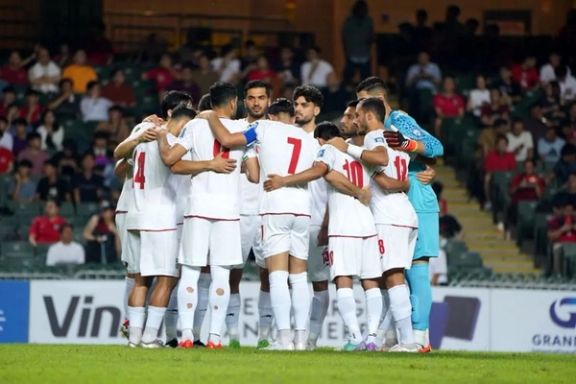
Iran is hoping to move its World Cup matches out of the United States and into Mexico, football chief Mehdi Taj said Monday, days after President Trump raised doubt about Iranian players trip to the US.

Taj said the federation is in discussions with FIFA about relocating the fixtures.

“When Trump has explicitly stated that he cannot ensure the security of the Iranian national team, we will certainly not travel to America,” Taj said in a post shared via the Iranian embassy in Mexico’s X account.

Iran’s sports minister said last week it would not be possible for the team to participate in the United States following US-Israeli airstrikes on Iran that killed the country’s supreme leader.

Most Viewed

The hidden target in US war on Iran may be China
1
PODCAST

The hidden target in US war on Iran may be China

2
PODCAST

US should use Iran talks leverage to help Iranian people, veteran journalist says

3

UK releases man jailed for spying on Iran International in 2023 terror plot

4
INSIGHT

Unity or fracture? Tehran battles Trump’s narrative of disarray

5

Is the US blockade working? It depends who you ask

Banner
Banner

Spotlight

  • Is Ghalibaf becoming Iran’s Khrushchev?
    INSIGHT

    Is Ghalibaf becoming Iran’s Khrushchev?

  • Iran’s new military-led order may mean greater dangers abroad
    ANALYSIS

    Iran’s new military-led order may mean greater dangers abroad

  • The hidden target in US war on Iran may be China
    PODCAST

    The hidden target in US war on Iran may be China

  • Unity or fracture? Tehran battles Trump’s narrative of disarray
    INSIGHT

    Unity or fracture? Tehran battles Trump’s narrative of disarray

  • Iran’s economy after the March war: how bad can it get?
    ANALYSIS

    Iran’s economy after the March war: how bad can it get?

  • Behind Tehran’s unity show: The secret letter to the shadow king
    INSIGHT

    Behind Tehran’s unity show: The secret letter to the shadow king

•
•
•

More Stories

Tehran press turn to survival as war upends Iranian New Year

Mar 17, 2026, 04:23 GMT+0
•
Behrouz Turani

In a normal year, Iranian newspapers would now be filled with stories celebrating Nowruz, the Persian New Year beginning March 20. But with war raging across Iran, front pages are instead dominated by headlines about security and survival.

After two weeks of upheaval — including the death of a supreme leader, the appointment of a successor and a war that has touched much of the country — Tehran’s newspapers are increasingly focused on the daily struggle of Iranians trying to make ends meet under fire.

Across the press, economic anxiety is now front and center.

The economic daily Donya-ye Eghtesad warned of a “red alert for the economic situation,” while Jomhouri Eslami struck a more pragmatic tone with the headline: “The need to be honest with the people in an emergency situation,” urging officials to “separate people’s livelihoods from politics.”

Coverage of the Strait of Hormuz also featured prominently on Monday’s front pages. The hardline Kayhan, whose editor is appointed by the Office of the Supreme Leader, vowed that “Iran’s response will make the enemies regret their actions in this war of wills.”

Ettela’at, another newspaper linked to that office, called on the government to “prevent looming famine and scarcity of goods,” taking a markedly different line from Kayhan’s “jihad economy” — a concept long promoted by the late leader Ali Khamenei.

It even suggested rationing essential goods during the Nowruz holidays, which typically last up to two weeks.

Economists quoted in several papers attributed part of the market turmoil to conflicting political signals and the Central Bank’s efforts to stabilize prices in the final days of the year.

Two key articles published Sunday, in Ettela’at and Jomhouri Eslami, captured the broader mood.

Ettela’at argued for “the priority of bread and ethics over political disputes,” criticizing political factions for turning people’s livelihoods into a battleground even during wartime. It urged officials and media to end factional infighting and focus on stabilizing prices to prevent further erosion of social trust.

Jomhouri Eslami, for its part, advised officials to remove advisers who mislead them and distract from the public’s real problems.

Three broad camps emerged in the press over the weekend.

Hardline outlets like Kayhan blamed the crisis on the war and called for resistance. Reformist papers including Etemad and Sharq described a deadlock and urged major change, including national reconciliation.

More centrist titles such as Ettela’at and Jomhouri Eslami framed the moment as a test of governance, calling for transparency, responsiveness and effective market control.

Despite their differences, nearly all newspapers agree on one point: the coming Iranian year, beginning March 20, is likely to be decisive for the country’s economy, its leadership and its social stability.
US, Iran offer conflicting accounts of outreach

Mar 17, 2026, 03:46 GMT+0

Iranian officials contacted US envoy Steve Witkoff and others in the Trump administration to "reopen a diplomatic channel," CNN reported citing two senior White House officials.

The sources said President Trump advised his team he remained opened to talks but did not want to negotiate for now.

The report contradicts an earlier remark by Iran's foreign minister Abbas Araghchi, who said such reports were "geared solely to mislead oil traders and the public.”

"My last contact with Mr. Witkoff was prior to his employer’s decision to kill diplomacy with another illegal military attack on Iran, he posted on X.

Axios and Drop Site News had earlier reported on the conflicting claims of outreach.

Trump was warned Iran could retaliate across the Persian Gulf - Reuters

Mar 17, 2026, 03:46 GMT+0

President Donald Trump was briefed before launching strikes on Iran that Tehran could retaliate against US allies in the Persian Gulf, Reuters reported Monday, citing a US official and several people familiar with intelligence assessments.

Prewar intelligence did not say retaliation was certain, but it was “on the list of potential outcomes,” one source said, speaking on condition of anonymity.

Two additional sources said Trump was also warned Iran might attempt to close the Strait of Hormuz, a vital global oil transit route.

Trump said twice on Monday that Iran’s retaliatory strikes on Qatar, Saudi Arabia, the United Arab Emirates, Bahrain and Kuwait had been unexpected.

“They weren’t supposed to go after all these other countries in the Middle East,” he said at a White House event. “Nobody expected that. We were shocked.”

The remarks came as the Pentagon sought to underscore the scale of the campaign. US Central Command said it had hit more than 7,000 targets across Iran by the end of Monday, including missile sites, naval assets and command facilities.

Israel’s military issued similarly sweeping claims, asserting in a post on its Persian X account that it had inflicted heavy losses on Iranian forces and leadership and caused declining morale — claims that could not be independently verified.

Yet a report by The Washington Post the same day cited US intelligence assessments suggesting the campaign has not destabilized Iran’s political system and that the Islamic Revolutionary Guard Corps is consolidating power, with no signs of major defections or internal fractures.

Trump defended the decision to join Israel in launching airstrikes on February 28, arguing the economic fallout was justified. He called the war’s impact on markets “a very small price to pay,” adding: “You want to see the stock market go down? Start letting them hit you with nukes.”

Major stock indexes have fallen since the campaign began, while oil prices surged as shipping through the Strait of Hormuz slowed sharply. Markets recovered somewhat Monday as oil prices eased.

Trump also argued the war was necessary to prevent a wider conflict, saying that “had we not done this, you would have had a nuclear war that would have evolved into World War III.”

Iraqi group says it flew a drone over US embassy in Baghdad

Mar 17, 2026, 03:32 GMT+0

An Iraqi armed group, Saraya Awlya al-Dam, has released a video it says shows a drone surveilling the US Embassy Baghdad in the Iraqi capital’s fortified Green Zone.

The footage, posted on the group’s Telegram channel, appears to show a quadcopter flying in broad daylight over the compound, capturing detailed views of the compound.

The footage could not be independently verified.

Trump was warned Iran could strike US allies - Reuters

Mar 17, 2026, 02:54 GMT+0

President Donald Trump was warned before launching strikes on Iran that Tehran could retaliate against US allies in the Persian Gulf, despite his claims that such attacks came as a surprise, Reuters reported citing one US official and two sources familiar with intelligence reports.

Pre-war intelligence assessments did not say retaliation was certain, but it was “on the list of potential outcomes,” one of the sources said, speaking on condition of anonymity.

Trump said twice on Monday that Iran’s strikes on Qatar, Saudi Arabia, the United Arab Emirates, Bahrain and Kuwait had been unexpected.

“They weren’t supposed to go after all these other countries in the Middle East,” he said. “Nobody expected that. We were shocked.”

The remarks appeared to contradict intelligence briefings received ahead of the operation, according to the sources.