• العربية
  • فارسی
Brand
  • Iran Insight
  • Politics
  • Economy
  • Analysis
  • Special Report
  • Opinion
  • Podcast
  • Iran Insight
  • Politics
  • Economy
  • Analysis
  • Special Report
  • Opinion
  • Podcast
  • Theme
  • Language
    • العربية
    • فارسی
  • Iran Insight
  • Politics
  • Economy
  • Analysis
  • Special Report
  • Opinion
  • Podcast
All rights reserved for Volant Media UK Limited
volant media logo

Australian Senate passes motion condemning Iran protest crackdown

Feb 5, 2026, 09:53 GMT+0
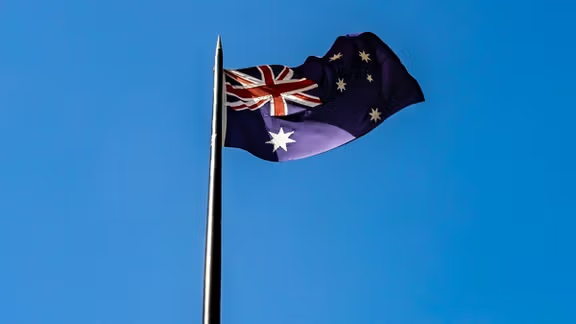
 The Australian flag, file photo.
The Australian flag, file photo.

The Australian Senate on Thursday passed a motion condemning Iran’s crackdown on nationwide anti-government protests that began in late December, citing killings, mass arrests and internet blackouts imposed on civilians.

The motion said senators noted “with grave concern” reports of indiscriminate killings of civilians, the targeting of women and children, mass arrests and internet and communications blackouts. It also acknowledged the distress felt by Iranian-Australians unable to contact relatives in Iran.

It called on the Albanese government to keep working with international partners, including the United Nations, to support independent investigations into human rights violations in Iran, press for accountability, expand targeted sanctions and push for an end to violence, executions and communications restrictions.

Labor Senator Raff Ciccone, one of the co-sponsors, said in a post on X that the Senate had condemned “the Iranian regime’s brutal repression of peaceful protesters” and reaffirmed Australia’s solidarity with the Iranian people and the Iranian-Australian community.

His comments followed earlier action this week, when Australia imposed new sanctions on 20 individuals and three entities linked to Iran’s security apparatus over the protest crackdown.

Speaking in the Senate earlier this week, Ciccone said he supported the government’s steps and voiced solidarity with Iranians protesting inside the country.

“Since 28 December last year, the Iranian regime has responded to peaceful protests with extraordinary and horrifying violence against its own people,” he told parliament.

He said authorities had tried to hide the scale of the crackdown. “The regime has attempted to conceal the scale of its brutality through nationwide internet and telecommunication blackouts,” he said.

Referring to the new sanctions, Ciccone said they targeted those responsible for repression, including figures linked to the Islamic Revolutionary Guard Corps. “These sanctions are not symbolic; they are targeted, deliberate and designed to impose real consequences on those responsible for repression and violence,” he said.

Ciccone also highlighted the impact on Iranians living in Australia. “Members of the Australian Iranian community have watched these events unfold with profound anguish,” he said, adding that many had relatives at risk.

“Australia’s message is clear: the use of violence against civilians, the silencing of dissent and the systemic denial of human rights will not be met with indifference,” he said.

Most Viewed

Ghalibaf defends Iran-US talks amid hardline backlash
1
INSIGHT

Ghalibaf defends Iran-US talks amid hardline backlash

2
VOICES FROM IRAN

Bread shortages, soaring prices strain households in Iran, residents say

3
INSIGHT

Iran diplomacy wobbles as factions compete to avoid looking soft on US

4
ANALYSIS

The politics of pink: how Iran uses cuteness to rebrand violence

5
ANALYSIS

From instability to influence: Pakistan’s pivotal role in US-Iran diplomacy

Banner
Banner

Spotlight

  • Is Iran entering its Gorbachev moment?
    INSIGHT

    Is Iran entering its Gorbachev moment?

  • Iran crackdown reaches cemeteries as graves of slain protesters defaced
    EXCLUSIVE

    Iran crackdown reaches cemeteries as graves of slain protesters defaced

  • Iran diplomacy wobbles as factions compete to avoid looking soft on US
    INSIGHT

    Iran diplomacy wobbles as factions compete to avoid looking soft on US

  • The politics of pink: how Iran uses cuteness to rebrand violence
    ANALYSIS

    The politics of pink: how Iran uses cuteness to rebrand violence

  • Bread shortages, soaring prices strain households in Iran, residents say
    VOICES FROM IRAN

    Bread shortages, soaring prices strain households in Iran, residents say

  • Ghalibaf defends Iran-US talks amid hardline backlash
    INSIGHT

    Ghalibaf defends Iran-US talks amid hardline backlash

•
•
•

More Stories

Canadian activists urge probe into Iranian expats linked to repression

Feb 4, 2026, 15:05 GMT+0
•
Negar Mojtahedi

Human rights advocates in Canada are urging the country’s national police to gather evidence on Canadians linked to Iran’s repression apparatus after thousands of protesters were killed in January.

The call is directed at the Royal Canadian Mounted Police (RCMP) and centers on what is known as a “structural investigation,” an evidence-gathering process that could help lay the groundwork for future prosecutions of individuals linked to crimes against humanity.

“We know that there are a number of IRGC officials in Canada, and also a very large Iranian diaspora with substantial evidence they can provide to the RCMP,” said Brandon Silver, an international human rights lawyer and founding director of policy and projects at the Raoul Wallenberg Centre for Human Rights.

“The RCMP can initiate what’s called a structural investigation into crimes against humanity,”

The push comes amid mounting demands for accountability after Iran International’s Editorial Board confirmed that more than 36,500 Iranians were killed by security forces during the January 8–9 crackdown, the deadliest two-day protest massacre in history.

Advocates say Canada must ensure perpetrators cannot find refuge abroad — and that Iranian Canadians have a direct avenue to report evidence.

Nazanin Afshin-Jam, a member of the Iranian Justice Collective, said structural investigations would give Iranian Canadians a concrete pathway to come forward and begin the accountability process.

Calls from Parliament Hill

The renewed push followed a day of meetings and testimony in Ottawa, where Afshin-Jam appeared before the House of Commons Subcommittee on International Human Rights.

“Yesterday I was invited to testify before the subcommittee on international human rights to give an update on the human rights situation in Iran and to also provide some recommendations,” she said.

Afshin-Jam said the aim was to press Canada to move beyond statements of condemnation toward tangible action.

Pressure on the IRGC

Silver also urged Ottawa to expand sanctions against senior officials directing the repression.

“Sanction the architects of this repression, starting with the Ayatollah,” he said.

He argued that Canada should coordinate closely with allies as international pressure mounts on the Islamic Revolutionary Guard Corps.

Afshin-Jam said Canada has already taken significant steps in the past — including listing the IRGC and closing its embassy in Tehran — and should again lead among Western democracies.

Advocates said they were encouraged by signs of cross-party engagement in Parliament but stressed that the next step must be follow-through: evidence collection, sanctions enforcement, and coordinated international action.

Iran crypto volumes draw US probes into sanctions evasion - Reuters

Feb 3, 2026, 13:32 GMT+0

US investigators are examining whether cryptocurrency platforms were used to help Iranian officials and state-linked actors evade sanctions, a blockchain researcher told Reuters, as crypto use rose sharply in Iran amid currency weakness and political unrest.

Ari Redbord, global head of policy at TRM Labs, said the US Treasury is reviewing whether platforms allowed state-linked players to move money abroad, access hard currency or buy restricted goods.

Estimates of Iran’s crypto activity vary. TRM Labs estimated roughly $10 billion in Iran-linked crypto activity in 2025, compared with $11.4 billion in 2024. Chainalysis said Iranian wallets received a record $7.8 billion in 2025, up from $7.4 billion in 2024 and $3.17 billion in 2023. Researchers cautioned that crypto’s pseudonymous nature makes precise attribution difficult and limits the ability to form a complete picture.

Chainalysis estimated that about half of Iran’s 2025 crypto activity was linked to the Islamic Revolutionary Guard Corps (IRGC). TRM Labs said it has identified more than 5,000 addresses it labels as IRGC-linked and estimates the Guards have moved about $3 billion worth of crypto since 2023.

Iran’s largest exchange, Nobitex, told Reuters that around 15 million people in Iran have some crypto exposure, with many using digital assets as a store of value as the rial depreciates. Analysts said funds can be moved off Iranian exchanges to wallets and platforms elsewhere, complicating enforcement for US authorities.

In September, the US Treasury Department’s Office of Foreign Assets Control (OFAC) sanctioned two Iranian financial facilitators and more than a dozen individuals and entities based in Hong Kong and the United Arab Emirates for helping coordinate money transfers — including proceeds from Iranian oil sales — that it said benefited the IRGC-Quds Force and Iran’s ministry of defense.

“Iranian ‘shadow banking’ networks like these—run by trusted illicit financial facilitators—abuse the international financial system, and evade sanctions by laundering money through overseas front companies and cryptocurrency,” read the statement.

Another Iran diplomat seeks asylum in Switzerland, sources say

Feb 3, 2026, 12:07 GMT+0

An Iranian diplomat posted in Austria has left his assignment and sought asylum in Switzerland, informed sources told Iran International on Tuesday.

Gholamreza Derikvand, Iran’s chargé d’affaires in Vienna, had broken with Tehran and is now in Switzerland. There was no immediate comment from Iran’s foreign ministry.

Sources told Iran International that officials at the ministry had avoided discussing the case, with some staff citing security concerns.

Derikvand previously served as charge d’affaires at Iran’s embassy in the Czech Republic from 2011 to 2014 and was viewed by colleagues as a career diplomat who could have risen to ambassador.

  • Iranian diplomat in Geneva seeks asylum in Switzerland, sources say

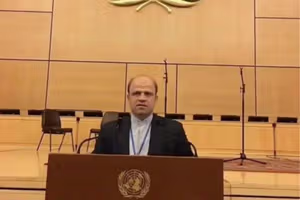
    Iranian diplomat in Geneva seeks asylum in Switzerland, sources say

The move follows a similar case last month in which Alireza Jeyrani Hokmabad, a senior Iranian diplomat based at the United Nations European headquarters in Geneva, left his post and sought asylum in Switzerland with his family.

Diplomatic sources said fears linked to Iran’s political unrest and concerns over the stability of the governing system had prompted the decision.

100%

Iran says Hatef-3 satellite launch likely by March, tests under way

Feb 3, 2026, 11:00 GMT+0

Iran could launch its Hatef-3 satellite on a Simorgh rocket by the end of the current Iranian year in March, the head of the country’s space agency said on Tuesday, adding that compatibility tests are under way.

Iran’s space agency chief Hassan Salarieh said the newly unveiled Hatef-3 is a full-scale test model for the planned 24-satellite “Martyr Soleimani” constellation and would be launched once final checks are completed.

Salarieh said Hatef-3 satellite is still considered an “experimental sample because the system must be placed into orbit and its performance be assessed in space.”

Iran is carrying out integration and compatibility tests between the Hatef-3 satellite and the Simorgh launch vehicle, he added, describing a launch by year-end as likely but subject to technical reviews.

According to Salarieh, a space base was also unveiled in Salmas in northwestern Iran and another in Chenaran in the northeast.

Also on Tuesday, Iran’s defense minister said the country must accelerate its space program to close what he described as lingering gaps, warning that falling behind could undermine national governance and independence.

Aziz Nasirzadeh said Iran should prioritize developing an air-launched rocket system and securing a presence in geostationary orbit, calling space a new arena for strategic competition.

  • Iran set to orbit three satellites in joint launch from Russia

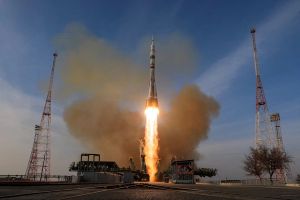
    Iran set to orbit three satellites in joint launch from Russia

Australia hits Iran with new sanctions over protest crackdown

Feb 3, 2026, 10:28 GMT+0

Australia imposed new sanctions on 20 individuals and three entities linked to Iran’s Islamic Revolutionary Guard Corps, accusing them of involvement in a violent crackdown on protests.

“The Australian Government is today imposing further targeted financial sanctions on Iran in response to the regime’s horrific use of violence against its own people,” read a government media release on Tuesday.

The Australian government said those sanctioned include senior IRGC officials and entities that violently suppress domestic protests and threaten lives inside and outside Iran.

Among those named are Iran’s national police chief Ahmad-Reza Radan, who has been a central figure in directing street-level repression, mass arrests and the use of force against protesters.

Intelligence Minister Esmail Khatib was also on the list. He oversees the security and intelligence apparatus responsible for surveillance, detentions and interrogations of activists and dissidents.

Ali Fazli, a senior IRGC commander and former Basij chief, who has long been associated with suppressing protests and coordinating paramilitary forces against demonstrators, was also sanctioned by Canberra.

Other notable names on the list included Mohammad Reza Fallahzadeh, a senior commander in the IRGC’s Quds Force, Mohammad Saleh Jokar, a former commander of student Basij forces, and Yahya Hosseini Panjaki, the intelligence ministry's deputy for domestic security.

Canberra’s sanctions also targeted the IRGC Cyber Defense Command, involved in online surveillance and information control; IRGC Quds Force Unit 840, a covert unit accused of planning operations against dissidents and foreign targets; and the IRGC Intelligence Organization, which oversees domestic intelligence, arrests and interrogations and plays a central role in suppressing protests inside Iran.

The Australian government said the new measures build on earlier step of listing the IRGC as a state sponsor of terrorism and its existing sanctions framework on Iran.

Australia officially designated IRGC as a state sponsor of terrorism in November after intelligence linked the group to attacks on Jewish centers in Sydney and Melbourne.

The Guards, who have been designated a terrorist organization by the United States since 2019, were also put on the EU’s terrorist list in late January.

The Albanese government has so far sanctioned more than 200 Iranian individuals and entities, including more than 100 linked to the IRGC.