• العربية
  • فارسی
Brand
  • Iran Insight
  • Politics
  • Economy
  • Analysis
  • Special Report
  • Opinion
  • Podcast
  • Iran Insight
  • Politics
  • Economy
  • Analysis
  • Special Report
  • Opinion
  • Podcast
  • Theme
  • Language
    • العربية
    • فارسی
  • Iran Insight
  • Politics
  • Economy
  • Analysis
  • Special Report
  • Opinion
  • Podcast
All rights reserved for Volant Media UK Limited
volant media logo
INSIGHT

Alarm grows over detention of doctors who treated Iran protesters

Maryam Sinaiee
Maryam Sinaiee

Iran International

Feb 2, 2026, 20:08 GMT+0
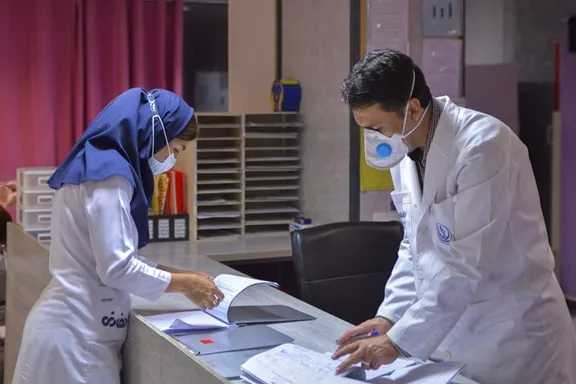
Medical staff checking reports in a Tehran hospital, in this undated file photo

Rights groups and activists are sounding the alarm over what they describe as a widening campaign of pressure, arrests and intimidation against Iranian doctors and nurses who treated injured protesters.

Iran International has reviewed information from multiple sources inside Iran suggesting that at least 32 members of the country’s medical staff have been detained, with no public information available about the status of their cases.

Doctors who treated wounded protesters in cities including Qazvin, Rasht, Tabriz, Mashhad and Gorgan have been arrested or have gone missing, according to the reports.

Most of the reported arrests are said to have taken place after January 8, following the escalation of protests and the ensuing security crackdown.

‘Normalization of arrests’

Iran Medical Council chief Mohammad Raiszadeh confirmed that 17 of its members had faced judicial or security cases linked to the recent unrest, but insisted that none had been prosecuted for providing medical treatment and that no verdicts had been issued.

The Medical Council is formally a civil body but operates under heavy state oversight.

Raiszadeh, who is close to conservative political circles and previously led the establishment-aligned Basij Doctors Organization, said the council had followed up the cases with security and judicial authorities and had been told that none of the individuals were arrested solely for treating patients.

His remarks prompted criticism within the medical community.

Mahdiar Saeedian, editor-in-chief of a medical science magazine in Iran, wrote on X that the council’s position amounted to normalizing state pressure on healthcare workers.

“More unpleasant than silence is the normalization of arrests and pressure on medical staff by the Medical Council,” he wrote. “This is the result of fully turning a professional organization into a state-controlled body.”

Reported cases

UK-based outlet Kayhan London reported that doctors Masoud Ebadi-Fard Azari and his wife, Parisa Porkar, were arrested in Qazvin for allegedly treating injured protesters, adding that their whereabouts remain unknown.

Another reported case involves Golnaz Naraqi, a 41-year-old emergency medicine specialist at Hasheminejad and Shohada-ye Tajrish hospitals in Tehran, who was reportedly arrested at her home more than ten days ago.

Social media users have also reported growing pressure on medical staff accused of helping protesters anonymously.

In one account, a viewer message sent to Iran International said Farshid Pourreza, head of Golsar Hospital in Rasht, was dismissed and expelled from the hospital for supporting protesters and treating the wounded.

Health Minister Mohammad Reza Zafarghandi wrote on X that providing “the best possible medical services to every patient in a safe healthcare environment,” regardless of “any external factors,” was the health system’s top priority.

The remarks drew swift criticism online.

“As a colleague, I am waiting to see whether you remain loyal to your oath, or whether an ‘external factor’ stands in the way of it,” Nakisa Serafinincho, an Iranian doctor based in Romania, wrote on X.

Another user responded: “You can’t even protect medical staff. How can you talk about patient safety?”

Most Viewed

Ghalibaf defends Iran-US talks amid hardline backlash
1
INSIGHT

Ghalibaf defends Iran-US talks amid hardline backlash

2
INSIGHT

Iran diplomacy wobbles as factions compete to avoid looking soft on US

3
VOICES FROM IRAN

Bread shortages, soaring prices strain households in Iran, residents say

4
ANALYSIS

The politics of pink: how Iran uses cuteness to rebrand violence

5

War-hit homeowners feel abandoned as Iran’s reconstruction aid fades

Banner
Banner

Spotlight

  • Tehran moderates see ‘no deal–no war’ limbo as worst outcome
    INSIGHT

    Tehran moderates see ‘no deal–no war’ limbo as worst outcome

  • The future has been switched off here
    TEHRAN INSIDER

    The future has been switched off here

  • Lights out, then gunfire: Witnesses recount Mashhad protest crackdown
    VOICES FROM IRAN

    Lights out, then gunfire: Witnesses recount Mashhad protest crackdown

  • Family told missing teen was alive, then received his body 60 days later
    EXCLUSIVE

    Family told missing teen was alive, then received his body 60 days later

  • Is Iran entering its Gorbachev moment?
    INSIGHT

    Is Iran entering its Gorbachev moment?

  • Iran crackdown reaches cemeteries as graves of slain protesters defaced
    EXCLUSIVE

    Iran crackdown reaches cemeteries as graves of slain protesters defaced

•
•
•

More Stories

How Tehran recasts protest killings as ‘holy duty’

Feb 2, 2026, 18:52 GMT+0
•
Arash Sohrabi

As Iranians mourn those killed in the nationwide crackdown, state-aligned voices are falling back on familiar defenses: downplaying the toll, casting the protests as a foreign plot, and stripping victims of civic status by branding them religious enemies.

Variations of this message have surfaced across pro-government platforms, from seminarians presenting bloodshed as “righteous” to well-connected insiders arguing that killing protesters in the street is cheaper than arresting and executing them one by one.

A week after Iran killed more than 36,500 people, a state-affiliated analyst, Hesamoddin Haerizadeh, framed the protests not as civic dissent but as a divinely charged war, wrapping state violence in religious and moral language.

Opening his remarks, Haerizadeh cast the uprising as an externally orchestrated assault, describing the unrest as foreign backed riots and part of a broader confrontation between the Islamic Republic and the "non-believers front."

From there, he moved beyond political framing into a religious logic that treats street protests as a battlefield where killing is not a crime but an inevitable feature of a sacred struggle.

Haerizadeh branded the protests as “armed rebellion,” insisting that what had taken place was not peaceful protest but organized violence.

  • 36,500 deaths in context: How Iran’s toll compares with wars and crackdowns

    36,500 deaths in context: How Iran’s toll compares with wars and crackdowns

  • Over 36,500 killed in Iran's deadliest massacre, documents reveal

    Over 36,500 killed in Iran's deadliest massacre, documents reveal

Haerizadeh then introduced an explicitly theological lens, portraying the crackdown as part of what he described as a divine process of purification.

“These events are meant to separate the impure from the pure,” he said, adding that turmoil is necessary so that “the impure are distinguished from the pure.”

In one of the starkest passages, he cited a Quranic verse often used to legitimize violence against perceived enemies: “And fight them until there is no more fitna,” he said, quoting scripture, “until religion is entirely for God.”

Critics say the effect of this framing is to turn the killing of protesters into something sacred: not a state decision, but a divine sorting mechanism—a form of moral cleansing.

Haerizadeh’s rhetoric relied heavily on dehumanization, dividing society into moral categories rather than citizens with rights.

“Kill, but with a ‘pure heart,’” activist Ahmad Batebi wrote, arguing that the lecture was designed to allow perpetrators to believe: “I didn’t kill; God sifted.”

The civic technology group TavaanaTech described the session as “workshops for killing and murder,” warning that such religious framing lowers the moral barrier to atrocity.

“This language is the language of genocide,” the group wrote, “a language that first makes the victim worthless so killing becomes easier.”

Killing as bureaucratic efficiency

A separate set of remarks, contained in an audio file attributed to Ahmad Ghadiri Abyaneh – the son of a former senior Iranian diplomat – moves beyond ideology into blunt cost-benefit logic.

In an online session on Thursday, January 29, he argued that killing protesters in the street could spare the Islamic Republic the international pressure that follows formal executions.

He minimized the scale of the deaths, reducing reported killings from tens of thousands to just over 3,000, and said the cost of killing protesters on the streets was far lower than arresting and executing them one by one.

“Why didn’t you kill them on the streets?” he asked, addressing the authorities. “You know that if they had been eliminated on the spot, the cost to the system would have been far, far lower than if you tried to execute them one by one.”

“Each one becomes a case file and a source of pressure on the Islamic Republic,” he continued. “By any logic—by any religious reasoning—it would have been right to show an iron fist with a decisive strike and wipe them out on the scene.”

  • Mockery of protest victims on state TV sparks fury in Iran

    Mockery of protest victims on state TV sparks fury in Iran

  • 'Finish the job': accounts point to Iran's executions of injured protesters

    'Finish the job': accounts point to Iran's executions of injured protesters

  • Forces given ‘blank check’ to kill protesters in Iran, senior official says

    Forces given ‘blank check’ to kill protesters in Iran, senior official says

Mockery on state television

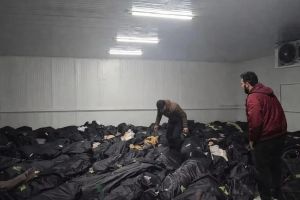
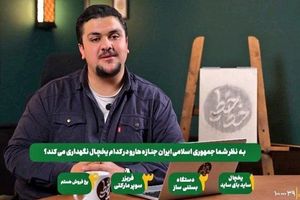
The narrative hardened further when a host on Ofogh TV, an IRIB channel affiliated with the Revolutionary Guards, mocked reports that thousands of bodies had been transported in refrigerated trailers.

“What type of refrigerator do you think the Islamic Republic keeps the bodies in?” he asked sarcastically, offering joking options including an “ice cream machine” and a “supermarket freezer.”

The remarks sparked outrage across Iran’s political spectrum. IRIB later removed Ofogh TV’s director, Sadegh Yazdani, and pulled the program, though many critics said deeper accountability was unlikely.

'Enemies of God'

The same logic resurfaced on Sunday, when Tehran City Council head Mehdi Chamran denied protest deaths while labeling victims with one of the Islamic Republic’s harshest religious-legal categories.

“In these protests we had no deaths, and only moharebs were present with guns and knives,” Chamran said.

The term mohareb –used for those accused of waging war against God – has long been associated with the harshest punishments, including execution. Critics say it functions as a rhetorical weapon, transforming civilians into divine enemies.

Taken together, these remarks point to a single through-line: Tehran's effort to frame violence as either sacred duty or bureaucratic convenience.

Thousands of protest deaths missing from Iran’s official tally

Feb 2, 2026, 17:00 GMT+0

Iran International has documented the deaths of more than six thousands people during recent protests in Iran whose names do not appear on an official government list published over the weekend.

“In a shameful attempt to downplay the scale of the largest street massacre in Iran’s contemporary history, Tehran has sought to cast doubt on the figures reported by Iran International,” the broadcaster’s editorial board said in a statement on Monday.

“Yet the statistics released by the government itself constitute further evidence of their dishonesty.”

The list published by Tehran includes 2,986 names. Fewer than 100 of those overlap with the 6,634 deaths compiled by Iran International since it issued a public call for documentation from families, witnesses and citizen journalists.

The information collected includes victims’ names, photographs, places of residence, circumstances of death and testimony from relatives, gathered despite severe internet restrictions and security pressure on families inside Iran.

Protests erupted in late December and escalated sharply on January 8 and 9, following a call for nationwide action by the exiled prince Reza Pahlavi. The demonstrations were met with a sweeping security crackdown in which thousands were killed and many more wounded or detained.

Iran International has previously put the death toll at at least 36,500, citing leaked official documents—a figure Tehran disputes.

The government’s release of an official “casualties list” appears to have been intended as a rebuttal to that report, but it has instead triggered a backlash.

Critics, including families of victims and activists, have pointed to alleged errors, duplicated identities, inconsistencies in official figures, and the absence of information about unidentified bodies and missing persons.

Iranian officials say the discrepancies stem from the presence of unidentified remains—a claim critics question given the scale of the state’s security and forensic apparatus.

You can read the full statement by Iran International’s editorial board here.

Statement by the Editorial Board of Iran International

Feb 2, 2026, 16:30 GMT+0

Iran International has recorded more than 6,000 names that have not been included on the list published by the government of the Islamic Republic of Iran.

Officials in President Pezeshkian’s government, in a shameful attempt to downplay the scale of the largest street massacre in Iran’s contemporary history, have sought to cast doubt on the figures reported by Iran International. Yet the statistics released by the government itself constitute further evidence of their dishonesty.

Since issuing a public call for the submission of documentation on those killed in the National Revolution, Iran International has received information confirming the deaths of 6,634 individuals. Of these, fewer than 100 namesoverlap with the 2,986-name list published by the Pezeshkian government.

In other words, without access to official institutional data—and relying solely on reports from citizen journalists and the families of those killed, amid intense security pressure and internet restrictions—Iran International has documented, within just 20 days, a death toll more than twice the figure claimed by the government.

The information received includes victims’ names, photographs, cities of residence, circumstances of death, and testimonies provided by families and relatives.

So far, the verified details of 1,141 individuals have been published on the “Truth Registration Map” on Iran International’s website, and this process continues daily.

Since the call was issued, information on an average of nearly 300 additional victims per day has been registered in Iran International’s database. The process of updating figures and documenting victims will therefore continue not only in the coming days, but in the weeks and months ahead.

It must be noted that this vast volume of information has been gathered while internet access remains severely restricted, with millions of Iranians—particularly in smaller and deprived areas—unable to connect. Widespread security pressure and threats against families to prevent them from speaking out have further complicated efforts to collect comprehensive data.

Under these conditions, the courage of those who remain committed to the truth and refuse to allow the memory and names of the victims to be erased has played a decisive role in documenting this crime.

Bodies are still being returned

In its second statement, issued on 5 Bahman (Jan. 25), the Editorial Board of Iran International announced that at least 36,500 people had been killed during the National Revolution.

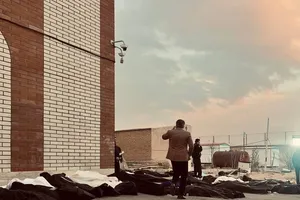
Verified reports indicate that despite nearly a month having passed since the massacres, the bodies of some protesters are still being returned to their families. Numerous reports received by Iran International also point to dozens of missing persons and the existence of many unidentified bodies.

There are repeated reports of mass burials of victims in various regions, making it impossible to obtain a complete picture of the full scale of the crime at this time.

A government that takes pride in evidence of a crime

Following the publication of its list of the dead, government officials promoted it as though they had released a document worthy of pride.

In an effort to normalize the crime and reduce human lives to mere numbers, the Pezeshkian government called on individuals and media outlets—particularly Iran International—to publish their own figures.

The statistics presented in this statement clearly demonstrate that the government loyal to Khamenei is incapable even of releasing a list aligned with its own narrative.

The government’s published list contains numerous irregularities, including the repetition of at least 25 names with identical national ID numbers, suggesting haste and disorder. Moreover, nearly a month after the killings of 18 and 19 Dey (Jan. 8–9), the figures released do not even match the government’s own claimed number of 3,317 deaths.

The government has attributed this discrepancy to the presence of unidentified bodies. The question remains: how is it that such a vast state apparatus has still failed, after all this time, to identify many of the bodies?

State-affiliated media have also claimed—through a distorted narrative—that large numbers of government agents were killed during the protests, with some officials citing a figure of 200 security personnel. Yet the government’s published list contains no mention of the names or number of these alleged casualties.

Renewed call for submitting documentation

The objective of the Islamic Republic is to conceal an unprecedented crime. The only way to confront this effort is through exposure and transparency.

As emphasized in its original call for documentation, Iran International stands ready to cooperate with human rights organizations, media outlets, journalists, researchers, and independent institutions to document, examine, and ensure international coverage of this crime.

All members of the public—especially the families and relatives of those killed, citizen journalists, and anyone in possession of reliable and verifiable information—are urged to share their documentation with Iran International via the IntelMedia chatbot.

Britain sanctions Iran’s security apparatus over deadly crackdowns

Feb 2, 2026, 15:09 GMT+0

Britain on Monday imposed a new round of sanctions on Iranian officials and a state security body, targeting those it said were responsible for violent crackdowns on peaceful protests.

The British Foreign Office said it had sanctioned 10 individuals and the Law Enforcement Forces of the Islamic Republic for what it described as serious human rights violations, including the killing of protesters, torture, sexual violence, and sweeping restrictions on freedom of expression and peaceful assembly.

The measures include asset freezes, travel bans and director disqualification sanctions, which prevent those listed from holding senior positions in British companies.

Among those designated was Eskandar Momeni, who oversees Iran’s domestic security apparatus, provincial police chiefs Mohammad Reza Hashemifar and Ahmed Amini, senior IRGC commander Mohammad Zamani, judges Ahmad Darvish Goftar and Mehdi Rasakhi, and the businessman Babak Zanjani.

“The Iranian people have shown extreme courage in the face of brutality and repression over recent weeks simply for exercising their right to peaceful protest,” Foreign Secretary Yvette Cooper said in a statement. “

The reports and shocking scenes of violence that have been seen around the world are horrific,” she added.

British officials said the action followed similar measures imposed by the European Union and the United States as part of a coordinated effort to hold Iranian authorities accountable.

Last week, EU foreign ministers formally designated the Islamic Revolutionary Guard Corps as a terrorist organization, a move that prompted sharp retaliation from Tehran.

Iranian officials have routinely dismissed Western sanctions as politically motivated and deny responsibility for abuses.

On Sunday, Iran’s parliament speaker said the country would now consider the armies of EU member states “terrorist groups,” escalating an already tense standoff between Iran and Western governments.

The sanctions were announced as signs emerged that diplomatic contacts between Iran and the United States could resume.

An Iranian foreign ministry official said on Monday that Tehran was weighing terms for renewed nuclear talks, even as Washington has increased its naval presence in the region following last month’s deadly protest crackdown.

Leaked memo shows Iran Guards media plan to undermine exiled prince

Feb 2, 2026, 11:01 GMT+0

A leaked Tasnim memo seen by Iran International shows the IRGC media apparatus sought to manipulate narratives around the protests and crackdown, undermine exiled Prince Reza Pahlavi, and frame the uprising as foreign-driven – not rooted in public anger at the Islamic Republic.

The document, issued by the Strategic Center of Tasnim News Agency – an outlet linked to the Islamic Revolutionary Guard Corps (IRGC), instructs that audiences should be led to view Pahlavi not as a political alternative, but as a Western-backed media instrument. It outlines three main lines of messaging.

First, it denies that Pahlavi has any meaningful social base inside Iran, saying recent protests were not the result of his calls but were planned on the ground by the United States and Israel. His statements, it argues, serve only as media coverage of unrest rather than leadership.

Second, the strategy seeks to separate broad social anger from support for Pahlavi, saying that many protesters were expressing accumulated frustration with the Islamic Republic rather than endorsing his political qualifications. Supportive slogans, it adds, reflect opposition to the system more than approval of Pahlavi himself.

Third, the document focuses on undermining Pahlavi’s political and personal credibility, portraying him as inconsistent, unwilling to take responsibility, lacking courage, and ultimately depicted as a “puppet” rather than a serious political actor.

Commenting on the document, political analyst Rouhollah Rahimpour, a freelance journalist, told Iran International that within the Islamic Republic’s broader media machinery, “nothing is random – neither words, nor terminology, nor narratives, nor timing.”

He described the approach as a classic narrative war designed to separate the public from political alternatives, allow anger to be released without enabling leadership to form, and keep society in a state of resentment.

“They tried to show that Crown Prince Reza Pahlavi is not a political actor but a tool,” Rahimpour said.

He added that the strategy also aims to prevent any perceived identity link between protesters inside Iran and Pahlavi, ensuring that “no identity connection is established between protesters inside Iran and Pahlavi.”